



 BIS Certification
 CDSCO
CDSCO
 CPCB
CPCB
 LMPC
LMPC
 WPC Approval
 Global Approvals
 TEC
TEC
 ARAI
ARAI
 BEE
BEE
 ISO Certification
 Drone Registration
 NOC For Steel





















 Business Registration















 Legal Services
 Trademark Registration
 Copyright Registration
 Patent Registration

- EPR Accountability Producers handle the collection, transportation, and recycling of the waste batteries.
- Safety Batteries should be properly segregated, stored and transported safely.
- Authorized Recycling & Reuse Only registered recyclers can recycle the batteries, and promote reuse of old batteries that are functional and reused as second-life batteries prior to disposal process.
- Labeling & Transparency Batteries must have chemistry, manufacturer, and disposal instructions.
- Monitoring and Awareness – Monitor the waste batteries, and report to the appropriate authorities, and educate your customers on how to properly dispose of the expired batteries.
Introduction

Battery Waste Management Rules 2022 are everywhere in many products, including mobile cell phones, laptops, cars, trucks, buses, industrial-grade tools, and renewable storage alternatives. As the demand for products in the electrification space increases (especially Electric Vehicles (EV) and storage), the battery waste is also forecast to increase alongside the increasing demand for mobile devices. If disposed of carelessly, batteries can pollute the environment or threaten human health and safety. The Government of India (GOI) has brought into force The EPR Certification issued under the authority of the Ministry of Environment, Forest and Climate Change (MOEFCC), as of August 24, 2022.
Understanding Battery Waste Management Rules
The Battery Waste MAmegement Rules are designed to enable the entire life cycle of batteries from production to disposal while safeguarding the environment, recovering resources, and protecting public health.
Why Do These Rules Matter ?
- Extended Producer Responsibility (EPR)– The Central Pollution Control Board (CPCB) has a policy in place to have producers comply with Extended Producer Responsibility (EPR).
- Safe Collection and Segregation – Once batteries have been used, they must be collected, segregated by type, and safely stored temporarily with no risks.
- Authorized Recycling & Second-Life Uses – Batteries will go to an authorized recycling facility. Batteries for which a second-use is possible, for example, used electric vehicle batteries, may be used for another purpose before recycling.
- Labelling & Transparency – Batteries will need to be labelled to present the chemistry, manufacturing, and disposal information.
- Monitoring & Compliance – Provision of documentation, which is submitted to regulatory bodies, and evidence that you are regularly reporting, safety, and core principles to abide by the requirements will show that you are complying with the rules.
- Consumer Awareness – Raising awareness in the community regarding proper disposal and collection points is important to promote compliance with the battery waste management rules.
What Are the Battery Waste Management Rules?
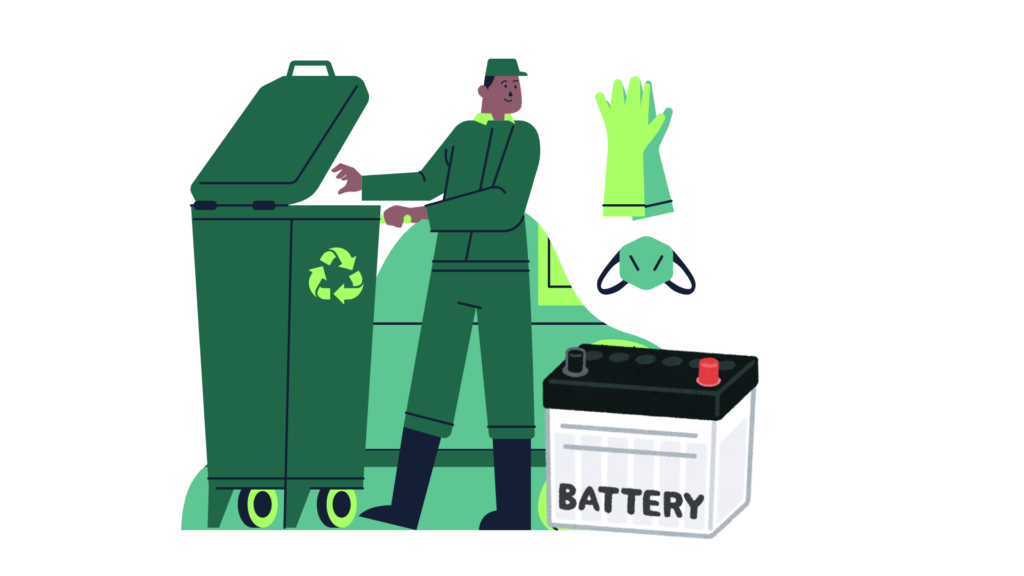
Battery Waste Management Rules 2022 will replace the existing rules from 2001. The old rules focused primarily on lead-acid batteries, while the new rules relate to all batteries (portable batteries, automotive batteries, batteries that are industrial and batteries that are used in electric vehicle applications).
The rules also introduce what is called Extended Producer Responsibility (EPR). This means that the battery producers (manufacturers, importers, assemblers) will be responsible to collect the waste battery and for the recycling of the waste battery based on the batteries they sold when they were manufactured.
What are the Gaps in Battery Waste Management Rules?
Based on the assessments of experts, reports, editorials, etc., we find below the main gaps, deficiencies and challenges in India’s EPR Certification Battery Waste Management (BWM) Rules. I can also recommend the recommended solutions, if you wish.
Key Features of the Rule
- Extended producer responsibility (EPR) – This policy transfers the costs and responsibility of battery collection, reuse, recycling from taxpayers and puts the responsibility on producers.
- Labeling – Disclose the battery chemistry in clear language and the required disposal process if applicable.
- Recycling and Second-life Use – Encourage proper reuse and recycling of batteries in your materials.
- Safety & Compliance – Include how to handle the battery and what the general transportation/disposal requirements are (indicating potential penalties for violations).
EPR Compliances for Waste Battery
- Registration – Producers must register with the State Pollution Control Board.
- Collection & Recycling Targets – Meet mandated targets for end-of-life batteries.
- Authorized Handling – Use only authorized collection centers, transporters, and recyclers.
- Documentation & Reporting – Maintain records and submit annual compliance reports.
- Consumer Awareness – Educate consumers on proper disposal and collection points.
Labelling Requirements
- Battery Chemistry – Clearly List the type of battery chemistry (for example, Li-ion, Lead-acid).
- Manufacturers Details – The name, address and contact details of the manufacturer.
- Disposal – Clearly display proper disposal/recycling instructions or symbols (such as the crossed-bin symbol).
- Capacity & Voltage – Include battery capacity and battery voltage (when applicable).
- Safety Warnings – Include warning details for safe operation, storage, and use.
Why Are These Rules Important?
The regulations are vital to allowing for protection of the environment; safe recycling, and disposal of harmful batteries; recovery of value materials, such as lithium and lead; worker and community safety; and a circular economy perspective regarding accountability for waste batteries for the producer.
- Protect the environment: Reduces pollution of land and watershed.
- Recover critical materials: Recover critical materials, such as lithium and cobalt.
- Support clean energy objectives: Responsible recyclables of batteries are a statement of India’s EV and renewables commitments.
Strengths of the Rules
- Comprehensive Coverage:- All battery types are covered; not just a narrow category.
- Clear EPR Framework:- Makes producers accountable; encourages formal recycling/collection infrastructure.
- Gradual but Firm Targets:- Moving targets help to ramp up capability, investment.
- Transparency & Monitoring:- Reporting, registration, online platforms help oversight.
- Circular Economy Push:- Use of recycled material in new batteries helps reduce dependence on raw material imports.
Suggestions for Effective Implementation
- Clear labelling of battery chemistry & disposal symbols.
- Eco-design standards for easy dismantling & recycling.
- Stronger EPR with fair floor prices & proper budgeting.
- Digital tracking for lifecycle monitoring.
- More formal recycling facilities with govt. incentives.
- Formalize & train informal sector players.
- Public awareness & accessible collection centres.
- Specific safety norms for EV/large batteries.
- Strict enforcement with transparent penalties.
- Standard protocols for reuse, second-life & recycling.
Documents required
- Application Form – The properly completed EPR application submitted to the Pollution Control Board (PCB).
- Company Information – Legal name, address and GST/PAN information, and type of batteries manufactured/sold.
- Proof of Authorization – Authorization of collection centers, recyclers, and transporters.
- EPR Plan – Proposed plan for collecting and the proper handling, storage, transport and recycling of used batteries.
- Financial Information – Budget allocated to implement the EPR plan.
- Recycling Agreements – Agreements/MOUs in place with registered recyclers or refurbishers.
- Record of Previous Compliance – Annual returns, or certificates, if you are renewing an EPR.
- Digital Tracking Information – QR codes, apps, or systems that would allow for tracking of the battery life (if applicable).
Step-by-Step Battery Waste Management Rules Process
- Collection – Producers/retailers will collect used batteries from consumers.
- Segregation & Storage – Batteries will be segregated by type and stored safely.
- Transport – Transport under the direction of authorized transporters will safely transport batteries to recycling or refurbishing units.
- Recycling/Refurbishment – Licensed recyclers will extract the valuable metals from batteries or refurbish batteries for a second-life application.
- Documentation & EPR Compliance – Will retain documents, issue EPR certificates and report to the respective governing authority.
Timelines, Costs, Validity & Renewal
Timeline
- Application processing typically takes 30–60 days after submission, depending on the state PCB.
Cost
| Fees vary by state and type/volume of batteries. |
| Additional costs may include collection, recycling agreements, and reporting systems. |
Validity
- EPR certificate is generally valid for 5 years from the date of issue.
Renewal
Apply before expiry with updated EPR plans,financials, and compliance reports; 30–60days for processing
Why Choose Diligence Certification?
Selecting due diligence certification is significant for a number of reasons:
- Risk management:- this assists organizations with identifying, evaluating, and managing environmental (ESG) risk, positive and negative.
- Conformity with laws and standards:- This provides businesses with proof of compliance with any legal obligation or benchmark compliance with recognized industry standards.
- Stakeholder confidence/trust:- This provides stakeholders (i.e. investors and customers) assurances that companies are acting socially responsible.
- Sustainability:- This provides ethically sourced products, less environmental impacts and safe business practices.
- Competitive advantage:- This demonstrates your commitment to transparency and corporate social responsibility. This commitment could further the reputation of a company and business development opportunities.
Conclusion
Battery Waste Management Rules represents a major advancement in India’s sustainable waste management framework seeking to protect the environment and recover valuable resources with an aim towards a “circular economy” through Extended Producer Responsibility (EPR), proper handling, and authorized recycling. Compliance with and effective enforcement of notices of compliance obligations, along with the development of infrastructure on the ground, and consumer awareness and education, will all be essential aspects of establishing a clean environment, resource efficiency and long-term sustainability.
Frequently Asked Question
What are the Battery Waste Management Rules, 2022?
These are rules put in place to allow the safe collection, recycling and disposal of batteries.
Who is regulated under these rules?
Manufacturers, Importers, consumers, sellers, collection centres, and recyclers are regulated.
What type of batteries do the regulations cover?
Stack batteries, Ni-cd, Ni-MH, Lithium, or hazardous other batteries.
What is "Extended Producer Responsibility" (EPR)?
EPR means that manufacturers would be responsible to collect and recycle previously used batteries.
What should the consumer do with used batteries?
Take it to the appropriate collection centre or seller. Do not throw it away in the household trash.
What is the role of the sellers?
A seller's role is to act as a collection center for used batteries, and when they receive them from consumers, they will then transport them to the collection centers.
How does a person prepare battery waste for short or long term storage?
Make sure that the waste is adequately stored in containers that do not leak, because many batteries may leak and cause environmental issues.
How does a person transport batteries for disposal?
They must transport the batteries in accordance with hazardous waste handling and safety regulations.
What happens if a person is found out-of-compliance?
They could face fines, criminal charges, or be suspended from operation under the Environment Protection Act, 1986.
What is the overall goal of these battery waste rules?
The goal of these rules is to reduce environmental pollution and public health effects from battery waste.