 BIS Certification
 CDSCO
CDSCO
 PESO
PESO
 CPCB
CPCB
 LMPC
LMPC
 WPC Approval
 Global Approvals
 TEC
TEC
 ARAI
ARAI
 BEE
BEE
 ISO Certification
 DGCA Certification
 NOC For Steel
 APEDA Registration























 Business Registration
 FSSAI Mark Certification












 (32).jpg)
 Legal Services
 Trademark Registration
 Copyright Registration
 Patent Registration
Succession Certificate
A Succession Certificate is a court-issued document that authorises the legal heirs of a person who died without a Will...
Get expert consultation
Trusted by 25,000+ leading enterprises worldwide













Key takeaways
- A Succession Certificate is a court-issued document granting heirs authority to collect debts, securities and movable assets of a person who died intestate (without a Will).
- It is issued by a District Judge after verifying the applicant’s relationship and eligibility under the Indian Succession Act.
- It is mandatory for transferring bank balances, shares, insurance proceeds and certain other movable assets when no Will exists.
- The process requires a court petition, public notice, hearings and payment of court fees before issuance.
- Court fees are charged as a percentage of the asset value and vary by state.
- Once granted, the certificate is valid throughout India.
What is a Succession Certificate?
A Succession Certificate in India is a court-issued document that allows the legal heirs of a deceased person who left no Will to inherit and manage their movable property, including bank deposits, insurance claims, shares, bonds and other securities. It is issued by the civil court with jurisdiction over the deceased’s residence or the location of the property, and falls under intestate succession, meaning the property is distributed according to succession laws rather than a Will.
Before issuing the certificate, the court conducts a public notice and verification to ensure the applicant is the rightful successor.
What the certificate does
- Authorises heirs to collect debts and securities in the deceased’s name
- Obligates heirs to settle any liabilities tied to those assets
- Lists all eligible successors, assets and liabilities
- Serves as recognised legal proof for movable assets such as securities and debts
Eligibility and governing law
Who can apply and which personal law governs the succession depends on the relationship to the deceased and their religion.
| Eligible applicant | Notes |
|---|---|
| Spouse | Spouse of the deceased |
| Children | Including adopted children |
| Parents | Parents of the deceased |
| Siblings | Where no closer heirs exist |
| Religion of deceased | Governing law |
|---|---|
| Hindus, Sikhs, Jains, Buddhists | Hindu Succession Act, 1956 |
| Others | Indian Succession Act, 1925, unless community-specific provisions apply |
Even if there is only one heir, the court still requires the formal process to avoid future disputes.
What the petition must include
Time and date of death
The time and date of the deceased’s death.
Last residence
Last residence of the deceased or the location of the property.
Relatives’ addresses
Addresses of all interested relatives of the deceased.
Applicant’s rights
The applicant’s rights as a successor to the estate.
No legal bar
A statement confirming that no legal bar exists to the claim.
Debts and securities
Details of the debts and securities for which the certificate is sought.
When a certificate is required
A Succession Certificate is not compulsory for every inheritance. It is required when the legal heirs need to claim or transfer debts, securities, bank balances and similar movable assets in the absence of a Will. Financial institutions will not release certain assets without this court-authorised proof of succession.
- Transferring bank balances of a person who died without a Will
- Claiming shares, bonds and other securities
- Realising insurance proceeds and other movable assets
- Collecting debts owed to the deceased
- Establishing the rightful successor where multiple heirs may claim
Procedure to obtain a certificate
The certificate is granted by the District Judge after filing, public notice and verification. We guide you through each stage.
Filing and notice
File the petition
Pay the prescribed court fee as per your state’s rules, draft and sign a petition to the District Judge, and include all details of heirs, assets and liabilities.
Preliminary hearing and public notice
The court holds an initial hearing and, if satisfied, orders a public notice in newspapers inviting objections within a fixed period, usually 45 days.
Grant and security
Grant of certificate
If no objections arise, the court verifies the claim and issues the Succession Certificate.
Security bond submission
The court may require a bond with sureties before the certificate takes effect, to safeguard against misuse of the assets.
Documents required
- Affidavit with self-undertaking
- Proof of identity (Aadhaar, Passport, PAN)
- Address proof of all legal heirs
- Date of birth proof of heirs
- Death certificate of the deceased
- Death certificate of any deceased legal heir, if applicable
- Residence proof of the deceased
Validity and scope
- Valid throughout the entire country of India
- Can be enforced anywhere in India without reapplying in different states
- If granted abroad by an Indian consular officer or diplomatic mission, it carries the same legal weight once duly stamped under the Court Fees Act, 1870
- Deemed perpetual unless revoked or withdrawn by a competent court
Related matters? See our Legal Heir Certificate, Power of Attorney and Legal Notice services.
How they differ
| Aspect | Succession Certificate | Legal Heir Certificate |
|---|---|---|
| Purpose | Transfer movable assets, debts and securities | Pension, insurance, government benefits and certain property claims |
| Issued by | District Judge (civil court) | Tehsildar or revenue authority |
| Applicants | Any legal heir | Only spouse, children or parents |
| Scope | Authorises debt and securities transfer | Establishes relationship for benefit claims |
Need a Succession Certificate?
We handle the entire process end to end, from petition drafting and informing the court to public notice and obtaining the final certificate, with a clear breakdown of court fees and our charges.
The Indian Succession Act, 1925 is published on India Code.
Frequently asked questions
What is a Succession Certificate?
It is a legal document issued by a court that permits legal heirs to collect debts and securities of a deceased person who has died intestate, that is, without a Will.
How do I get a Succession Certificate?
You file a petition before the District Judge of the competent jurisdiction where the deceased resided at the time of death or where the property is located. The petition must contain the prescribed particulars, and a public notice is posted before the certificate is granted.
Is a Succession Certificate always compulsory?
No. It is not compulsory for all inheritances, but it is required where the legal heirs intend to claim or transfer debts, securities, bank balances and similar assets in the absence of a Will.
How much does it cost?
The cost varies with the overall value of the assets, because court fees are assessed as a percentage of that value and are paid via judicial stamp papers. Fees vary by state, and lawyer fees apply if you hire representation.
Can a Succession Certificate be challenged or revoked?
Yes. Any affected person may challenge its validity during the objection window following the public notice, or later by a petition for revocation under Section 383 of the Indian Succession Act, 1925, on grounds such as a defective process, fraud or misrepresentation.
How long is it valid?
Once granted it is deemed perpetual unless revoked or withdrawn by a competent court, and it applies throughout India. A certificate granted abroad by an Indian representative is valid in India once stamped in accordance with the Court Fees Act, 1870.
Why choose Diligence Certification?
For compliance and credibility, Diligence is much more than a checklist - we give you real confidence in your business. We examine your legal, financial and operational status, so you are not just certified, but trusted.
Stronger risk protection
Spot hidden legal, financial or operational risks early - fix problems before they become threats.
Earn stakeholder trust
From investors to customers, people want to work with businesses that play by the rules.
Stay legally aligned
Compliant not just on products but on labour, environmental and tax laws too.
Enhance brand reputation
Show the world you operate with integrity and transparency.
Stand out from competitors
In a crowded market, credibility is your biggest edge.
24×7 expert support
A 100+ strong service team guiding you at every step, free first consultation.
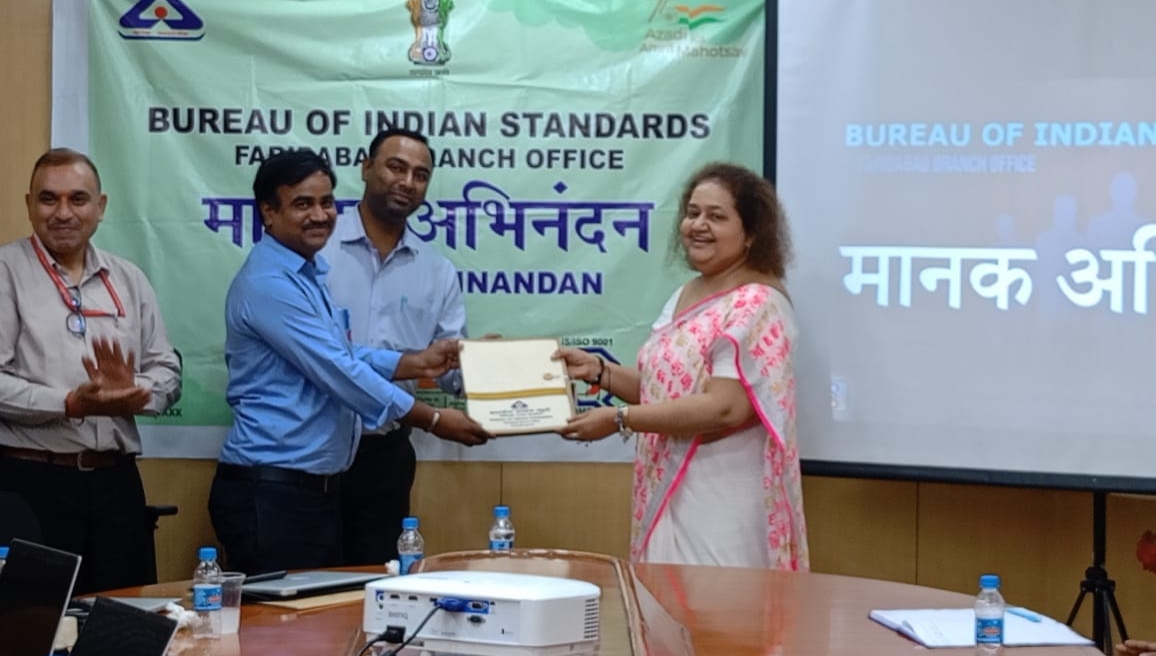
Real sites, real certifications
Our teams work inside factories and plants across India and abroad - inspections, audits and certification milestones spanning BIS, global schemes and the full compliance stack you see on this site.






What our clients say
Reviews and feedback from businesses that have worked with Diligence Certifications.








Related Family Law services
Legal Heir Certificate
Get your Legal Heir Certificate hassle-free.
View details →Will Drafting
Professional will drafting - secure your estate.
View details →Will Registration
Secure your will with professional registration.
View details →Mutual Divorce
Mutual divorce - process, requirements, documents.
View details →Divorce Notice
Draft a Divorce Notice in India - step-by-step.
View details →Divorce Settlement Agreement
Draft divorce settlement agreements - key terms.
View details →Ready to get Succession Certificate?
Talk to our experts for a clear, fixed-scope plan - most clients get a roadmap the same day.