 BIS Certification
 CDSCO
CDSCO
 PESO
PESO
 CPCB
CPCB
 LMPC
LMPC
 WPC Approval
 Global Approvals
 TEC
TEC
 ARAI
ARAI
 BEE
BEE
 ISO Certification
 DGCA Certification
 NOC For Steel
 APEDA Registration























 Business Registration
 FSSAI Mark Certification












 (32).jpg)
 Legal Services
 Trademark Registration
 Copyright Registration
 Patent Registration
ECO Mark Certification
ECO Mark Certification is a voluntary, BIS-administered eco-label for products that meet India's environmental and sustainability standards under the ISO...
Get expert consultation
Trusted by 25,000+ leading enterprises worldwide




Key takeaways
- ECO Mark is a voluntary eco-label issued in India by the Bureau of Indian Standards (BIS), an arm of the Ministry of Environment, Forest and Climate Change.
- It is based on the ISO 14024 Type I Ecolabel and certifies products that meet environmental sustainability criteria across their life cycle.
- It covers broad product categories including soaps and detergents, paper, food items, plastics, textiles, paints, batteries and electronics.
- Certification follows BIS evaluation, a factory audit and product testing at accredited laboratories against the relevant IS standards.
- It helps brands win government procurement tenders and access eco-conscious markets at home and abroad.
- The certificate is typically valid for 1 to 3 years and can be renewed after re-assessment.
- Breaching the licence terms can lead to fines, suspension or revocation.
What is ECO Mark Certification?
ECO Mark Certification is an internationally harmonised environmental product certification that identifies products and services meeting high standards of environmental sustainability across the full life cycle. It is based on the ISO 14024 Type I Ecolabel in the ISO 14000 family of standards, helping consumers make environmentally conscious choices while letting businesses demonstrate a genuinely responsible position.
The ECO Mark was first established in India, but the term is often used to describe a range of national and international eco-labels. They all share the same intent: to verify and identify products that have minimal environmental impact.
Comparable eco-labels worldwide
- EU Ecolabel (Europe)
- Blue Angel (Germany)
- Green Seal (United States)
- Eco Mark Japan
- ECOLOGO (North America)
- Nordic Swan (Nordic countries)
Standards and product categories
ECO Mark is a Type I eco-label recognised under ISO 14024, awarded on life-cycle and sustainability performance (LCA). The BIS scheme covers a wide range of product categories, each assessed against its relevant IS standard.
| Feature | What it means |
|---|---|
| Life-cycle based | Assessed on sustainability performance across the full life cycle (LCA). |
| Type I eco-label | Recognised under ISO 14024, the standard for third-party eco-labelling. |
| Environmental assurance | High assurance of reduced environmental risk, resource efficiency and low toxicity. |
| Broad coverage | Packaging, electronics, cleaning and personal care products, paper and more. |
| Product category | Examples |
|---|---|
| Soaps and detergents | Laundry soaps, detergent powders, toilet soaps |
| Paper products | Recycled paper, packaging materials |
| Food items | Edible oils, tea and coffee |
| Plastic and polymer | Recycled plastic products, biodegradable carry bags |
| Textiles | Organic cotton fabrics, jute-based products |
| Wood substitutes | Plywood, particle boards |
| Batteries | Mercury-free batteries |
| Paints and coatings | Lead-free paints |
| Electronics and electrical | Energy-efficient appliances, CFL and LED lamps |
Advantages of ECO Mark Certification
Stand out on sustainability
Differentiate your brand in a competitive market by proving genuine environmental performance.
Government procurement
Meet the eco standards required for central and state government supply tenders.
Market access
Open doors to eco-conscious buyers in India and export markets across Europe, North America and Japan.
Consumer confidence
Verified, non-toxic and eco-friendly products build trust and long-term loyalty.
Better waste management
The scheme encourages recycling, biodegradable materials and lower-toxicity inputs.
ESG alignment
Demonstrate corporate social responsibility and align with brand supply chains that prioritise ESG.
Why BIS introduced the ECO Mark
The Bureau of Indian Standards introduced ECO Mark Certification to promote the use of eco-friendly products in India. Alongside the usual quality and safety rules, products are carefully checked against defined ecological criteria so that buyers can rely on the claim.
What the scheme sets out to do
- Promote sustainable products that protect natural resources and reduce waste.
- Reduce environmental pollution by favouring products that use fewer resources.
- Improve waste management through recyclable, biodegradable and non-toxic materials.
- Encourage green manufacturing and energy-efficient production under BIS.
Penalties for non-compliance
- Fines proportionate to the scope of the violation.
- Suspension of the ECO Mark licence.
- Revocation of the licence for serious breaches.
The certification process, step by step
Whether you produce for the local market or import, the path follows a consistent set of stages, from selecting the right scheme to grant of the licence.
Preparation and testing
Select the eco-label
Determine the regional scheme that relates to your product group and target market.
Understand the requirements
Review the product standard for specifications on materials, emissions, recyclability, energy use and hazardous substances.
Testing and research
Submit technical reports from engineering, laboratory analysis and sustainability analysis.
Validation and grant
BIS evaluation
BIS checks the application for accuracy and may request further information or clarification.
Audit and product testing
BIS-authorised staff conduct a factory audit and test product samples at authorised laboratories against the IS standards.
Certification and licensing
On a positive review you sign an agreement with BIS, pay the licence fees and your product can carry the ECO Mark.
Documents required
- Product details and features
- NABL accreditation of the testing laboratory
- Details and information obtained from the lab
- Product catalogue
- Sample information
- Details of the manufacturing process and raw-material environmental impact
- Test results from certified labs proving compliance with the relevant IS standards
- Certificate of incorporation, Memorandum and Articles of Association (for a company)
Validity & renewal
- The certificate is typically valid for 1 to 3 years from the issuing authority.
- It can be renewed after a fresh re-assessment of the product.
- It may be suspended or revoked by BIS if licence terms are breached.
- ECO Mark India references ISO 14024, so it aligns with eco-labels accepted worldwide.
Exploring related approvals? See our ISI Mark Certification, FMCS Mark Certification and RoHS Certification services.
Who can apply
Your product can be ECO Mark certified if it is safe for the environment, meets performance standards and fits a recognised product category such as detergents, packaging or electronics. The core eligibility tests are:
- Product category: falls within a category in the chosen eco-labelling framework.
- Environmental performance: low energy and water use, lower greenhouse-gas emissions, non-toxic chemicals and recyclable or biodegradable packaging.
- Technical and regulatory compliance: meets applicable national and international standards (relevant BIS standards in India, EN standards in Europe) and local environmental rules.
- Third-party testing: validated test reports from accredited laboratories and technical dossiers covering the full bill of materials.
- No harmful substances: free of prohibited or restricted chemicals and heavy metals harmful to health or the environment.
Cost varies by product, region and testing requirements, and generally includes application fees, testing fees and, where applicable, inspection fees. The applicant usually bears the cost of laboratory testing.
Ready to certify your product?
Tell us your product category and target market, and we will map the right eco-label, the documents, the testing and the timeline for your ECO Mark.
Frequently asked questions
What is ECO Mark Certification?
ECO Mark Certification is a voluntary eco-label for products that meet both environmental and quality standards, helping consumers identify environmentally safe products. In India it is issued by the Bureau of Indian Standards, a branch under the Ministry of Environment, Forest and Climate Change.
Is ECO Mark mandatory?
No. ECO Mark is voluntary. However, if you sell in eco-conscious markets or target government procurement, it validates your product claims and adds credibility.
Which products can be ECO Mark certified?
ECO Mark works for products such as soaps, detergents, paper, packaging, electronics, textiles and cosmetics, provided they meet the environmental and safety standards.
How do I apply and how is it tested?
The application is submitted to the national eco-label authority for your country, which is BIS in India. The process involves documentation, product testing and a factory audit before the licence is granted.
How long is the certificate valid?
The certification usually lasts 1 to 3 years from the issuing authority and can be renewed after re-assessment of the product.
Does ECO Mark help with exports?
Yes. ECO Mark helps exporters distinguish themselves in eco-conscious international markets, especially in Europe, North America and Japan, because it references the ISO 14024 Type I eco-label standard recognised worldwide.
Why choose Diligence Certification?
For compliance and credibility, Diligence is much more than a checklist - we give you real confidence in your business. We examine your legal, financial and operational status, so you are not just certified, but trusted.
Stronger risk protection
Spot hidden legal, financial or operational risks early - fix problems before they become threats.
Earn stakeholder trust
From investors to customers, people want to work with businesses that play by the rules.
Stay legally aligned
Compliant not just on products but on labour, environmental and tax laws too.
Enhance brand reputation
Show the world you operate with integrity and transparency.
Stand out from competitors
In a crowded market, credibility is your biggest edge.
24×7 expert support
A 100+ strong service team guiding you at every step, free first consultation.
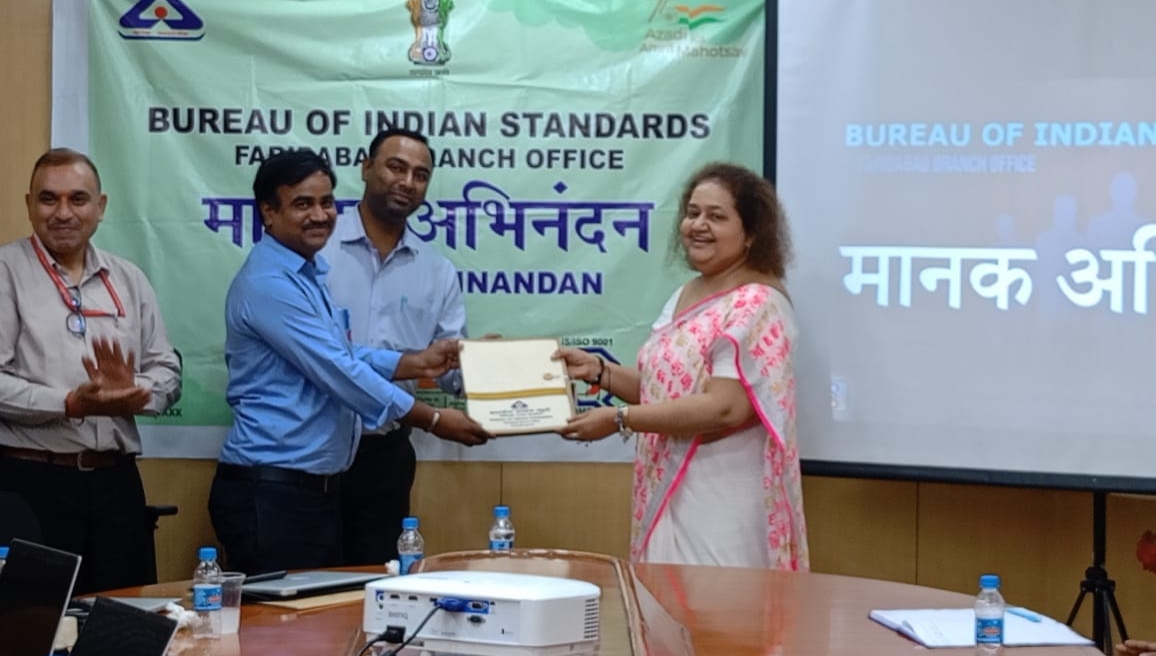
Real sites, real certifications
Our teams work inside factories and plants across India and abroad - inspections, audits and certification milestones spanning BIS, global schemes and the full compliance stack you see on this site.






What our clients say
Reviews and feedback from businesses that have worked with Diligence Certifications.






Related BIS & Standards services
BIS Certification
Get your products BIS certified to ensure compliance with Indian standards.
View details →ISI Mark Certification
ISI Mark Certification for your products with expert guidance.
View details →CRS Mark Certification
BIS CRS Registration for electronics & IT products.
View details →Hallmarking
BIS Hallmarking Certification for gold & jewellery.
View details →FMCS Mark Certification
For foreign manufacturers entering the Indian market.
View details →Laboratory Accreditation
NABL & lab accreditation certification support.
View details →Ready to get ECO Mark Certification?
Talk to our experts for a clear, fixed-scope plan - most clients get a roadmap the same day.