 BIS Certification
 CDSCO
CDSCO
 PESO
PESO
 CPCB
CPCB
 LMPC
LMPC
 WPC Approval
 Global Approvals
 TEC
TEC
 ARAI
ARAI
 BEE
BEE
 ISO Certification
 DGCA Certification
 NOC For Steel
 APEDA Registration























 Business Registration
 FSSAI Mark Certification












 (32).jpg)
 Legal Services
 Trademark Registration
 Copyright Registration
 Patent Registration
Private Limited Company Registration
A Private Limited Company is the most popular business structure in India, registered with the Registrar of Companies under the...
Get expert consultation
Trusted by 25,000+ leading enterprises worldwide













Key takeaways
- A Private Limited Company is a privately held business entity formed under the Companies Act, 2013, giving owners limited liability protection.
- It needs a minimum of two directors and two shareholders, with at least one director a resident of India.
- It is a separate legal entity from its directors, so personal assets are shielded from the company’s liabilities.
- Registration is handled by the Registrar of Companies (ROC) under the Ministry of Corporate Affairs (MCA).
- The full process is online through the SPICe+ form on the MCA portal.
- On completion, the ROC issues a Certificate of Incorporation with a CIN.
- Registration is usually completed in around 7 to 10 working days, subject to document verification.
What is a Private Limited Company?
A Private Limited Company is one of the most common company forms under the Companies Act, 2013 in India. It is a privately held business entity whose shares are typically held by the directors, their relatives and close friends. It sits between the flexibility of a partnership and the limited liability of a company, which is why it is mainly preferred by new and growing businesses looking for funding and expansion.
The registration and ongoing compliance are looked after by the Ministry of Corporate Affairs under the Companies Act, 2013, while the authority that registers companies and ensures the law is followed is the Registrar of Companies (ROC). Forming a Private Limited Company gives founders credibility, limited liability and scope for future investment.
Key characteristics
- Minimum of two shareholders and two directors required by law
- Upper limit of 200 members
- Restricted transferability of shares
- Mandatory registration with the ROC
- The words “Private Limited” must appear at the end of the name
- Minimum paid-up capital of INR 1 lakh has been waived
Forms of a private limited company
By structure, a Private Limited Company can take different forms. The right choice depends on how members wish to limit their liability.
| Type | How liability works |
|---|---|
| Company limited by shares | Members’ liability is limited to the amount unpaid on the shares they hold. This is the most widely used form. |
| Company limited by guarantee | Members limit their liability to the amount they guarantee to contribute to the company’s assets in the event of winding-up. |
| Unlimited company | Members carry unlimited liability for the debts and obligations of the company. This is relatively uncommon. |
| Statutory limit | Requirement |
|---|---|
| Minimum members | Two shareholders and two directors |
| Maximum members | 200 members |
| Resident director | At least one director must be a resident of India |
| Name clause | Name must end with “Private Limited” |
Benefits of registering
Limited liability
Shareholders’ liability is limited to their investment, shielding personal assets from claims against the company for business debts.
Separate legal entity
The company has its own legal identity, so it can enter contracts, own property and sue or be sued in its own name.
Perpetual succession
The company continues regardless of changes in shareholders, so the business runs without interruption.
Easier funding
It is simpler to attract investment and loans through equity shares than with most other business structures.
Stronger credibility
A registered company instills confidence in customers, suppliers, banks and partners.
Tax advantages
Private limited companies can access tax benefits and incentives offered by the government.
The Certificate of Incorporation is essential
The Certificate of Incorporation is the document the Registrar of Companies issues once incorporation is complete. It is the legal proof that the company is registered and entitled to carry on business in India. Without it, a company cannot operate as a separate legal person.
What the certificate lets you do
- Legal recognition of the company as an entity in the eyes of the law.
- Open a bank account in the company name, sign contracts and trade legally.
- Access funding, as it is required before applying for a loan or investment.
- Prove existence of the company for multiple business purposes.
- Meet compliance, as it is needed to file annual returns and maintain other obligations.
The registration process, step by step
The process is fully electronic through the MCA portal, which makes it quick and transparent. Documentation must be prepared correctly before filing.
Prepare and apply
Obtain DSC
Get a Digital Signature Certificate, which is required to e-file the incorporation documents.
Apply for DIN
Every director must obtain a Director Identification Number allotted by the MCA.
Name approval
Pick a unique, compliant name and submit it to the MCA, ideally with two to three options.
File and incorporate
Draft MOA and AOA
Prepare the Memorandum of Association stating the objectives and the Articles of Association setting the internal rules.
File on SPICe+
Submit the incorporation application and documents through the SPICe+ form on the MCA portal.
Get incorporated
The MCA issues the Certificate of Incorporation with a CIN, and the company can begin operating.
Documents required
- PAN and Aadhaar card of directors and shareholders
- Identity and address proof (electricity bill, rent agreement or property documents)
- Bank statement or utility bill as identity proof
- Passport-size photographs of the directors
- Digital Signature Certificate (DSC)
- Memorandum and Articles of Association (MOA and AOA)
- Registered office address proof in India
- Affidavit declaring that the information provided is correct
Eligibility & capital
- Minimum two directors, at least one a resident of India.
- Minimum two shareholders, who can also be the directors.
- A registered office address in India.
- Authorised and paid-up capital details, with the INR 1 lakh minimum now waived.
Considering other structures? Compare our One Person Company Registration, LLP Registration and Public Limited Company Registration services.
What to expect
Registration is usually completed within about 7 to 10 working days, depending on document verification and approvals from the concerned departments.
| Item | Details |
|---|---|
| Government fees | MCA filing fees, which vary with authorised capital |
| Professional charges | Drafting, filing and end-to-end advisory |
| Documentation | Preparation of DSC, DIN, MOA, AOA and the SPICe+ application |
| Typical timeline | Around 7 to 10 working days, subject to verification |
Ready to register your company?
Share your proposed name and director details, and we will check name availability, apply for DSC and DIN, draft the MOA and AOA and handle all ROC filings.
Private limited company incorporation is administered by the Ministry of Corporate Affairs (MCA).
Frequently asked questions
What is a Private Limited Company?
A Private Limited Company, abbreviated Pvt Ltd, is a business that is legally registered and provides limited liability protection to its owners. It is a separate legal entity and allows easy transferability of ownership within the restrictions set by its articles.
Who governs private limited company registration in India?
Registration and ongoing compliance are looked after by the Ministry of Corporate Affairs under the Companies Act, 2013. The authority that registers companies and ensures the law is followed is the Registrar of Companies (ROC).
How long does registration take?
Registration generally takes around 7 to 10 working days, depending on verification of the documents submitted and approval from the concerned departments.
Can a single person register a Pvt Ltd company?
No. At least two directors and two shareholders are required for a Private Limited Company. If you want to start a business alone, you can register it as a One Person Company (OPC).
Can a foreign national or NRI register a Pvt Ltd company?
Yes. A foreign national or NRI can register a Private Limited Company in India, but at least one director must be a resident Indian.
Is there a minimum paid-up capital requirement?
The earlier requirement of INR 1 lakh minimum paid-up share capital has been waived. It is still advisable to capitalise the company reasonably for its planned operations.
Why choose Diligence Certification?
For compliance and credibility, Diligence is much more than a checklist - we give you real confidence in your business. We examine your legal, financial and operational status, so you are not just certified, but trusted.
Stronger risk protection
Spot hidden legal, financial or operational risks early - fix problems before they become threats.
Earn stakeholder trust
From investors to customers, people want to work with businesses that play by the rules.
Stay legally aligned
Compliant not just on products but on labour, environmental and tax laws too.
Enhance brand reputation
Show the world you operate with integrity and transparency.
Stand out from competitors
In a crowded market, credibility is your biggest edge.
24×7 expert support
A 100+ strong service team guiding you at every step, free first consultation.
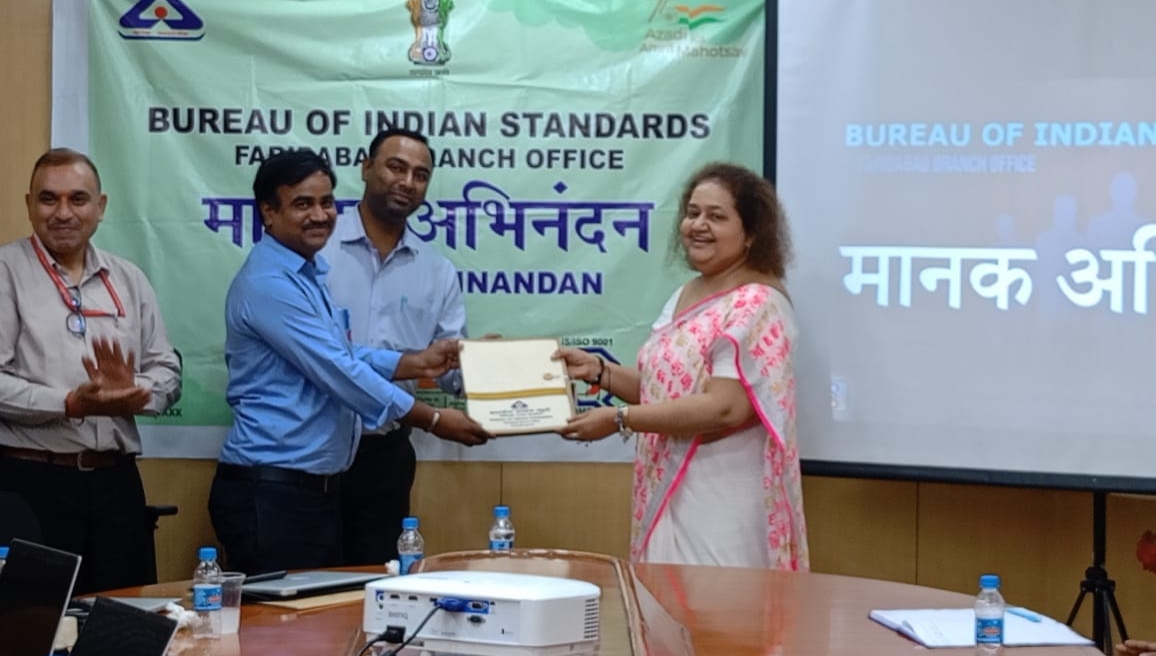
Real sites, real certifications
Our teams work inside factories and plants across India and abroad - inspections, audits and certification milestones spanning BIS, global schemes and the full compliance stack you see on this site.






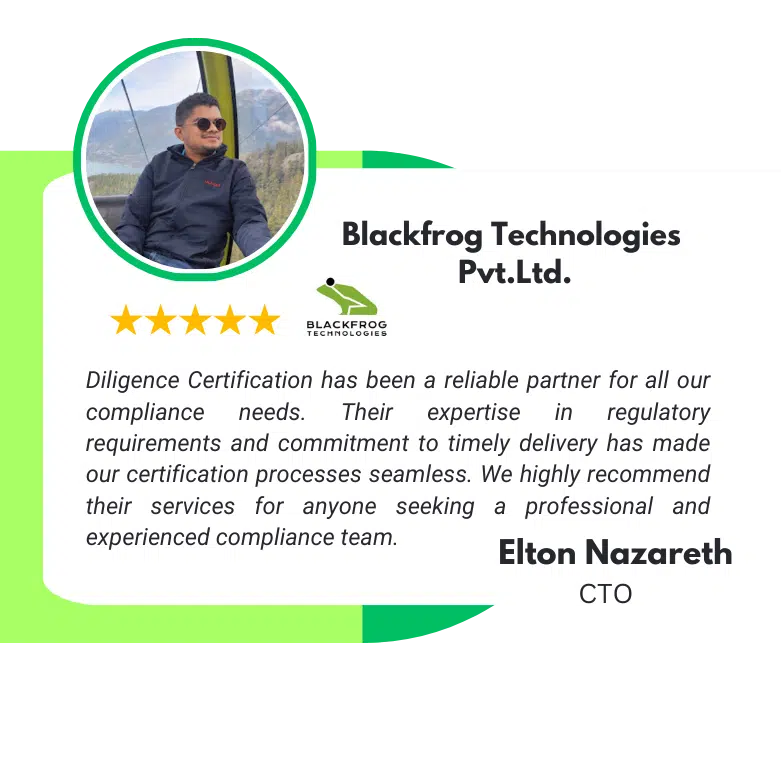
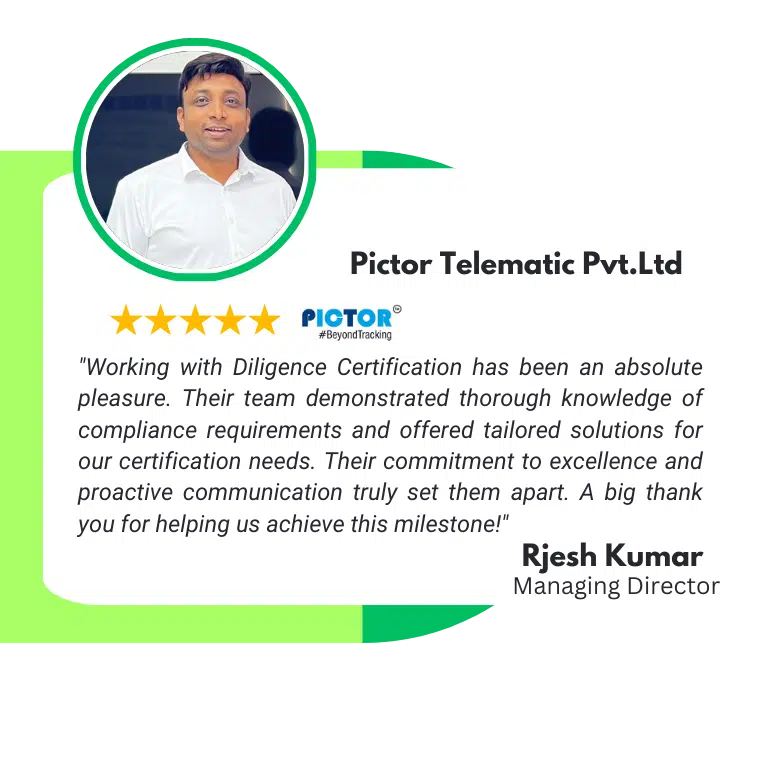
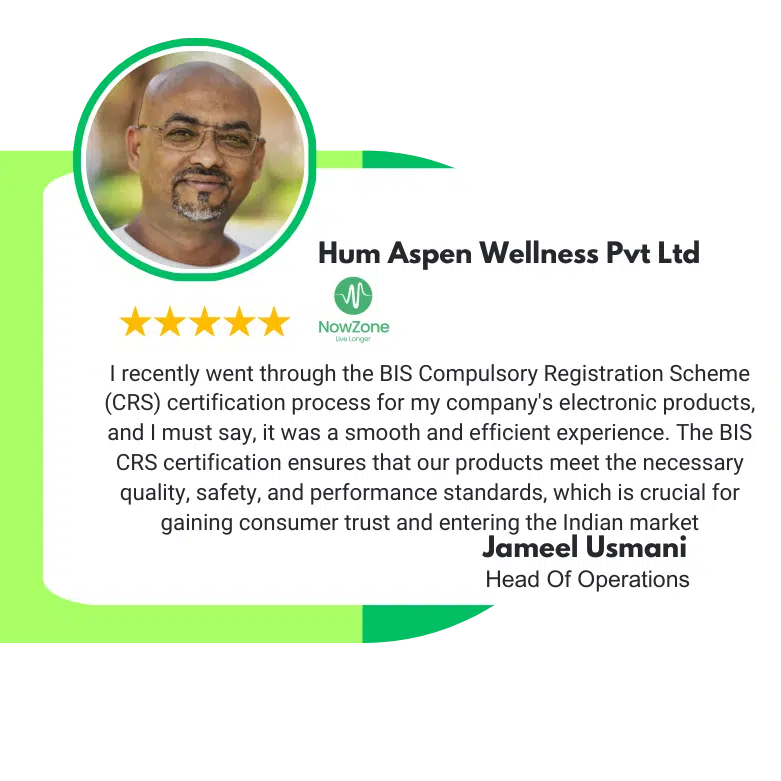
What our clients say
Reviews and feedback from businesses that have worked with Diligence Certifications.







Related Corporate Registration services
Public Limited Company
Public Limited Company registration - simplified.
View details →One Person Company (OPC)
OPC with limited liability and full control.
View details →LLP Registration
Limited Liability Partnership registration.
View details →Partnership Firm
Partnership firm registration with expert guidance.
View details →Sole Proprietorship
Sole proprietorship registration - simple & fast.
View details →Indian Subsidiary Company
Foreign subsidiary company registration in India.
View details →Ready to get Private Limited Company Registration?
Talk to our experts for a clear, fixed-scope plan - most clients get a roadmap the same day.