 BIS Certification
 CDSCO
CDSCO
 PESO
PESO
 CPCB
CPCB
 LMPC
LMPC
 WPC Approval
 Global Approvals
 TEC
TEC
 ARAI
ARAI
 BEE
BEE
 ISO Certification
 DGCA Certification
 NOC For Steel
 APEDA Registration























 Business Registration
 FSSAI Mark Certification












 (32).jpg)
 Legal Services
 Trademark Registration
 Copyright Registration
 Patent Registration
Patent Opposition
Patent opposition lets you challenge a patent application or a granted patent before the Indian Patent Office under the Patents...
Get expert consultation
Trusted by 25,000+ leading enterprises worldwide













Key takeaways
- Patent opposition is the legal mechanism to challenge a patent application or a granted patent under the Patents Act, 1970 and the Patents Rules, 2003.
- There are two routes: pre-grant opposition under Section 25(1) and post-grant opposition under Section 25(2).
- Pre-grant opposition can be filed by any person; post-grant opposition can only be filed by a person interested.
- Both are heard by the Controller of Patents at the appropriate branch of the Indian Patent Office.
- The grounds for opposition are listed exhaustively in Section 25 and include lack of novelty, obviousness and insufficient disclosure.
- Post-grant opposition must be filed within 12 months of the date of publication of the grant.
- A post-grant opposition is examined by an Opposition Board before the Controller decides the matter.
What is patent opposition?
Patent opposition is a statutory remedy that allows a third party to object to the grant of a patent, or to challenge a patent that has already been granted, before the Indian Patent Office. It is a built-in safeguard within the Patents Act, 1970 that keeps invalid, overly broad or undeserving patents from being granted or remaining on the register.
Opposition is decided by the Controller of Patents and is distinct from court litigation. It is faster and more cost-effective than a revocation suit, and it lets competitors, industry bodies and other interested parties protect freedom to operate without going to the High Court.
When patent opposition is used
- A competitor is about to secure a patent that blocks your product
- An application claims an invention that is already known or published
- A granted patent is being asserted against you in a notice or suit
- You want to clear the path before launching in a crowded field
- A patent wrongly claims subject matter that is not patentable in India
- An applicant has failed to disclose prior art or foreign filing details
Pre-grant vs post-grant opposition
The Patents Act provides two windows to oppose a patent. The right route depends on whether the patent has already been granted and on your standing to file.
| Feature | Pre-grant - Section 25(1) |
|---|---|
| Who can file | Any person |
| When | After publication and before grant of the patent |
| Filed as | Representation in Form not requiring fee, with a request for hearing |
| Decided by | The Controller of Patents |
| Feature | Post-grant - Section 25(2) |
|---|---|
| Who can file | Any person interested |
| When | Within 12 months of publication of the grant |
| Filed as | Notice of opposition in Form 7 with the prescribed fee |
| Decided by | The Controller, after an Opposition Board report |
A pre-grant opposition under Section 25(1) is the cheaper, earlier option, but the Controller has discretion over the hearing. A post-grant opposition under Section 25(2) is a full adversarial proceeding with an independent Opposition Board.
Grounds for opposition
The grounds available for both pre-grant and post-grant opposition are listed in Section 25 of the Patents Act, 1970. An opposition must rest on one or more of these statutory grounds.
Lack of novelty
The invention was already published, used or anticipated by prior art before the priority date.
Obviousness
The invention lacks an inventive step and is obvious to a person skilled in the art.
Not patentable
The subject matter is excluded from patentability under Sections 3 and 4 of the Act.
Insufficient disclosure
The specification does not describe the invention or the method clearly enough to be performed.
Wrongful obtaining
The invention was wrongfully obtained from the opponent or another rightful party.
Non-disclosure of source
Failure to disclose, or wrong disclosure of, the source or geographical origin of biological material.
Other grounds include non-disclosure of foreign filing details under Section 8, anticipation by traditional knowledge, and the application not being filed within the prescribed time.
Who can file an opposition
Your standing depends on the route. Pre-grant opposition is open to the public, while post-grant opposition is restricted to a person who has a real, direct interest in the patent.
- Pre-grant (Section 25(1)): any person, including competitors, individuals and industry bodies
- Post-grant (Section 25(2)): a person interested, such as someone engaged in the same trade or research
- Competitors protecting their products and freedom to operate
- Research institutions and universities working in the same field
- Manufacturers and importers who could be sued for infringement
- Industry and trade associations acting for their members
The opposition process, step by step
The procedure differs between the two routes. We manage the entire filing and the hearing before the Controller.
Pre-grant opposition
Search and grounds
Identify the published application, run a prior-art search and pin down the strongest grounds under Section 25(1).
File the representation
Submit the written representation to the Controller with evidence and a request for a hearing.
Examination
The Controller considers the representation alongside the examination of the application.
Decision
The Controller may refuse the application, require amendments, or proceed to grant.
Post-grant opposition
Notice of opposition
File the notice in Form 7 with the fee within 12 months of publication of the grant.
Written statement and evidence
Submit the written statement and supporting evidence; the patentee may file a reply statement.
Opposition Board
The Controller constitutes an Opposition Board that examines the documents and submits a recommendation.
Hearing and order
After a hearing, the Controller may maintain, amend or revoke the patent.
Documents required
- Application or patent number and the published specification
- Written representation (pre-grant) or notice of opposition in Form 7 (post-grant)
- Statement of grounds and the relief sought
- Prior-art documents: earlier patents, publications and product literature
- Expert affidavits or technical evidence, where relevant
- Power of authority (Form 26) appointing the patent agent or attorney
- Proof of interest, for a post-grant opposition by a person interested
Fees & timelines
- A pre-grant representation under Section 25(1) carries no official fee.
- A post-grant opposition in Form 7 attracts the prescribed official fee, which differs for individuals and startups versus other entities.
- Post-grant opposition must be filed within 12 months of publication of the grant.
- Timelines depend on the Controller’s schedule, the Opposition Board and any hearings.
Related IP services? See our Indian Patent Search and Trademark Registration services.
Benefits of filing an opposition
Freedom to operate
Stop a weak patent from blocking your product or technology in the market.
Cost-effective
Far cheaper and faster than a revocation suit in the High Court.
Early intervention
A pre-grant route lets you act before the patent is even granted.
Cleaner register
Keeps invalid and overly broad patents off the register for the whole industry.
Defensive shield
Pre-empts an infringement claim by challenging the patent’s validity.
Leverage
Strengthens your position in licensing or settlement negotiations.
Common pitfalls
A patent opposition succeeds or fails on the strength of its grounds and evidence. These are the errors we routinely help clients avoid.
- Missing the window: letting the 12-month post-grant deadline lapse.
- Weak prior art: relying on documents that do not pre-date the priority date.
- Vague grounds: failing to map evidence to a specific ground under Section 25.
- No standing: filing a post-grant opposition without being a person interested.
- Thin evidence: omitting expert affidavits where a technical point is contested.
- Ignoring claims: opposing the abstract rather than the actual patent claims.
Your opposition partner
Thorough prior-art search
We build the evidence base with searches across patent and non-patent literature.
Precise drafting
Representations and notices drafted to tie every ground tightly to the claims.
Hearing representation
Registered patent agents represent you before the Controller and Opposition Board.
End-to-end handling
From the first filing to the final order, we manage every step and deadline.
Facing or planning a patent challenge?
Tell us the application or patent number and your concern. We will assess the grounds, the right route and the timeline, then handle the opposition end to end.
Patent opposition proceedings are conducted before Intellectual Property India.
Frequently asked questions
What is the difference between pre-grant and post-grant opposition?
Pre-grant opposition under Section 25(1) is filed after publication but before the patent is granted and can be filed by any person. Post-grant opposition under Section 25(2) is filed within 12 months of publication of the grant and can only be filed by a person interested.
Who can file a patent opposition in India?
Any person can file a pre-grant opposition. A post-grant opposition can only be filed by a person interested, meaning someone with a genuine commercial or research interest in the patent, such as a competitor in the same field.
What are the grounds for opposing a patent?
Section 25 lists the grounds, including lack of novelty, lack of inventive step (obviousness), the subject matter not being patentable under Sections 3 and 4, insufficient disclosure, wrongful obtaining of the invention, and non-disclosure of foreign filing or the source of biological material.
What is the time limit for post-grant opposition?
A post-grant opposition must be filed within 12 months from the date of publication of the grant of the patent. There is no fixed deadline for a pre-grant representation, as it can be filed any time after publication and before grant.
Where is a patent opposition heard?
It is decided by the Controller of Patents at the appropriate branch of the Indian Patent Office. In a post-grant opposition, an Opposition Board examines the matter and submits a recommendation before the Controller passes the final order.
What can the outcome of an opposition be?
In a pre-grant opposition the Controller may refuse the application, require amendments, or proceed to grant. In a post-grant opposition the Controller may maintain the patent, maintain it with amendments, or revoke it. The decision can be appealed.
Why choose Diligence Certification?
For compliance and credibility, Diligence is much more than a checklist - we give you real confidence in your business. We examine your legal, financial and operational status, so you are not just certified, but trusted.
Stronger risk protection
Spot hidden legal, financial or operational risks early - fix problems before they become threats.
Earn stakeholder trust
From investors to customers, people want to work with businesses that play by the rules.
Stay legally aligned
Compliant not just on products but on labour, environmental and tax laws too.
Enhance brand reputation
Show the world you operate with integrity and transparency.
Stand out from competitors
In a crowded market, credibility is your biggest edge.
24×7 expert support
A 100+ strong service team guiding you at every step, free first consultation.
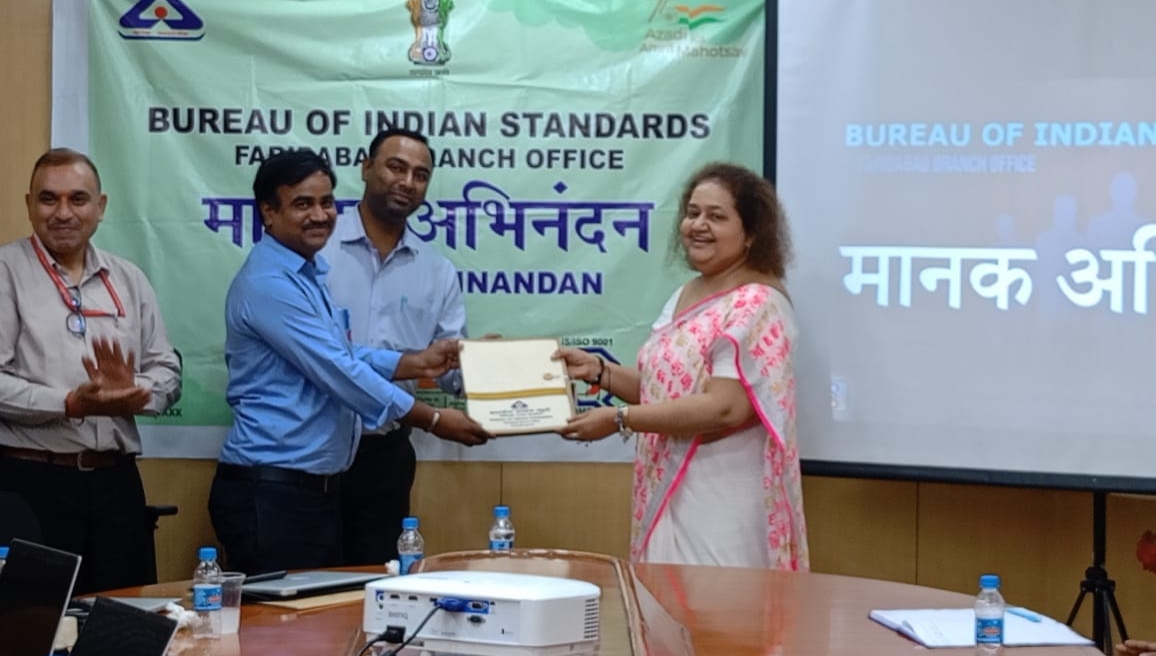
Real sites, real certifications
Our teams work inside factories and plants across India and abroad - inspections, audits and certification milestones spanning BIS, global schemes and the full compliance stack you see on this site.






What our clients say
Reviews and feedback from businesses that have worked with Diligence Certifications.










Related IP & Licensing services
Trademark Registration
Protect your brand - trademark registration.
View details →PSARA License
Private Security Agency license under PSARA.
View details →Brand Name Registration
Register your brand name as a trademark under the Trade Marks Act, 1999.
View details →Copyright Assignment
A clear guide to Copyright Assignment under the Copyright Act, 1957: what it is, Sections.
View details →Copyright Licensing
A guide to copyright licensing in India under the Copyright Act, 1957: voluntary, compulsory.
View details →Copyright Objection
Received a copyright objection or discrepancy notice?
View details →Ready to get Patent Opposition?
Talk to our experts for a clear, fixed-scope plan - most clients get a roadmap the same day.