





 BIS Certification
 CDSCO
CDSCO
 PESO
PESO
 CPCB
CPCB
 LMPC
LMPC
 WPC Approval
 Global Approvals
 TEC
TEC
 ARAI
ARAI
 BEE
BEE
 ISO Certification
 DGCA Certification
 NOC For Steel
 APEDA Registration






















 Business Registration
 FSSAI Mark Certification












 (32).jpg)
 Legal Services
 Trademark Registration
 Copyright Registration
 Patent Registration
India's #1 Compliance Partner
Purchase and Selling
A Sale and Purchase Agreement is the legally binding contract that records the terms on which a seller sells, and...
25,000+
Clients
200+
Certifications
25+
Years
Pan-India
Presence
Get expert consultation
Trusted by 25,000+ leading enterprises worldwide








Key takeaways
- A Sale and Purchase Agreement records the terms on which a seller agrees to sell, and a buyer agrees to buy, an asset - whether goods, immovable property or a business.
- It is governed mainly by the Indian Contract Act, 1872; sales of goods engage the Sale of Goods Act, 1930 and sales of immovable property the Transfer of Property Act, 1882.
- The agreement fixes the price, delivery, transfer of title and risk, and allocates liability through warranties and indemnities.
- Stamp duty is payable under the relevant State Stamp Act and varies by state and by the nature of what is sold.
- For immovable property, a sale deed must usually be registered under the Registration Act, 1908 to pass legal title.
- A strong agreement turns on its conditions, warranties, payment terms and dispute-resolution clause - the terms that protect both sides if things go wrong.
Overview
What is a Sale and Purchase Agreement?
A Sale and Purchase Agreement, sometimes called a purchase-and-sale or sale agreement, is a definitive contract that sets out the terms on which one party sells and another party buys a defined asset for an agreed consideration. It captures what is being sold, the price, how and when payment is made, when ownership and risk pass, and what each side promises about the asset.
The document does far more than confirm that a deal has been struck. It records exactly what was agreed, in what condition the asset will be handed over, and what happens if a promise is broken. That precision is what protects buyer and seller alike if a dispute arises after money has changed hands.
What a sale and purchase agreement can cover
- Sale of goods, stock-in-trade and inventory
- Sale of immovable property - land, flats and buildings
- Sale of plant, machinery and equipment
- Sale of a business or a business undertaking
- Sale of intellectual property and other intangibles
- Sale of shares or a stake in a company
Agreement to sell vs sale
When you need a Sale and Purchase Agreement
You need a written agreement whenever ownership of something of value is changing hands and the terms matter. A key distinction under Indian law is whether the contract is an agreement to sell (a promise to transfer in future) or a completed sale (title passes immediately).
| Agreement to sell | What it means |
|---|---|
| Future transfer | Ownership passes later, once conditions such as payment are met. |
| Executory contract | Both sides still have obligations to perform before completion. |
| Remedy | Breach typically gives a right to damages or specific performance. |
| Sale (completed) | What it means |
|---|---|
| Immediate transfer | Ownership and title pass to the buyer on execution. |
| Executed contract | The main obligation - transfer of the asset - is already done. |
| Risk | Risk usually moves to the buyer along with ownership. |
Common situations where the agreement is used
- Buying or selling a flat, plot or commercial property
- Supplying or procuring goods in bulk or on credit
- Selling a business as a going concern
- Disposing of machinery, vehicles or equipment
- Transferring a brand, product line or customer book
- Recording the terms before a larger deed is executed
Anatomy
Key clauses in the agreement
The strength of a Sale and Purchase Agreement lies in its clauses. Each one settles a question that could otherwise turn into a dispute once the deal is done.
Subject matter
A precise description of the asset being sold, including quantity, specification or schedule.
Price & payment
The consideration, advance or token amount, instalments and the mode and timing of payment.
Delivery & transfer
When and how the asset is handed over and the point at which ownership and risk pass.
Warranties & title
The seller’s assurances on clear title, condition, quality and freedom from encumbrances.
Indemnity & default
What happens, and who pays, if a promise is broken or the deal falls through.
Dispute resolution
Governing law, jurisdiction and whether disputes go to court or arbitration.
Legal framework
The law that governs the agreement
A Sale and Purchase Agreement is a commercial contract, so its foundation is the Indian Contract Act, 1872. The statutes that apply alongside it depend on what is being sold and to whom.
- Indian Contract Act, 1872: validity, consideration and enforceability of the agreement.
- Sale of Goods Act, 1930: conditions, warranties and transfer of property in goods.
- Transfer of Property Act, 1882: sale and transfer of immovable property.
- Registration Act, 1908: compulsory registration of sale deeds for immovable property.
- State Stamp Acts: stamp duty on the agreement and the instrument of transfer.
- Income Tax Act, 1961: capital gains and tax on the consideration received.
How it works
The drafting and execution process
We take a Sale and Purchase Agreement from first instructions through to a signed, stamped and enforceable contract. The work usually runs along two parallel tracks.
Drafting the agreement
Understand the deal
We map what is being sold, the price, the payment plan and the concerns of each side.
Draft the contract
We prepare the agreement with clear terms on price, delivery, title, warranties and default.
Negotiate
We mark up the counterparty’s comments and negotiate a fair allocation of risk on your behalf.
Finalise
The agreed draft is locked, stamped per the applicable State Stamp Act and made ready for signing.
Completing the sale
Verify title
For property and high-value assets, title, ownership and encumbrances are checked before payment.
Conditions & approvals
Any consents, no-objection certificates or approvals needed for the transfer are obtained.
Execution
The parties sign, the consideration is paid and possession is handed over.
Registration
Where the law requires it, the sale deed is registered so that legal title passes.
Paperwork
Documents required
- Identity and address proof of the buyer and the seller
- Ownership or title documents for the asset being sold
- For a company, board resolution and authority of the signatory
- Description, schedule or valuation of the asset
- Details of any charges, loans or encumbrances on the asset
- Proof of price, advance paid and the agreed payment plan
- For property: prior sale deed, tax receipts and encumbrance certificate
- Any consents, no-objection certificates or regulatory approvals required
Stamp duty & timeline
Cost & duration
- Stamp duty is governed by the State Stamp Act where the asset or parties are located and differs by state.
- Sales of immovable property attract higher, value-based stamp duty plus registration charges.
- Professional fees depend on the value, the complexity and the negotiation involved.
- A straightforward agreement can be drafted within days; complex deals run over a few weeks with diligence and approvals.
Drafting or reviewing other contracts? See our Asset Purchase Agreement, Vendor Agreement and Non-Disclosure Agreement services.
Why it matters
Benefits of a well-drafted agreement
Certainty of terms
Price, payment and delivery are fixed in writing, leaving no room for later argument.
Risk allocation
Warranties and indemnities clearly fix who bears which liability if something goes wrong.
Clear title
Title and encumbrance terms protect the buyer from disputes over ownership.
Enforceability
A precise, properly stamped contract stands up if the matter reaches court.
Payment security
Staged payments, advances and default terms protect the money on both sides.
Smooth completion
Conditions and approvals are settled up front so the transfer closes without surprises.
Why Diligence Certifications
Talk to a legal expert
Your partner for deal documentation
Sales are won and lost in the detail of the contract. Our team drafts, reviews and negotiates Sale and Purchase Agreements that reflect the commercial reality of your transaction while keeping you protected under Indian law.
- Bespoke drafting tailored to the asset, the sector and your risk appetite
- Clear, plain-English terms that still hold up in court
- Coordinated title verification, stamping and registration support
- Experienced negotiation to protect your commercial position
Planning a purchase or sale?
Tell us what is being bought or sold, and we will draft a Sale and Purchase Agreement that fits the deal and protects your interests.
FAQ
Frequently asked questions
What is a Sale and Purchase Agreement?
A Sale and Purchase Agreement is a contract that records the terms on which a seller sells, and a buyer buys, an asset such as goods, property or a business for an agreed price. It sets out the price, payment, delivery, transfer of title and how risk is shared between the parties.
What is the difference between an agreement to sell and a sale?
An agreement to sell is a promise to transfer ownership in the future once conditions such as payment are met, whereas a sale transfers ownership and title to the buyer immediately on execution. The remedies for breach differ accordingly.
Which laws govern a sale and purchase in India?
The Indian Contract Act, 1872 governs the agreement itself. Sales of goods are covered by the Sale of Goods Act, 1930, while sales of immovable property engage the Transfer of Property Act, 1882 and the Registration Act, 1908.
Is stamp duty payable on the agreement?
Yes. Stamp duty is payable under the relevant State Stamp Act and varies from state to state. Sales of immovable property attract higher, value-based stamp duty along with registration charges.
Does a sale agreement for property need to be registered?
A sale deed transferring immovable property generally must be registered under the Registration Act, 1908 for legal title to pass. An agreement to sell records the intended terms but, on its own, does not transfer ownership.
What happens if one party breaks the agreement?
The defaulting party can be liable for damages, and in many cases the other party can seek specific performance to compel completion. A well-drafted default clause sets out remedies, forfeiture of advance and the dispute-resolution route in advance.
25,000+
Clients served
200+
Certifications
100+
Experts
25+
Years
Why Diligence
Why choose Diligence Certification?
For compliance and credibility, Diligence is much more than a checklist - we give you real confidence in your business. We examine your legal, financial and operational status, so you are not just certified, but trusted.
Stronger risk protection
Spot hidden legal, financial or operational risks early - fix problems before they become threats.
Earn stakeholder trust
From investors to customers, people want to work with businesses that play by the rules.
Stay legally aligned
Compliant not just on products but on labour, environmental and tax laws too.
Enhance brand reputation
Show the world you operate with integrity and transparency.
Stand out from competitors
In a crowded market, credibility is your biggest edge.
24×7 expert support
A 100+ strong service team guiding you at every step, free first consultation.
Real sites, real certifications
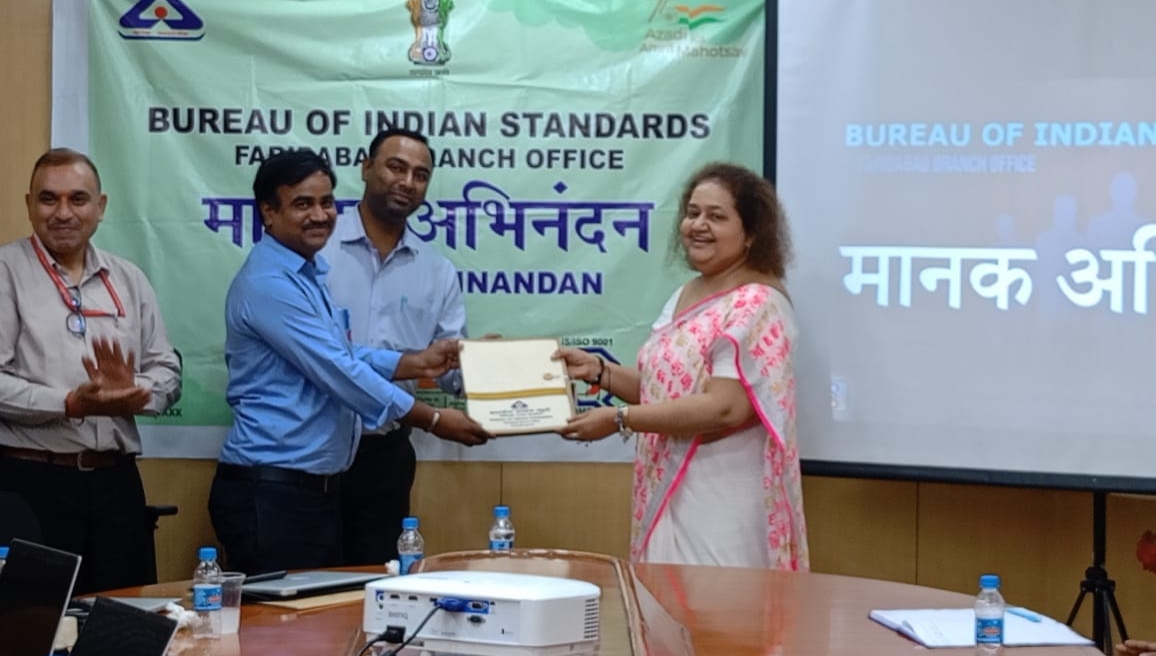
Our teams work inside factories and plants across India and abroad - inspections, audits and certification milestones spanning BIS, global schemes and the full compliance stack you see on this site.






What our clients say
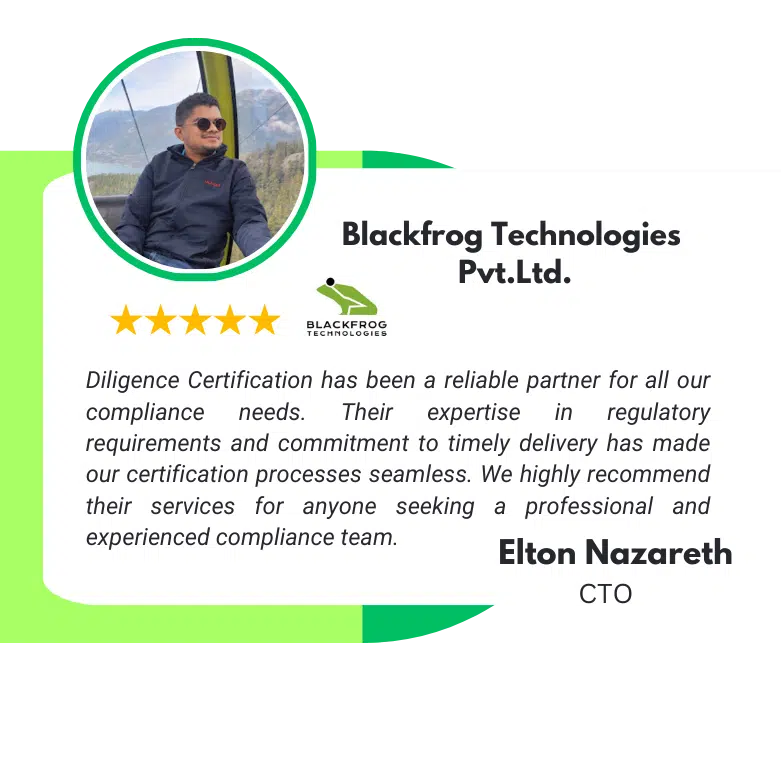
Reviews and feedback from businesses that have worked with Diligence Certifications.









Explore
Related BIS & Standards services
BIS Certification
Get your products BIS certified to ensure compliance with Indian standards.
View details →ISI Mark Certification
ISI Mark Certification for your products with expert guidance.
View details →CRS Mark Certification
BIS CRS Registration for electronics & IT products.
View details →Hallmarking
BIS Hallmarking Certification for gold & jewellery.
View details →FMCS Mark Certification
For foreign manufacturers entering the Indian market.
View details →ECO Mark Certification
Showcase your eco-friendly products with ECO Mark.
View details →Ready to get Purchase and Selling?
Talk to our experts for a clear, fixed-scope plan - most clients get a roadmap the same day.