BIS Certification
 CDSCO
CDSCO
 PESO
PESO
 CPCB
CPCB
 LMPC
LMPC
 WPC Approval
 Global Approvals
 TEC
TEC
 ARAI
ARAI
 BEE
BEE
 ISO Certification
 DGCA Certification
 NOC For Steel
 APEDA Registration























 Business Registration
 FSSAI Mark Certification












 (32).jpg)
 Legal Services
 Trademark Registration
 Copyright Registration
 Patent Registration

 By
By - The NGO registration online allows easy digital incorporation of trusts, societies, and Section 8 companies in India
- Online registration is a process of submitting documents, verifying documents and obtaining a certificate by using government web portals
- Online registration reduces paperwork, physical visits, and processing delays
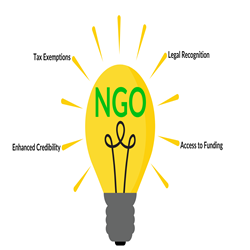
- It is essential for obtaining legal recognition, tax exemptions, and donor credibility
- This guide covers the complete NGO registration process, legal steps, and compliance requirements
Introduction
NGOs bridge the gap of disparity between policies and implementations in a diverse and highly populated country like India while working on various arenas in education, healthcare, rural development, women’s empowerment, environment, etc. Now this has to be done legally to enjoy tax exemption and credibility as an NGO.
No matter if you want to start a charitable trust, a society, or non-profit company, the first step towards that would be navigating the NGO registration process. In this extensive guide from Diligence Certification, we will take you through every little detail you need to know about NGO registration online, types of registration, required documents, and importance of 12A 80G registration.
What Is an NGO Registration ?

An NGO is a self-sustaining, voluntary, non-profit working independently from the government. These organizations exist with social welfare and service purposes without profit motives. An NGO can be established under the following:
- Indian Trusts Act, 1882 (as a Trust)
- Societies Registration Act, 1860 (as a Society)
- Companies Act, 2013 (as a Section 8 Company)
Types of NGO Registration in India
In India, an NGO can be registered in any of the following ways:
1. Trust
- A trust is governed under the provision of the Indian Trusts Act. It is established essentially for purposes of management of property or funds for either charitable or religious activities.
- Minimum Members: 2 Trustee
- Jurisdiction: State level
- Suitable For: Charity works in areas such as education, health care, old age homes
2. Society
- A society is governed by the societies registration act 1860; it is constituted for promoting literature, art, science and other charitable purposes.
- Minimum Members: 7 (from different states, if it is national society)
- Jurisdiction: State level or national
- Suitable For: Cultural promotion, sports, education
3. Section 8 Company
- This type of NGO is incorporated under the Companies Act, 2013, to promote commerce, art, science and religion or to carry out any other beneficial purpose.
- Minimum Members: 2 Directors
- Jurisdiction: Central level (regulated by MCA)
- Suitable For: Larger NGOs that need well-structured compliances and funding
Why Register an NGO?
Registering an NGO comes with many advantages, such as:
- Legal Recognition: Allows the NGO to function as a legal entity.
- Bank Account: Opens an avenue for the setting up of bank accounts in the name of the NGO.
- Fundraising: Builds credibility and allows fundraising from government and private donors.
- Tax Benefits: The registration under 12A and 80G gets tax exemptions for the donors as well as to the organization.
- Government Schemes: Eligible to apply for grants and subsidies offered by the government.
Step-by-Step NGO Registration Process
Here’s a simplified guide to the NGO registration process for each type:
It contains the following essential points:
A. The Process of Registering a Trust
- Select a name for the trust.
- The Trust Deed must then be drafted, involving the trust’s name, objects, particulars of trustees, and rules, and regulations.
- Print on stamp paper (value according to state law).
- Register the Deed with the local Sub-Registrar.
- Get PAN and TAN for the trust.
B. The Process of Registering a Society
- Select a name for the society that is not already in use.
- Prepare the Memorandum of Association (MOA) and Rules and Regulations.
- Collect the signatures of all founders on the documents.
- Submit the application to the Registrar of Societies, along with fees and documents.
- Upon successful perusal, a Certificate of Registration shall be granted.
C. The Process of Registering a Section 8 Company
- Apply for the DSC and DIN of the proposed Directors.
- Reserve a unique name using the RUN (Reserve Unique Name) provision.
- Prepare the MOA and AOA with charitable purpose(s).
- File Incorporation Forms with the MCA along with necessary attachments.
- Obtaining a Certificate of Incorporation from the ROC.
- Need help with the NGO registration online? Diligence Certification can assist you with end-to-end registration, compliance, and documentation.
Essential Documents Required for NGO Registration
For Trust:
- Trust deed
- ID and address proof of trustees
- Passport-size photos
- PAN card of the trust (post-registration)
For Society:
- MOA and Rules & Regulations
- Affidavits from President and Secretary
- Address proof and ID of members
- NOC from the premises owner
For Section 8 Company:
- DSC and DIN of directors
- MOA and AOA
- Utility bill and NOC for registered office
- Identity and address proof of directors
12A and 80G Registration - Unlock Tax Benefits
Once you finish registering an NGO, the very next step is to apply for 12A and 80G registration, which are essential for claiming exemptions from income tax.
12A Registration
12A Registration is issued under the Income Tax Act of 1961, exempting NGOs from paying income tax on their surplus income.
Benefits: No tax on income applied for charitable purposes
Applicable for Trusts, Societies, and Section 8 Companies
80G Registration Explained
80G registration means that donors to your NGO can claim a 50% tax deduction for their donations.
Benefits:
- Attracts donations due to tax savings
- It instils confidence and represents reliable and transparent working
- Documents Required for 12A 80G Registration:
- PAN of the NGO
- NGO Registration Certificate
- MOA/Trust Deed/Articles of Association
- Utility bill and rent agreement
- List of donors and activities
- Financial statements
With Diligence Certification, NGOs can easily apply for 80G and 12A registration and can ensure 100% compliance with the latest guidelines.
How Diligence Certification Helps in NGO Registration
With Diligence Certification, new founders are able to understand the seemingly daunting task of dealing with legal formalities. With our consultants, who have been with you through every step from NGO registration online to securing 12A and 80G registrations.
Our services include:
- Advisory on name selection and type of entity
- Drafting of MOA, AOA, and Trust Deeds
- Application filing/documentation via the internet
- Government department follow-ups
- Post-registration compliance and advisory
Get Free Consultant For your NGO registration : GUIDE
Conclusion
Starting an NGO is more than a mere legal formality; it’s a commitment to engaging with positive changes in society. Education to underprivileged children, protection of the environment, or empowerment of women: these are just a few examples of specific activities that proper registration sets the foundation for, legitimizing efforts and ensuring access to tax exemptions or government support or donor trust.
The organization will process applications more efficiently, make room for greater financing capacity, and impact on the base when the registration of the NGO done online is based on 12A and 80G registrations and meets all legal other requirements. All this is easier said than done because it involves several forms and verifications, and legal niceties.
This is exactly the reason Diligence Certification is there for. It makes your entire NGO registration experience after you build the right structure: 80G and 12A registration simple so that you can keep focusing on what you are meant to do, that is your mission.
Frequently Asked Questions (FAQs)
In India, what is the time frame for NGO registration?
It varies between 15 to 30 days depending on entity type and preparedness of paperwork.
Can NGOs work without registration?
Yes, in theory, but they cannot obtain tax exemptions, set up a bank account in the name of the NGO, or cause fundraising activities by law.
Are 12A and 80G registrations required?
It is not required, but it is strongly advisable if the NGO wants to receive donations and operate tax-free.
Can foreigners be members of an NGO in India?
Yes, there are provisions for foreign members, subject to requirements under FEMA and FCRA.
What is the validity period of 12A and 80G registrations?
They will be valid for 5 years per the newly amended provisions and will have to be renewed thereafter.
Is there any way for me to register my NGO through online means without physically attending any government office?
Yes, with professional consulting help from Diligence Certification, one can smoothly complete NGO registration online including preparation of documents, filing the digital signature, and submitting through relevant government portals.
What is the cost for registration of an NGO in India?
The cost varies depending on the type of NGO (Trust, Society, or Section 8 Company), professional fee charges, government charges, and documentation. By and large, the costs involved in getting an NGO registered vary from ₹5,000 to ₹25,000.
Can an NGO receive foreign donations?
The answer is yes, but only after the NGO has gotten FCRA registration (Foreign Contribution Regulation Act) from the Ministry of Home Affairs. It will be in addition to the usual NGO registration and 12A 80G registration.
Is PAN mandatory for NGO registration?
Yes, A Permanent Account Number (PAN) is mandatory for the NGO entity after registration for tax compliance and to apply for 12A and 80G registration.
Is PAN mandatory for NGO registration?
Yes, A Permanent Account Number (PAN) is mandatory for the NGO entity after registration for tax compliance and to apply for 12A and 80G registration.
What activities an NGO may undertake?
An NGO may work in education, healthcare, environmental internationalism, and women's empowerment as well as skill development and rural development. These activities may vary and depend on the particular welfare objectives declared in its founding document(s).
What is the difference between 12A and 80G registration?
12A registration provides exemption from tax to the income of the NGO 80G registration entitles donors to a deduction from taxable income for donations made to the NGO.
Can you register an NGO at a residential address?
Yes, many NGOs are functioning from residential addresses, provided valid address proof and NOC have been provided by the property owner.