BIS Certification
 CDSCO
CDSCO
 PESO
PESO
 CPCB
CPCB
 LMPC
LMPC
 WPC Approval
 Global Approvals
 TEC
TEC
 ARAI
ARAI
 BEE
BEE
 ISO Certification
 DGCA Certification
 NOC For Steel
 APEDA Registration























 Business Registration
 FSSAI Mark Certification












 (32).jpg)
 Legal Services
 Trademark Registration
 Copyright Registration
 Patent Registration
 By
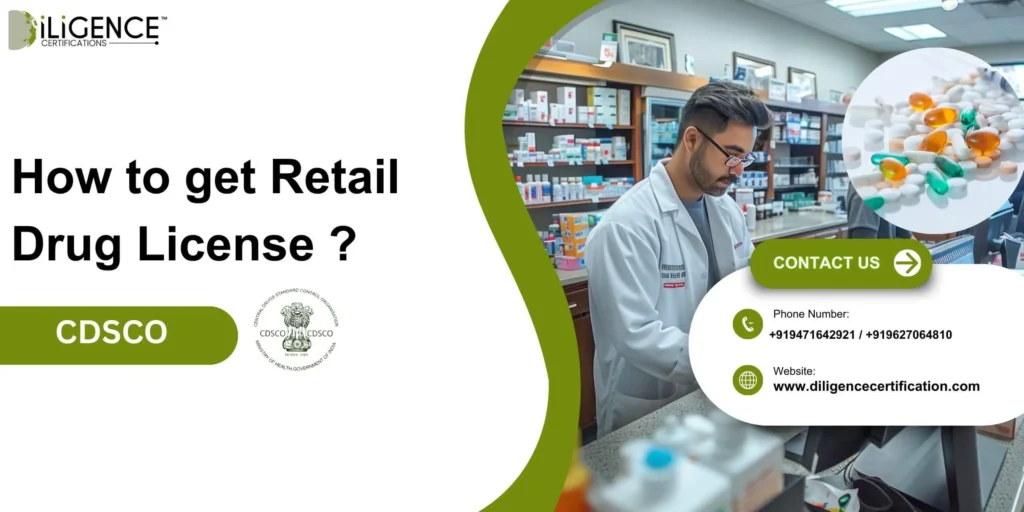
By - As per the Drugs and Cosmetics Act, 1940, all medicine retailers are required to have a retail drug license.
- Retailers with a pharmacy license must have a minimum area of 10 sq. meters with necessary storage and refrigeration facilities.
- An application must include employment of a registered pharmacist, NOC from the property owner, and all required documents.
- If someone operates without a license, the punishment can be a maximum of 3 years of imprisonment and a fine of at least ₹5,000. The license is valid for a period of 5 years and should be renewed 6 months prior to expiry.
Introduction
When Rajesh Kumar launched his pharmacy in BTM Layout in Bangalore in 2023, he thought that possessing the medicines and the shop would be adequate. However, within three weeks, government officials from the Karnataka FDA showed up to inspect his pharmacy. Having not registered for a license, they immediately shut it down and charged him a ₹25,000 fine and a 60-day suspension for his business.
This is the same situation that occurs every month in India across the country. A retail drug license is not just important paperwork, it is the legal foundation for operating any pharmacy. Under the Drugs and Cosmetics Act 1940, you are committing a crime if you sell medicines without holding the proper licenses, and the penalties are harsh.
What is a Retail Drug License?
A retail drug license (RDL) is an official approval from State Drug Control Organizations allowing businesses to sell drugs directly to the public. It ensures that safeguards and quality systems are established and maintain the standards necessary for the protection of public health.
The drug license is different than wholesale licenses, by adding stricter storage requirements, a required pharmacist presence, and stricter inspections. Because retail pharmacies dispense drugs the end user, regulatory scrutiny remains particularly high.
Legal Framework
The Drugs and Cosmetics Act 1940 and subsequent Rules (1945) establish comprehensive licensing requirements. Section 18(c) specifically mandates retail drug licenses for medicine sale, distribution, or storage operations.
Types of Drug Licenses in India
Having knowledge about the various license categories can guide you to the appropriate authorization:
1. Retail Drug License
- - Use: To sell medicine directly to the consumer
- - Types: Chemist shops, medical stores, hospital pharmacies
- - Duration: Valid for 5 years (subject to renewal)
- - Issued by: State FDA/Drug Control Department
2. Wholesale Drug License
- - Use: To sell and distribute medicine bulk shipment to retailers
- - Types: Distributors, stockists, wholesale dealers
- - Premises: Requires larger square footage and higher capital investment
- - Additional: May require bulk drug testing laboratory
3. Manufacturing License
- - Use: To manufacture and compound medicines
- - Issued by: Central/State licensing authority, as indicated in the drug schedule
- - Complexities: Must comply with GMP standards and production facilities in quality control laboratories
4. Import License
- - Use: To receive and import medicines from another country
- - Issued by: Central Drug Standard Control Organization (CDSCO)
- - Additional: External medications require stringent licensing and associated quality certificates.
Prerequisites for Retail Drug License
State drug authorities evaluate specific criteria before license approval:
1. Premises Requirements
Minimum Area Standards:
- Standalone retail shop: 10 square meters
- Combined retail-wholesale: 15 square meters
- Hospital pharmacy: As per bed capacity norms
Infrastructure Specifications:
- Proper ventilation and lighting systems
- Clean water supply and drainage
- Segregated storage areas for different drug categories
- Locked cupboards for Schedule H and H1 medicines
2. Storage and Equipment
Mandatory Equipment:
- Refrigerator: 2-8°C capacity for vaccines, insulin, biologics
- Air conditioning: Temperature control for drug stability
- Weighing scale: Digital balance for accurate dispensing
- Fire safety equipment: Extinguishers and safety protocols
Storage Guidelines:
- Separate areas for different medicine categories
- Protection from direct sunlight and moisture
- Proper shelving with adequate spacing
- Temperature monitoring systems
3. Human Resources
Registered Pharmacist Requirements:
- Valid Pharmacy Council of India registration
- Relevant educational qualifications (B.Pharm/D.Pharm)
- Physical presence during all operational hours
- Responsibility for prescription verification and counseling
Additional Staff:
- Trained assistants for medicine handling
- Regular training on drug storage and customer service
4. Compliance Documentation
Legal Requirements:
- No prior drug law violations by applicant
- Clean criminal record certification
- Valid business registration (proprietorship/partnership/company)
- Tax registration and compliance certificates
Benefits of Obtaining Retail Drug License
1. Legal Protection and Compliance
Operating with a legal license helps pharmacies stay on the right side of the law and avoid prosecution for violations of the drug laws. A valid retail drug license provides legal protection from closure orders and penalties.
2. Consumer Confidence and Reputation
Consumers typically prefer to purchase medicines from licensed pharmacies and often seek a licensed pharmacy directly. A pharmacy’s professional competency and compliance with law are demonstrated when a pharmacy displays their license, which contributes to the business’s credibility and reputation.
3. Banking and Insurance Provisions
Having a valid pharmacy business license allows pharmacies to obtain business insurance, business loans and credit from banks. Financial institutions require licensing to lend money to fund a pharmaceutical business.
4. Opportunities for Franchises and Partnerships
Large chains such as Apollo Pharmacy, MedPlus, and organizations such as 1mg require that a business obtain and maintain their retail drug license as an eligibility requirement for franchises and partnerships. Licensed pharmacies have access to increased suppliers and distribution for other drug products for broad pharmacy shelves.
5. Participating in Government Schemes
Licensed pharmacies access multiple government health schemes and supply contracts with institutions, including various procurement programs using licensed pharmacies as registered suppliers.
Required Documents for License Application
Primary Documentation
- Business Registration Papers
- MOA & AOA (for companies)
- Partnership deed (for partnerships)
- Proprietorship declaration
- Identity and Address Proof
- Aadhar card, PAN card, passport
- Utility bills, bank statements
- Voter ID, driving license
- Premises Documentation
- Property ownership deed/lease agreement
- No Objection Certificate from property owner
- Site plan and layout drawings
- Municipal building approval
- Professional Qualifications
- Pharmacist registration certificate
- Educational degree certificates
- Experience certificates (if applicable)
Technical Documentation
- Equipment Proof
- Refrigerator purchase invoice and warranty
- Air conditioning installation certificate
- Fire safety compliance certificate
- Legal Declarations
- Affidavit of non-conviction (applicant and pharmacist)
- Undertaking for compliance maintenance
- Board resolution (for companies)
Step-by-Step License Application Process
Step 1: Registering Online
Simply visit your state’s drug authority site (Maharashra FDA, Delhi Drug Control, Karnataka FDA, etc.). There you can register for user credentials and verify with an email/SMS.
Step 2: Completing Your Application
Complete Form 19 (the application) and then Form 20 (the license format) with the following:
• Personal details of applicant and their business
• The address of the premises and its technical details
• Details and qualifications of the pharmacists
• Details of equipment and the storage area
Step 3: Uploading Documents
Upload all necessary documents in pdf format (, to reduce the size of files). Check for clarity and completion of documents to ensure you submit correctly.
Step 4: Paying Fees
Pay any prescribed fees through the online gateway. These are:
• Application fee
• License fee
• Inspection fee
Step 5: Scheduling Inspection
The drug inspector should conduct their visit within 15-30 days of your application. It is a good idea to prepare the premises according to your specifications, and ensure a pharmacist is available to speak to the inspector.
Step 6: Conducting Inspection
The Inspector will check:
• The area of the premises and infrastructure
• Functionality and calibration of equipment
• Conditions of storage area and its organisation
• Qualifications and presence of personnel
• Completion of any other documents
Step 7: Receiving Your License
You will receive your retail drug license within 7-15 days of the satisfying inspection. This will be recognised with a unique number, period of validity, and conditions of use.
Inspection Guidelines and Compliance
Pre-Inspection Preparation
Premises Readiness:
- Clean and organized medicine display
- Proper storage temperature maintenance
- Functional equipment with calibration certificates
- Updated medicine inventory records
Documentation Organization:
- License application acknowledgment
- All supporting documents in organized files
- Purchase and sales records
- Pharmacist attendance register
During Inspection
Inspector Verification Points:
- Premises measurement and infrastructure assessment
- Equipment testing and functionality check
- Medicine storage condition evaluation
- Staff interaction and competency assessment
- Record maintenance and documentation review
Common Inspection Issues:
- Inadequate premises area or poor maintenance
- Non-functional refrigeration or AC systems
- Absent or unqualified pharmacist
- Improper medicine storage or expired stock
- Incomplete documentation or records
Penalties for Non-Compliance
Criminal Penalties
Under Section 27 of the Drugs and Cosmetics Act:
- Imprisonment: Up to 3 years
- Fine: Minimum ₹5,000, extendable to ₹10,000
- Both: Imprisonment and fine for serious violations
Administrative Actions
- Immediate shop closure and sealing
- Confiscation of medicine stock
- Blacklisting from future license applications
- Prohibition from pharmaceutical business
In 2023, Uttar Pradesh FDA sealed 247 unlicensed medical stores, imposing penalties totaling ₹1.2 crores. Similar enforcement drives in Maharashtra and Karnataka demonstrate increased regulatory vigilance.
License Renewal Process
Renewal Timeline
- License validity: 5 years from issuance date
- Renewal application: File 6 months before expiry
- Late renewal penalty: 25-50% additional fee
Renewal Requirements
- Updated premises and equipment certificates
- Current pharmacist registration
- Compliance track record
- No violation history during license period
Renewal Procedure
- Online application through state portal
- Document update and verification
- Fee payment and inspection (if required)
- New license issuance
State-Specific Variations
Maharashtra FDA Requirements
- Online application through mahafda.gov.in
- Minimum 10 sq.m area mandatory
- Pharmacist presence 8 hours daily
- Monthly return submission required
Delhi Drug Control Specifications
- Application through delhi.gov.in portal
- Enhanced documentation for pharmacy chains
- Stricter storage temperature monitoring
- Quarterly compliance reporting
Karnataka FDA Guidelines
- Online processing through karnatakafda.gov.in
- Additional NOC from pollution control board
- Mandatory digital payment systems
- Regular surprise inspections
Best Practices for License Maintenance
Operational Excellence
- Regular compliance audits to identify potential issues
- Staff training programs on regulatory requirements
- Inventory management systems for proper stock control
- Customer service protocols aligned with professional standards
Documentation Management
- Digital record keeping for easy access and backup
- Regular document updates as per regulatory changes
- Compliance calendar for renewal and reporting deadlines
- Audit trail maintenance for all transactions
Technology Integration
Digital Solutions
Modern pharmacies leverage technology for license compliance:
- Pharmacy Management Software for inventory and compliance tracking
- Temperature monitoring systems with automated alerts
- Digital prescription management for better record keeping
- Online reporting tools for regulatory submissions
Future Trends
- AI-powered compliance monitoring for proactive issue identification
- Blockchain-based medicine authentication for supply chain integrity
- Telemedicine integration for expanded service delivery
- IoT-enabled storage monitoring for real-time condition tracking
Economic Impact and Business Benefits
Revenue Protection
Licensed pharmacies report 15-20% higher customer retention due to trust factors. The retail drug license serves as quality assurance for consumers, leading to sustained business growth.
Market Access
Licensed establishments qualify for:
- Hospital empanelment opportunities
- Corporate tie-ups for employee healthcare
- Insurance network participation
- Government tender participation
Financial Advantages
- Lower insurance premiums due to compliance status
- Better credit terms from suppliers and banks
- Higher business valuation for sale or partnership
- Reduced legal risks and associated costs
Independent Pharmacy Success
Srinivas Medical Store in Hyderabad transformed from a struggling unlicensed operation to a thriving licensed pharmacy. Post-licensing benefits included:
- 40% increase in monthly revenue
- Access to premium medicine brands
- Hospital supply contract opportunities
- Enhanced community trust and recognition
Conclusion
The retail drug license involves more than just compliance with laws and regulations. It is a mark of professional dedication not only to the health of the public but also to the success of your pharmacy business. From a vast chain like Apollo to the local medical store, a successful pharmacy operation begins with having the proper licensing under the Drugs and Cosmetics Act 1940.
Many things lead to success, including:
1. Being proactive in obtaining licensing well before you open the pharmacy
2. Hiring and retaining a qualified pharmacist
3. Investing in infrastructure from storage to equipment
4. Maintaining compliance through regular audits
The Indian pharmaceutical retail market continues to expand. The size is expected to rise to ₹7.4 lakh crores by 2025. Licensed pharmacies can make the most of this growth in the pharmacy sector and will be able to attract better opportunities and partnerships from suppliers and other stakeholders to earn consumer trust.
If you are a new pharmacy entrepreneur, your first priority should be the acquisition of your retail drug license. There is professional compliance consulting available to expedite the process if hired, with review and revision of all the documents needed to efficiently operate your pharmacy.
Frequently Asked Questions
Is it possible for someone with a retail drug license to operate more than one pharmacy?
No, a separate retail drug license (which is location specific) needs to be obtained for each pharmacy. A retail drug license cannot be transferred from one location to another.
What happens if the pharmacist on the retail drug license resigns after it has been approved?
If a pharmacist resigns after the retail drug license is approved, you will need to notify the drug authority immediately. In this situation, you must replace that pharmacist, and you have 30 days to obtain a qualified pharmacist. If you do not have a qualified pharmacist, you may have to temporarily close.
Can someone with a retail drug license sell medicines online?
No. A retail drug license only covers the operation of a retail pharmacy (brick and mortar), and an additional e-pharmacy registration also needs to be completed if you plan to sell medicines online and/or ship pharmaceuticals. Additionally, you must comply with the IT Rules for Pharmaceuticals.
What happens when your retail drug license expires?
When your retail drug license expires, practicing without a valid retail drug license is considered operating without a license. The consequences of unlicensed practice are consistent with operating without a license. You should be in the process of applying to renew your retail drug license prior to its expiration.
How long will the license process take?
The standard retail drug license processing is between 30-60 days depending on (1) how efficient the state is, and (2) countries can only processed applications that are submitted accurately. Some states offer a fast track process, and there may be an additional cost to expedite the licensing process.
Is it possible for the pharmacy to relocate following a license approval?
Relocation requires a new license application, as licenses are issued to, and specific for, premises. The current license is no longer valid when a pharmacy relocates.
What are the storage conditions for medicines?
General medicines: Store at room temperature (15-25°C)
Cold chain products: Store in refrigerator (2-8°C)
Controlled substances: Store locked
Schedule H medicines: Store securely and separately