


 BIS Certification
 CDSCO
CDSCO
 CPCB
CPCB
 LMPC
LMPC
 WPC Approval
 Global Approvals
 TEC
TEC
 ARAI
ARAI
 BEE
BEE
 ISO Certification
 DGCA Certification
 NOC For Steel
 APEDA Registration











 Business Registration
 FSSAI Mark Certification



 Legal Services
 Trademark Registration
 Copyright Registration
 Patent Registration
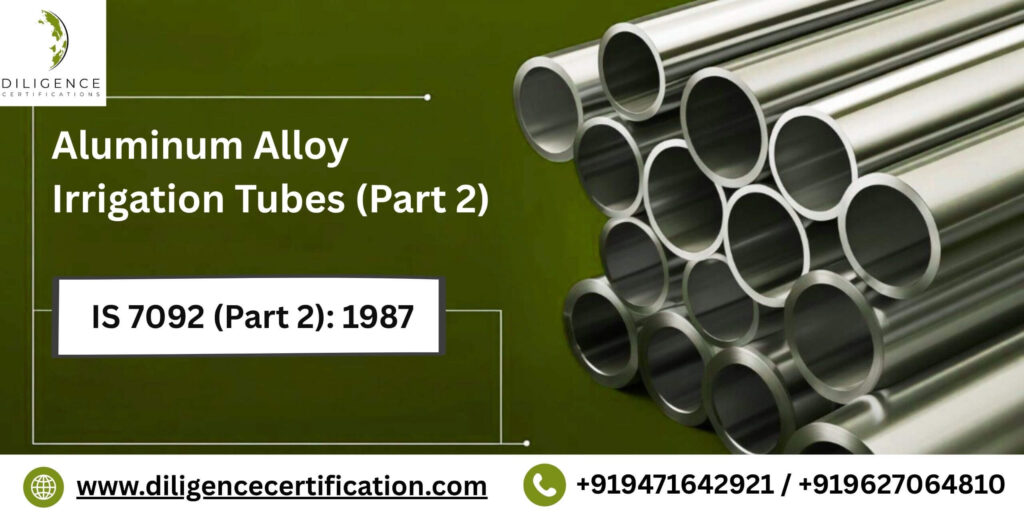
- Extruded tubes are precision aluminium alloy sections widely used in construction, transport, and furniture because of their strength and lightweight finish.
- BIS Certification for Extruded Tubes is mandatory under IS 7092 (Part 2): 1987.
- Certification covers material quality, dimensions, strength, and safety requirements.
- Process involves application, testing, inspection, and approval.
- Certification is valid for two years and renewable.
- Benefits include legal compliance, customer trust, and market access.
Introduction
Extruded tubes are used extensively by industries as varied as automotive, aerospace, defense, construction and electrical. These tubes exhibit superior strength, durability, and resistance to corrosion, so they must be in any engineering project requiring an engineered product. Manufacturers of extruded tubes can achieve safety, reliability, and standardization by obtaining BIS Certification for Extruded Tubes, as per the requirements of IS 7092 (Part 2): 1987.
BIS (Bureau of Indian Standards), as a national standards organization, regulates the quality of extruded tubes, as a means of consumer protection and benchmarking national standards with international standards.
What is IS 7092 (Part 2): 1987?

IS 7092 (Part 2): 1987 is the Indian Standard publication that outlines the requirements, dimensions, chemical compositions, mechanical properties and tests for extruded tubes made from aluminium and aluminium alloys.
The standard relates to the following:
- Composition / metallurgical requirements
- Tolerances and quality of finish to the outside surface
- Mechanical strength (tensile strength, hardness, elongation)
- Heat treatment conditions
- Quality and safety checks
Manufacturers who use this standard for their extruded tubes will have met Indian and global expectations in terms of performance and durability.
Key Features of Aluminum Alloy Extruded Tubes
- Material Properties: Being lightest and strong, tubes of these high-grade BIS Certificate for aluminum alloys tubes have good corrosion resistance and are best for irrigation applications.
- Precision Manufacturing: outsourced positive, the processes of extrusion remain constant dimensions applied into pipes with smooth internal and external surfaces. Tube walls are consistent in thickness to ensure a strong tube.
- Adaptability: Tubes that can be used for Dripping and shower system pumps can adapt to all types of Irrigation System. Different types of fittings and connectors will then complete compatibility.
Common Aluminium Alloys Used for Extruded Tubes
Aluminium is one of the most versatile metals on Earth, capable of being produced as a light weight, strength-to-weight ratio, and corrosion-resistant material. When aluminium is alloyed with other elements such as magnesium, silicon, copper, or zinc, it exhibits mechanical and physical properties that are superior to those of pure aluminium or other metals.
Aluminium alloys that use extruded shapes like tubes, pipes, or bars are used in the aerospace, automotive, marine, defense, architectural, and industrial sectors because aluminium has a combination of durability, formability, and cost advantages. Generally, it is important to choose the right alloy based on the application requirements as each alloy has its own unique properties related to strength, machinability, corrosion resistance, and weldability.
Specifications and Considerations Regarding Raw Materials for IS 7092 (Part 2):1987.
- IS 7092 (Part 2):1987 specifies a particular chemical make-up of aluminums alloys tubes intended for the manufacture of irrigation tubes. Thus, it ensures that the primary materials contribute to the mechanical properties, such as:
- Tensile Strength: The ability of the tube to withstand external forces without breaking.
- Yield Strength: The stress at which the material begins to deform permanently.
- Elongation: The capability to stretch without breaking, which is important for absorbing internal pressure when water flows.
- Corrosion Resistance: The resistance to corrosion of the aluminum alloy tubes when exposed to water, soil, and other surrounding environments.
QCO Update: Mandatory BIS Certification for Aluminium Alloy Irrigation Tubes (Part 2)
As per the latest Quality Control Order (QCO) issued by the Ministry of Commerce and Industry, BIS certification has been made mandatory for Aluminium Alloy Irrigation Tubes (Part 2) under the relevant Indian Standard.
Testing Requirements
To comply with the conditions of IS 7092 (Part 2): 1987, the manufacturers have to conduct a series of tests including the following:
1. Chemical Composition Test:-
- Number of samples : 5 pieces of 5 cm in length.
- Verification: Chemical properties of raw materials should confirm to the specified standards.
2. Mechanical Properties Test:
- Tensile Test: Determines whether the strength and elongation of the tube meet the specified requirements.
- Flattening Test: This is a measure of a tube’s ability to withstand deformation without cracking.
3. Dimensional and Tolerance Tests:
- All the tubes should comply with the dimension and tolerance requirements specified in IS 7092 (Part 2).
- These tests are conducted in the factory for consistency of measurement and accuracy.
4. Hydrostatic Pressure Test:
- Requirement: All tubes tested in full length should be able to undergo hydrostatic pressure test as per clause 7.4 of IS 7092 (Part 2) at the manufacturer site.
- Purpose: To confirm that internal pressure can be withstood during operation by the tube during operation.
Importance of IS 7092 (Part 2): 1987
- Quality Assurance: Ensures consistent quality across all manufactured products.
- Durability: Promotes the use of corrosion-resistant materials for extended service life.
- Operational Efficiency: Guarantees reliable performance in irrigation systems.
- Safety Standards: Minimizes risks of leakage or mechanical failure.
- Market Competitiveness: Products conforming to this standard gain credibility and customer trust.
Documents Required
- Application form via ManakOnline portal
- IS 7092 Part 2 compliant test reports from BIS-approved labs
- Factory layout, extrusion press details, and QMS manual
- Raw material certificates and calibration records
- Manufacturer’s identity (GST, Udyam/Aadhar, PAN) and authorised signatory proof
Step By Step Process For BIS Certification for Extruded tubes
1. Application & Document Upload
Begin the process of registering on the BIS portal and providing your application and required documents including test results, quality manuals, and factory layout.
2. Factory Inspection by the BIS Officer
The first step to certification by the BIS is a visit and inspection of your premises by a BIS officer to assess whether you manufacture extruded tubes that comply with an accepted standard.
3. Product Sample Testing
At the time of the visit, the BIS officer will take samples of the extruded tubes. Samples are then sent to a laboratory recognised by BIS and tested according to IS7092 (part 2):1987.
4. Technical Review and License Grant
After the successful testing of the samples and the visit by the BIS officer, the BIS will conduct a review of the application. If compliant with the standard and procedures, the BIS will grant you a license.
The license will identify the scope of the product for which the license is granted.
5. Ongoing Surveillance and License Renewal
The BIS will manage the ongoing surveillance that will be carried out every 6 to 12 months to ensure compliance throughout the certification period. A manufacturer has to re-apply for the license before the expiry date.

Role of Diligence Certifications
Diligence Certifications refers to the process of providing official recognition that a product or manufacturing process adheres to established quality standards. This certification is a testament to the commitment of manufacturers to meet regulatory and industrial benchmarks, ensuring consistency, safety, and reliability in their offerings. Specifically, in the context of IS 7092 (Part 2):1987, Diligence Certifications confirms the compliance of the BIS Certificate for aluminum alloy tubes designed for irrigation systems. By obtaining this certification, manufacturers demonstrate that their products have undergone rigorous inspection, testing, and quality control processes.
This certification not only builds trust among customers and stakeholders but also enhances the brand’s reputation in the market. It reassures buyers that the product meets stringent quality requirements, ensuring durability and performance under operational conditions. Furthermore, Diligence Certifications simplifies the pathway to regulatory approvals, fostering a sense of confidence and credibility in business collaborations. By maintaining compliance through this certification, companies can remain competitive in the global market and align themselves with industry advancements and consumer expectations.
Conclusion
The IS 7092 (Part 2): 1987 standard outlines the requirements for manufacturing aluminum alloy extruded tubes, which, although not part of modern irrigation systems, remain crucial in various industrial applications. By adhering to this standard, manufacturers and users can be confident in the reliability, safety, and durability of their products. Partnering with Diligence Certifications ensures a seamless certification process, enabling manufacturers to streamline compliance and focus on delivering top-quality materials to the market.
With Diligence Certifications as your trusted partner, you gain expert guidance, a simplified pathway to certification, and enhanced credibility in the competitive market. Take the first step towards excellence and connect with Diligence Certifications today to elevate your manufacturing standards and stay ahead in the industry!
Frequently Asked Questions
Where are extruded tubes commonly used?
They are used for furniture, railings, EV frames, and solar mounts, generally where lightweight strength and a good surface finish is desired.
What is IS 7092 (Part 2):1987?
It is the Bureau of Indian Standards (BIS) standard for aluminium alloy tubes, and describes the types of alloy required, tolerances and mechanical properties.
Is BIS certification mandatory for extruded tubes?
Yes, for government tenders and regulated industries, BIS certificate will be mandatory under IS 7092 to ensure proper compliance and safety.
What aluminium grades would be particularly good for extruded tubes?
6063-T6 would be preferred for architecture, while 6061-T6 would be the preferred alternative for structure. Both would be strong, good finish and easy to work with.
What documentation is needed for BIS certificate?
You will require a factory layout and flowchart, test reports required under IS 7092, raw material traceability, quality system documentation and more.
How long is my BIS certification valid for?
BIS certificate is valid for 2 years. After 2 years you can renew the certification via a simplified audit and testing process.
How do I know if my extruded tubes are BIS certified?
Look for ISI mark, plus the license number. You can also ask for a Diligence certificate or test report from the manufacturer.
Who are the leading manufactures of certified extruded tubes in India?
Hindalco, Jindal Aluminium, and Nalco are the top three manufactures in India supplying BIS certified extruded aluminium tubes.
Can I anodise or powder coat my extruded tubes?
Extruded tubes that are made with 6063 and 6061 are suitable for anodising or powder coating, which will increase corrosion resistance and aesthetics.