

 BIS Certification
 CDSCO
CDSCO
 CPCB
CPCB
 LMPC
LMPC
 WPC Approval
 Global Approvals
 TEC
TEC
 ARAI
ARAI
 BEE
BEE
 ISO Certification
 Drone Registration
 NOC For Steel












 Business Registration




 Legal Services
 Trademark Registration
 Copyright Registration
 Patent Registration
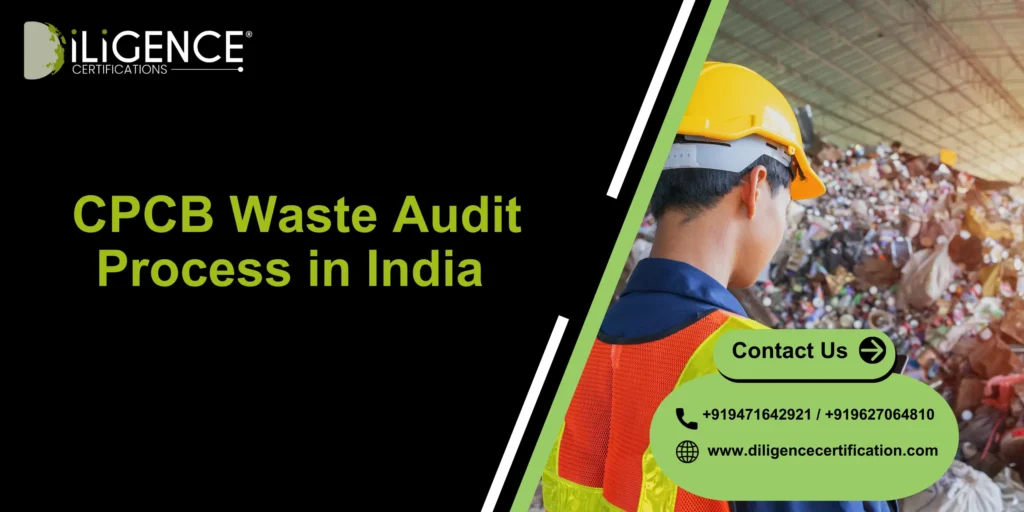
- CPCB Waste Audit Process for diligence generating dangerous andnon-hazardous waste.
- The Audit ensures compliance with environmental regulations.
- diligence must maintain proper waste records and reporting systems.
- The process is regulated by CPCB and State Pollution Control Boards.
- Non-compliance may affect penalties or suspense of operations.

Introduction
Artificial growth in India has significantly increased waste generation across sectors similar as manufacturing, chemicals, medicinals, and essence processing. To ensure responsible waste operation and environmental protection, diligence must follow a structured compliance medium known as the CPCB waste Audit process in India.
Waste checkups help diligence dissect waste generation sources, ameliorate recycling practices, reduce environmental pitfalls, and maintain legal compliance. The Audit process is regulated by theCentral Pollution Control Board under colorful environmental laws including the Environment Protection Act 1986.
A proper waste Audit not only ensures compliance but also improves functional effectiveness and sustainability practices.
What’s CPCB Waste Audit?
A CPCB Waste Audit Process is a methodical examination of waste generation, handling, storehouse, treatment, and disposal practices within an artificial unit.
The ideal of the Audit is to
- Identify types and volume of waste generated
- estimate current waste operation practices
- insure compliance with environmental laws
- Recommend waste reduction and recycling measures
- Ameliorate environmental performance
Waste checkups may cover dangerous waste, plastic waste, battery waste,e-waste, and other artificial waste aqueducts.
Who Needs to Conduct a Waste Audit?
Waste Audit conditions generally apply to:
- Manufacturing diligence
- Chemical processing units
- Pharmaceutical companies
- oil painting refineries and petrochemical shops
- Essence and mining diligence
- Large marketable establishments generating bulk waste
Units generating dangerous waste must follow specific Audit and reporting scores as per CPCB and SPCB guidelines.
Step- by- Step CPCB Waste Audit Process in India
Waste Identification
Identify all types of waste generated in the installation including dangerous andnon-hazardous waste.
Waste Quantification
Measure the volume of waste generated per day, month, or time.
Process Analysis
Examine manufacturing processes to identify waste generation points.
Record Verification
Review waste records, manifests, storehouse logs, and disposal agreements.
Storage and Handling Audit
Check if waste is stored safely and labeled duly as per regulations.
Disposal and Recycling Review
corroborate tie- ups with authorized recyclers or disposal installations.
Compliance Check
ensure adherence to applicable waste operation rules and reporting norms.
Audit Report Preparation
Prepare a detailed Audit report pressing findings and recommendations.
Key Documents Needed During CPCB Waste Audit Process
diligence must maintain
- Consent to Establish( CTE)
- Consent to Operate( CTO)
- Dangerous waste authorization( if applicable)
- Waste force records
- Disposal agreements with authorized recyclers
- Periodic return forms
- Waste storehouse layout plan
Proper attestation ensures smooth Audit verification.
Benefits of Conducting a Waste Audit
- Ensures legal compliance
- Reduces environmental threat
- Identifies cost- saving openings
- Improves recovering effectiveness
- Enhances commercial sustainability image
- Prepares unit for examinations by authorities
A visionary waste Audit helps businesses avoid legal complications and penalties.
Penalties for Non-Compliance
Failure to follow waste Audit and compliance conditions may lead to
- Environmental compensation charges
- suspense of Consent to Operate
- Closure notice from authorities
- Legal action under environmental laws
Strict enforcement encourages responsible waste operation practices.
Role of CPCB in Waste Audit
The Central Pollution Control Board formulates guidelines and norms for waste operation across India. State Pollution Control Boards apply and cover compliance at the state position.
CPCB may issue directions, conduct examinations, and review Audit reports to insure environmental protection.
Why Choose Diligence Certification?
Conducting a CPCB Waste Audit Process requires specialized moxie and nonsupervisory understanding. Diligence Certification provides complete support for CPCB waste Audit compliance in India.
Expert Waste Assessment
We dissect your waste aqueducts and compliance status.
Attestation Review
We corroborate records and identify compliance gaps.
Audit Report Preparation
We prepare structured Audit reports as per nonsupervisory morals.
Compliance enhancement Plan
We suggest waste reduction and recycling strategies.
End- to- End backing
From assessment to nonsupervisory compliance support, we manage the entire process.
Conclusion
The CPCB waste Audit process in India is a pivotal compliance medium for diligence generating waste.CPCB Certfication
It ensures methodical waste operation, environmental safety, and adherence to nonsupervisory norms. Conducting regular waste checkups not only prevents penalties but also promotes sustainable and effective artificial operations.
Frequently Asked for Questions
What's CPCB waste inspection?
It's a methodical review of artificial waste generation and operation practices.
Who regulates waste inspection in India?
The Central Pollution Control Board along with State Pollution Control Boards.
Is waste inspection obligatory for diligence?
Yes, especially for diligence generating dangerous waste.
What documents are needed for a waste inspection?
CTE, CTO, waste records, authorization, and disposal agreements are needed.
How frequently should a waste inspection be conducted?
It's generally conducted annually or as directed by authorities.
What's the purpose of a waste inspection?
To insure nonsupervisory compliance and ameliorate waste reduction practices.
What happens if waste inspection compliance is not met?
diligence may face penalties, suspense of operations, or legal action.
Does CPCB conduct examinations?
Yes, examinations may be carried out to corroborate compliance.
Can small diligence be checked ?
Yes, if they induce regulated waste orders.
Does waste inspection ameliorate sustainability?
Yes, it helps reduce waste generation and ameliorate recovering effectiveness.