 BIS Certification
 CDSCO
CDSCO
 PESO
PESO
 CPCB
CPCB
 LMPC
LMPC
 WPC Approval
 Global Approvals
 TEC
TEC
 ARAI
ARAI
 BEE
BEE
 ISO Certification
 DGCA Certification
 NOC For Steel
 APEDA Registration























 Business Registration
 FSSAI Mark Certification












 (32).jpg)
 Legal Services
 Trademark Registration
 Copyright Registration
 Patent Registration
Indian Subsidiary Company
An Indian Subsidiary Company is a company incorporated in India but owned or controlled by a foreign parent company under...
Get expert consultation
Trusted by 25,000+ leading enterprises worldwide













Key takeaways
- An Indian Subsidiary Company is incorporated in India but owned or controlled by a foreign parent or holding company, and remains a separate legal entity.
- The definition flows from Section 2(87) of the Companies Act, 2013: the holding company controls the Board or holds more than half of the share capital.
- When the holding company owns 100% of the share capital, the entity is a wholly owned subsidiary.
- Incorporation is filed through the SPICe+ form with the Ministry of Corporate Affairs (MCA).
- You need at least two directors (one an Indian resident), two shareholders and a registered office in India.
- 100% Foreign Direct Investment (FDI) is allowed in most sectors, many through the automatic route.
- Registration usually takes 15 to 25 working days, subject to document verification and approvals.
What is an Indian Subsidiary Company?
An Indian Subsidiary Company is a company formed or registered in India but owned or controlled by a foreign company, known as the parent or holding company. It lets the foreign entity operate in the Indian market while keeping a separate legal identity.
The holding company owns a majority of the shares in the subsidiary, allowing it to exercise control as the principal shareholder. When the holding company holds 100% of the subsidiary’s share capital, the subsidiary is termed a wholly owned subsidiary. A subsidiary can be either established afresh or acquired by the holding company.
Under Section 2(87) of the Companies Act, 2013, a company is a subsidiary of another company (the holding company) if the holding company controls the composition of its Board of Directors, or exercises or controls more than half of the total share capital. This control can be exercised directly or together with one or more subsidiaries.
Typical benefits of the structure
- Limited liability protection for shareholders
- 100% FDI allowed in most sectors
- Legal presence in the Indian market for expansion
- Lower tax rates compared to a foreign branch office
- Access to Indian customers and supply chains
- Credibility in front of local partners and regulators
Types of Indian subsidiary structures
A foreign business can choose from several structures based on ownership, operational control and scope. The right choice depends on your business goals and the FDI position in your sector.
| Structure | What it means |
|---|---|
| Wholly Owned Subsidiary | Parent holds 100% of shares for full control and ownership; allowed only in sectors where 100% FDI is permitted. |
| Partially Owned Subsidiary | Parent holds a majority stake (usually over 50%) but not 100%, with shared ownership and decisions. |
| Joint Venture Subsidiary | Two or more companies, often a foreign parent with an Indian entity, pool resources and share risk as a separate legal entity. |
| Liaison Office | A representative office for communication and market research only; it cannot carry out commercial activity or earn revenue. |
| Branch Office | An extension of the parent that can conduct commercial activities and earn revenue, subject to similar legal obligations. |
| Regulatory basis | Role |
|---|---|
| Companies Act, 2013 | Governs the holding and subsidiary relationship, restricts layers and cross-holdings, and requires consolidated financial statements. |
| SEBI (LODR) Regulations, 2015 | Strengthens governance of material subsidiaries and related party transactions for transparency and accountability. |
| Ministry of Corporate Affairs (MCA) | Administers the rules for registration procedures and ensures compliance with legal requirements. |
| FEMA and RBI | Govern foreign investment, capital inflows and foreign transactions of the subsidiary. |
Benefits of an Indian subsidiary
Limited liability
Shareholders are protected, with the subsidiary standing as a separate legal entity from the parent.
Full FDI access
100% Foreign Direct Investment is allowed in most sectors, many through the automatic route.
Indian market presence
Operate locally with a recognised legal identity for genuine business expansion.
Better tax position
Indian corporate tax rates are typically lower than those on a foreign branch office.
Local credibility
A registered Indian entity builds trust with customers, suppliers and local partners.
Supply chain access
Direct entry to Indian customers, vendors and supply chains for smoother operations.
Eligibility and ongoing compliance
Incorporation must comply with the Companies Act, 2013 and FEMA regulations. The Act restricts the number of layers of subsidiaries, cross-holdings and treasury shares, and gives the holding company authority over the appointment and removal of the subsidiary’s directors. After incorporation, the subsidiary carries continuing obligations with the MCA, RBI and FEMA.
What you must put in place
- At least two directors, one of whom is an Indian resident.
- At least two shareholders; the foreign parent company can be one.
- A registered office address in India.
- Corporate tax at 25% or 30%, depending on turnover.
- GST registration and filing, where applicable.
- Annual financial statements, audit, and FEMA and RBI compliance for foreign transactions.
The registration process, step by step
Registration is filed online with the MCA using the SPICe+ form, which combines name reservation, incorporation and several allied registrations in one application.
Core incorporation steps
Obtain DSC
Get a Digital Signature Certificate (DSC) for the proposed directors.
Apply for DIN
Apply for the Director Identification Number (DIN) for the directors.
Reserve the name
Reserve the company name through Part A of the SPICe+ form with the MCA.
Draft MOA and AOA
Prepare the Memorandum and Articles of Association for incorporation.
File with MCA
File the incorporation documents through Part B of SPICe+ with the Ministry of Corporate Affairs.
Certificate of Incorporation
Receive the Certificate of Incorporation along with PAN and TAN.
Bank and FEMA
Open a corporate bank account and complete RBI and FEMA compliance.
Covered within SPICe+ Part B
Company incorporation
Incorporation of the subsidiary along with DIN allotment for directors.
PAN and TAN
Application for the company PAN and TAN in the same filing.
EPFO and ESIC
Registration under EPFO and ESIC for the new entity.
GSTIN
GSTIN application where the subsidiary needs GST registration.
Bank account and tax
Bank account opening and Professional Tax registration (applicable in Maharashtra).
Documents required
- Memorandum of Association (MOA) and Articles of Association (AOA)
- Certificate of Incorporation of the parent company (foreign corporate entity)
- Board resolution of the promoter company for setting up the subsidiary
- Proof of business address: rent agreement or ownership documents, plus utility bills
- Capital layout of the company
- DSC and DIN for directors and designated shareholders
- PAN and Aadhaar of Indian directors; passport and address proof of foreign directors
- Photographs, declarations, and interest of first directors in other entities
Timeline & filing
- Registration usually takes 15 to 25 working days, depending on document verification and approvals.
- The applicant downloads the form as PDF, authenticates it with the DSC, and uploads it with all forms and declarations.
- After payment, the Registrar of Companies (RoC) reviews the submission and issues the Certificate of Incorporation.
- Ongoing filings include annual financial statements, audit, GST and FEMA or RBI compliance.
Comparing structures? See our Private Limited Company, One Person Company and LLP Registration services.
Indian subsidiary vs branch office
Choosing the right vehicle affects your liability, tax and the scope of activity you can carry out in India.
| Feature | Indian Subsidiary | Branch Office |
|---|---|---|
| Legal identity | Separate entity from parent company | Same as parent company |
| Liability protection | Limited liability | Parent company is fully liable |
| Tax benefits | Indian corporate tax structure | Subject to higher tax rates |
| Business scope | Can engage in full business operations | Restricted to liaison, R&D and exports |
Not sure which structure fits?
Tell us about your sector, ownership plan and FDI position, and we will map the right entity, documents and timeline for your India entry.
Company incorporation in India is administered by the Ministry of Corporate Affairs (MCA).
Frequently asked questions
What is an Indian Subsidiary Company Registration?
An Indian Subsidiary Company is a company incorporated in India where a foreign company owns more than 50% of the shares. It operates under Indian laws but remains controlled by the parent foreign entity.
Is 100% FDI allowed in an Indian subsidiary?
Yes, in most sectors 100% Foreign Direct Investment is allowed without prior approval. However, certain industries require government approval before investment.
How long does registration take?
The registration process usually takes 15 to 25 working days, depending on document verification and the approvals involved.
What are the minimum requirements?
You need at least two directors, one of whom must be an Indian resident, at least two shareholders (the foreign parent can be one), a registered office in India, and compliance with the Companies Act, 2013 and FEMA regulations.
Which form is used to register the subsidiary?
The SPICe+ form is used. Part A reserves the company name and Part B covers incorporation, DIN, PAN, TAN, EPFO, ESIC, GSTIN, bank account opening and Professional Tax registration where applicable.
What ongoing compliance applies after incorporation?
The subsidiary pays corporate tax at 25% or 30% depending on turnover, files GST where applicable, prepares annual financial statements and audit, and meets FEMA and RBI compliance for foreign transactions.
Why choose Diligence Certification?
For compliance and credibility, Diligence is much more than a checklist - we give you real confidence in your business. We examine your legal, financial and operational status, so you are not just certified, but trusted.
Stronger risk protection
Spot hidden legal, financial or operational risks early - fix problems before they become threats.
Earn stakeholder trust
From investors to customers, people want to work with businesses that play by the rules.
Stay legally aligned
Compliant not just on products but on labour, environmental and tax laws too.
Enhance brand reputation
Show the world you operate with integrity and transparency.
Stand out from competitors
In a crowded market, credibility is your biggest edge.
24×7 expert support
A 100+ strong service team guiding you at every step, free first consultation.
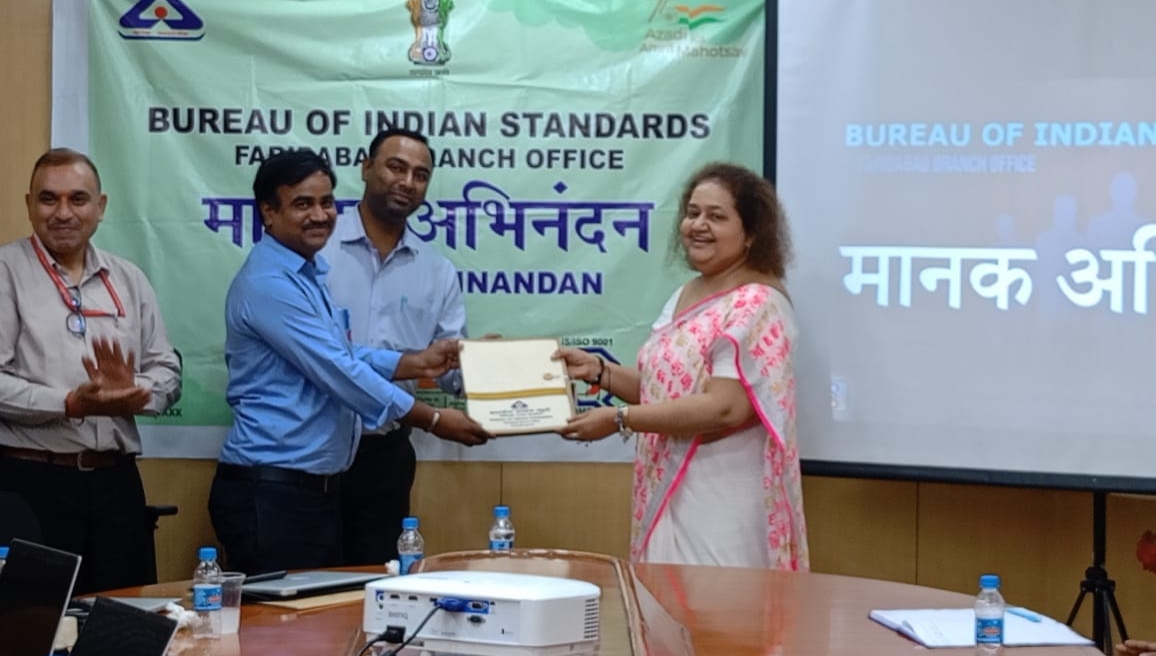
Real sites, real certifications
Our teams work inside factories and plants across India and abroad - inspections, audits and certification milestones spanning BIS, global schemes and the full compliance stack you see on this site.






What our clients say
Reviews and feedback from businesses that have worked with Diligence Certifications.









Related Corporate Registration services
Public Limited Company
Public Limited Company registration - simplified.
View details →Private Limited Company
Private Limited Company registration - start to finish.
View details →One Person Company (OPC)
OPC with limited liability and full control.
View details →LLP Registration
Limited Liability Partnership registration.
View details →Partnership Firm
Partnership firm registration with expert guidance.
View details →Sole Proprietorship
Sole proprietorship registration - simple & fast.
View details →Ready to get Indian Subsidiary Company?
Talk to our experts for a clear, fixed-scope plan - most clients get a roadmap the same day.