 BIS Certification
 CDSCO
CDSCO
 PESO
PESO
 CPCB
CPCB
 LMPC
LMPC
 WPC Approval
 Global Approvals
 TEC
TEC
 ARAI
ARAI
 BEE
BEE
 ISO Certification
 DGCA Certification
 NOC For Steel
 APEDA Registration























 Business Registration
 FSSAI Mark Certification












 (32).jpg)
 Legal Services
 Trademark Registration
 Copyright Registration
 Patent Registration
Public Limited Company Registration
A Public Limited Company can offer its shares to the public and trade them on a stock exchange to raise...
Get expert consultation
Trusted by 25,000+ leading enterprises worldwide










Key takeaways
- A Public Limited Company (PLC) can trade its shares publicly on a stock exchange, letting the business raise large amounts of capital.
- It gives limited liability to shareholders, protecting personal assets from the company’s debts or losses.
- It requires a minimum of 3 directors and at least 7 shareholders, and must comply with the Companies Act, 2013.
- There is no minimum paid-up capital, but an authorised share capital of INR 1 lakh is required.
- Incorporation is filed with the Registrar of Companies (ROC) through the Ministry of Corporate Affairs (MCA).
- PLCs deliver high transparency and accountability through statutory audits and public disclosure of financial records.
- The registration process typically takes 3 to 6 weeks, including name approval, documentation and the incorporation certificate.
What is a Public Limited Company?
A Public Limited Company (PLC) is a business structure that can publicly issue shares for sale to the public through a stock exchange. It is intended for medium to large companies that want to attract large amounts of capital and grow their presence in the marketplace.
In India a Public Limited Company is registered under the Companies Act, 2013, and must have at least three directors and seven shareholders. Ownership is divided into shares that investors can trade easily, which assures transparency, accountability and credibility. PLCs must comply with annual disclosures, auditing of accounts and Securities and Exchange Board of India (SEBI) guidelines.
Diligence Certifications handles everything from documentation and compliance to regulatory approval, so the process is accurate, efficient and fully within the law.
Core characteristics of a PLC
- Separate legal existence, distinct from shareholders and directors
- Limited liability, restricted to each member’s shareholding
- A minimum of three and a maximum of fifteen directors
- No minimum paid-up capital, INR 1 lakh authorised capital
- Easy transfer of shares for liquidity and flexibility
- Perpetual succession regardless of changes in ownership
Categories of Public Limited Company
The type of PLC depends on listing status and ownership. Every PLC must also meet a fixed set of incorporation conditions before registration.
| Type | What it means |
|---|---|
| Listed Public Company | Shares are traded on stock exchanges such as NSE or BSE under SEBI regulations. |
| Unlisted Public Company | Registered under the Companies Act, 2013 but shares are not publicly traded. |
| Government Public Company | Majority ownership (51% or more) held by Central or State Government. |
| Subsidiary Public Company | Controlled by the majority shareholding of another public company. |
| Foreign Public Company | Incorporated outside India but conducting business within India. |
| Requirement | Detail |
|---|---|
| Shareholders | At least seven shareholders. |
| Directors | At least three directors are mandatory. |
| Paid-up capital | No minimum paid-up capital. |
| Authorised share capital | Minimum authorised share capital of INR 1 lakh. |
| DSC and DIN | One director needs a Digital Signature Certificate, all directors need a Director Identification Number. |
| Documents | MOA, AOA, Form DIR-12, Form INC-7 and Form INC-22 filed with the ROC. |
Benefits of a Public Limited Company
Limited liability
Shareholders’ personal assets are protected from the debts and liabilities of the company.
Capital generation
Raise capital by issuing shares to the public to develop and expand the business.
Credibility and reputation
Build goodwill, investor confidence and brand image that drive growth and partnerships.
Transferable shares
Easy ownership transfer attracts investors and adds liquidity in the stock market.
Access to borrowing
Greater credibility helps secure loans and credit facilities from financial institutions.
Employee incentives
Stock options and share-ownership plans strengthen employee loyalty and motivation.
The regulatory framework
Public Limited Company registration in India is governed by the Companies Act, 2013, which covers the entire incorporation mechanism, including directors, shareholders, share capital and key documents such as the MOA and AOA. The Securities and Exchange Board of India regulates the issuance and trading of securities, listing, disclosure requirements and corporate governance. The Income Tax Act sets the financial reporting standards a PLC must follow.
Ongoing obligations every PLC must meet
- Hold at least four board meetings per calendar year, under Section 173.
- Hold the Annual General Meeting within six months of the financial year end.
- Appoint a qualified auditor within 30 days of incorporation.
- File annual returns with the ROC in Form MGT-7.
- File financial statements in Form AOC-4 under Section 137.
- File the Income Tax Return through ITR-6 by 30 September.
- Maintain statutory registers of members, directors and charges.
- Comply with SEBI rules and GST regulations where applicable.
The registration process, step by step
Registration runs through the Registrar of Companies and the Ministry of Corporate Affairs. The path moves from name approval to the certificate of incorporation, with an optional IPO stage for companies going public.
Incorporation
Name approval
Choose a unique company name and get it approved by the Registrar of Companies.
Draft MOA and AOA
Prepare the Memorandum and Articles of Association defining the purpose, structure and rules of the company.
Appoint directors and secretary
Appoint qualified directors and a company secretary to handle affairs and ensure compliance.
File for incorporation
Lodge all documents with the Registrar of Companies along with the prescribed registration fee.
After approval
Certificate of Incorporation
Once the documents are examined, the ROC issues the Certificate of Incorporation recognising the PLC.
Commencement certificate
After ROC approval, apply for the Business Commencement Certificate before starting operations.
Initial Public Offering
To raise funds publicly, prepare a prospectus and comply with the applicable securities regulations.
Documents required
- Identity proof of all directors and shareholders
- Address proof of all directors and shareholders
- AOA and MOA of the company
- DIN and DSC of all directors
- NOC from the landlord of the proposed office premises
- Latest utility bills (not more than 2 months old) of the registered office
Validity & renewal
- A PLC stays valid as long as it meets statutory requirements and files annual returns with the ROC.
- There is no traditional renewal, but regular compliance, annual filings and statutory audits keep it active.
- A PLC can be converted into a Private Limited Company by special resolution and MCA approval.
Comparing structures? See our Private Limited Company Registration, One Person Company Registration and LLP Registration services.
Cost, timeline and validity
Costs vary with authorised capital, government fees and professional charges. The typical parameters are:
| Parameter | Details |
|---|---|
| Cost | Varies with professional fees, government registration charges and documentation, generally as per actual. |
| Timeline | The process typically takes 3 to 6 weeks, including name approval, documentation and the incorporation certificate. |
| Validity | Valid as long as the company meets statutory requirements and files annual returns with the ROC. |
| Renewal | No traditional renewal, but regular compliance, annual filings and statutory audits are required. |
Ready to incorporate your Public Limited Company?
Tell us about your directors, shareholders and capital, and we will map the exact documents, forms and timeline for your registration.
Public limited company incorporation is administered by the Ministry of Corporate Affairs (MCA).
Frequently asked questions
What is a Public Limited Company in India?
A Public Limited Company is a structure under the Companies Act, 2013 that can offer shares to the public and list them on a stock exchange. It needs at least 3 directors and 7 shareholders, with no upper cap on the number of shareholders.
What are the main benefits of a Public Limited Company?
Key benefits include limited liability for shareholders, easier transferability of shares, the ability to raise capital through an initial public offering and stock-exchange listing, and greater credibility for business expansion.
What are the requirements to register a PLC?
You need a minimum of 7 shareholders and 3 directors, a registered office in India, approval of the company name from the MCA, and PAN and TAN registration.
What documents are required?
Mandatory documents include the Digital Signature Certificate (DSC) and Director Identification Number (DIN), identity and address proof of directors and shareholders, the Memorandum of Association (MOA) and Articles of Association (AOA), and proof of the registered office address.
How long does registration take?
The process typically takes 3 to 6 weeks, depending on documentation verification and approval from the MCA. We help ensure faster incorporation with full legal compliance.
Can a Public Limited Company be converted into a Private Limited Company?
Yes. A Public Limited Company can be converted into a Private Limited Company by passing a special resolution and obtaining MCA approval. We provide expert assistance with company conversion procedures.
Why choose Diligence Certification?
For compliance and credibility, Diligence is much more than a checklist - we give you real confidence in your business. We examine your legal, financial and operational status, so you are not just certified, but trusted.
Stronger risk protection
Spot hidden legal, financial or operational risks early - fix problems before they become threats.
Earn stakeholder trust
From investors to customers, people want to work with businesses that play by the rules.
Stay legally aligned
Compliant not just on products but on labour, environmental and tax laws too.
Enhance brand reputation
Show the world you operate with integrity and transparency.
Stand out from competitors
In a crowded market, credibility is your biggest edge.
24×7 expert support
A 100+ strong service team guiding you at every step, free first consultation.
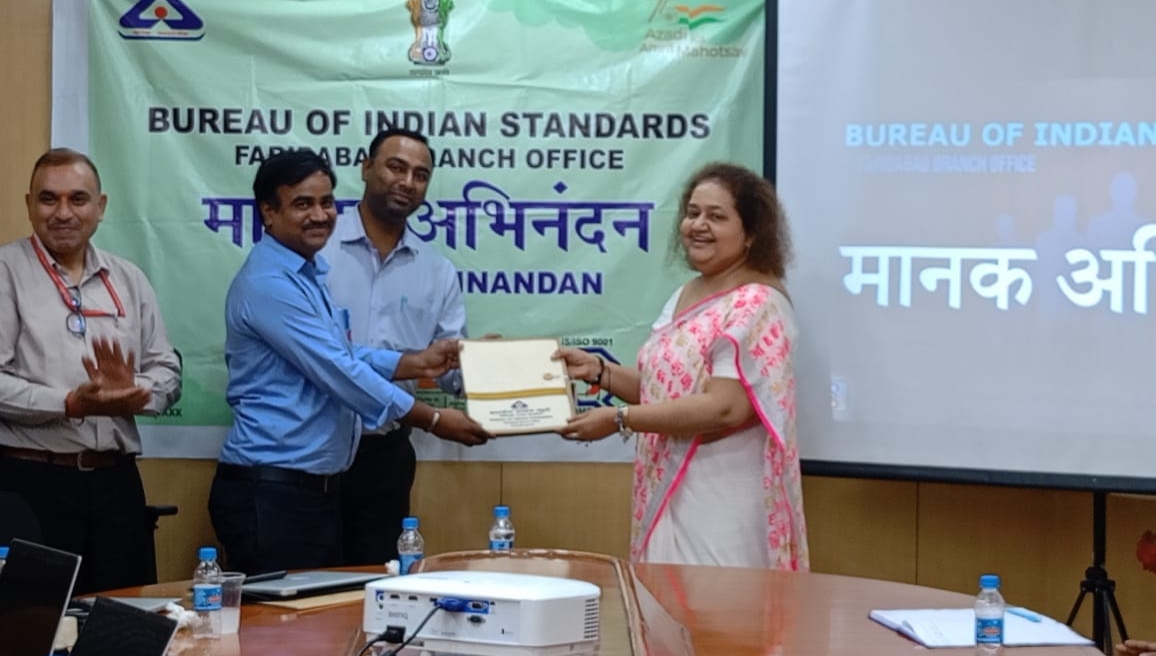
Real sites, real certifications
Our teams work inside factories and plants across India and abroad - inspections, audits and certification milestones spanning BIS, global schemes and the full compliance stack you see on this site.






What our clients say
Reviews and feedback from businesses that have worked with Diligence Certifications.




Related Corporate Registration services
Private Limited Company
Private Limited Company registration - start to finish.
View details →One Person Company (OPC)
OPC with limited liability and full control.
View details →LLP Registration
Limited Liability Partnership registration.
View details →Partnership Firm
Partnership firm registration with expert guidance.
View details →Sole Proprietorship
Sole proprietorship registration - simple & fast.
View details →Indian Subsidiary Company
Foreign subsidiary company registration in India.
View details →Ready to get Public Limited Company Registration?
Talk to our experts for a clear, fixed-scope plan - most clients get a roadmap the same day.