



 BIS Certification
 CDSCO
CDSCO
 CPCB
CPCB
 LMPC
LMPC
 WPC Approval
 Global Approvals
 TEC
TEC
 ARAI
ARAI
 BEE
BEE
 ISO Certification
 DGCA Certification
 NOC For Steel
 APEDA Registration










 Business Registration
 FSSAI Mark Certification



 Legal Services
 Trademark Registration
 Copyright Registration
 Patent Registration

- BIS Certification Copper wire remains critical in engineering, construction, and electrical applications.
- BIS Certification for Copper Wire under IS 4412:1981 is mandatory in India.
- Certification is granted by the Bureau of Indian Standards.
- It ensures product quality, safety, and compliance with Indian norms.
- Testing, inspection, and documentation are essential for approval.
- IS 4412:1981 covers requirements like dimensions, conductivity, and durability.
Introduction:
Copper wires are important for many electrical and industrial stations owing to their conductivity, life, and reliability. To ensure Quality, Safety and Compliance within the Indian criteria it is mandatory to apply for BIS Certification for Copper Wire under IS 4412:1981. The Bureau of Indian Standards (BIS) outlines quality requirements regarding copper wires in IS 4412:1981, which stipulates dimensional requirements, mechanical requirements, electrical properties, and more.
Manufacturers and Importers of Copper Wire should obtain the BIS Certification before selling each product in the Indian market. Certainly, regulations must be adhered to, but rest assured, measures taken to conform to Compliance will help instill strength and confidence in your business.
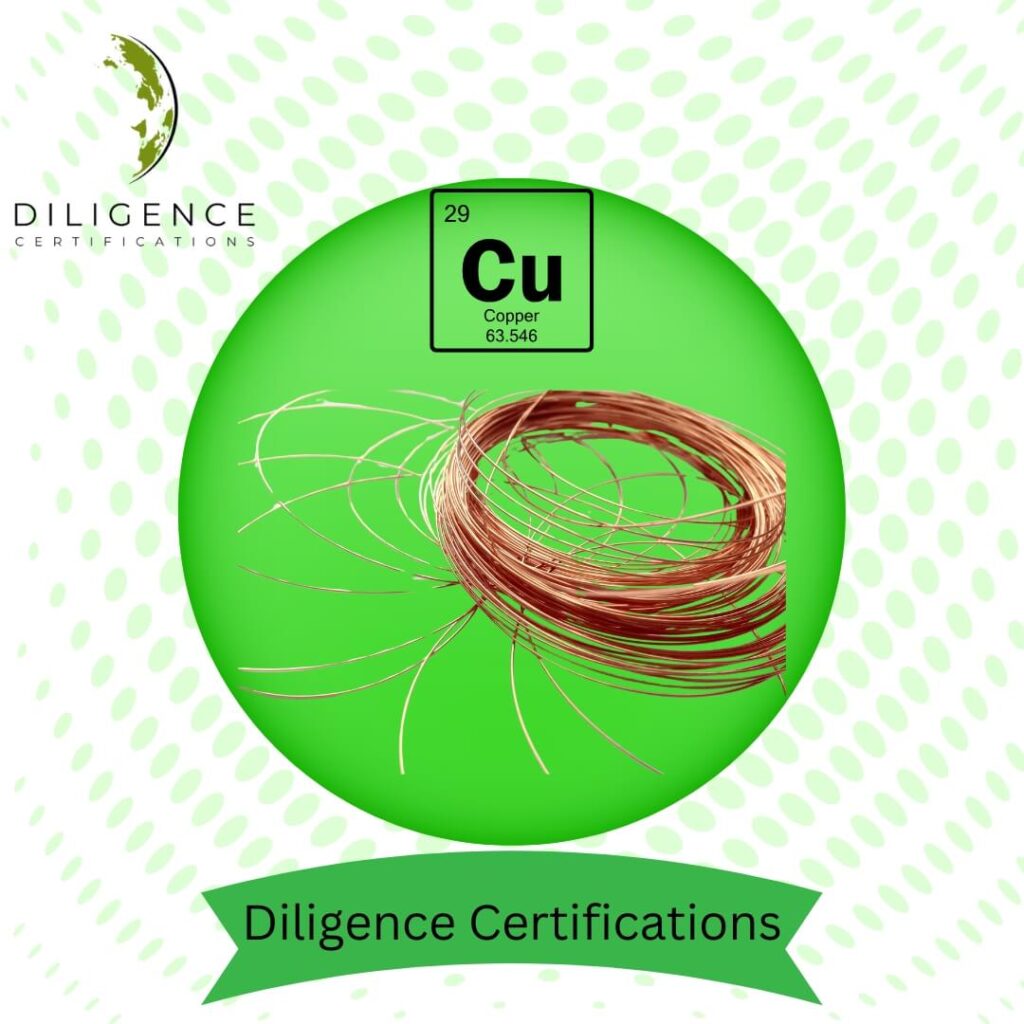
BIS Certification Copper Wire for General Engineering Purposes
Material selection becomes very important in engineering and manufacturing to ensure safety, efficiency, and durability of any manufactured product. Copper among those materials holds a premier position because of its excellent electrical conductivity, ductility, and resistance to corrosion. The Indian Standard IS 4412:1981 deals in specifying the essential requirements for copper wires for general engineering applications. This blog gives a detailed account about IS 4412:1981, its significance, and its applicability for Diligence certification through the Scheme of Inspection and Testing (SIT).
The choice of materials is critical in safety, efficiency, and durability in engineering and manufacturing. Among such materials, copper stands second because it has very good electrical conductance, ductility, and
resistance to corrosion. The Indian Standard IS 4412:1981 lays down essential requirements of copper wires for different engineering applications. This blog speaks about all the details of IS 4412:1981, its importance, and relevance to Diligence Certification BIS Consultancy in India as an annex to the Scheme of Inspection and Testing (SIT).
What Is Copper Wire And Why Is It So Common?
Copper wire is an electrical conductor made from pure copper. Copper is desired for its exceptional conductivity, flexibility, and resistance to corrosion. Copper wire is commonly used in:
- Power transmission and distribution
- Electrical and electronic appliances and equipment
- Automobiles, EVs, and industrial machines
- Residential and commercial building wiring
- Solar, wind, and infrastructure work
“If steel is the skeleton of a development, copper wire is its nervous system.”
Why BIS Certification for Copper Wires is Mandatory ?

The Bureau of Indian Standards (BIS) mandates certification under various Indian Standards for copper wires used in engineering purposes. This ensures public safety, consistency, and regulatory oversight.
BIS Certification is mandatory if the wire is:
- Used in government/infra contracts
- Sold commercially in regulated categories
- Exported or imported for use in India
Relevant standards include:
- IS 8130: Conductors for insulated electric cables and cords
- IS 694: PVC insulated copper wires for working voltages
- IS 398/Part I: Aluminium conductors (if mixed wires)
Common Use-Cases Requiring Certification
- Government tenders
- Power grid contracts (Powergrid, NTPC, SECI)
- OEM manufacturing
- Automotive and aerospace wiring
- Telecom tower projects
Which Types of Copper Wire Need BIS Certification?
| Type | BIS Mandate Status | Use Case |
| Bare Copper Wire | Conditional | Earthing, transformer coils |
| Enamelled Copper Wire | Mandatory | Motors, transformers |
| Multi-strand Flexible Copper | Mandatory | Control panels, PLCs |
| Oxygen-Free Copper (OFC) | Growing requirement | EVs, audio cables, aerospace |
What is IS 4412:1981?
IS 4415:1981 is the Indian Standard that provides requirements for copper wires in general electrical purposes. It provides:
- Adequate mechanical strength
- Good electrical conductivity
- Durability and environmental stress
- Standardized dimension and tolerance
This standard allows consistent production practices and assists purchasers to identify products capable of meeting national quality standards.
Purpose and Scope
This Indian Standard specifies the requirements for BIS Certification for copper wires to be used in engineering applications such as electrical wiring and electronics, as well as those employed in manufacture. It establishes quality and performance requirements to be met by such wires for successful functioning.
Key Specifications
The standard covers the important aspects touching the production of copper wire.
- Chemical Composition: Here, the standard defines purity standards of copper to ensure conductivity. Impurity levels are given, which may affect the quality of the wire in total.
- Mechanical Properties: This includes the mechanical properties of wires, such as tensile strength, elongation, and hardness that should be essential for an operating wire to withstand operational stresses without breaking.
- Dimensional Tolerances: This standard defines the dimensions and tolerances of different wire sizes to make them data compatible and, therefore, interoperable in engineering projects. Consistency is paramount to the manufacturer and engineer.
- Physical Properties: There are more defined criteria such as thermal and electrical conductivity laid down to guarantee that the wires perform adequately in their intended applications.
Importance of BIS Certification for Copper Wire
- Legal Requirement – Selling non-BIS-certified copper wires is not legal in India.
- Quality Assurance –The BIS Certification ensures the wires comply with IS 4412:1981 .
- Access to Market –If the copper wire is not BIS certified then you cannot get any bulk supply contracts either in the government sector or private sector.
- Consumer Safety –It will avert the risks of overheating, short circuits or fire hazards.
- International Standing-It will create more opportunities to export and ensure compliance with international norms.
Merits of Diligence Certification
- Quality Assurance: It means an assurance that these wires are suitable for heavy duty, field-tested and verified, thereby nullifying the existence of any chance of being defective when used in critical applications.
- Regulatory Compliance: IS 4412:1981 ensures that all states are compliant with national and international regulatory standards, as well as facilitating access to the markets and improving image.
- Consumer Confidence: The confidence raised among consumers that bare products have passed tests for quality and safety is generated from certification.
- Competitive Advantage: In most cases, diligence certification BIS Consultancy in India puts such companies ahead of their competitors in terms of market access as quality footsteps show commitment to quality and reliability.
BIS Certification Process for Copper Wire
1. Document Collection
You’ll need:
- Manufacturing license
- Product drawings/specs
- Test reports (from BIS-approved labs)
- Factory address proof
- Authorized Signatory ID
- Quality Management Documents
2. Application Submission
- Fill Form VI and upload on Manakonline Portal
- Attach test reports, drawings, and fee challans
3. Factory Inspection
- BIS officials will visit your site to validate quality process and infrastructure
4. Product Testing
- Random samples are drawn and tested in BIS-accredited labs for electrical, physical, and chemical parameters.
5. License Granting & Marking
- All copper wire drums must be marked with the ISI logo, batch number, and license number
On approval, you’ll receive your ISI certificate
Challenges and considerations
While IS 4412:1981 frames a robust architecture for quality assurance in BIS Certification for copper wire production, numerous challenges could occur:
- Rapid Technological Advancement: Due to technological advancement, new materials and processes will be developed. Manufacturers must keep in touch with the latest emerging technology to keep their compliance and performance in the product.
- Global Standards: A World of International Standards is difficult for a manufacturer, let alone someone who wants to export products. How does this standard fare against other international standards to promote the company in the market?
- Environmental Regulations: Stricter and more penetrating environmental laws now make a manufacturer consider the environment on which he operates. Adjustment to such a situation while maintaining the balance of quality standards becomes a challenge.
Conclusion
IS 4412:1981 is the key requirement for engineering BIS Certification for copper wires as it assures rigorous quality and performance requirements from an engineering end. It not only complements the Diligence Certification bis consultancy in India but also adds value to a strong Scheme of Inspection and Testing to ensure the reliability of products that will develop confidence in the minds of the consumers.
High-demand BIS Certification for copper products will continue to grow in importance and merit some certification such as IS 4412:1981. Highlighting Diligence Certification BIS consultancy in India with a thorough testing regime assures the industry to meet engineering challenges confidently.
Thus, IS 4412:1981 is a standard that not only provides guidance to the manufacturers but also forms the basis of quality assurance in engineering. Going by these standards will enable manufacturers to also codify safer, more efficient engineering solutions, which benefit industry and society at large.
Frequently Asked Questions
Is BIS certification mandatory for all copper wire types?
Not all. But for industrial, engineering, and regulated applications, it is legally required.
What is the duration of BIS certification?
The initial license is valid for 2 years and can be renewed thereafter.
Describe the tests under the certification process.
Electrical conductivity, tensile strength, annealing, diameter and chemical composition
Can I import copper wire without BIS certification?
You can import into India at any time, but you cannot sell or use it legally in regulated sectors.
Is ISI marking the same as BIS certification?
ISI is the mark, BIS is the certifying authority.
What if my supplier gives fake BIS docs?
You’re liable. Cross-verify all licenses on bis.gov.in.
How much time does the BIS process take?
4–8 weeks, depending on lab testing and inspection clearance.
Can MSMEs get BIS certification?
Yes, and BIS offers concessional fees for MSMEs.
Is copper wire used in solar plants BIS-certified?
Yes, as per MNRE rules, all solar wiring must follow BIS standards.
Does BIS apply to copper wire for export?
Only if exported wires are also sold domestically. Otherwise, BIS is not mandatory.