BIS Certification
 CDSCO
CDSCO
 PESO
PESO
 CPCB
CPCB
 LMPC
LMPC
 WPC Approval
 Global Approvals
 TEC
TEC
 ARAI
ARAI
 BEE
BEE
 ISO Certification
 DGCA Certification
 NOC For Steel
 APEDA Registration























 Business Registration
 FSSAI Mark Certification












 (32).jpg)
 Legal Services
 Trademark Registration
 Copyright Registration
 Patent Registration
 By
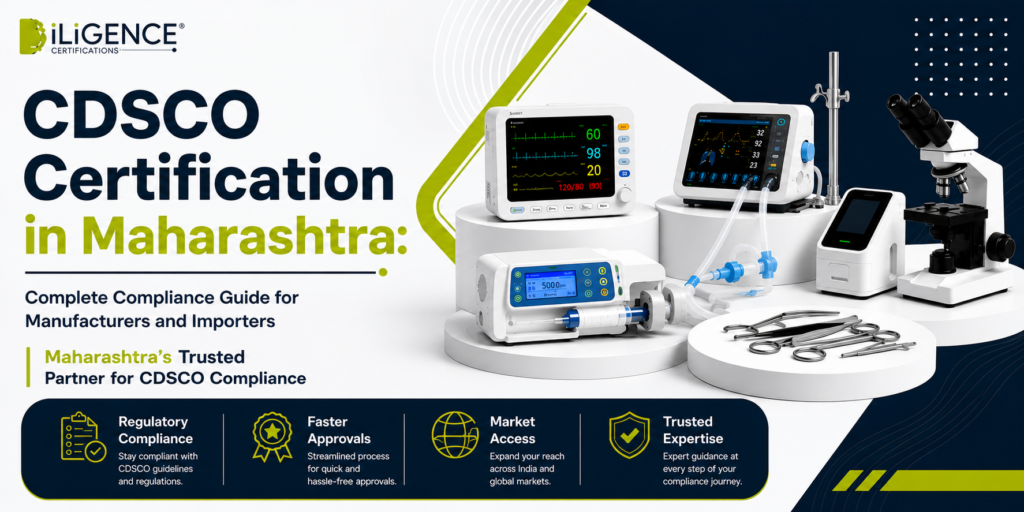
By CDSCO Certification in Maharashtra is essential for manufacturers, importers, and distributors of medical devices, drugs, cosmetics, and IVD products to comply with Indian regulatory requirements. Businesses operating in Maharashtra must obtain the applicable CDSCO approvals before manufacturing, importing, marketing, or selling regulated healthcare products in India. Proper product classification, technical documentation, and regulatory compliance help companies avoid approval delays and ensure smooth market access.
Introduction
A company in Mumbai once approached our consultants after its imported diagnostic product was ready for launch. Packaging was printed, distributors were lined up, and the sales team had already started speaking with hospitals. The issue was simple but serious: the product needed regulatory approval before sale.
This is where many healthcare businesses lose time. They focus on product sourcing, branding, supplier negotiation and marketing first. Compliance is checked later. For products controlled under drug, cosmetic, medical device or diagnostic regulations, this sequence can create avoidable delays.
CDSCO Certification for Regulated healthcare products play a vital role in business transactions in Maharashtra. Pharmaceuticals, medical devices, cosmetics, and healthcare supplies are also traded in this area. Some cities that have manufacturers and distributors include Mumbai, Pune, Nashik, Thane, Nagpur, and Aurangabad.
For such businesses, CDSCO approval is not only a regulatory document. It is a legal entry point into the Indian healthcare market.
What is CDSCO Certification?
CDSCO stands for Central Drugs Standard Control Organization. It is India’s national regulatory authority for drugs, cosmetics, medical devices and certain healthcare products.
CDSCO is responsible for drug approval, clinical trial regulation, standards for drugs, quality control of imported drugs and coordination with State Drug Control authorities.
In practical terms, CDSCO Certification means the required licence, registration, approval or permission that allows a regulated product or activity to move legally in India.
For example, if a Maharashtra-based company wants to import a medical device, it may require an import licence. If a cosmetic brand wants to import skincare products, it may require cosmetic registration. If a company wants to manufacture a regulated medical device, the applicable MD forms and licensing route must be checked.
Why CDSCO Certification in Maharashtra is Important
Maharashtra is one of India’s major commercial and healthcare markets. A product launched from Maharashtra often reaches buyers across India. This makes compliance more important because one regulatory gap can affect the entire supply chain.
CDSCO Certification in Maharashtra helps businesses:
- Sell regulated products legally
- Avoid customs or market-entry issues
- Build confidence with hospitals and distributors
- Meet tender and institutional buyer requirements
- Reduce risk of product seizure or notice
- Create a clean compliance record for future expansion
A distributor may not ask many questions in the early stage. But hospitals, labs, large pharmacies, e-commerce platforms and government buyers usually ask for valid licences, registrations and product documents.
Regulatory documents become business documents. Without them, even a good product may not move.
Products Covered Under CDSCO Certification in Maharashtra
CDSCO compliance may apply to several product categories. The approval route depends on product type, intended use, composition, risk class and business activity.
Drugs and Pharmaceutical Products
Drug manufacturing, import, sale and distribution require proper licensing. This may include formulations, APIs, biological products, new drugs and other regulated pharmaceutical products.
Medical Devices
Medical devices are regulated under the Medical Devices Rules, 2017. These include diagnostic equipment, implants, surgical instruments, hospital devices, monitoring devices, dental products, orthopaedic devices and other regulated devices.
In-Vitro Diagnostic Devices
IVD devices are used for testing human samples. Examples include diagnostic kits, reagents, analysers, rapid test kits and laboratory testing systems.
Cosmetics
Imported cosmetics require registration before being sold in India. Products such as creams, lotions, perfumes, shampoos, serums, colour cosmetics and personal care products may fall under this route.
Imported Healthcare Products
Many importers assume that a foreign certificate is enough. It is not. Indian regulatory approval must be checked separately for applicable products.
Who Needs CDSCO Certification in Maharashtra?
Different businesses may need CDSCO Certification in Maharashtra depending on their activity.
Manufacturers
Manufacturers producing drugs, cosmetics, medical devices or diagnostic products must check the applicable licence. Site details, quality systems, technical staff, equipment and product documentation may be required.
Importers
Importers need approval before bringing regulated products into India. Import approval is generally linked with product details, manufacturer details and authorised Indian agent documentation.
Authorised Indian Agents
Foreign manufacturers often appoint an Indian authorised agent to handle CDSCO applications. This role carries responsibility and must be documented properly.
Distributors and Wholesalers
Drug and medical device wholesalers may need appropriate sale, stock or distribution licences. For medical devices, MD-41 and MD-42 may be relevant depending on the activity.
Healthcare Startups
Healthcare startups often work with new devices, diagnostic products, wellness products or cosmetic formulations. Before marketing such products, classification must be checked carefully.
CDSCO Certification Process for Maharashtra
The process depends on the product category. However, most CDSCO applications follow a similar practical route.
Step 1: Product Classification
The first step is identifying whether the product is a drug, cosmetic, medical device, IVD or another regulated product. This is the stage where many businesses make mistakes.
A cream claiming to treat a medical condition may not remain a simple cosmetic. A testing kit may be treated as an IVD. A wellness device may fall under medical device regulation if its intended use is medical.
Step 2: Regulatory Route Selection
Once the classification is clear, the correct approval route must be selected. This includes checking applicable rules, form numbers, authority, fees, technical requirements and document format.
Step 3: Document Preparation
Documents must match the product and approval route. A generic checklist is not enough. Medical device files, cosmetic documents and drug licence files are different.
Step 4: Portal Registration
Many applications are filed through online portals such as SUGAM or the Medical Device Online system. Applicant details must match legal documents.
Step 5: Application Filing
The correct form must be filled and uploaded with documents. Product names, model numbers, manufacturer address, licence scope and labels must be checked properly.
Step 6: Technical Review
The authority reviews the application. If any information is unclear, a query may be raised. The response must be factual, complete and supported by corrected documents.
Step 7: Approval and Compliance
Once approved, the certificate or licence is issued. The business must then follow conditions related to labelling, records, validity, retention fees, changes and post-market obligations.
Documents Required for CDSCO Certification in Maharashtra
Documents vary by product category, but common requirements may include:
Business Documents
- Certificate of Incorporation or firm registration
- Company PAN card
- GST registration
- Address proof
- Authorisation letter
- Board resolution, where applicable
- Import Export Code, if import is involved
Product Documents
- Product catalogue
- Product specification
- Intended use
- Model list
- Product label and artwork
- Instructions for use
- Shelf-life details, if applicable
Technical Documents
- Device master file
- Plant master file
- Product technical file
- Risk analysis report
- Performance evaluation report
- Stability data, where applicable
- Safety and performance documents
Quality Documents
- ISO 13485 certificate, if applicable
- GMP documents
- Quality manual
- Manufacturing licence
- Process validation records
- Testing reports
Import Documents
- Free Sale Certificate
- Power of Attorney
- Authorised agent agreement
- Legal manufacturer details
- Overseas regulatory approval, if available
- Notarised or apostilled documents, where required
CDSCO Certification in Maharashtra: Medical Devices
Medical devices are classified based on risk. Class A and Class B devices are lower-risk categories, while Class C and Class D devices are higher-risk categories. The approval route depends on classification and activity.
For medical device import, Form MD-14 is used for application, and Form MD-15 is issued as the import licence. For manufacturing, forms such as MD-3, MD-5, MD-7 and MD-9 may apply based on class and licence type.
A practical example: a Pune-based company importing a patient monitoring device should not file only on the basis of catalogue and invoice. It must check the device classification, intended use, technical file, manufacturer licence, free sale certificate and Indian authorised agent details.
Medical device approval is document-heavy. Filing without a proper technical file often leads to queries.
CDSCO Certification in Maharashtra: Cosmetics
Cosmetic import registration is required for imported cosmetic products before sale in India. The application is generally filed in Form COS-1, and the registration certificate is granted in Form COS-2.
For Maharashtra-based cosmetic importers, Mumbai is a major entry and distribution point. Many brands import skincare, perfumes, haircare and colour cosmetic products through Indian agents.
Common issues include:
- Incorrect product category
- Missing ingredient list
- Non-compliant label claims
- Mismatch in manufacturer name
- Missing Free Sale Certificate
- Incomplete Power of Attorney
- Product marketed with medical claims
Cosmetic brands should be careful with claims. A product promoted as curing or treating a disease may trigger drug-related concerns instead of simple cosmetic treatment.
CDSCO Certification in Maharashtra: Drugs
Drug approvals are stricter because they directly affect patient safety. Businesses dealing with drugs may require manufacturing licence, import licence, wholesale licence, retail licence, new drug approval or clinical trial approval depending on the activity.
Maharashtra has a strong pharmaceutical ecosystem, so competition is high. Buyers and regulators both expect better documentation.
For drug businesses, important areas include:
- Product formulation
- Manufacturing site compliance
- Technical staff details
- Storage conditions
- Labelling compliance
- Testing reports
- Licence scope
- Inspection readiness
Drug licence work should not be handled casually. One incorrect form or missing technical document can delay the entire plan.
CDSCO Certification in Maharashtra: Medical Device Wholesale
Businesses selling, stocking, exhibiting or distributing medical devices may require registration depending on applicability. In many cases, Form MD-41 is used for application and Form MD-42 is issued as the registration certificate.
This is especially relevant for distributors supplying devices to hospitals, clinics, diagnostic centres and healthcare institutions.
A wholesale business should keep records of supplier licences, product approvals, invoices, storage conditions and sale documents. During compliance review, these records may become important.
Timeline for CDSCO Certification in Maharashtra
The timeline depends on product category, application route, document readiness and query response. There is no single timeline for every product.
Simple cases may move faster when documents are complete. Complex medical devices, imported products, new drug-related applications or technically weak files may take longer.
Factors affecting timeline include:
- Product classification
- Number of products or models
- Manufacturer document readiness
- Technical file quality
- Portal filing accuracy
- Testing requirement
- Query response time
- Regulatory workload
Businesses should complete compliance assessment before committing to a launch date or import shipment.
Cost of CDSCO Certification in Maharashtra
The cost of CDSCO Certification in Maharashtra depends on product type, approval category, number of products, document preparation, testing requirement and professional support.
A fixed cost is not practical because each product has a different compliance path. Cosmetic import registration, medical device import licence, drug manufacturing licence and wholesale registration are not the same.
For a realistic estimate, businesses should share:
- Product name and category
- Intended use
- Model list
- Manufacturer details
- Import or manufacturing scope
- Existing certificates
- Product label and technical documents
Diligence Certifications can review these details and suggest the proper approval route.
Common Mistakes in CDSCO Applications
Most delays happen because the application is not structured correctly from the beginning.
Common mistakes include:
- Wrong product classification
- Wrong form selection
- Missing authorisation documents
- Inconsistent product names
- Unclear intended use
- Incomplete technical file
- Weak label review
- Poor query response
- Filing without checking latest requirements
One small mismatch in address, manufacturer name or model number can create regulatory friction. This is why document review matters.
Benefits of CDSCO Certification in Maharashtra
CDSCO Certification in Maharashtra gives both compliance and business advantages.
Key benefits include:
- Legal market access
- Better buyer confidence
- Reduced regulatory risk
- Easier hospital and distributor onboarding
- Stronger tender participation
- Smooth import planning
- Better brand credibility
- Long-term compliance readiness
For regulated healthcare products, certification is not an optional branding asset. It is part of the business foundation.
Why Choose Diligence Certifications?
Diligence Certifications helps businesses with CDSCO Certification in Maharashtra through practical regulatory support.
Our support includes:
- Product classification
- Document checklist preparation
- CDSCO application filing
- Medical device registration
- Cosmetic import registration
- Drug licence consultation
- Query response assistance
- Import and manufacturing compliance guidance
Many clients contact us after receiving objections. A better approach is to involve a consultant before filing. It helps avoid wrong forms, missing documents and unnecessary back-and-forth.
Conclusion
CDSCO Certification in Maharashtra is essential for businesses dealing with drugs, medical devices, cosmetics, diagnostic products and healthcare imports. It protects the business from regulatory risk and helps build trust with buyers.
Before launching, importing or distributing any regulated healthcare product, confirm the correct approval route. Early compliance planning is cheaper and safer than correcting mistakes after filing.
For CDSCO Certification in Maharashtra, contact Diligence Certifications and speak with our consultants for documentation support, application filing and regulatory guidance.
Frequently Asked Questions
Who issues CDSCO licenses in Maharashtra?
Central CDSCO: Issues approvals for the import of medical devices/drugs, new drug approvals, clinical trials, and critical items.State Licensing Authority (SLA) (Maharashtra FDA): Grants manufacturing and wholesale licenses for drugs, cosmetics, and certain medical devices within the state
How do I apply for CDSCO registration?
Applications are processed online through the centralized CDSCO SUGAM Portal. Manufacturers and importers must first register their organization, submit technical documents, and then process the relevant form (e.g., MD-14 for medical device imports, Form 40 for drug imports)
Are all medical devices regulated in India?
Yes, all medical devices require a manufacturing or import license. Devices are classified based on risk levels:Class A: Low risk (self-declaration)Class B: Low to moderate riskClass C & Class D: Moderate to high risk (mandatory licensing)
Can I get a single license for different manufacturing sites in Maharashtra?
No. Separate applications and licenses are required for each manufacturing or operational site, even if they are located within the same city in Maharashtra
What is the processing time and validity for CDSCO certification?
Processing Time: Varies by product. It typically takes 1 to 2 months for Class A medical devices, while Class C/D devices and new drugs can take 3 to 9+ months.Validity: Most standard certificates, once granted or retained, are valid unless suspended or canceled. License retention fees are required to be paid every 5 years
Do I need a CDSCO license for cosmetics?
If you are importing cosmetics, you must register your products through the central SUGAM portal. However, if you are strictly manufacturing cosmetics within Maharashtra, you must apply for a manufacturing license directly through the Maharashtra State Licensing Authority (FDA).
How long is the CDSCO license valid for?
CDSCO license validity depends on the specific product category and the exact form issued. Many medical devices and cosmetic licenses now feature perpetual validity (they do not expire) provided you pay a mandatory retention fee every 5 years, while traditional pharmaceutical drug licenses typically remain valid for 3 to 5 years
What are the rules for giving a medical certificate?
Medical certificates are legal and ethical documents used to verify an individual's health status, sick leave, or fitness for duty. To be valid, they must be issued by a registered medical practitioner (such as an MBBS/MD doctor) following an actual examination, and contain clear clinical facts without ambiguous medical jargon
Is a handwritten medical certificate valid?
Yes, a handwritten medical certificate is completely valid. However, the medium does not matter as much as the content; the document is only legally acceptable if it is issued by a registered medical practitioner and contains all necessary identifying details
What is compulsory licensing of drugs?
Compulsory licensing of drugs is a legal mechanism that allows a government to authorize a third party-or use the invention itself-to manufacture, use, or sell a patented medication without the patent owner's consent. It is primarily used to bypass monopolies, reduce prices, and increase access to essential, life-saving medicines