





 BIS Certification
 CDSCO
CDSCO
 PESO
PESO
 CPCB
CPCB
 LMPC
LMPC
 WPC Approval
 Global Approvals
 TEC
TEC
 ARAI
ARAI
 BEE
BEE
 ISO Certification
 DGCA Certification
 NOC For Steel
 APEDA Registration






















 Business Registration
 FSSAI Mark Certification












 (32).jpg)
 Legal Services
 Trademark Registration
 Copyright Registration
 Patent Registration
India's #1 Compliance Partner
Commercial Agreement
A commercial agreement is the legally binding contract that records the terms between businesses, suppliers, partners and clients. We draft,...
25,000+
Clients
200+
Certifications
25+
Years
Pan-India
Presence
Get expert consultation
Trusted by 25,000+ leading enterprises worldwide






Key takeaways
- A commercial agreement is a legally binding contract that defines the rights, obligations and remedies between parties in a business relationship.
- Its enforceability flows from the Indian Contract Act, 1872, which sets out what makes an agreement a valid contract.
- A sound agreement needs offer and acceptance, lawful consideration, free consent, capacity and a lawful object.
- Well-drafted clauses on scope, payment, liability, indemnity, confidentiality and termination prevent disputes before they arise.
- A clear dispute resolution and jurisdiction clause decides where and how disagreements are settled.
- Stamp duty must be paid as per the relevant state Stamp Act for the agreement to be admissible as evidence.
Overview
What is a commercial agreement?
A commercial agreement is a written contract that records the terms on which two or more parties do business with each other. It sets out who must do what, by when, for how much, and what happens if something goes wrong. Once signed and properly stamped, it becomes a binding instrument that a court or tribunal can enforce.
In India, the validity of any commercial agreement is governed by the Indian Contract Act, 1872. The strength of an agreement lies not in its length but in how precisely it captures the commercial intent of the parties and closes the gaps that later turn into disputes.
Common commercial agreements we draft
- Service and consultancy agreements
- Supply, distribution and dealership agreements
- Franchise and licensing agreements
- Joint venture and shareholders’ agreements
- Vendor, procurement and master service agreements
- Agency, referral and channel-partner agreements
When you need one
Who needs a commercial agreement
Any time value, goods, services or money change hands between businesses, a written agreement protects both sides. A handshake or an email thread rarely survives a serious dispute.
| Situation | Why an agreement matters |
|---|---|
| Engaging a supplier or vendor | Fixes price, quality, delivery and penalties for delay or default. |
| Appointing a distributor or agent | Defines territory, targets, margins and grounds for termination. |
| Entering a joint venture | Allocates control, capital, profit-sharing and exit rights. |
| Outsourcing services | Records scope, service levels, ownership of work and confidentiality. |
| Party | Typical use |
|---|---|
| Startups | Founder, vendor and client agreements that protect equity and IP. |
| SMEs | Supply, dealership and employment-adjacent contractor agreements. |
| Corporates | Master service agreements and high-value procurement contracts. |
| Professionals | Consultancy, retainer and non-disclosure agreements. |
Anatomy
Essential clauses in a strong agreement
Scope of work
A precise description of the goods, services or deliverables that leaves no room for assumption.
Payment terms
Amounts, milestones, due dates, taxes and consequences of late or non-payment.
Indemnity & liability
Who bears the risk, caps on liability and protection against third-party claims.
Confidentiality
Protection of trade secrets, data and proprietary information shared during the relationship.
Termination
Notice periods, exit triggers, survival of obligations and consequences on exit.
Dispute resolution
Governing law, jurisdiction and whether disputes go to arbitration or the courts.
Legal foundation
What makes an agreement enforceable
Section 10 of the Indian Contract Act, 1872 states that all agreements are contracts if they are made by the free consent of parties competent to contract, for a lawful consideration and with a lawful object. An agreement that fails any of these tests may be void or unenforceable, however carefully it is worded.
- Offer and acceptance: a clear proposal accepted without conditions
- Lawful consideration: something of value passing between the parties
- Free consent: no coercion, undue influence, fraud or misrepresentation
- Capacity to contract: parties of sound mind, of legal age and not disqualified by law
- Lawful object: the purpose of the agreement is legal and not against public policy
- Certainty: the terms are clear, definite and capable of performance
How it works
Our drafting & review process
Whether you need a fresh agreement drafted or an existing one vetted before you sign, we follow a disciplined, two-track approach.
Drafting a new agreement
Understand the deal
We map the commercial intent, the parties, the obligations and the risks you want to guard against.
Draft the contract
We prepare a tailored agreement with clear scope, payment, liability, confidentiality and exit clauses.
Review & refine
You review the draft, we incorporate your inputs and negotiate the language where needed.
Finalise & stamp
We guide execution, witnessing and stamp-duty payment so the agreement is binding and admissible.
Reviewing an existing one
Read the draft
We study the agreement clause by clause against your commercial objectives.
Spot the risks
We flag one-sided terms, missing protections, ambiguous wording and hidden liabilities.
Mark up changes
We propose redlines and alternative clauses that rebalance the agreement in your favour.
Advise on signing
We confirm what is safe to sign and what must be renegotiated before execution.
Paperwork
Information & documents required
- Names, addresses and constitution of all parties (individual, firm or company)
- Authorised signatory details and board resolution, where a company is a party
- A clear note on the commercial terms agreed (scope, price, timelines)
- Any letters of intent, term sheets or prior correspondence
- Details of deliverables, payment schedule and milestones
- Existing drafts or templates, if the agreement is to be reviewed
- Preferred jurisdiction and dispute-resolution mechanism
Validity & stamping
Stamp duty & execution
- Stamp duty is governed by the relevant state Stamp Act and varies from state to state.
- An unstamped or under-stamped agreement may not be admitted as evidence in court.
- Agreements can be executed on stamp paper or via e-stamping where the state permits.
- The agreement remains in force for the term it specifies, until terminated or fully performed.
Related drafting needs? See our Power of Attorney and Trademark Registration services.
Timeline & cost
Get your agreement drafted
Turnaround & cost factors
Timelines and fees depend on the complexity of the deal, the number of parties and the level of negotiation involved. The typical components are:
| Factor | Details |
|---|---|
| Professional fee | Drafting or review charge, scaled to the complexity and value of the agreement. |
| Stamp duty | Statutory charge as per the applicable state Stamp Act. |
| Negotiation rounds | Additional time where multiple redline cycles are needed between parties. |
| Turnaround | A standard agreement is usually delivered within a few working days; complex contracts take longer. |
About to sign a contract?
Send us the deal terms or the draft on the table, and we will tell you exactly what to fix before you commit.
Why it matters
Benefits of a professionally drafted agreement
Legal certainty
Clear, enforceable terms that leave little room for misinterpretation or dispute.
Risk protection
Indemnity, liability caps and warranties that shield you from avoidable exposure.
Stronger relationships
Defined expectations keep commercial partnerships smooth and predictable.
Confidentiality
Built-in safeguards for your data, trade secrets and intellectual property.
Clear exit
Defined termination rights so you are never trapped in a failing arrangement.
Dispute readiness
An agreed forum and governing law that make any future dispute quicker to resolve.
Why Diligence Certifications
Why work with our legal team
Drafting a commercial agreement is not about filling in a template. It is about anticipating how a deal can go wrong and writing those risks out of existence. Our team combines commercial sense with legal precision so your contracts protect you when it matters most.
- Agreements tailored to your specific deal, not generic boilerplate
- Lawyers who understand both the commercial intent and the legal risk
- Clear, plain-English drafting that your counterparties can actually follow
- End-to-end support from drafting through negotiation to execution and stamping
- Guidance on jurisdiction, arbitration and enforcement under Indian law
- Confidential handling of your commercial and proprietary information
FAQ
Frequently asked questions
What is a commercial agreement?
A commercial agreement is a legally binding written contract that sets out the rights, obligations and remedies between parties in a business relationship. Its enforceability in India is governed by the Indian Contract Act, 1872.
Is a commercial agreement legally binding without registration?
Most commercial agreements are binding once signed by competent parties with free consent, lawful consideration and a lawful object. Registration is required only for certain instruments, but proper stamp duty must still be paid for the agreement to be admissible as evidence.
Do I need to pay stamp duty on a commercial agreement?
Yes. Stamp duty is payable as per the relevant state Stamp Act, and rates vary from state to state. An unstamped or under-stamped agreement may not be accepted as evidence in court.
Can you review an agreement someone else has drafted?
Absolutely. We vet drafts clause by clause, flag one-sided or risky terms, propose redlines and advise you on what is safe to sign and what should be renegotiated first.
What clauses are most important in a commercial agreement?
Scope of work, payment terms, indemnity and liability, confidentiality, termination and dispute resolution are the clauses that most often decide the outcome of a disagreement, so they deserve the closest attention.
How long does it take to draft a commercial agreement?
A standard agreement is usually drafted within a few working days. More complex contracts involving multiple parties or several rounds of negotiation take longer, depending on how quickly the parties agree on terms.
25,000+
Clients served
200+
Certifications
100+
Experts
25+
Years
Why Diligence
Why choose Diligence Certification?
For compliance and credibility, Diligence is much more than a checklist - we give you real confidence in your business. We examine your legal, financial and operational status, so you are not just certified, but trusted.
Stronger risk protection
Spot hidden legal, financial or operational risks early - fix problems before they become threats.
Earn stakeholder trust
From investors to customers, people want to work with businesses that play by the rules.
Stay legally aligned
Compliant not just on products but on labour, environmental and tax laws too.
Enhance brand reputation
Show the world you operate with integrity and transparency.
Stand out from competitors
In a crowded market, credibility is your biggest edge.
24×7 expert support
A 100+ strong service team guiding you at every step, free first consultation.
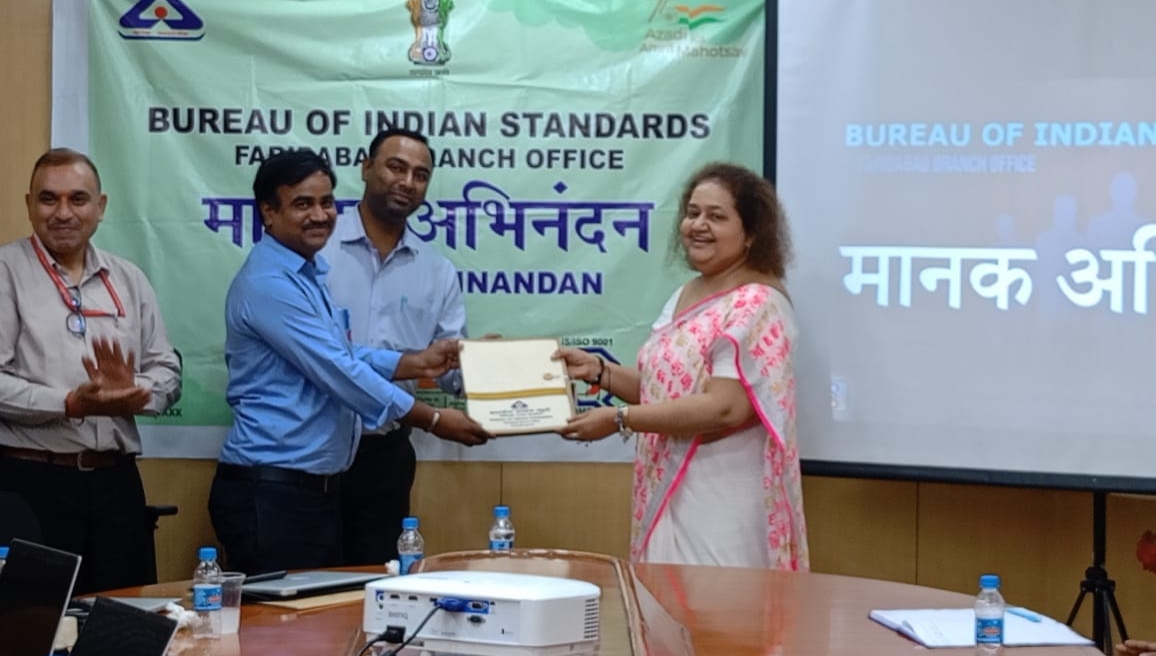
Real sites, real certifications
Our teams work inside factories and plants across India and abroad - inspections, audits and certification milestones spanning BIS, global schemes and the full compliance stack you see on this site.






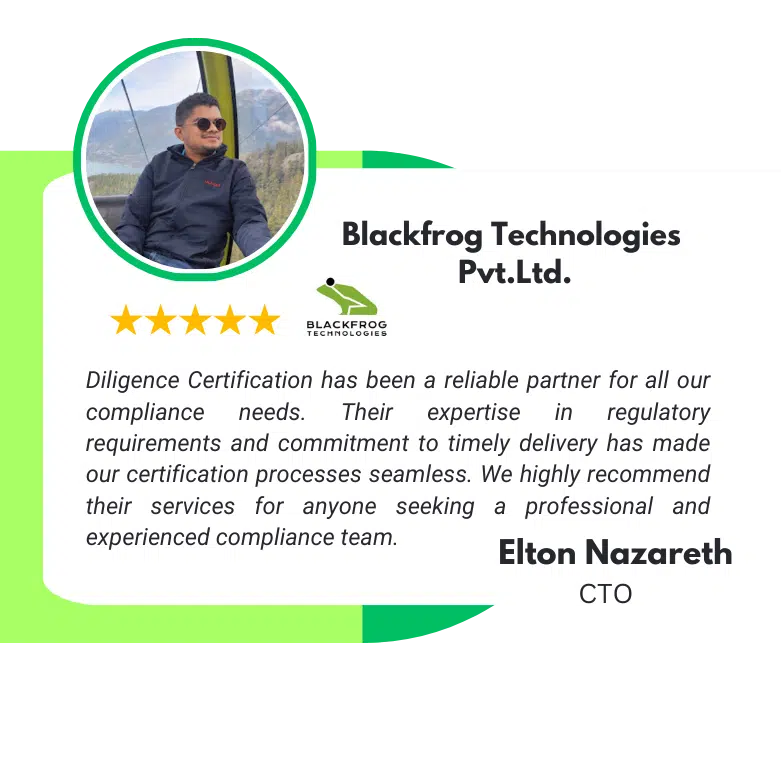
What our clients say
Reviews and feedback from businesses that have worked with Diligence Certifications.









Explore
Related BIS & Standards services
BIS Certification
Get your products BIS certified to ensure compliance with Indian standards.
View details →ISI Mark Certification
ISI Mark Certification for your products with expert guidance.
View details →CRS Mark Certification
BIS CRS Registration for electronics & IT products.
View details →Hallmarking
BIS Hallmarking Certification for gold & jewellery.
View details →FMCS Mark Certification
For foreign manufacturers entering the Indian market.
View details →ECO Mark Certification
Showcase your eco-friendly products with ECO Mark.
View details →Ready to get Commercial Agreement?
Talk to our experts for a clear, fixed-scope plan - most clients get a roadmap the same day.