



 BIS Certification
 CDSCO
CDSCO
 CPCB
CPCB
 LMPC
LMPC
 WPC Approval
 Global Approvals
 TEC
TEC
 ARAI
ARAI
 BEE
BEE
 ISO Certification
 DGCA Certification
 NOC For Steel
 APEDA Registration














 Business Registration
 FSSAI Mark Certification












 (32).jpg)
 Legal Services
 Trademark Registration
 Copyright Registration
 Patent Registration
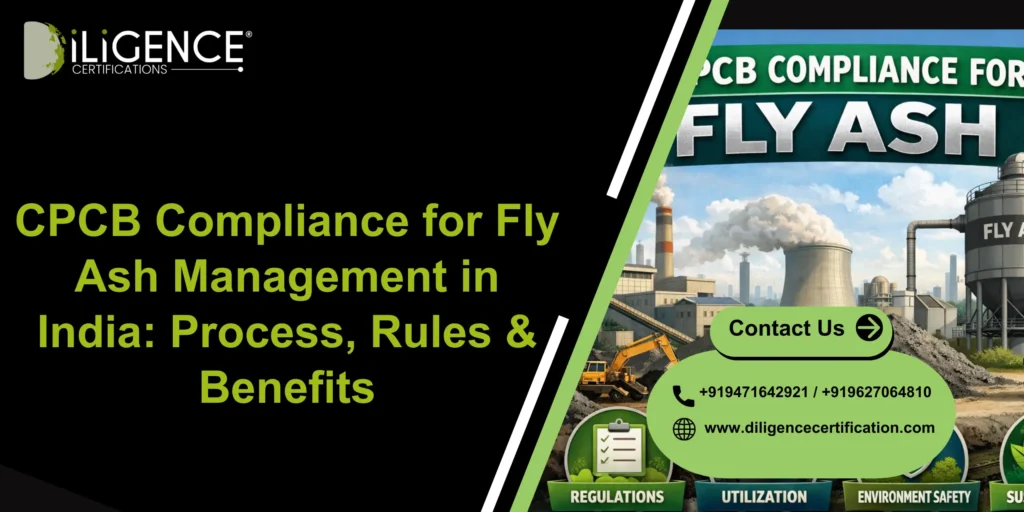
- CPCB Compliance for Fly Ash covered the whole process of fly ash handling, i.e., safe handling, storage, transportation, and utilization, to be done in accordance with the environment regulations of India.
- It also helped industries in not facing penalties, in avoiding the need for environmental compensation, and in not being forced to shut down their operations because of non-compliance.
- Correct and timely compliance not only pick up but also promotes the utilization of fly ash in cement, bricks, roads, and construction.
- This, in turn, leads to less air, water, and soil pollution that would otherwise be caused by improper disposal of fly ash.
- CPCB compliance also creates regulatory trust, sustainability objectives, and business continuity in the long term.

Introduction
Fly ash is primarily a waste from industry and it is mostly produced by coal-fired thermal power plants. While, poor management and disposal of fly ash can cause various types of pollution like air, water and soil, India’s top position among the world fly ash producers has made it a requirement to manage and utilize the waste from the environmental point of view effectively.
To start with, the Central Pollution Control Board (CPCB) has laid down strict compliance requirements through the Fly Ash Utilization Rules for regulating the handling and promoting the safe use of ash. The CPCB is the highest regulatory body operating under the Ministry of Environment, Forest and Climate Change (MoEFCC).
CPCB Compliance for Fly Ash Management in India not only assures that industries will very soon be adopting scientifically proven methods of getting rid of the fly ash but will also be using them for storing, transporting, and disposing of it while still maintaining a low impact on the environment.
What Is CPCB Compliance for Fly Ash Management?
CPCB compliance for fly ash management is a term that defines the process of adhering to the set environmental rules, standards, and guidelines of CPCB regarding the fly ash-related activities, including generation, storage, transportation, utilization, and disposal.
This compliance does not only mean following the CPCB directives and the Fly Ash Utilization Rules but also:
- Has safe systems for fly ash storage and handling
- Utilizes fly ash to the maximum in approved applications
- Does not allow air, water, and soil to get polluted
- Reports on monitoring and compliance are submitted regularly
- The industries that do not meet CPCB fly ash regulations are treated as violating environmental laws and as such, enforcement actions are taken against them.
CPCB compliance for fly ash management is a must in India. Why?
The non-observance of fly ash regulations might result in:
- Very high environmental compensation and fines
- Stopping or closing of operations
- Legal notices and regulatory actions
- Denial of environmental clearances
- Harming of corporate reputation
However, on the other hand, compliance brings about the following:
- Legal right to operate
- Lower environmental and regulatory risks
- Safer disposal and utilization methods
- No troubles during inspections and audits
- Sustainability and compliance certainty over time
Who Needs CPCB Compliance for Fly Ash Management?
CPCB compliance is necessary for:
- Coal-fired thermal power stations
- Self-generating power plants
- Factories producing fly ash
- Cement and brick making companies using fly ash
- Construction and road building firms
- Fly ash management and transport companies
All the regulators of the generation or use of fly ash will have to abide by the rules put down by the CPCB.
Benefits of CPCB Compliance for Fly Ash Management
| Importance | Benefits |
| Legal compliance | Meets CPCB and Fly Ash Utilization Rules |
| Pollution control | Prevents air, land, and water contamination |
| Resource utilization | Encourages productive use of fly ash |
| Business continuity | Avoids shutdowns and penalties |
| Sustainability | Supports circular economy and green growth |
Step-by-Step CPCB Compliance Process for Fly Ash Management
Step 1: Applicability Assessment
First of all, determine the quantity of fly ash produced or used and find out the applicable requirements of both CPCB and MoEFCC.
Step 2: Infrastructure Readiness
Install fly ash management technologies such as silos, ash ponds, dry ash collection systems, and pollution control measures to set up the required infrastructure.
Step 3: Documentation Preparation
Prepare environmental documents including fly ash management plans, utilization contracts, and monitoring reports.
Step 4: Application & Reporting
Use portals to submit compliance declarations, environmental returns, and approvals required to the CPCB/SPCB.
Step 5: Inspection & Verification
Inspect the site where ash is handled, stored, and used, the practices followed may be inspected by the inspectors from time to time.
Step 6: Ongoing Compliance
Continuous monitoring, reporting, and adherence to CPCB standards should be done without any interruption.
Documents Required for CPCB Compliance for Fly Ash
- Certificate of incorporation
- Environmental Clearance (EC)
- Consent to Establish (CTE) / Consent to Operate (CTO)
- Fly ash generation and utilization data
- Fly ash management and utilization plan
- Agreements with fly ash users or transporters
- Environmental monitoring reports
- Site layout and storage details
Timeline, Validity & Renewal
Processing Time: 30–60 working days
Validity: According to EC and consent terms
Renewal: Necessary with updated compliance information
Late Compliance: Could result in penalties or limitations on operations
Timely reporting and renewal are crucial to prevent any disruption in operations.
Conclusion
CPCB Compliance for Fly Ash management in India is not merely a regulatory obligation but a key commitment to the environment and the development of sustainable industrial cities. Compliance takes care of waste properly, makes its usage more than a hundred percent and keeps its management pollution free. CPCB Certification
When adopting CPCB Compliance for Fly Ash practices, industries could benefit in terms of less environmental impact, no legal risks, and a positive contribution to the nation’s sustainability and circular economy objectives. The realization and maintenance of CPCB compliance are a smart investment in responsible operations and long-term business success.
Frequently Asked for Questions
What is CPCB compliance for fly ash?
It guarantees that fly ash is properly managed to be reused and disposed of and is according to the Indian environmental laws.
Who is the one required to adhere to the fly ash compliance regulations?
Thermal plants, fly ash manufacturers, users, and carriers must comply with the rules.
Is the CPCB compliance mandatory for fly ash?
Definitely, it is a must according to both the Fly Ash Utilization Rules and CPCB directions.
What are the consequences of non-compliance with fly ash rules?
The industries can be fined, shut down, or have their permits revoked.
Is the use of fly ash permissible?
CPCB endorses its utilization in the manufacture of cement, bricks, roads, and buildings.
Which body is responsible for fly ash compliance oversight?
CPCB in coordination with the respective State Pollution Control Boards (SPCBs).
Can the fly ash compliance be a sustainable measure?
The answer is yes, it not only utilizes waste but also reinforces the goals of the circular economy.
Is getting the environmental clearance connected with fly ash compliance?
The answer is yes, fly ash conditions are frequently included in the EC and consent approvals.
How frequently does fly ash compliance get reported?
Continuous reporting according to the directions of CPCB/SPCB is obligatory.
Does being compliant with CPCB boost a business's credibility?
The answer is yes, it certainly creates an aura of trust around regulators, clients, and stakeholders.