



 BIS Certification
 CDSCO
CDSCO
 CPCB
CPCB
 LMPC
LMPC
 WPC Approval
 Global Approvals
 TEC
TEC
 ARAI
ARAI
 BEE
BEE
 ISO Certification
 DGCA Certification
 NOC For Steel
 APEDA Registration







 Business Registration
 FSSAI Mark Certification
 Legal Services
 Trademark Registration
 Copyright Registration
 Patent Registration
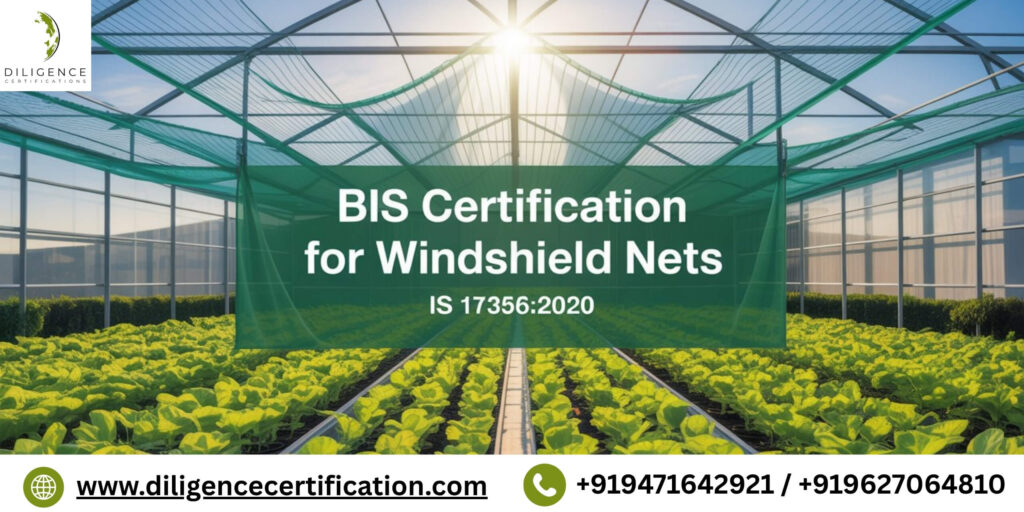
- Windshield nets protect crops from wind damage and pests.
- BIS Certification ensures product quality and safety standards.
- Farmers need certified nets for government subsidies and tenders.
- IS Standard IS 17356:2020 for windshield nets covers material, strength, UV protection.
Introduction
Rajesh Patil, a grape grower in Nashik, saw his crop yield fall by nearly 30% due to recurring wind damage during monsoon months. His agri-input dealer suggested windshield nets, but most available nets were unlabelled imports. Without BIS certificate, he couldn’t apply for the state subsidy under horticulture protection schemes.
This scenario is far too common. Farmers, exporters, and horticulture businesses across India are increasingly realising the value of certified windshield nets—not just for protection but also compliance.
What Are Windshield Nets?
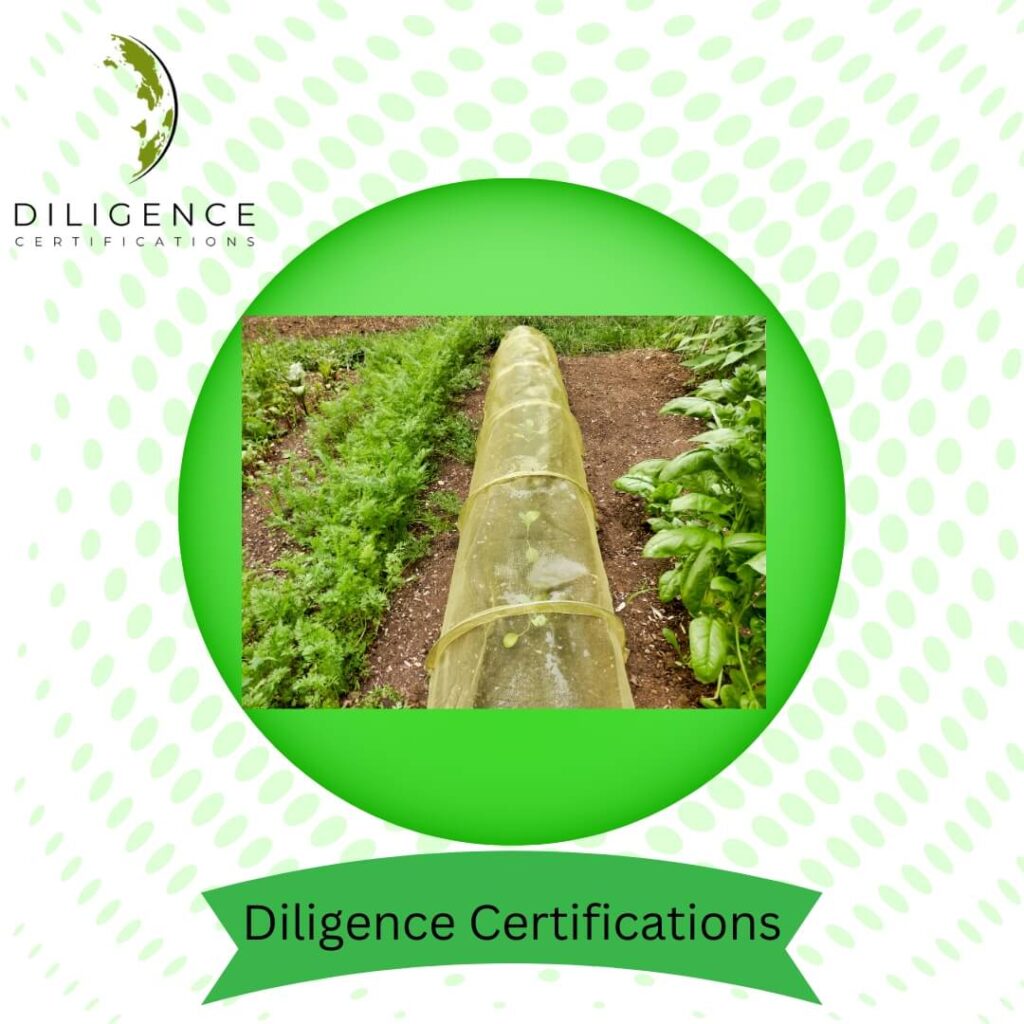
Windshield nets are tough, protective mesh structures placed around fields, nurseries, and/or polyhouses. The basic purpose of windshield nets is to lower wind speeds and protect crops against mechanical damage, dust, insects, and frost.
Typically, these nets are made of high-density polyethylene (HDPE) with UV stabilisation for long-lasting protection in intense sunlight and changing climatic zones like in Rajasthan, Tamil Nadu, or Punjab.
Key Benefits:
- Minimise stem breakage and leaf shredding in windy zones.
- Improve microclimate stability in greenhouses.
- Lower pest intrusion when installed at entry points.
- Reduce pesticide spray drift in open farms.
Which Indian Standard Covers Windshield Nets?
The applicable standard is: IS 17356 : 2020 – Windbreak Net for Agriculture and Horticulture – Specification
This standard outlines:
- Fabric type: Mono-filament or tape yarn
- UV stabilisation: Minimum 3 years resistance
- Wind porosity: Should allow 30%–60% air permeability
- Tear strength: Defined as per net category
For manufacturers, this standard is the backbone of their compliance process under the Compulsory Registration Scheme (CRS) or Scheme I under BIS.
Why BIS Standards Matter for Windshield Nets in Farming
Windshield nets are an essential device in agriculture and horticulture that help protect crops against various external threats such as wind, pests, and inclement weather. These nets act as a shield, enhancing the quantity and quality of crops by providing a modified microenvironment. Because of their significance with respect to agricultural productivity, it is critical that high-quality windshield nets are durable and functional. For this very purpose, the Bureau of Indian Standards (BIS) devised IS 17356:2020, an exhaustive standard exclusively meant for windshield in agriculture and horticulture.
Nets for Agriculture and Horticulture lays out the parameters of selection, pertaining to material and structural design, and performance against various climatic conditions, for which the product must be tested. The fulfilment of these standards is a necessity in the eyes of manufacturers who are interested in gaining recognition within the market, while, at the same time, have to conform to the expectations of their farmers and horticulturists. If the manufacturers follow the IS 17356 standard, they will earn the trust of their clientele and, therefore, build a long-standing relationship based on dependability and effectiveness concerning their windshield nets.
Understanding IS 17356:2020
In agricultural and horticultural purposes, IS 17356:2020 specifies the prerequisite for windshield nets, which:
- Reduces and affects crops by wind velocity.
- Acts as a barrier against pests and animals.
- Provides partial shading thus enhancing crop growth.
- Creates a microclimate under which better yield and quality of produce would be subjected.
- Provides protection from severe weather conditions like storm and hail.
The standards mention aspects like material composition, mesh size, tensile strength, and UV resistance for the effective performance of these nets under a range of environmental conditions.
Test Equipment List for IS 17356:2020
In accordance with IS 17356:2020, all manufacturers are required to carry out certain tests using specified testing equipment. Below is a list of indispensable testing apparatus:
a) Tensile Strength Tester: For breaking strength measurement of the net.
b) UV Accelerated Weathering Tester: For testing resistant to UV.
c) Mesh Size Gauge: To ensure uniformity and dimensions of mesh.
d) Thickness Gauge: To measure material thickness of the net.
e) Elongation Tester: To determine the elasticity and durability of the net.
f) Color Fastness Tester: To check sunlight fastness of the net.
g) Flammability Testing Equipment: For establishing resistance to fire.
h) Wind Load Testing Equipment: For determining the net performance under simulated wind conditions.
i) Abrasion Resistance Tester: Assessing the durability of the net against wear and tear.
Scheme of Inspection and Testing (SIT)
The Scheme of Inspection and Testing (SIT) is a planned systematic approach to inspection and testing for the purpose of product conformity to IS 17356:2020. The following are the major components of SIT:
- Raw Material Inspection:
- Check to see whether the raw materials are as per their set standards.
- Test polymer for UV stabilization and tensile strength.
- In-process Inspection:
- Keep the mesh size, uniformity, and thickness under control while producing.
- Ensure that weaving and knotting processes meet quality standards.
- Finished Product Testing:
- Tensile strength and elongation measurements and tests.
- Resistance to UV, flammability, and performance under wind load.
- Dimensions and abrasion resistance and overall appearance of nets.
- Batch Sampling:
- Stamping and application of a sampling plan for product representation.
- Keep samples for tracking and future reference.
- Documentation:
- Records of all inspections and tests.
- Progressive detailed reports on a production unit.
- Traceability of raw material to production history and finished product.
- Marking and labeling:
- Labeling shall be properly done indicating the name of the manufacturer, batch number, size of the mesh, as well as compliance with IS 17356:2020.
- Installation, maintenance, and storage should also be included in the instructions.
- Periodic Audit and Reviews:
- Periodical reviews regarding the production process and quality control system.
- Internal audits to find and fix the deviation from the standards.
Challenges and Best Practices
Among the challenges manufacturers invariably grapple with to meet total compliance to IS 17356:2020, the following will generally afflict manufacturers:
a)Quality procurement of raw materials;
b)Consistency of batch to batch production data; and
c)Calibrating test equipment accurately.
To overcome these challenges,
It is advisable to:
a) Establish strong supplier evaluation and approval processes;
b) Train manpower involved in quality assurance and testing;
c) Build mechanisms for continuous improvement in production and quality control.
How Certification Helped Exports
GreenHarvest, a Maharashtra-based exporter of roses to the Netherlands, failed two audit checks due to unlabelled windshield netting in their packaging zone. After switching to BIS-certified nets, they passed EU compliance and improved their cold chain efficiency.
Importance of Certification
Obtaining certification under IS 17356:2020 assures customers of the product quality and compliance with national standards. It provides:
- Enhanced market credibility.
- Assurance regarding the durability and reliability of products.
- Compliance with regulatory requirements.
- Gaining a competitive edge in domestic and international markets.
Besides, certified windshield nets contribute towards a sustainable agricultural system by minimizing the need for chemical inputs and crop losses.
Step-by-Step BIS Certification Process for Windshield Nets

Whether you’re a net manufacturer or importer, here’s how the BIS Certificate unfolds:
1. Application Filing
Submit application under Scheme-I of BIS for IS 16008. Include your production unit location, product samples, and quality control measures.
2. Document Submission
- Factory license
- Product technical specs
- Third-party test report (if any)
- List of machinery & QC equipment
- GST and incorporation documents
3. Sample Testing by BIS
BIS officials collect samples from your factory for independent lab testing. Results must match IS parameters.
4. Inspection Visit
Factory audit by BIS to verify:
- Raw material quality
- Manufacturing processes
- Storage and labelling
- Internal quality control lab
5. Grant of Licence
If the audit and test reports are satisfactory, BIS grants a Standard Mark license. This is valid for one or two years initially.
Conclusion
It is historical commitment to quality and customer satisfaction apart from regulatory compliance for adopting this IS 17356:2020 Diligence Certification. It promises that the specified nets adhere to the most stringent standards for crop protection and assure agricultural and horticultural stakeholders. Compliance is to IS 17356 requirements by manufacturers through specified test equipment and procedures in the scheme of inspection as well as testing, which is what defines the critical integrity and trustworthiness of the product.
Those interested in certifying their windshield nets according to the IS 17356:2020-standards or hare referring for more information pertaining to this standard can contact Diligence Certifications BIS consultancy in India for close and adequate guidance and assistance on certification. Their experts also offer support for seamless certification, guiding manufacturers to compliance with complete confidence in the regulatory journey. Contact with Diligence Certifications BIS consultancy in India puts you in the know of ways they can be of help in your certification path journey.
FAQs
What is the purpose of a windshield net?
nets reduce wind speed and protect crops, especially in open farms and greenhouses. They also help in controlling dust and insect entry.
Is BIS certificate mandatory for windshield nets?
Yes, for agricultural applications and government supply, BIS certificate is mandatory under IS IS 17356:2020.
Which Indian standard applies to windshield nets?
IS 17356:2020 – Windbreak Net for Agriculture and Horticulture – Specification.
How long does BIS certification take for windshield nets?
Typically 30–90 days, depending on audit and lab results.
Can imported windshield nets get BIS certified?
Yes, via foreign manufacturer certificate scheme (FMCS), but testing must happen in BIS-recognised labs.
Are BIS certified nets eligible for subsidy?
Yes, most state and central schemes mandate BIS-certified products.
What happens if I sell non-certified windshield nets?
Legal action under BIS Act 2016, including fines and product seizures.
How can I verify a windshield net is BIS certified?
Check for the IS number, standard mark, and verify the licence at bis.gov.in.
Can one BIS licence cover multiple net sizes?
Yes, provided the size variants are mentioned in the application and tested accordingly.
What documents are required to apply for BIS Certification of windshield nets?
To apply, manufacturers need business registration proof, factory licence, product details, quality control plan, and test reports from a BIS-recognized laboratory.