BIS Certification
 CDSCO
CDSCO
 PESO
PESO
 CPCB
CPCB
 LMPC
LMPC
 WPC Approval
 Global Approvals
 TEC
TEC
 ARAI
ARAI
 BEE
BEE
 ISO Certification
 DGCA Certification
 NOC For Steel
 APEDA Registration























 Business Registration
 FSSAI Mark Certification












 (32).jpg)
 Legal Services
 Trademark Registration
 Copyright Registration
 Patent Registration
 By
By - Omnibus Technical Regulation ensures mandatory safety standards for machinery and electrical equipment in India
- Introduces Quality Control Order 2024 under Scheme‑X BIS certification and compliance process
- Targets pumps, compressors, cranes, transformers, textile machinery, metal‑cutters, etc.
- Effective enforcement: August 28, 2025 (extended to Sept 1, 2026 for select categories)
- Highlights compliance steps, exemptions, penalties, and real‑world industry responses
Introduction

In early 2025, I visited a mid‑sized textile mill near Surat-one that legally imports power‑loom machines every quarter. The owner, Mr. Patel, was tense. He’d just learned that the Omnibus Technical Regulation (OTR) under the new Quality Control Order 2024 would soon make BIS certification mandatory. His supplier in China hadn’t secured BIS approval yet. The mill faced a dilemma: stop importing machines, risk production, or scramble to certify under BIS Scheme‑X-all within months.
That real‑world scenario highlights the pulse behind this regulation. India’s machinery import boom-especially in sectors like textiles, construction, and automotive-brought economic promise but also safety risks. OTR 2024 seeks to address these concerns with a uniform, robust standard for Machinery and Electrical Equipment Safety across a wide product range.
What Is the Omnibus Technical Regulation?
The Omnibus Technical Regulation, officially the Machinery and Electrical Equipment Safety (Omnibus Technical Regulation) Order, 2024, is a Quality Control Order (QCO) under the BIS (Conformity Assessment) Regulations Scheme‑X .It mandates that machines, electrical gear, and sub‑assemblies listed under specified HS‑codes must obtain BIS certification before import, sale, or manufacture in India.
Why It Matters
- Safety First: Aligns machinery safety with ISO/IEC benchmarks (e.g., IS 16819/ISO 12100) across general, category‑specific, and detailed product standards
- Consumer Trust: BIS mark reassures buyers-just like the ISI mark on electronics
- Market Access: Non‑certified products can’t be sold or imported post compliance deadline
Timeline & Enforcement
- Gazette Notification: August 28, 2024 - OTR officially issued,
- Enforcement Date: Initially August 28, 2025
- Extension: On June 13, 2025, BIS postponed enforcement to September 1, 2026 for certain components (e.g., textile machines)
- Real‑World Scenario: In Surat (textile capital), factories welcomed the delay-leveraging the extension to strategize
What Does the OTR Cover?
The regulation applies to:
- Complete machines (pumps, compressors, cranes, transformers, generators, etc.)
- Electrical equipment like switchgear, motor‑starters, converters
- Sub‑assemblies/components of these machines, unless covered by other QCOs or CMVR rules
- Products not sold in domestic markets, or those certified under other QCOs, are exempt
Key HS‑Codes Included
Pumps (8413…), compressors (8414…), cranes (8426…), textile looms (8446…), metal‑cutters (8456-8461…), switchgear (8536-8538)… encompassing over 20 major categories
Quality Control Order 2024 & BIS Scheme‑X
Quality Control Order
Under Section 16(1) of the BIS Act, the Ministry of Heavy Industries invokes Scheme‑X for broad‑based regulation of machinery and electrical equipment
BIS Scheme‑X Explained
- Launched in March 2022 to enforce certification of industrial/high‑risk equipment
- Unlike consumer products (Scheme‑I), Scheme‑X demands stricter type testing, factory audits, and risk assessments
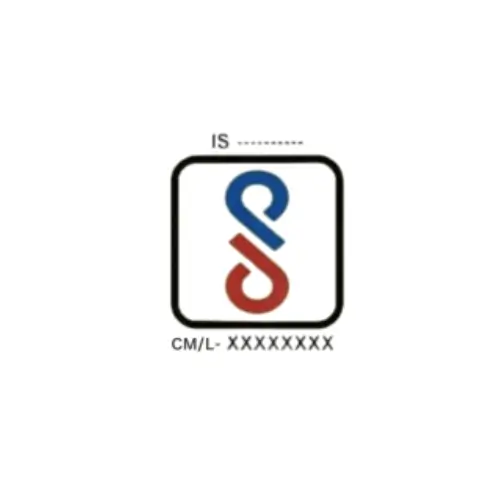
- BIS mark (“CM/L‑…”) or Certificate of Conformity indicates compliance
BIS Scheme X Certification Process
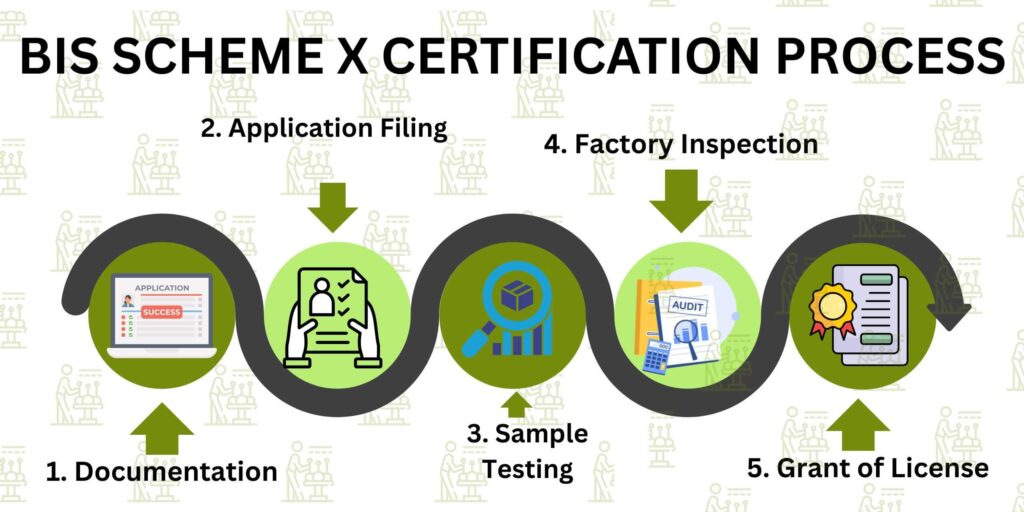
Step 1: Identify affected products
Check HS‑code against First Schedule of OTR Decide if products fall under textile exemptions (deferred)
Step 2: Map applicable standards
- Type‑A: IS 16819:2018 / ISO 12100 - general safety design
- Type‑B/C: Product‑specific IS/IEC standards
In case of conflict, Type‑C prevails
Step 3: Register & Apply on Manakonline
Domestic and foreign manufacturers must register, submit technical dossier
Step 4: Factory Audit & Testing
- Domestic → 2‑day audit; Foreign → 3‑day
- Witness testing at factory/BIS facility
- Required documentation includes manufacturing records, QMS, test reports
Step 5: BIS Certification
- Issued upon compliance
- License valid 3-6 years or CoC issued for one‑time production
Exemptions & Clarifications
- Construction machinery under CMVR rules not covered
- Exports not consumed in India exempt
- Products under other QCOs also exempt
Penalties for Non‑Compliance
Post enforcement, non‑certified machinery cannot be manufactured, sold, or imported . Penalties include market ban, seized shipments, potential fines-a corporate analogy would be like running a factory without statutory pollution consent under the Environment Act.
How Indian Industries Are Responding to BIS QCO
Ludhiana Awareness Event
Over 65 business reps attended the BIS awareness session on June 9, 2025. BIS officials emphasized the historic breadth of this QCO-covering 400+ products under 90+ standards
Surat’s Textile Sector
SGCCI praised the Sept 2026 deferral, allowing its 2,500-4,000 high‑speed loom imports per year to plan compliance, scale up local manufacturing, and support Make‑in‑India
How Quality Control Order 2024 Impacts Indian Industries
India imports heavily from China, Germany, US. Many foreign suppliers have delayed BIS compliance. This could cause temporary supply shocks MSME Switzerland
Small firms will bear compliance cost of ₹50,000 to ₹50 lakh. Without relief, this could strain cash flows Collaborations and government incentives could ease pressure.
Conclusion
The Omnibus Technical Regulation marks India’s first all‑encompassing machinery safety regulation. It introduces the rigorous Quality Control Order 2024 and mandates BIS Scheme‑X compliance across diverse sectors. With an enforcement timeline of August 2025 (extended in parts to September 2026), it demands strategic preparedness-especially from MSMEs, importers, and foreign manufacturers. But compliance also opens doors: higher trust, streamlined exports, and competitive edge.
If you manufacture or import industrial machinery, now is the time to audit your HS‑codes, map standards, initiate BIS registration, and prepare for factory audits. Don’t wait for the deadline to surprise you-start today.
Need help navigating BIS Scheme‑X, OTR standards mapping, or documentation? Connect with our compliance experts and ensure your equipment is market‑ready, safe, and certified under the OTR.
Frequently Asked Questions
What is Omnibus Technical Regulation?
A BIS Quality Control Order (2024) mandating mandatory BIS certification under Scheme‑X for a wide range of machinery/electrical equipment before manufacture, import, sale in India.
When does it take effect?
Enforcement is from 28 August 2025, with an extended deadline of 1 September 2026 for textile‑related machinery.
Which products are covered?
Pumps, compressors, textile looms, cranes, metal‑cutters, generators, switchgear, transformers (refer full HS‑codes in legislation).
What standards must compliance meet?
General design (IS 16819/ISO 12100), Type‑B product categories, and detailed Type‑C standards-whichever applicable, with Type‑C overriding conflicts.
Who needs certification?
Domestic and foreign manufacturers/importers unless exempt (exports, other QCOs, CMVR-governed products).
What is BIS Scheme‑X?
High‑risk industrial certification scheme with rigorous audits, testing, and licensing under BIS.
Steps to get certified?
Identify product, map standards, register in Manakonline, submit dossier, undergo factory audit/test, obtain BIS license or CoC.
What are the exemptions?
Construction machines under CMVR, exports, items covered by other QCOs.
What if non‑compliant?
Prohibition on manufacture/sale/import; BIS may seize non‑certified machinery; possible penalties and business disruption.
How long for compliance?
Domestic compliance takes ~90 days; foreign manufacturers need up to 6-12 months-hence early action critical.