 BIS Certification
 CDSCO
CDSCO
 PESO
PESO
 CPCB
CPCB
 LMPC
LMPC
 WPC Approval
 Global Approvals
 TEC
TEC
 ARAI
ARAI
 BEE
BEE
 ISO Certification
 DGCA Certification
 NOC For Steel
 APEDA Registration





















 Business Registration
 FSSAI Mark Certification











 (32).jpg)
 Legal Services
 Trademark Registration
 Copyright Registration
 Patent Registration
Online Dispute Resolution
Online Dispute Resolution (ODR) settles disputes through digital negotiation, mediation, conciliation and arbitration without going to court. We help you...
Get expert consultation
Trusted by 25,000+ leading enterprises worldwide











Key takeaways
- Online Dispute Resolution (ODR) resolves disputes digitally through negotiation, mediation, conciliation and arbitration, without the cost and delay of going to court.
- It is built on existing law, mainly the Arbitration and Conciliation Act, 1996, the Mediation Act, 2023 and the Information Technology Act, 2000.
- NITI Aayog has actively championed ODR in India to widen access to justice and ease the burden on courts.
- A valid ODR or arbitration clause in your contract is the simplest way to make disputes resolvable online.
- An arbitral award made through ODR is final and binding, and a mediated settlement agreement is enforceable as a court decree.
- ODR is ideal for commercial, consumer, e-commerce, fintech and contractual disputes, especially high-volume, low-value matters.
What is Online Dispute Resolution?
Online Dispute Resolution (ODR) is the resolution of disputes using technology and alternative dispute resolution (ADR) methods, conducted over digital platforms instead of physical courtrooms. It combines negotiation, mediation, conciliation and arbitration with secure communication, document exchange and video conferencing so that parties can resolve a dispute from anywhere.
ODR is not a new law in itself. It applies established legislation, principally the Arbitration and Conciliation Act, 1996 and the Mediation Act, 2023, in a fully online setting. The aim is faster, cheaper and more accessible justice, particularly for the large volume of commercial, consumer and contractual disputes that clog traditional courts.
Methods used in ODR
- Negotiation: parties settle directly through a guided online exchange
- Mediation: a neutral mediator helps the parties reach a voluntary settlement
- Conciliation: a conciliator proposes terms to bridge the gap
- Arbitration: an arbitrator hears the matter and delivers a binding award
- Hybrid (med-arb): mediation first, moving to arbitration if it fails
Who needs ODR
ODR suits any party that wants a private, time-bound and cost-effective resolution, especially where parties are in different cities or the value of each dispute is modest but volumes are high.
| Sector | Typical disputes resolved online |
|---|---|
| E-commerce & retail | Refunds, delivery, product quality and seller disputes |
| Banking & fintech | Loan recovery, EMI default, payment and chargeback disputes |
| Businesses & MSMEs | Vendor, supply, service and contractual disputes |
| Sector | Typical disputes resolved online |
|---|---|
| Consumers | Defective goods, deficient services and unfair trade practices |
| Real estate | Builder-buyer, rent and possession disputes |
| Tech & IP | Licensing, SaaS, domain and online contract disputes |
The laws behind ODR in India
ODR does not run on a single statute. It draws authority from a combination of dispute-resolution and technology laws, all of which recognise digital processes and electronic records.
| Law / framework | Role in ODR |
|---|---|
| Arbitration and Conciliation Act, 1996 | Governs arbitration and conciliation; arbitral awards are final and binding |
| Mediation Act, 2023 | Provides for mediation, including online mediation, and enforceable settlement agreements |
| Information Technology Act, 2000 | Gives legal validity to electronic records and digital signatures used in ODR |
| Consumer Protection Act, 2019 | Enables online consumer complaints via the e-Daakhil portal and mediation |
| Code of Civil Procedure, 1908 (Section 89) | Allows courts to refer disputes to arbitration, mediation or conciliation |
| NITI Aayog ODR policy | Policy push to mainstream ODR and widen access to justice |
Benefits of resolving disputes online
Speed
Time-bound processes resolve matters in weeks, not the years a court case can take.
Lower cost
No travel, reduced legal overheads and lighter procedural expense than litigation.
Resolve from anywhere
Parties join from any location over video and secure document exchange.
Confidential
Proceedings stay private, protecting commercial relationships and reputation.
Enforceable outcomes
Arbitral awards and mediated settlements carry the force of law.
Relationship-friendly
Collaborative methods preserve business and personal relationships better than litigation.
The ODR process, step by step
The exact path depends on whether the parties choose mediation or arbitration, but most ODR matters move through the same broad stages on a secure digital platform.
Mediation / conciliation route
File the matter
The claimant submits the dispute, contract and supporting documents on the ODR platform.
Notice & consent
The other party is notified online and the neutral is appointed.
Online sessions
Parties meet the mediator over video to discuss options and narrow the issues.
Settlement
A signed mediated settlement agreement is enforceable as a court decree.
Arbitration route
Invoke the clause
A party invokes the arbitration or ODR clause and files the claim online.
Appoint the arbitrator
A neutral arbitrator is appointed per the agreement or platform rules.
Hearings
Pleadings, evidence and arguments are exchanged and heard digitally.
Award
The arbitrator issues a reasoned award that is final and binding on the parties.
Documents required
- The underlying contract or agreement with the dispute clause
- The ODR, arbitration or mediation clause, if separate
- Correspondence and notices exchanged between the parties
- Invoices, payment records and statements of account
- A statement of claim setting out the dispute and the relief sought
- Identity and authorisation proof of the parties or signatories
- Any digital evidence: emails, chats, screenshots and transaction logs
Forum, timeline & outcome
- Forum: a private ODR platform or institution, not a physical court.
- Timeline: most matters conclude in a few weeks to a few months, depending on complexity.
- Mediation outcome: a settlement agreement enforceable as a decree of court.
- Arbitration outcome: an award that can be enforced like a court decree.
Have a contract dispute or a consumer grievance? See our Legal Notice and Consumer Complaint services.
The ODR clause in your contracts
The cleanest way to make future disputes resolvable online is to build a well-drafted ODR or arbitration clause into your contracts at the outset. A clear clause removes arguments about whether ODR applies and how the process will run.
A good ODR clause should specify
- The ADR method: negotiation, mediation, conciliation or arbitration
- The ODR platform or institution that will administer the dispute
- The seat, governing law and language of the proceedings
- How the neutral is appointed and how costs are shared
- That electronic records and digital signatures are valid
- That the outcome is final and binding on the parties
How we help you
We pair legal expertise with practical, technology-led process so your dispute is handled cleanly from first notice to final outcome. Whether you want to prevent disputes or resolve a live one, we manage the matter end to end.
- Draft and review ODR, arbitration and mediation clauses for your contracts
- Prepare and file your claim, statement and evidence on the right platform
- Represent you in online mediation, conciliation and arbitration sessions
- Coordinate appointment of neutral mediators and arbitrators
- Draft settlement agreements and reasoned submissions
- Advise on enforcement of awards and mediated settlements
Have a dispute you want resolved online?
Tell us the nature of the dispute and the contract behind it, and we will map the right ODR route, documents and timeline for you.
The Arbitration and Conciliation Act, 1996 is published on India Code.
Frequently asked questions
What is Online Dispute Resolution (ODR)?
ODR is the resolution of disputes using technology together with alternative dispute resolution methods, namely negotiation, mediation, conciliation and arbitration, conducted online instead of in a physical court.
Is an outcome from ODR legally binding?
Yes. An arbitral award made through ODR is final and binding and can be enforced like a court decree, and a mediated settlement agreement under the Mediation Act, 2023 is enforceable as a decree of court.
Which laws govern ODR in India?
ODR applies existing laws in a digital setting, mainly the Arbitration and Conciliation Act, 1996, the Mediation Act, 2023, the Information Technology Act, 2000 and the Consumer Protection Act, 2019, supported by NITI Aayog’s policy work on ODR.
What kinds of disputes are suited to ODR?
Commercial, contractual, consumer, e-commerce, banking, fintech and real-estate disputes are well suited to ODR, particularly high-volume, low-value matters where speed and cost matter most.
Do both parties need to agree to use ODR?
Generally yes. Consent usually comes from an ODR or arbitration clause in the contract, or from the parties agreeing to refer the dispute to ODR after it arises.
How long does an ODR matter take?
Most ODR matters conclude within a few weeks to a few months, far faster than traditional litigation, with the exact duration depending on the method chosen and the complexity of the dispute.
Why choose Diligence Certification?
For compliance and credibility, Diligence is much more than a checklist - we give you real confidence in your business. We examine your legal, financial and operational status, so you are not just certified, but trusted.
Stronger risk protection
Spot hidden legal, financial or operational risks early - fix problems before they become threats.
Earn stakeholder trust
From investors to customers, people want to work with businesses that play by the rules.
Stay legally aligned
Compliant not just on products but on labour, environmental and tax laws too.
Enhance brand reputation
Show the world you operate with integrity and transparency.
Stand out from competitors
In a crowded market, credibility is your biggest edge.
24×7 expert support
A 100+ strong service team guiding you at every step, free first consultation.
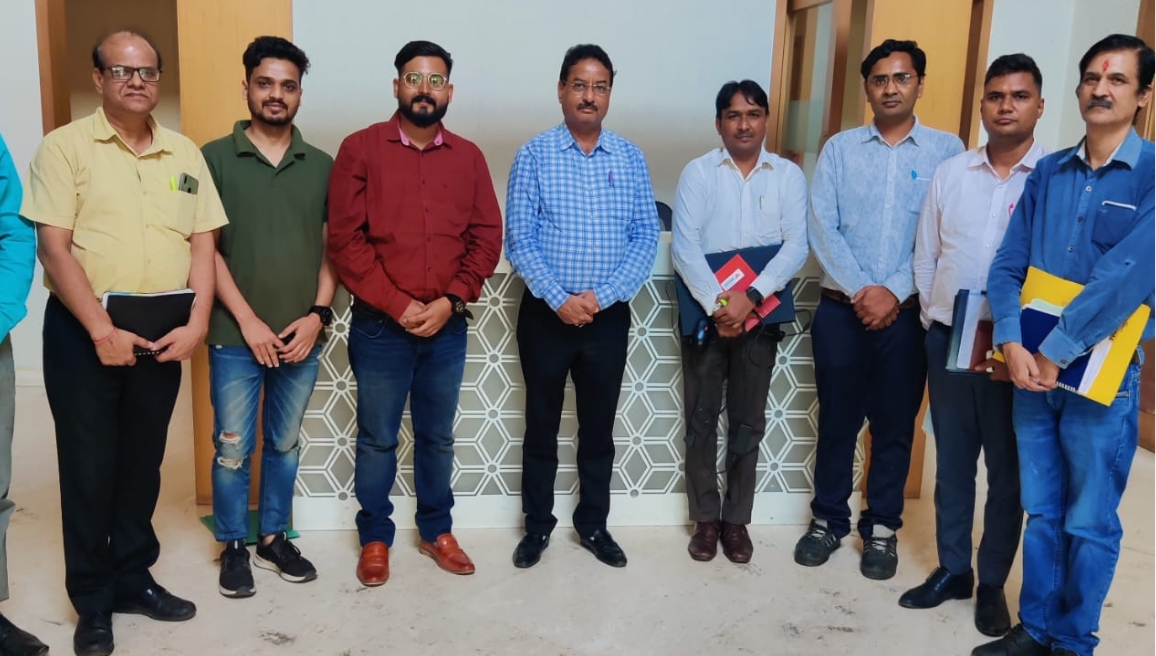
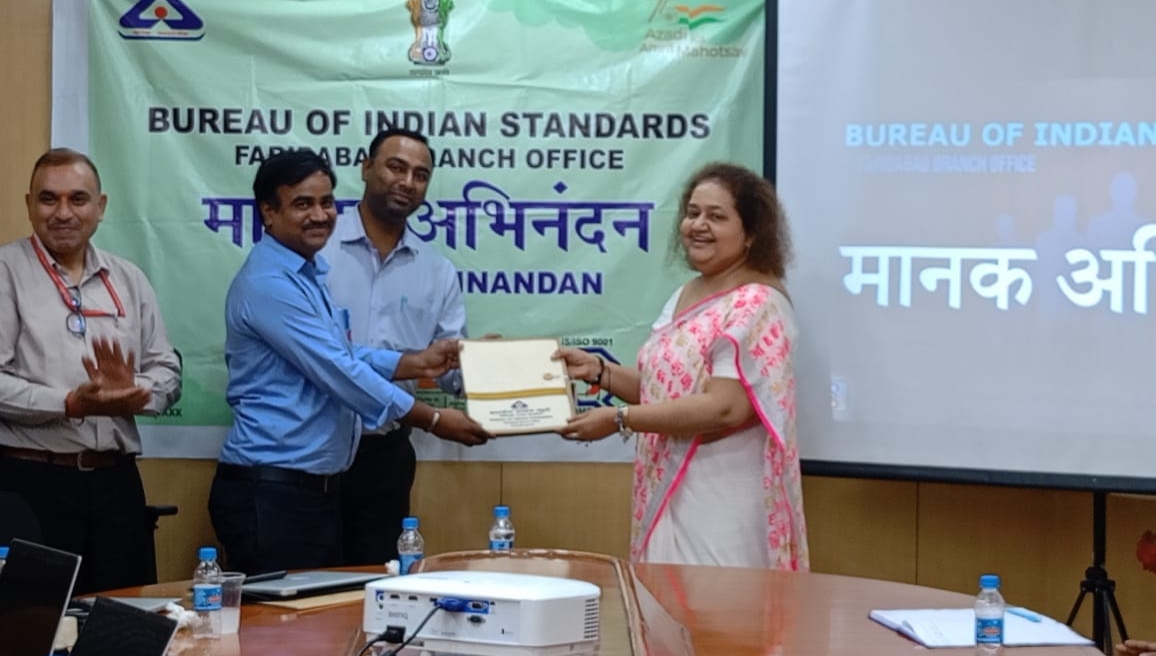
Real sites, real certifications
Our teams work inside factories and plants across India and abroad - inspections, audits and certification milestones spanning BIS, global schemes and the full compliance stack you see on this site.





What our clients say
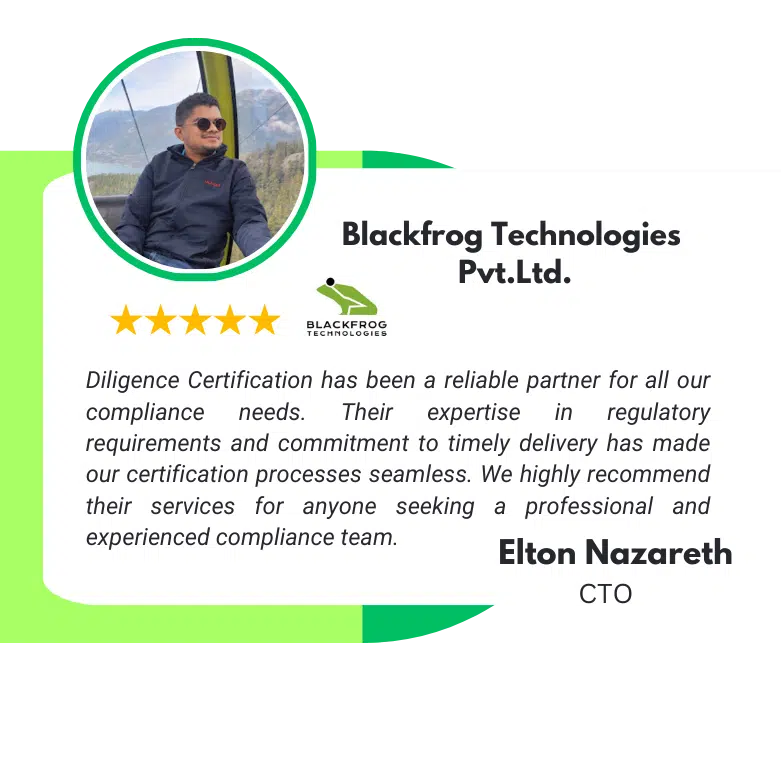
Reviews and feedback from businesses that have worked with Diligence Certifications.







Related Litigation & Courts services
RERA Complaint
Resolve builder disputes via RERA Complaint filing.
View details →Public Interest Litigation
PIL filing - meaning, process & complete guide.
View details →Caveat Petition
File Caveat Petition under CPC to avoid ex-parte orders.
View details →Consumer Court
File consumer complaints - process & guidance.
View details →Special Leave Petition
File SLP under Article 136 of the Constitution.
View details →Bail Application
File bail application - step-by-step guidance.
View details →Ready to get Online Dispute Resolution?
Talk to our experts for a clear, fixed-scope plan - most clients get a roadmap the same day.