 BIS Certification
 CDSCO
CDSCO
 PESO
PESO
 CPCB
CPCB
 LMPC
LMPC
 WPC Approval
 Global Approvals
 TEC
TEC
 ARAI
ARAI
 BEE
BEE
 ISO Certification
 DGCA Certification
 NOC For Steel
 APEDA Registration























 Business Registration
 FSSAI Mark Certification












 (32).jpg)
 Legal Services
 Trademark Registration
 Copyright Registration
 Patent Registration
Trademark Objection
A trademark objection is raised by the Examiner in the Examination Report when your application appears to conflict with the...
Get expert consultation
Trusted by 25,000+ leading enterprises worldwide










Key takeaways
- A trademark objection is raised by the Examiner in the Examination Report under the Trade Marks Act, 1999 when an application appears non-compliant.
- Objections most often fall under Section 9 (absolute grounds) or Section 11 (relative grounds for refusal).
- An objection is not a rejection - it is an opportunity to respond and clarify.
- A written reply must be filed on the IP India portal, normally within 30 days of the Examination Report.
- If the reply does not satisfy the Examiner, the matter proceeds to a show-cause hearing before the Registrar.
- A well-drafted reply with case law and evidence of use greatly improves the chances of acceptance.
What is a trademark objection?
A trademark objection is a formal query raised by the Trade Marks Registry during examination of your application. After you file, the application is examined and the Examiner issues an Examination Report. If the mark appears to fall foul of the Trade Marks Act, 1999, the report records an objection that you must address before the mark can proceed to advertisement and registration.
It is important to understand that an objection is not the same as a refusal. It is the Registry inviting you to explain why your mark should be registered. A clear, well-reasoned reply, supported by evidence and precedent where relevant, often resolves the objection and moves the application forward.
Where an objection sits in the journey
- Application filed on the IP India portal
- Formality check and examination by the Registry
- Examination Report issued, raising objections (if any)
- Reply filed by the applicant within the prescribed time
- Show-cause hearing, if the reply is not accepted
- Advertisement in the Trade Marks Journal, then registration
Common grounds for objection
Most objections cite one of two sections of the Trade Marks Act, 1999. Knowing which applies shapes the entire reply strategy.
| Section 9 - absolute grounds | What it covers |
|---|---|
| Non-distinctive | The mark cannot distinguish your goods or services from others. |
| Descriptive | The mark merely describes the kind, quality, quantity or purpose of the goods. |
| Generic or customary | The mark is common to the trade or used in everyday language. |
| Deceptive | The mark is likely to deceive or cause confusion among the public. |
| Section 11 - relative grounds | What it covers |
|---|---|
| Identical mark | An identical mark already exists for similar goods or services. |
| Similar mark | A deceptively similar earlier mark may cause confusion. |
| Conflicting class | Conflict with a cited mark in the same or allied class. |
| Well-known mark | The mark may take unfair advantage of a well-known earlier mark. |
Objections may also be procedural - for example, an incorrect or vague specification of goods, the wrong applicant details, or a missing user affidavit where prior use is claimed.
Who receives a trademark objection?
Any applicant can receive an objection, regardless of size or sector. It usually arrives weeks to a few months after filing, once the application is examined. Acting promptly is essential because the window to reply is short.
Startups and founders
New brands often face Section 9 objections because the mark is seen as descriptive of the product.
MSMEs and traders
Conflicts with existing marks in the same class commonly trigger Section 11 objections.
Companies and brands
Larger portfolios face objections where a new mark resembles a cited or well-known mark.
Foreign applicants
International filings often need clarification of goods, applicant details or proof of use.
Why you must reply on time
A trademark objection must be answered within the time set by the Registry - generally 30 days from the date of the Examination Report. Ignoring it does not make it go away; it puts your entire application, and the priority date that protects your brand, at risk.
What happens if you do not reply
- The application can be marked abandoned for failure to respond.
- You lose the filing date and priority attached to the mark.
- Re-filing means fresh fees and a fresh queue, with no guarantee the mark is still available.
- A competitor may secure a similar mark in the meantime.
How we resolve an objection, step by step
The reply is filed online through the IP India e-filing portal. We handle the analysis, drafting and follow-through.
Drafting the reply
Analyse the report
We study every objection cited in the Examination Report and identify whether it is on absolute, relative or procedural grounds.
Build the argument
We draft a reasoned reply with legal grounds, distinguishing the mark from cited marks and citing relevant case law.
Gather evidence
Where prior use is claimed, we compile an affidavit and supporting proof such as invoices, advertisements and usage records.
File the response
The reply is filed on the IP India portal within the prescribed period and acknowledged by the Registry.
If a hearing is fixed
Hearing notice
If the reply does not fully satisfy the Examiner, the Registrar fixes a show-cause hearing.
Preparation
We prepare written submissions and assemble the supporting evidence and precedents.
Representation
We appear before the Registrar to argue the case for acceptance of your mark.
Outcome
On acceptance, the mark is advertised in the Trade Marks Journal and moves toward registration.
Documents required
- Copy of the Examination Report
- Trademark application number and filing details
- Power of Attorney (Form TM-48) authorising the agent
- Details and representation of the mark applied for
- User affidavit, where prior use of the mark is claimed
- Evidence of use: invoices, brochures, packaging, advertisements
- Details of any cited marks to be distinguished
Timeline & fees
- The reply is normally due within 30 days of the Examination Report.
- Filing the reply itself carries no separate government fee in most cases.
- A show-cause hearing, if fixed, follows the reply by weeks to a few months.
- Professional charges depend on the grounds raised, drafting effort and whether a hearing is needed.
Related services? See our Trademark Registration, Trademark Renewal and Copyright Registration services.
Benefits of a strong objection reply
Protect your priority
A timely reply preserves your filing date and the head start it gives your brand.
Higher acceptance
A reasoned, evidence-backed reply improves the odds of the mark being accepted.
Avoid re-filing costs
Overcoming the objection saves the fees and delay of starting a fresh application.
Keep momentum
Resolving objections quickly keeps the application moving toward advertisement.
Legal certainty
A clear record of arguments strengthens your position in any later dispute.
Brand confidence
A registered mark builds trust with customers, partners and marketplaces.
Objection is not opposition
These two stages are often confused. They occur at different points and involve different parties.
| Aspect | Objection |
|---|---|
| Raised by | The Examiner at the Trade Marks Registry |
| Stage | During examination, before advertisement |
| Response | Reply to the Examination Report |
| Aspect | Opposition |
|---|---|
| Raised by | A third party after publication |
| Stage | After advertisement in the Trade Marks Journal |
| Response | Counter-statement and evidence in opposition proceedings |
Why choose Diligence Certifications
Replying to a trademark objection is a matter of strategy, not just paperwork. Our team reads the Examiner’s reasoning closely, distinguishes your mark from cited marks, and builds a reply that stands up to scrutiny - and we represent you at the hearing if one is fixed.
- Experienced trademark attorneys and agents handling Section 9 and 11 objections
- Carefully drafted replies with case law and evidence of use
- Timely filing on the IP India portal, well within the deadline
- End-to-end support through hearings, advertisement and registration
Received a trademark objection?
Share your Examination Report and we will assess the grounds, explain your options and draft a reply that gives your mark the best chance of acceptance.
Examination reports and objections are issued by Intellectual Property India.
Frequently asked questions
What is a trademark objection?
It is a query raised by the Examiner in the Examination Report when your application appears to conflict with the Trade Marks Act, 1999. It is an invitation to explain why your mark should be registered, not a final refusal.
How long do I have to reply to an objection?
The reply is usually due within 30 days of the date of the Examination Report. Filing within this window is essential to keep your application alive and protect your priority date.
What is the difference between Section 9 and Section 11 objections?
Section 9 covers absolute grounds, such as a mark being descriptive or non-distinctive. Section 11 covers relative grounds, where the mark is identical or deceptively similar to an earlier mark.
What happens if I do not reply to the objection?
The application can be treated as abandoned. You then lose your filing date and would have to file afresh, paying new fees and risking that the mark is no longer available.
Is a hearing always required after I reply?
No. If the reply satisfies the Examiner, the mark proceeds to advertisement. A show-cause hearing is fixed only when the Registry is not satisfied with the written reply.
How is an objection different from an opposition?
An objection is raised by the Registry during examination, before publication. An opposition is filed by a third party after the mark is advertised in the Trade Marks Journal.
Why choose Diligence Certification?
For compliance and credibility, Diligence is much more than a checklist - we give you real confidence in your business. We examine your legal, financial and operational status, so you are not just certified, but trusted.
Stronger risk protection
Spot hidden legal, financial or operational risks early - fix problems before they become threats.
Earn stakeholder trust
From investors to customers, people want to work with businesses that play by the rules.
Stay legally aligned
Compliant not just on products but on labour, environmental and tax laws too.
Enhance brand reputation
Show the world you operate with integrity and transparency.
Stand out from competitors
In a crowded market, credibility is your biggest edge.
24×7 expert support
A 100+ strong service team guiding you at every step, free first consultation.
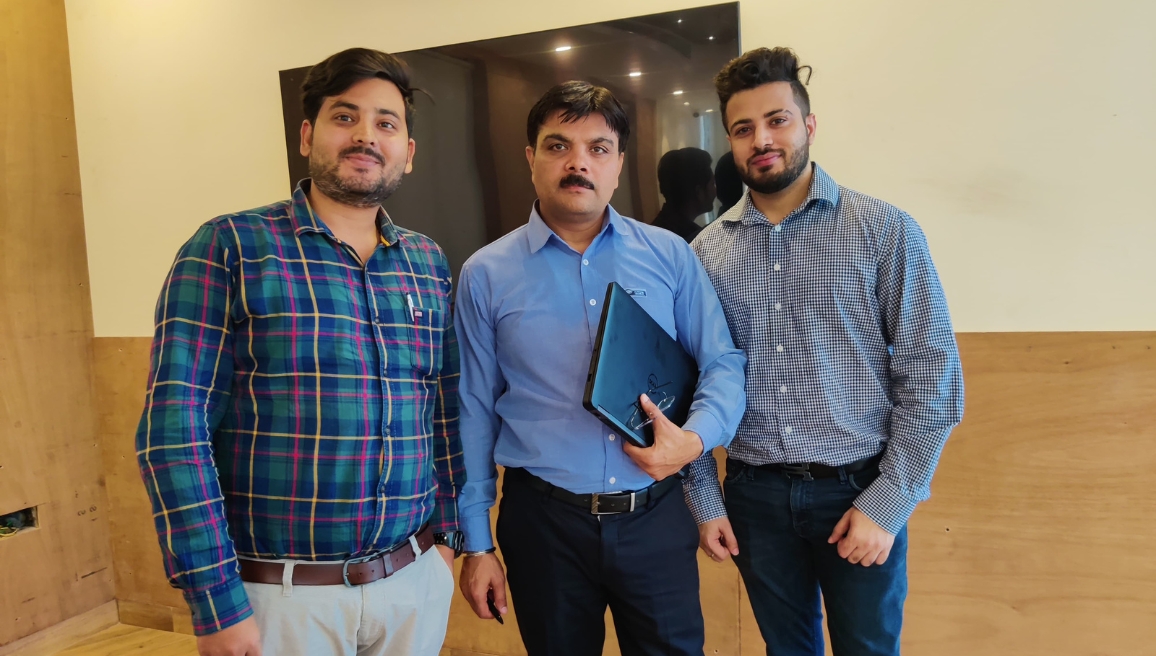
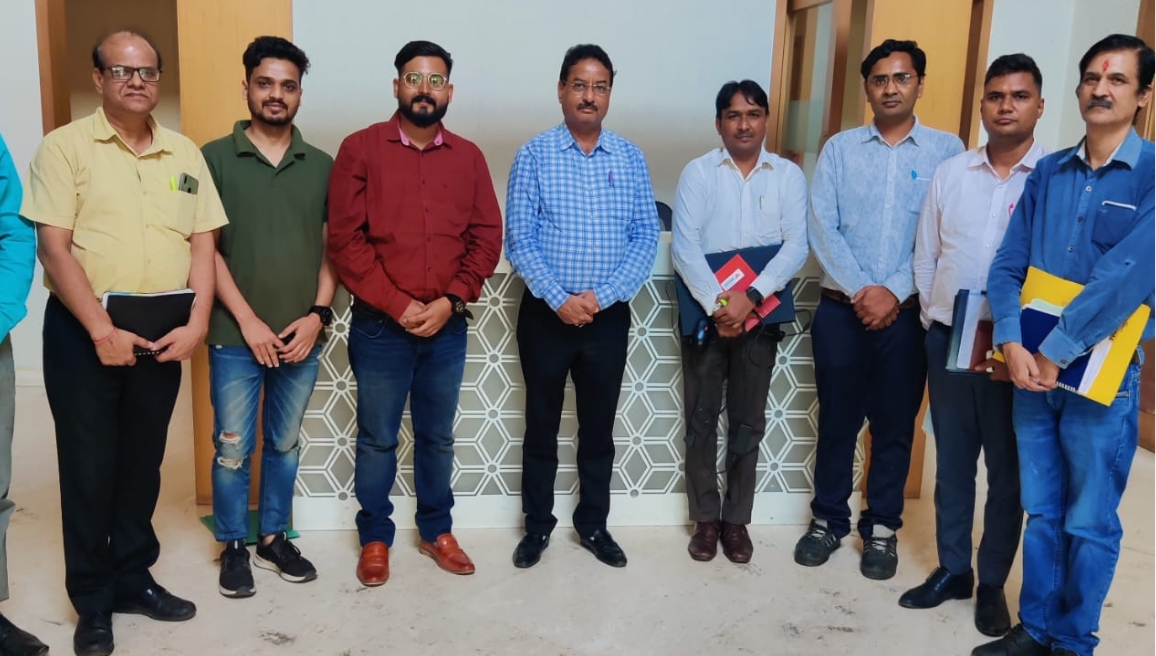
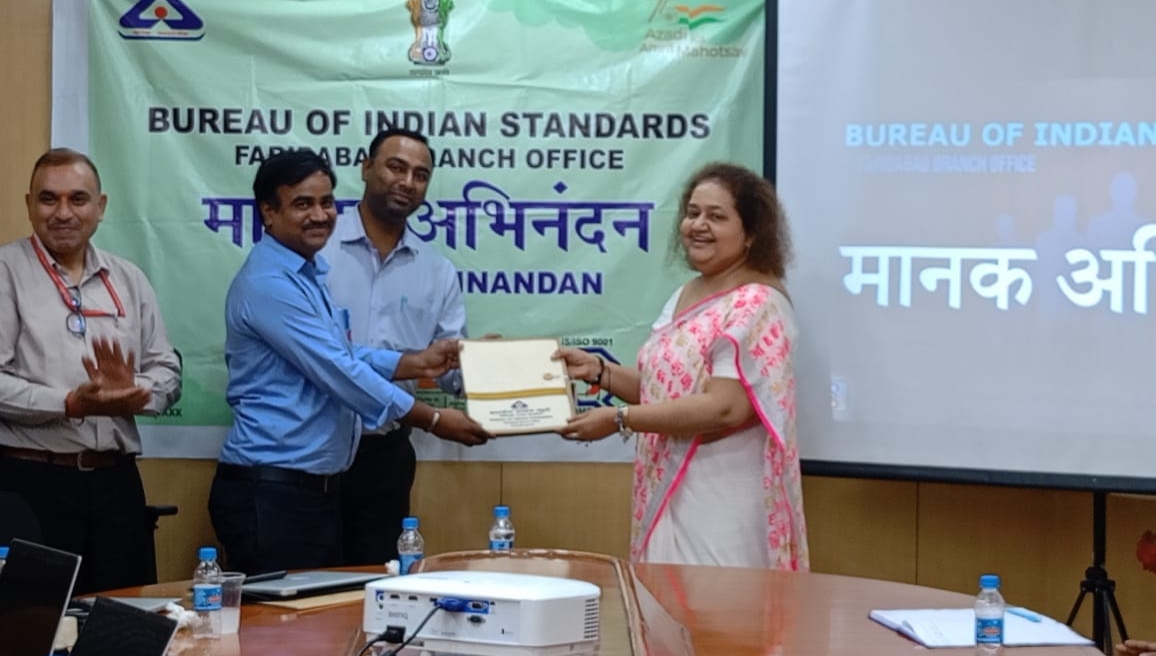
Real sites, real certifications
Our teams work inside factories and plants across India and abroad - inspections, audits and certification milestones spanning BIS, global schemes and the full compliance stack you see on this site.




What our clients say
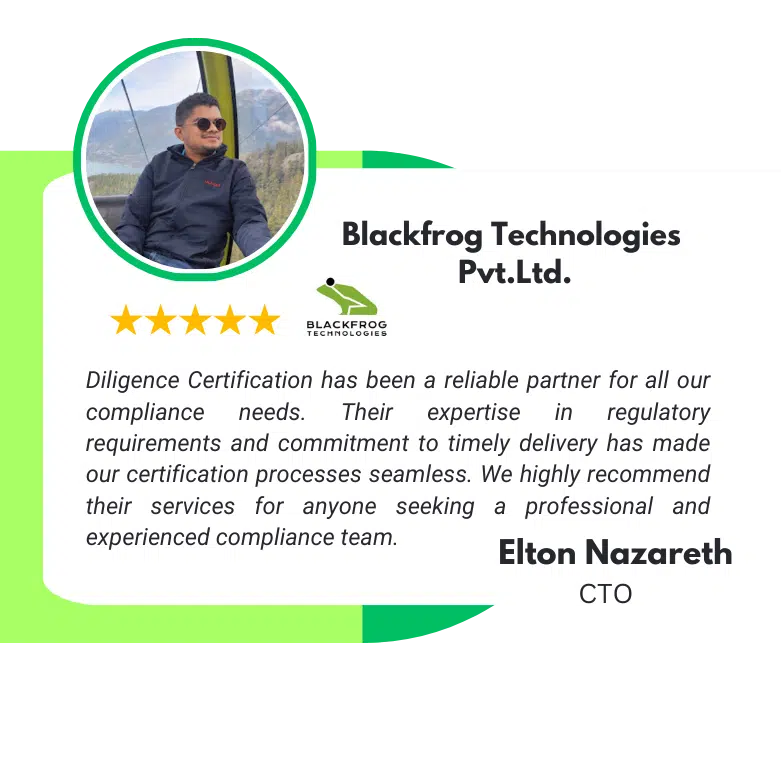
Reviews and feedback from businesses that have worked with Diligence Certifications.









Related IP & Licensing services
Trademark Registration
Protect your brand - trademark registration.
View details →PSARA License
Private Security Agency license under PSARA.
View details →Brand Name Registration
Register your brand name as a trademark under the Trade Marks Act, 1999.
View details →Copyright Assignment
A clear guide to Copyright Assignment under the Copyright Act, 1957: what it is, Sections.
View details →Copyright Licensing
A guide to copyright licensing in India under the Copyright Act, 1957: voluntary, compulsory.
View details →Copyright Objection
Received a copyright objection or discrepancy notice?
View details →Ready to get Trademark Objection?
Talk to our experts for a clear, fixed-scope plan - most clients get a roadmap the same day.