 BIS Certification
 CDSCO
CDSCO
 PESO
PESO
 CPCB
CPCB
 LMPC
LMPC
 WPC Approval
 Global Approvals
 TEC
TEC
 ARAI
ARAI
 BEE
BEE
 ISO Certification
 DGCA Certification
 NOC For Steel
 APEDA Registration























 Business Registration
 FSSAI Mark Certification












 (32).jpg)
 Legal Services
 Trademark Registration
 Copyright Registration
 Patent Registration
Remote Pilot Certificate
A Remote Pilot Certificate (RPC) is the DGCA authorization that lets an individual legally operate drones for commercial and professional...
Get expert consultation
Trusted by 25,000+ leading enterprises worldwide

Key takeaways
- A Remote Pilot Certificate (RPC) is mandatory for commercial drone operations in India.
- It is regulated under the Drone Rules, 2021, notified by the Ministry of Civil Aviation.
- The Directorate General of Civil Aviation (DGCA) is the regulatory authority that oversees certification.
- Training must be completed from a DGCA-approved Remote Pilot Training Organisation (RPTO).
- Applicants must be at least 18 years old and meet basic education and medical fitness criteria.
- The certificate is issued digitally after candidates pass written and practical assessments.
- Operating without an RPC, where required, can lead to penalties, seizure of equipment and legal action.
What is a Remote Pilot Certificate?
A Remote Pilot Certificate (RPC) is an official authorization issued under DGCA guidelines that allows an individual to operate drones legally in India. It confirms that the pilot has completed proper theoretical and practical training from a DGCA-approved Remote Pilot Training Organisation (RPTO), and demonstrates competence in drone operations, safety procedures, aviation regulations and emergency handling.
India’s drone industry is growing rapidly across sectors such as agriculture, real estate, construction, filmmaking, surveillance and mapping. As the use of unmanned aircraft systems (UAS) increases, the government has introduced strict regulations to ensure safety, accountability and controlled airspace operation. In simple terms, the RPC is similar to a driving licence, but for drone pilots.
Who needs a Remote Pilot Certificate
- Aerial photographers and videographers
- Surveying and mapping professionals
- Agricultural drone operators (spraying and monitoring)
- Construction inspection teams
- Real estate drone service providers
- Film and media production companies
- Security and surveillance operators
Drone categories and eligibility
Under the Drone Rules, drones are classified by their maximum take-off weight (MTOW). RPC requirements generally apply to Micro (for commercial use), Small, Medium and Large categories. Nano drones used for recreational purposes may have certain exemptions, but commercial operation may still require compliance.
| Drone category | Maximum take-off weight |
|---|---|
| Nano Drone | Up to 250 grams |
| Micro Drone | 250 grams to 2 kg |
| Small Drone | 2 kg to 25 kg |
| Medium Drone | 25 kg to 150 kg |
| Large Drone | Above 150 kg |
| Eligibility criteria | Requirement |
|---|---|
| Minimum age | 18 years |
| Education | Minimum 10th pass (generally) |
| Identity | Valid government identity proof |
| Medical | Basic medical fitness |
| Training | Completion of training from a DGCA-approved RPTO |
Benefits of an RPC
Legal authorization
Operate drones commercially with full authorization under DGCA regulations.
Enhanced credibility
Certification builds trust with clients who expect qualified, compliant pilots.
Access to contracts
Become eligible for government and private drone assignments and tenders.
Career opportunities
Open more openings across the fast-growing drone industry in India.
Safety knowledge
Gain advanced safety knowledge and operational confidence in the field.
Regulatory compliance
Stay compliant with aviation regulations and avoid enforcement action.
Why an RPC is mandatory
The operation of drones in India is regulated under the Drone Rules, 2021, notified by the Ministry of Civil Aviation. These rules replaced the earlier Unmanned Aircraft System (UAS) Rules to simplify compliance and promote the drone ecosystem. The DGCA approves RPTOs, defines the training syllabus and norms, monitors compliance, and issues and supervises certification standards. Individuals operating certain categories of drones must obtain an RPC from a DGCA-authorized training body.
Penalties for operating without an RPC
- Monetary penalties imposed under the applicable rules.
- Seizure of drone equipment by the authorities.
- Suspension of operations for non-compliant operators.
- Legal proceedings under aviation and environmental laws.
- Reputational damage to the business and its operators.
The certification process, step by step
Obtaining an RPC involves structured training and evaluation through a DGCA-approved RPTO. The duration of the training program may vary depending on the drone category.
Training and enrolment
Choose a DGCA-approved RPTO
Enrol with a Remote Pilot Training Organisation approved by the DGCA.
Registration
Submit personal details and the required documents for course registration.
Ground training
Classroom instruction on drone regulations, airspace structure, meteorology, safety protocols and emergency procedures.
Practical and certification
Simulator and practical training
Hands-on flying practice under instructor supervision.
Assessment and examination
Candidates must pass both written and practical tests.
Certificate issuance
On successful completion, the Remote Pilot Certificate is issued digitally as per regulatory guidelines.
Documents required
- Aadhaar Card or Passport
- Educational qualification certificate
- Passport-size photographs
- Medical fitness declaration
- Registration proof from the RPTO
Providing accurate documentation helps avoid delays during certification.
Validity & renewal
- Validity depends on prevailing DGCA regulations.
- In many cases the certificate remains valid for a defined period, subject to regulatory updates.
- Pilots must stay updated with DGCA announcements and comply with renewal or refresher training, if applicable.
- Operating with an expired or invalid certificate can result in non-compliance issues.
Planning drone operations? See our Drone Registration, UIN Registration and DGCA Certification services.
How we help
Obtaining a Remote Pilot Certificate requires proper guidance, accurate documentation and compliance with DGCA regulations. Our support covers the full journey:
- Expert regulatory guidance on DGCA norms and the Drone Rules at every stage.
- End-to-end support from selecting a DGCA-approved RPTO to documentation and application coordination.
- Error-free documentation to avoid rejections, delays or compliance issues.
- Fast and smooth processing to reduce delays and complete certification efficiently.
- Dedicated consultation based on your drone category, business needs and career goals.
- Ongoing compliance support for regulatory changes and renewal requirements after certification.
Ready to start your drone career?
Tell us your drone category and intended use, and we will map the exact RPTO, documents and timeline for your Remote Pilot Certificate.
Frequently asked questions
Is a Remote Pilot Certificate mandatory in India?
Yes. It is mandatory for operating certain categories of drones commercially. The certificate is issued under DGCA regulations through approved RPTOs.
What is the minimum age to apply?
The applicant must be at least 18 years old, along with meeting the education, identity and medical fitness criteria.
Is RPTO training compulsory?
Yes, training from a DGCA-approved RPTO is required. Only exempted nano drones used for recreational purposes may not require certification.
What documents are needed for the RPC?
Identity proof, educational qualification certificate, passport-size photographs, a medical fitness declaration and RPTO registration proof.
How long is the certificate valid?
Validity depends on prevailing DGCA regulations and may require renewal or refresher training. Pilots should stay updated with DGCA announcements.
What happens if I fly a drone without an RPC?
You may face monetary penalties, seizure of equipment, suspension of operations or legal action under aviation and environmental laws.
Why choose Diligence Certification?
For compliance and credibility, Diligence is much more than a checklist - we give you real confidence in your business. We examine your legal, financial and operational status, so you are not just certified, but trusted.
Stronger risk protection
Spot hidden legal, financial or operational risks early - fix problems before they become threats.
Earn stakeholder trust
From investors to customers, people want to work with businesses that play by the rules.
Stay legally aligned
Compliant not just on products but on labour, environmental and tax laws too.
Enhance brand reputation
Show the world you operate with integrity and transparency.
Stand out from competitors
In a crowded market, credibility is your biggest edge.
24×7 expert support
A 100+ strong service team guiding you at every step, free first consultation.
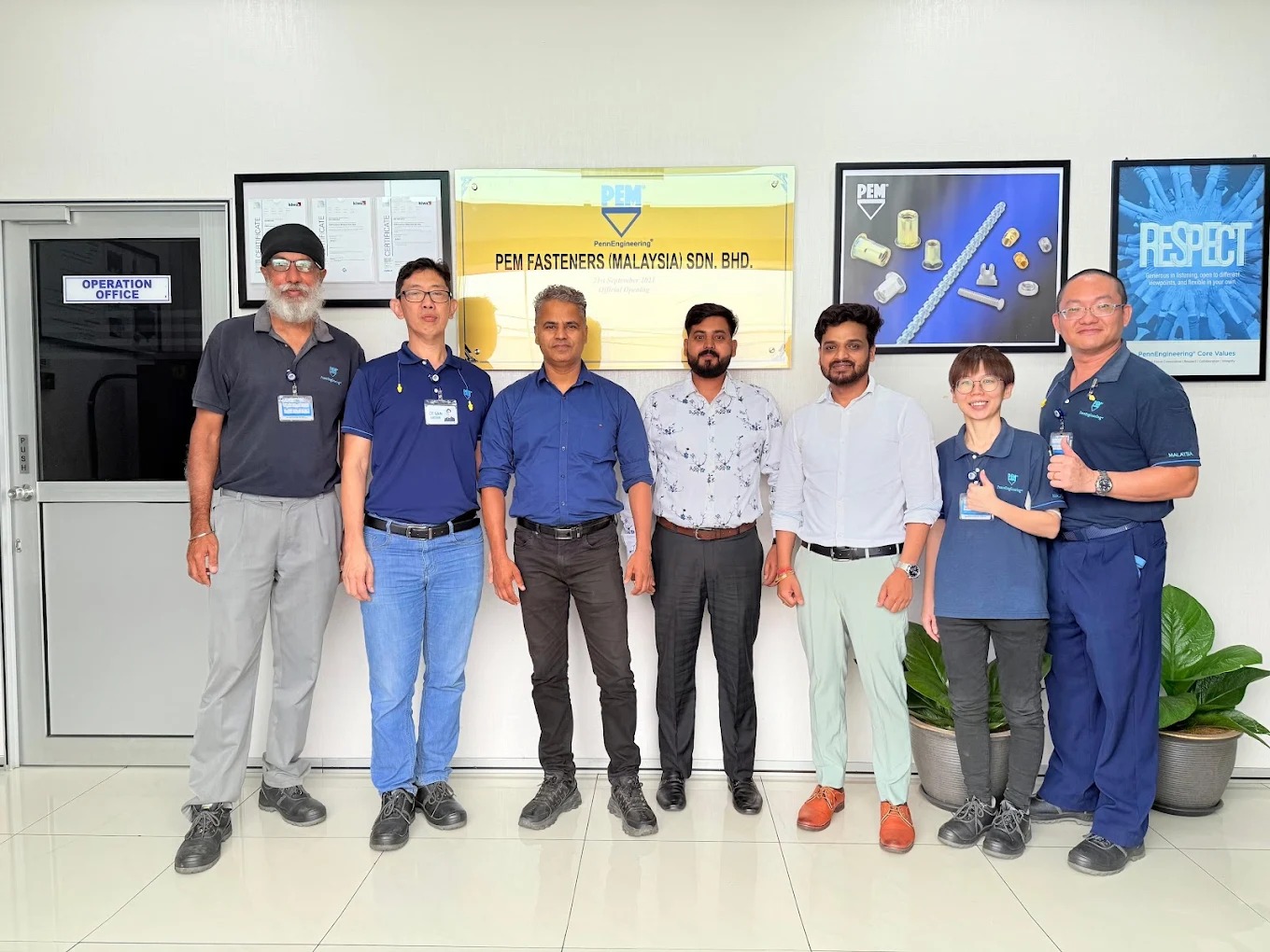
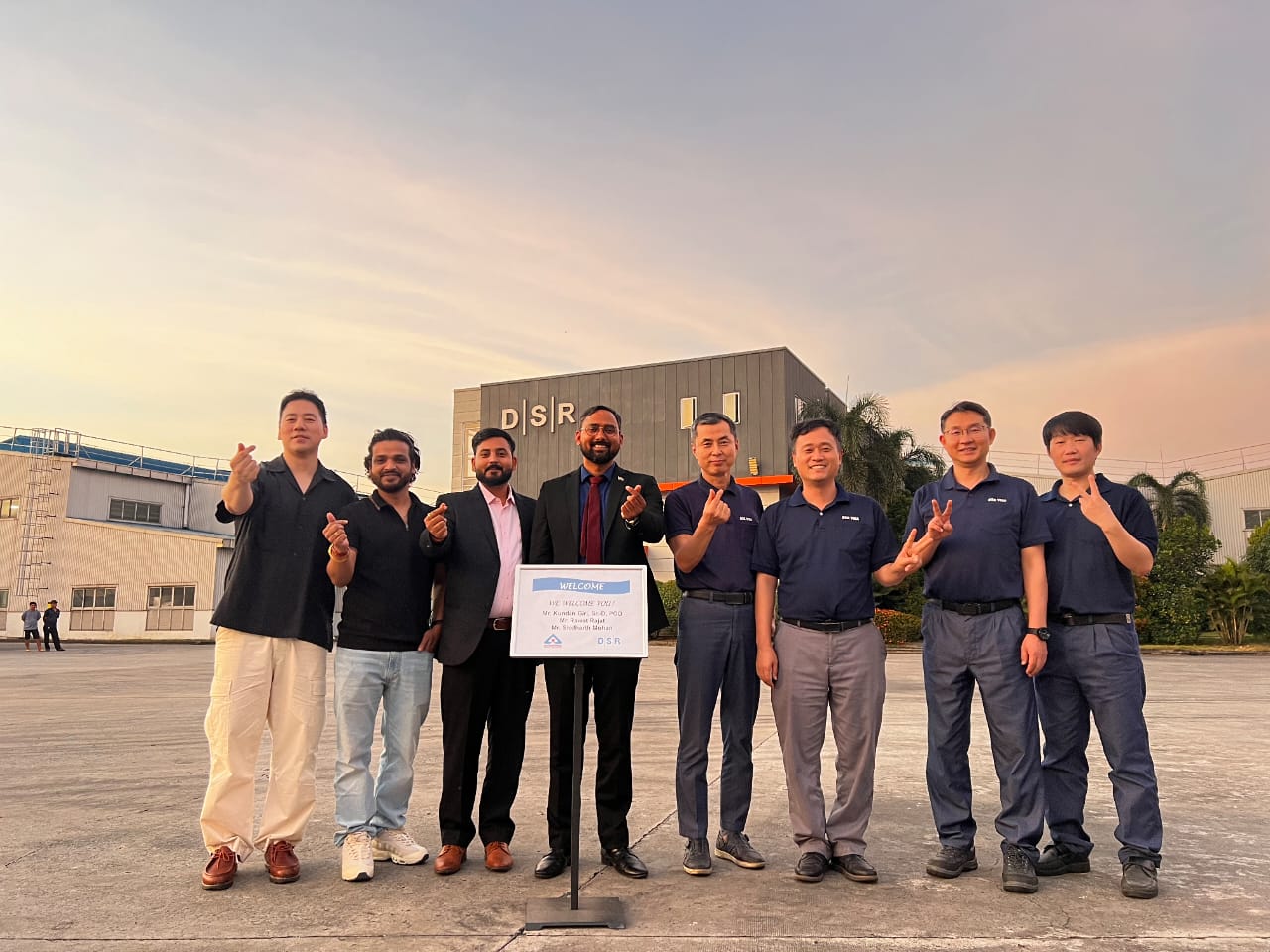
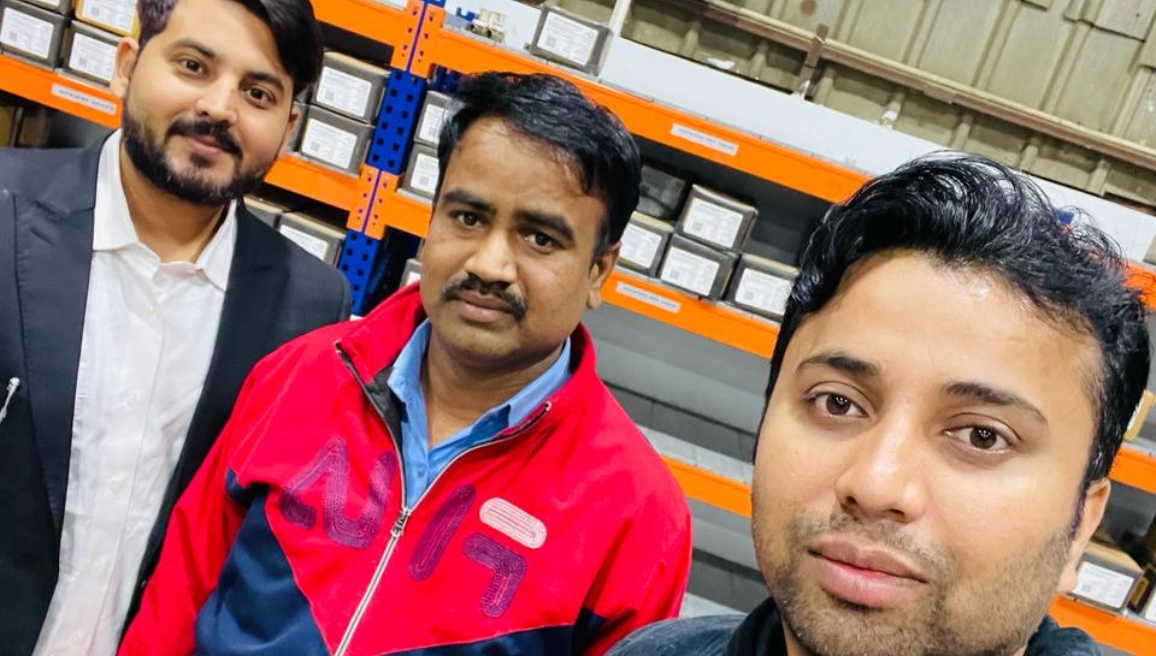
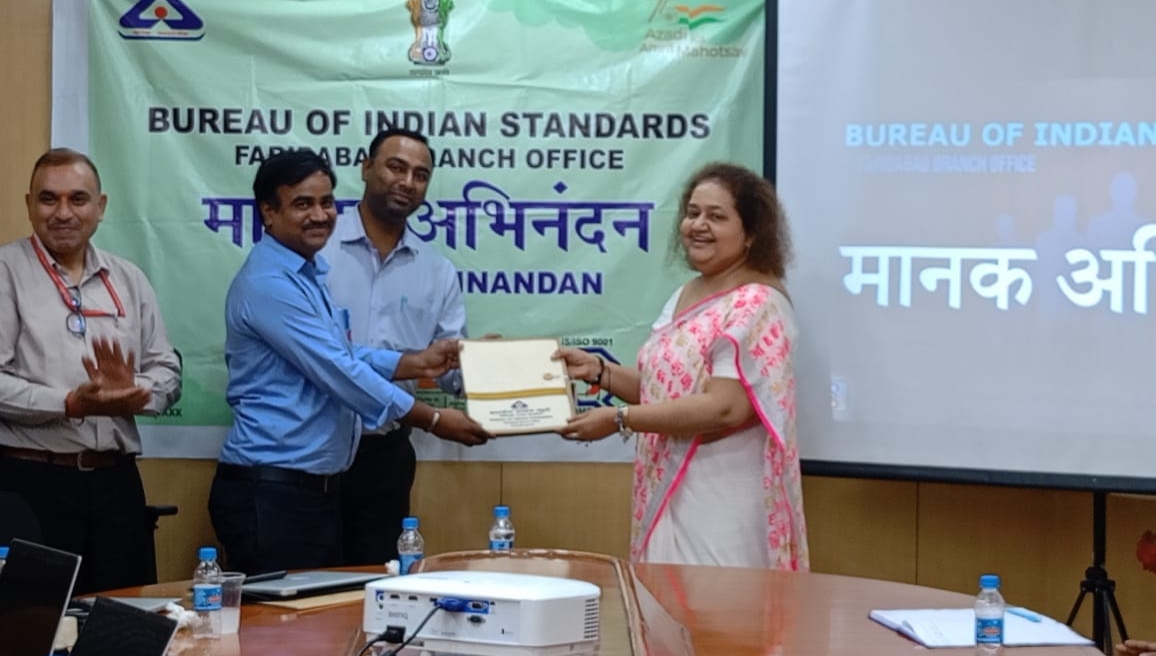
Real sites, real certifications
Our teams work inside factories and plants across India and abroad - inspections, audits and certification milestones spanning BIS, global schemes and the full compliance stack you see on this site.

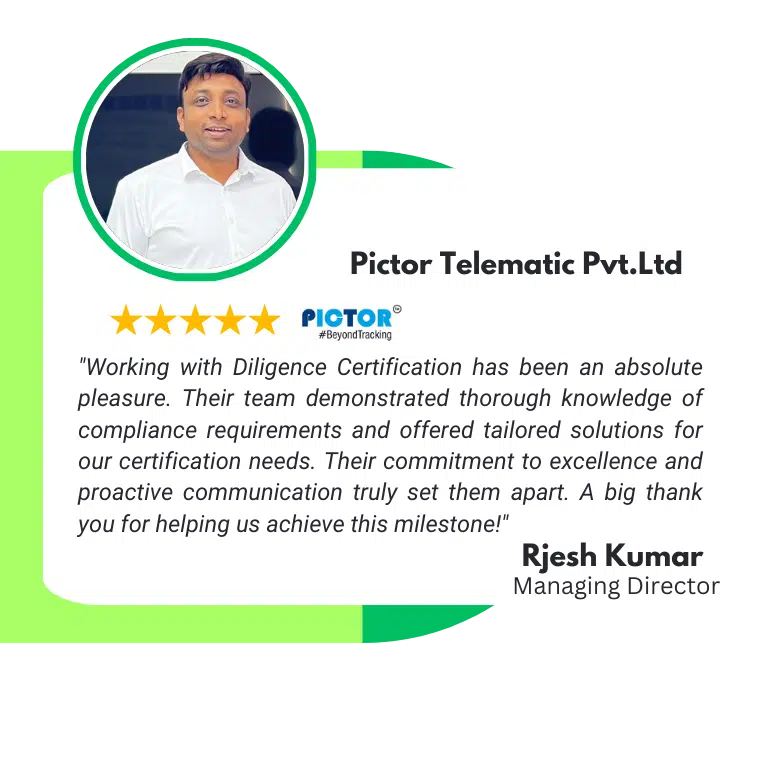
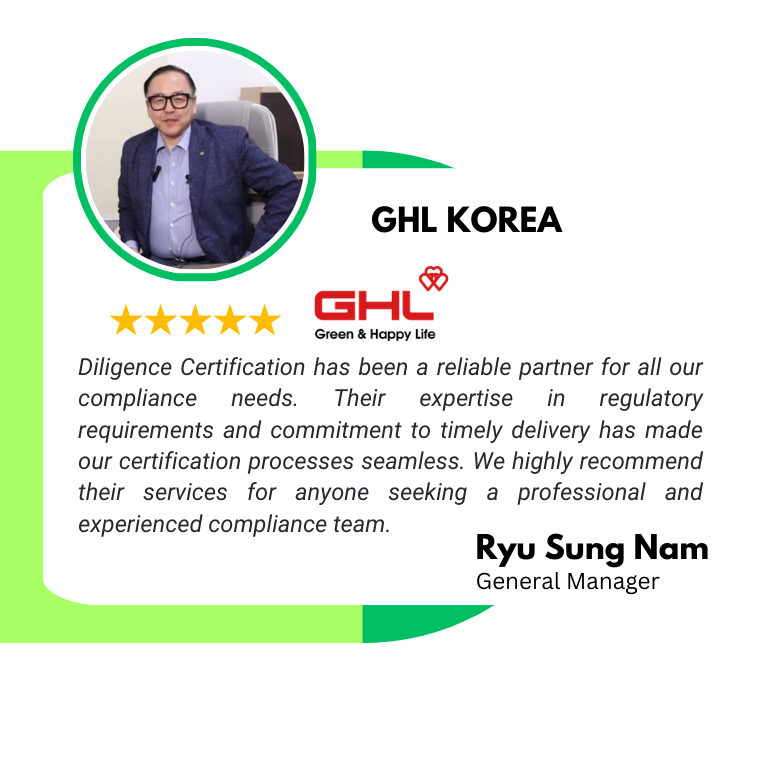
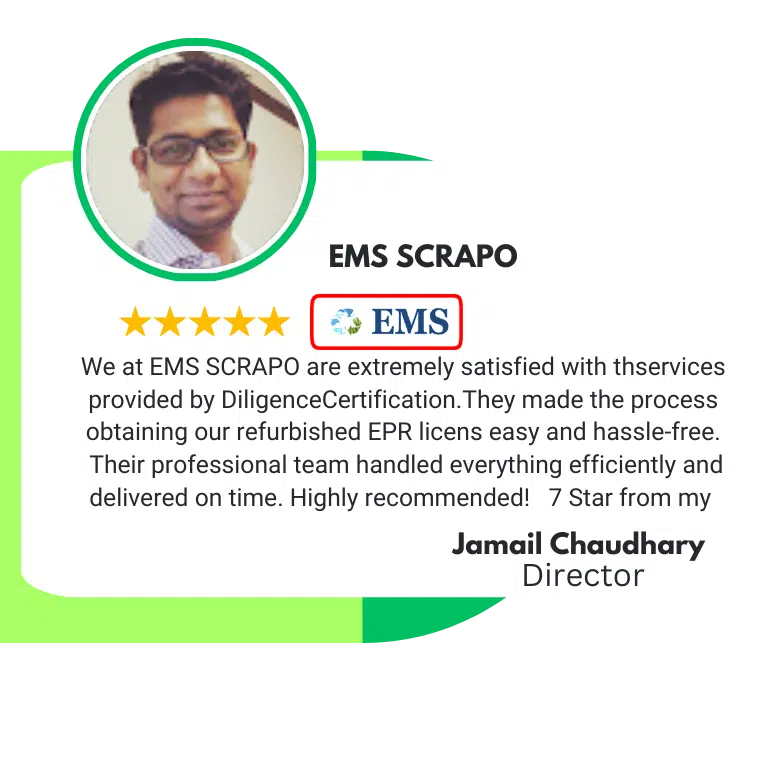
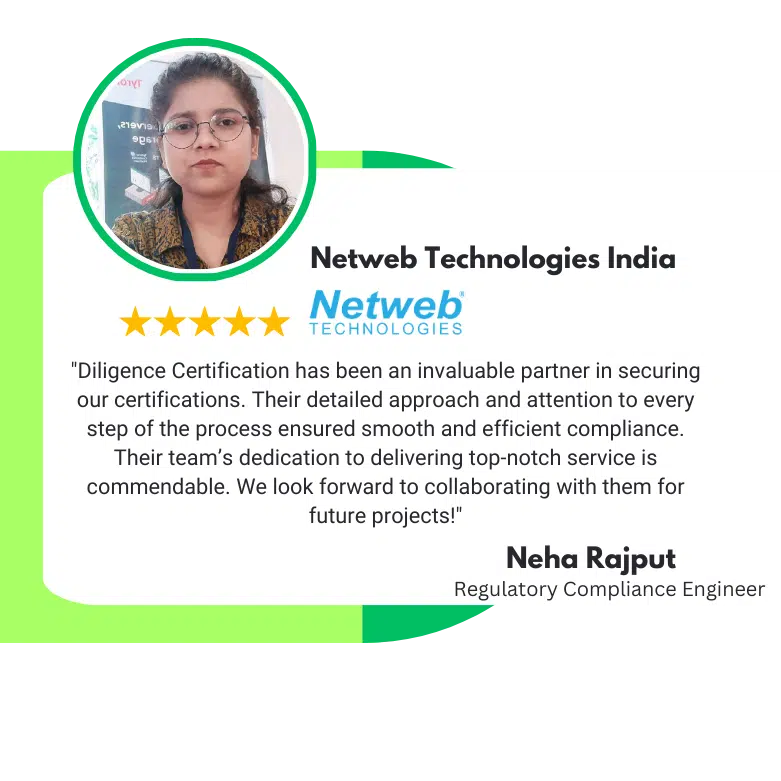
What our clients say
Reviews and feedback from businesses that have worked with Diligence Certifications.


Related DGCA / Drones services
DGCA Certification
Drone approval, UIN, and Remote Pilot Certification.
View details →UIN Registration
Unique Identification Number registration for drones.
View details →DGCA Certification
A clear guide to the DGCA certification process for drones under the Drone Rules, 2021: Type.
View details →Drone Registration
Complete guide to drone registration in India: DGCA UIN on Digital Sky, type certificate.
View details →Ready to get Remote Pilot Certificate?
Talk to our experts for a clear, fixed-scope plan - most clients get a roadmap the same day.