BIS Certification
 CDSCO
CDSCO
 PESO
PESO
 CPCB
CPCB
 LMPC
LMPC
 WPC Approval
 Global Approvals
 TEC
TEC
 ARAI
ARAI
 BEE
BEE
 ISO Certification
 DGCA Certification
 NOC For Steel
 APEDA Registration























 Business Registration
 FSSAI Mark Certification












 (32).jpg)
 Legal Services
 Trademark Registration
 Copyright Registration
 Patent Registration
 By
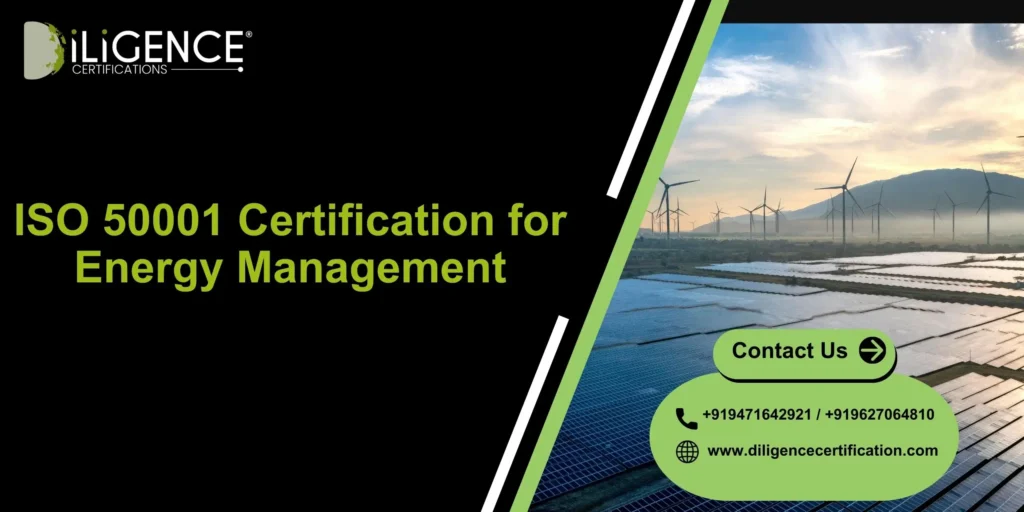
By - Improves Energy Efficiency: ISO 50001 Energy Management helps a business to develop a management system that improves its energy efficiency.
- Reduces Energy Costs:ISO 50001, if properly utilized, helps a business reduce its energy costs.
- Supports Environmental Sustainability:ISO 50001 helps a business to reduce greenhouse emissions, hence contributing to the sustainability of the environment.
- Improves Organizational Performance:ISO 50001 helps a business improve its performance by improving its utilization of energy.
- Builds Credibility and Compliance: ISO 50001 Energy Management helps a business improve its credibility by proving that it is complying with international standards.
Introduction | Energy Management
ISO 50001 Certification in Energy Management is an international standard that can be followed by companies to enhance the efficiency of the organization in the field of energy management. It is a scientific method of handling the energy consumption of the organization, which in turn reduces the cost of the organization. By implementing the ISO 50001 standard in the organization, companies can effectively monitor, control, and enhance the efficiency of the energy consumption of the organization, thus ensuring sustainability in the environment. The ISO 50001 standard can be followed by all types of companies of different sizes that are ready to enhance the efficiency of the organization in the field of energy management.
What is ISO Certification?
ISO Certification is a formal acknowledgement that a company adheres to the standards set by the International Organization for Standardization (ISO). ISO standards are guidelines that assist businesses in ensuring quality, safety, and efficiency in their products and services.ISO certification is a formal acknowledgement that a business adheres to international guidelines. It is awarded to a business after evaluation by an accredited certification agency to check if the business adheres to a specific ISO standard.
Points:
- International Standard:ISO Certification guarantees that a company abides by international standards as outlined by the International Organization for Standardization.
- Improves Quality and Efficiency:ISO Certification helps businesses improve the quality of their products, services, and processes.
- Global Recognition:ISO Certification has global recognition and can be used to enhance a business’s credibility.
- Ensures Compliance:ISO Certification guarantees that a company abides by appropriate management standards and practices in business.
- Builds Customer Trust:ISO Certification assures businesses that they are committed to quality and safety.
Types of ISO Certifications
- ISO 9001 - Quality Management System (QMS)
Focuses on improving the quality of products/services and customer satisfaction.
- ISO 14001 - Environmental Management System (EMS)
Helps in managing the environmental responsibility of the organization.
- ISO 45001 - Occupational Health & Safety (OH&S)
Ensures the safety of the employees in the organization.
- ISO 27001 - Information Security Management System (ISMS)
Ensures the security of the data in the organization.
- ISO 22000 - Food Safety Management System (FSMS)
Ensures the safety of the food products in the supply chain.
- ISO 13485 - Medical Devices Quality Management
Establishes the quality standards for the manufacturing of medical devices.
- ISO 50001 - Energy Management System (EnMS)
Helps the organization in improving the efficiency of the energy used in the organization.
Why is ISO Certification mandatory
ISO certification is not always mandatory from a legal standpoint, but many firms choose to obtain it for the benefits it offers in terms of credibility, quality, and efficiency. In many sectors, government bodies, clients, or international partners demand ISO certification as a prerequisite for any contract or business relationship. ISO certification enables firms to adopt standardized practices, minimize risks, or guarantee the quality of their products or services. ISO certification is also an indicator of the firm’s dedication to global standards, customer satisfaction, or continuous improvement.
Points:
- Ensures Standardized Processes:ISO certification assists organizations in adhering to international standards and operating businesses in a standardized fashion.
- Improves Product and Service Quality:ISO certification assists organizations in providing quality products and services to their consumers.
- Required for Business Contracts:ISO certification is a must-have for many government contracts and business partners.
- Builds Customer Trust:ISO certification assists organizations in developing trust with their consumers, as it is a standard of quality.
- Supports Legal and Regulatory Compliance:ISO certification assists organizations in adhering to legal standards and operating a business smoothly.
Importance and Benefits of ISO Certification
| Importance | Benefits |
| Improves Energy Performance:Facilitates monitoring and managing energy consumption in an effective manner. | Reduces Energy Costs:Efficient management of energy reduces overall operational costs. |
| Promotes Sustainable Practices:Inspires businesses to be environmentally friendly and sustainable. | Improves Energy Efficiency:Identifies areas where energy can be saved. |
| Enhances Operational Efficiency:Simplifies energy management activities in the business organization. | Increases Business Opportunities:Many clients want to do business with a certified company. |
| Supports Compliance with Regulations:Facilitates businesses in adhering to energy management regulations and environmental regulations. | Better Risk Management:Reduces risks associated with energy supply, usage, and environmental impact. |
| Strengthens Corporate Reputation:Exhibits commitment to energy management and environmental stewardship | Continuous Improvement:Encourages constant review and improvement of performance. |
ISO Certification Process (Step-by-Step)
- Select the Relevant ISO Standard
Identify the appropriate standard (e.g., ISO 9001, ISO 14001, ISO 27001) based on your business activities and objectives. All standards are developed by the International Organization for Standardization. - Gap Analysis
Conduct a gap analysis to compare your current processes with ISO standard requirements and identify areas for improvement. - Documentation & Implementation
Prepare required policies, procedures, manuals, and records. Implement the management system across the organization. - Employee Training & Awareness
Train employees to ensure they understand ISO requirements and follow standardized processes. - Internal Audit
Perform an internal audit to evaluate compliance and identify non-conformities before the external audit. - Management Review
Top management reviews audit findings, system performance, and improvement actions. - Certification Audit (Stage 1 & Stage 2)
An accredited certification body conducts:
- Stage 1 Audit: Documentation review
- Stage 2 Audit: On-site verification of implementation
- Stage 1 Audit: Documentation review
- Issuance of ISO Certificate
If the organization meets all requirements, the certification body issues the ISO Certificate (generally valid for 3 years). - Surveillance Audits
Periodic audits (usually annually) ensure continued compliance and system effectiveness.
Documents Required for ISO Certification
| Category | Documents Required |
| Company Registration Certificate | Legal proof of business existence |
| Quality Policy & Objectives | Shows commitment to quality and improvement |
| ISO Manual / Management System Manual | Defines structure of the management system |
| Internal Audit Report | Confirms compliance before certification audit |
| Corrective & Preventive Action (CAPA) Records | Tracks non-conformities and improvements |
Timelines, Costs, Validity & Renewal
- Timelines : Certification process usually takes 1-6 months depending on business size.
- Costs:Cost depends on ISO standard type (ISO 9001, ISO 14001, ISO 27001, etc.)
- Validity : ISO Certificate is generally valid for 3 years.
- Renewal : Renewal required after 3 years through re-certification audit.
Why Choose Diligence Certifications
Diligence Certifications is an esteemed organization that provides certification and consulting services. Their main aim is to help businesses obtain ISO certifications with ease and speed. Their team of experts helps businesses obtain ISO certification. Their main aim is to provide reliable, affordable, and hassle-free certification services while ensuring that the organization remains compliant with international standards. By partnering with Diligence Certifications, an organization can improve its management systems, increase credibility, and enhance long-term business growth.
Conclusion
ISO 50001 Certification in Energy Management is a standard that helps companies improve energy efficiency, minimize operational costs, and contribute to environmental sustainability. By implementing this standard, companies can better monitor and control their energy consumption, hence improving performance. Moreover, the company’s reputation will improve, and it will be able to show its commitment to responsible energy management. The adoption of this standard is a great move for companies that wish to attain sustainability, efficiency, and global recognition in the near future.
Frequently Asked Questions (FAQs)
What is ISO 50001?
ISO 50001 is an international standard for energy management and energy efficiency.
Who can apply for ISO 50001?
Any organization can apply for ISO 50001 certification.
What is the purpose of ISO 50001?
The purpose of ISO 50001 is to reduce energy consumption.
Is ISO 50001 mandatory?
No, ISO 50001 is not mandatory but is required by clients.
How long does it take to apply for ISO 50001?
The process of applying for ISO 50001 certification may take a few weeks to a few months.
What are the key benefits of ISO 50001?
It can help reduce energy costs, improve efficiency, and support environmental sustainability.
What are the key industries that use ISO 50001?
Manufacturing, construction, IT, health, and many other industries make use of ISO 50001.
Does ISO 50001 help reduce carbon emissions?
Yes, it can help reduce carbon emissions.
How often is ISO 50001 renewed?
It is generally valid for a period of three years.
Why should a company opt for ISO 50001?
It can improve energy management, reduce costs, and enhance business credibility.