BIS Certification
 CDSCO
CDSCO
 PESO
PESO
 CPCB
CPCB
 LMPC
LMPC
 WPC Approval
 Global Approvals
 TEC
TEC
 ARAI
ARAI
 BEE
BEE
 ISO Certification
 DGCA Certification
 NOC For Steel
 APEDA Registration























 Business Registration
 FSSAI Mark Certification












 (32).jpg)
 Legal Services
 Trademark Registration
 Copyright Registration
 Patent Registration
 By
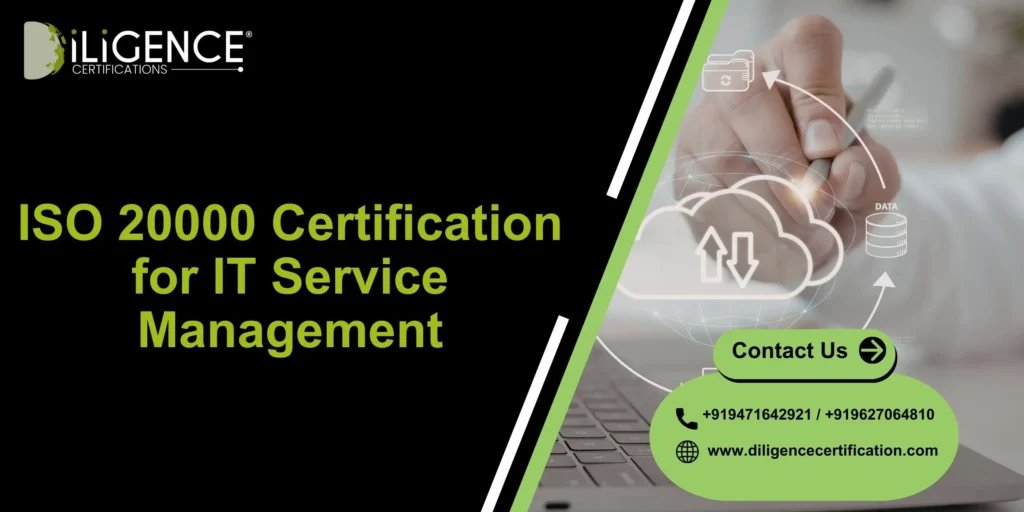
By - International Standard for IT Service Management: The ISO/IEC 20000 is an international standard that helps organizations in managing and delivering IT services.
- Improves Service Quality: The ISO/IEC 20000 standard helps organizations in ensuring that IT services are delivered in an efficient manner.
- Standardized IT Processes: The ISO 20000 standard provides a number of standardized processes in terms of incident management, problem management, and service delivery.
- Increases Business Credibility: The ISO/IEC 20000 standard helps in enhancing business credibility as it shows that an organization is adhering to international standards for IT service management.
- Facilitates Continuous Improvement: The ISO/IEC 20000 standard helps organizations in continuously monitoring their IT services.
Introduction
ISO/IEC 20000 Certification is an international standard for IT Service Management (ITSM), which helps companies deliver high-quality and reliable IT services. ISO 20000 is a standard that helps in the development of a framework for the management of IT services and processes to deliver quality services to the customers. ISO 20000 is a standard for planning, implementing, monitoring, and improving IT services in an organization. This helps businesses to increase their efficiency, reduce disruptions in services, and align their IT services with their business objectives. ISO 20000 is used by IT businesses and companies that highly depend on technology to run their businesses.
What is ISO Certification?
International Organization for Standardization (ISO) Certification is a formal recognition that a company or organization is complying with international standardization in quality, safety, efficiency, and management systems. The international standardization promotes better business operations, providing quality services or products, and meeting customer and regulatory demands.ISO Certification is a formal recognition given by a recognized body that has assessed the management systems of a company or organization and found that it meets the requirements of a specific ISO standard. It is a formal recognition that a company or organization is dedicated to providing quality and meeting customer demands.
Points:
- International Standard:The International Organization for Standardization develops international standards that help organizations achieve quality, safety, and efficiency in their operations.
- Proof of Quality Management:ISO Certification acts as proof that the company complies with international standards in managing their products, services, or systems.
- Issued by Accredited Bodies:The ISO Certification process involves certified bodies that audit and verify whether the organization meets ISO standard requirements.
- Applicable to Many Industries:The ISO standards are applicable to different industries, including manufacturing, health care, information technology services, and education.
- Focus on Continuous Improvement:The ISO certification process encourages companies to improve their operations to attain efficiency and satisfaction.
Types of ISO Certifications
- ISO 9001 - Quality Management System (QMS)
Focuses on improving the quality of products/services and customer satisfaction.
- ISO 14001 - Environmental Management System (EMS)
Helps in managing the environmental responsibility of the organization.
- ISO 45001 - Occupational Health & Safety (OH&S)
Ensures the safety of the employees in the organization.
- ISO 27001 - Information Security Management System (ISMS)
Ensures the security of the data in the organization.
- ISO 22000 - Food Safety Management System (FSMS)
Ensures the safety of the food products in the supply chain.
- ISO 13485 - Medical Devices Quality Management
Establishes the quality standards for the manufacturing of medical devices.
- ISO 50001 - Energy Management System (EnMS)
Helps the organization in improving the efficiency of the energy used in the organization.
Why is ISO Certification mandatory
International Organization for Standardization (ISO) certification is significant for organizations because it ensures that the products, services, and processes of the organization conform to the internationally accepted standards. Although ISO certification is not mandatory in many cases, many industries, government tenders, and international clients demand it to ensure the quality, safety, and reliability of the products and services provided by the organization.
Points:
- Ensures International Standards:International Organization for Standardization ensures that all international standards are followed in the organization.
- Builds Customer Trust:ISO certification ensures that the company has built trust with its customers by providing quality products or services.
- Required for Tenders and Contracts:ISO certification is required for participating in government tenders and business contracts.
- Improves Business Efficiency:ISO standards improve business efficiency by reducing errors in business operations.
- Enhances Market Opportunities:ISO certification gives businesses an edge over other companies and improves business opportunities in local and international markets.
Importance and Benefits of ISO Certification
| Importance | Benefits |
| Improves IT Service Management:Facilitates the management of IT services in an organization and provides quality IT solutions to customers. | Increased Satisfaction:The delivery of service is a key aspect that can increase customer satisfaction. |
| Enhances Service Quality:Guarantees standardized processes for improved service quality. | Efficient IT Operations:Efficient service delivery can reduce service interruptions and increase productivity. |
| Builds Customer Confidence:The certification process shows that an organization is adhering to international best practices in IT service management. | Competitive Advantage:Organizations that are ISO 20000 certified have a competitive advantage in the IT service delivery sector. |
| Facilitates Business Growth:Helps organizations gain new customers and business opportunities through their ability to prove their credibility. | Continuous Improvement:The standard encourages constant improvement of IT service and process delivery. |
| Ensures Better Risk Management:Manages IT service risks for stability. | Global Recognition:The standard is recognized globally and can help businesses expand globally. |
ISO Certification Process (Step-by-Step)
- Select the Relevant ISO Standard
Identify the appropriate standard (e.g., ISO 9001, ISO 14001, ISO 27001) based on your business activities and objectives. All standards are developed by the International Organization for Standardization. - Gap Analysis
Conduct a gap analysis to compare your current processes with ISO standard requirements and identify areas for improvement. - Documentation & Implementation
Prepare required policies, procedures, manuals, and records. Implement the management system across the organization. - Employee Training & Awareness
Train employees to ensure they understand ISO requirements and follow standardized processes. - Internal Audit
Perform an internal audit to evaluate compliance and identify non-conformities before the external audit. - Management Review
Top management reviews audit findings, system performance, and improvement actions. - Certification Audit (Stage 1 & Stage 2)
An accredited certification body conducts:
- Stage 1 Audit: Documentation review
- Stage 2 Audit: On-site verification of implementation
- Stage 1 Audit: Documentation review
- Issuance of ISO Certificate
If the organization meets all requirements, the certification body issues the ISO Certificate (generally valid for 3 years). - Surveillance Audits
Periodic audits (usually annually) ensure continued compliance and system effectiveness.
Documents Required for ISO Certification
| Category | Documents Required |
| Company Registration Certificate | Legal proof of business existence |
| Quality Policy & Objectives | Shows commitment to quality and improvement |
| ISO Manual / Management System Manual | Defines structure of the management system |
| Internal Audit Report | Confirms compliance before certification audit |
| Corrective & Preventive Action (CAPA) Records | Tracks non-conformities and improvements |
Timelines, Costs, Validity & Renewal
- Timelines : Certification process usually takes 1-6 months depending on business size.
- Costs:Cost depends on ISO standard type (ISO 9001, ISO 14001, ISO 27001, etc.)
- Validity : ISO Certificate is generally valid for 3 years.
- Renewal : Renewal required after 3 years through re-certification audit.
Why Choose Diligence Certifications
Diligence Certifications is a reliable certification service that can assist businesses in acquiring ISO and other regulatory certifications in a swift manner. They offer expert guidance and documentation support for businesses to achieve their certifications in an efficient manner. With their expert support and guidance, businesses can easily achieve their certifications without any unwanted delay.Diligence Certifications provides complete support for businesses to achieve their certifications in an efficient manner. They assist businesses in preparing for their audits and dealing with the concerned authorities. Their aim is to make the process of obtaining certifications simpler for businesses and enable them to achieve international standards in an efficient manner.
Conclusion
ISO/IEC 20000 Certification has a significant role to play in enhancing the quality and efficiency of IT service management services offered by an organization. ISO/IEC 20000 Certification offers a framework that enables businesses to effectively manage IT services, reducing potential risk and providing quality services to customers.ISO 20000 Certification enables organizations to effectively enhance their services and establish a strong reputation in the global market. ISO 20000 Certification also enables organizations to promote continuous improvement and ensure that IT services are aligned with business objectives. ISO 20000 Certification enables organizations to attain better services and operational efficiency, leading to business success.
Frequently Asked Questions (FAQs)
What is ISO 20000 Certification?
ISO 20000 Certification is an international standard for IT Service Management, which assists organizations in providing effective IT services.
Who needs ISO 20000 Certification?
IT companies, service providers, telecom companies, etc., who provide IT services.
What is the main purpose of ISO 20000?
To enhance the quality, efficiency, and reliability of IT service management.
Is ISO 20000 Certification mandatory?
No, it is not mandatory, but it is necessary for doing business.
How long does it take to get ISO 20000 Certification?
It may take a few weeks or even a few months, depending on the organization.
What are the benefits of getting ISO 20000 Certification?
It improves service quality, increases customer satisfaction, and enhances business reputation.
Who provides ISO 20000 Certification?
It is provided by a certification body that has been accredited after auditing the company.
Is ISO 20000 Certification recognized worldwide?
Yes, it is a globally recognized standard for IT service management.
What type of companies or industries use or implement ISO 20000?
IT services, cloud service providers, telecom companies, and software companies.
How often is the ISO 20000 Certification renewed?
It is valid for a period of 3 years.