BIS Certification
 CDSCO
CDSCO
 PESO
PESO
 CPCB
CPCB
 LMPC
LMPC
 WPC Approval
 Global Approvals
 TEC
TEC
 ARAI
ARAI
 BEE
BEE
 ISO Certification
 DGCA Certification
 NOC For Steel
 APEDA Registration























 Business Registration
 FSSAI Mark Certification












 (32).jpg)
 Legal Services
 Trademark Registration
 Copyright Registration
 Patent Registration
 By
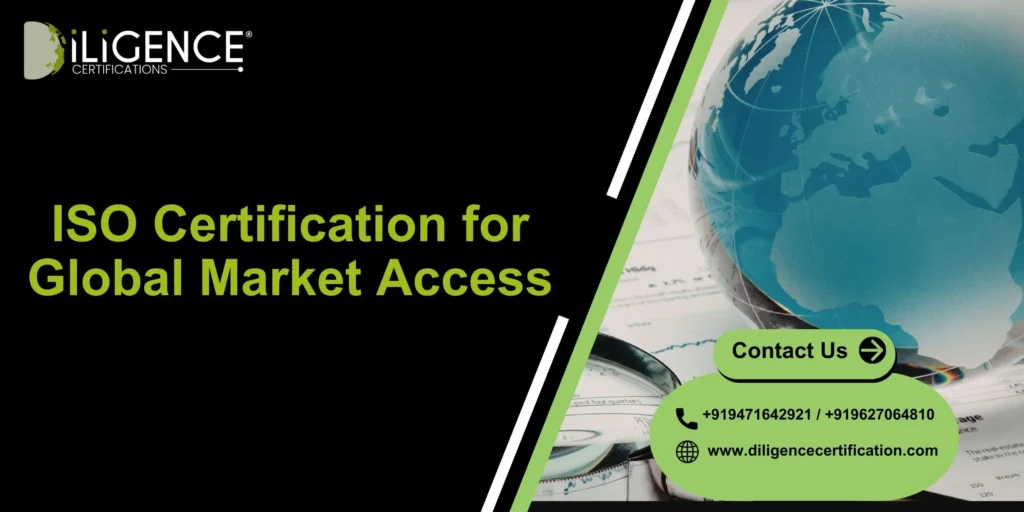
By - International Recognition: ISO certification Global Market Access is recognized globally, which in turn helps the business attain international recognition.
- Improves Product and Service Quality: ISO certification Global Market Access helps the business improve the quality of the products it delivers to the customers. This in turn helps the business gain the trust of international customers.
- Facilitates International Trade: ISO certification Global Market Access is mostly recognized globally in most countries. This in turn helps the business trade globally.
- Enhances Business Reputation: ISO certification helps the business attain international recognition. This in turn helps the business become more professional in its trade.
- Competitive Advantage in Global Markets: ISO certification helps the business compete with other businesses in the international market.
Introduction| Global Market Access
ISO Certification Global Market Access is of significant importance to businesses that seek to operate in the international market. ISO Certification is a symbol of assurance that a business is adhering to international norms in terms of quality, safety, efficiency, and management. Organizations that attain ISO Certification receive a boost in terms of confidence from international customers, partners, and government agencies. Therefore, ISO Certification is of significant importance to businesses that seek to operate in the international market.
What is ISO Certification?
ISO Certification Global Market Access is the recognition of the management system, processes, and services of a company that have met the standards of the International Organization for Standardization norms. The norms ensure that the quality, safety, efficiency, and reliability of the services of the company are at the highest level.ISO certification is awarded by the certification bodies based on the assessment of the company’s compliance with a particular ISO norm. It is a way of ensuring that the company is committed to adhering to the norms.
Points:
- International Standard Recognition: ISO Certification Global Market Access gives the company recognition that it is adhering to universally accepted standards set out by the International Organization for Standardization.
- Improves Business Processes: ISO Certification Global Market Access helps businesses to develop effective business processes, thus improving productivity.
- Third-Party Certification: ISO certification Global Market Access is given to a business organization by a third party that audits the management systems.
- Builds Customer Trust:Business organizations that have been certified to the ISO standard have gained credibility.
- Supports Continuous Improvement: ISO standards Global Market Access encourage business organizations to continuously monitor and improve business processes.
Types of ISO Certifications
- ISO 9001 - Quality Management System (QMS)
Focuses on improving the quality of products/services and customer satisfaction.
- ISO 14001 - Environmental Management System (EMS)
Helps in managing the environmental responsibility of the organization.
- ISO 45001 - Occupational Health & Safety (OH&S)
Ensures the safety of the employees in the organization.
- ISO 27001 - Information Security Management System (ISMS)
Ensures the security of the data in the organization.
- ISO 22000 - Food Safety Management System (FSMS)
Ensures the safety of the food products in the supply chain.
- ISO 13485 - Medical Devices Quality Management
Establishes the quality standards for the manufacturing of medical devices.
- ISO 50001 - Energy Management System (EnMS)
Helps the organization in improving the efficiency of the energy used in the organization.
Why is ISO Certification mandatory
ISO Certification Global Market Access is not necessary from a legal perspective; however, ISO Certification has become a requirement for many organizations and businesses. ISO Certification is necessary for businesses to prove to their clients that their products and services are conforming to international standards. ISO Certification has become a requirement for many industries and businesses since it ensures quality, safety, efficiency, and compliance. ISO Certification has become a requirement for businesses that need to grow.
Points:
- Required for Government Tenders:It is often required that the company must be ISO certified in order to bid for certain tenders floated by the government.
- Ensures Quality Standards: ISO certification Global Market Access ensures that the company is complying with the quality management and operational standards.
- Builds Customer Confidence:It is often seen that customers are willing to do business with those companies that are ISO certified.
- Helps in International Business: ISO certification Global Market Access is also required for international trade, as many international partners require ISO certification.
- Improves Compliance :ISO certification Global Market Access also ensures that the company is complying with the regulations and operational risks.
Importance and Benefits of ISO Certification
| Importance | Benefits |
| Improves Business Credibility:ISO certification improves the trust and credibility that a business enjoys in the market. | Better Product and Service Quality:ISO standards ensure the maintenance of quality in products and services. |
| Ensures Standardized Processes:ISO certification enables organizations to follow proper systems and standardized procedures. | Competitive Market Advantage:ISO-certified businesses enjoy a competitive advantage over non-ISO-certified businesses. |
| Enhances Customer Satisfaction:ISO standards mainly concentrate on providing quality, which results in customer satisfaction. | Increased Business Opportunities:Businesses have more opportunities, especially when dealing with the government and clients, when they are ISO certified. |
| Supports Business Growth:ISO certification enables businesses to venture into new markets. | Improved Operational Efficiency:ISO standards ensure efficient and effective processes with minimal errors and wastage. |
| Strengthens Risk Management:ISO certification enables organizations to identify risks and implement proper measures to manage them. | Global Recognition:ISO certification is recognized all over the world, and this is a great advantage for businesses. |
ISO Certification Process (Step-by-Step)
- Select the Relevant ISO Standard
Identify the appropriate standard (e.g., ISO 9001, ISO 14001, ISO 27001) based on your business activities and objectives. All standards are developed by the International Organization for Standardization. - Gap Analysis
Conduct a gap analysis to compare your current processes with ISO standard requirements and identify areas for improvement. - Documentation & Implementation
Prepare required policies, procedures, manuals, and records. Implement the management system across the organization. - Employee Training & Awareness
Train employees to ensure they understand ISO requirements and follow standardized processes. - Internal Audit
Perform an internal audit to evaluate compliance and identify non-conformities before the external audit. - Management Review
Top management reviews audit findings, system performance, and improvement actions. - Certification Audit (Stage 1 & Stage 2)
An accredited certification body conducts:
- Stage 1 Audit: Documentation review
- Stage 2 Audit: On-site verification of implementation
- Stage 1 Audit: Documentation review
- Issuance of ISO Certificate
If the organization meets all requirements, the certification body issues the ISO Certificate (generally valid for 3 years). - Surveillance Audits
Periodic audits (usually annually) ensure continued compliance and system effectiveness.
Documents Required for ISO Certification
| Category | Documents Required |
| Company Registration Certificate | Legal proof of business existence |
| Quality Policy & Objectives | Shows commitment to quality and improvement |
| ISO Manual / Management System Manual | Defines structure of the management system |
| Internal Audit Report | Confirms compliance before certification audit |
| Corrective & Preventive Action (CAPA) Records | Tracks non-conformities and improvements |
Timelines, Costs, Validity & Renewal
- Timelines : Certification process usually takes 1-6 months depending on business size.
- Costs:Cost depends on ISO standard type (ISO 9001, ISO 14001, ISO 27001, etc.)
- Validity : ISO Certificate is generally valid for 3 years.
- Renewal : Renewal required after 3 years through re-certification audit.
Why Choose Diligence Certifications
Diligence Certifications is a well-known name in the field of certification consulting that helps businesses achieve ISO and other regulatory certifications in the most efficient way. The company offers the best guidance and documentation support that ensures businesses do not face any delays in acquiring the necessary certifications. The team at Diligence Certifications helps businesses at every step of the certification process, thus making the entire process simple and hassle-free.
Conclusion
ISO Certification is one of the most important aspects that businesses need to fulfill in order to take their businesses to the next level in the international market. ISO Certification is one of the best ways for organizations to ensure that high levels of quality, efficiency, and safety are being maintained in their businesses, at the same time winning the confidence of their customers. With the help of ISO Certification, organizations can take their businesses to the next level, giving a competitive edge to their competitors, and exploring new markets.
Frequently Asked Questions (FAQs)
What is ISO Certification?
ISO Certification is proof that the organization is adhering to international standards in quality, safety, and efficiency.
Who provides ISO Certification?
ISO certification is provided by various certification bodies after an audit is conducted by them.
Is ISO Certification mandatory?
It is not mandatory in all cases; however, there are cases wherein ISO certification is required by clients and industries.
How long does it take to get ISO Certification?
The time required to get ISO certification is from a few days to a few weeks.
Which ISO certification is most popular?
ISO 9001 is one of the most popular ISO certifications.
What are the benefits of ISO Certification?
It enhances credibility, quality management, and business opportunities.
Is ISO Certification valid worldwide?
Yes, ISO standards are valid worldwide.
How long is ISO Certification valid?
ISO certification is valid for three years with regular surveillance audits.
Can small businesses get ISO Certification?
Yes, ISO certification is valid for small businesses.
Does ISO Certification help in exports?
Yes, it enhances trust for the business.