BIS Certification
 CDSCO
CDSCO
 PESO
PESO
 CPCB
CPCB
 LMPC
LMPC
 WPC Approval
 Global Approvals
 TEC
TEC
 ARAI
ARAI
 BEE
BEE
 ISO Certification
 DGCA Certification
 NOC For Steel
 APEDA Registration























 Business Registration
 FSSAI Mark Certification












 (32).jpg)
 Legal Services
 Trademark Registration
 Copyright Registration
 Patent Registration
 By
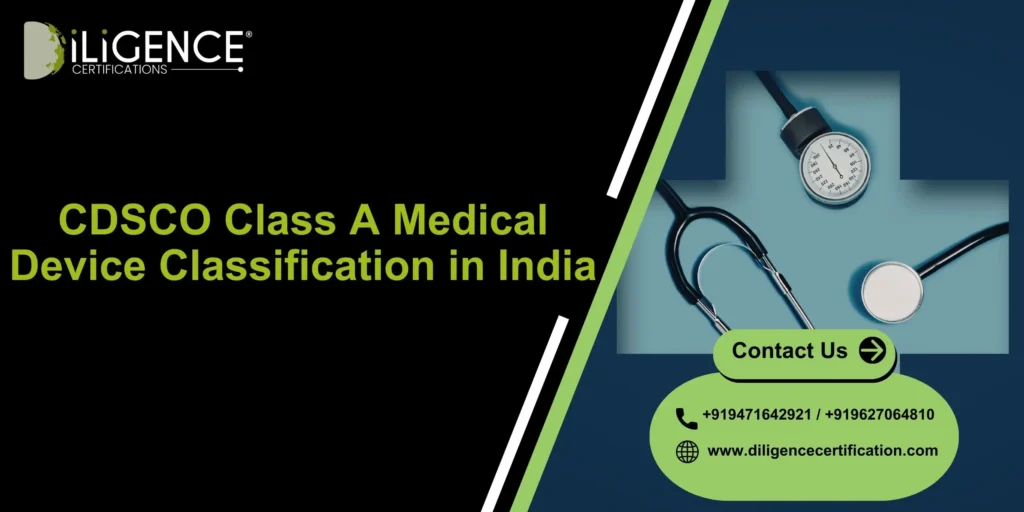
By - CDSCO Class A Medical Device are considered low-risk devices under the Indian Medical Device Rules (MDR) and require simplified regulatory procedures compared to higher-risk categories.
- The Central Drugs Standard Control Organization (CDSCO) regulates medical devices in India and oversees their classification, approval, and compliance.
- Manufacturers and importers must obtain registration or licensing before selling Class A medical devices in the Indian market.
- Compliance with quality standards such as ISO 13485 is often required to ensure product safety and quality.
- Class A devices include products like surgical dressings, tongue depressors, and simple medical instruments, which have minimal risk to patients.
Introduction | CDSCO Class A Medical Device
The medical device industry in India has grown rapidly in recent years due to increased healthcare demand, technological advancements, and stronger regulatory frameworks. To ensure patient safety and product reliability, the Government of India regulates medical devices through the Central Drugs Standard Control Organization (CDSCO).
Medical devices are categorized based on their risk level, ranging from Class A (low risk) to Class D (high risk). Among these, Class A medical devices represent the lowest risk category and are subject to relatively simpler regulatory requirements.Still, though the nonsupervisory process for Class A Devices is simpler than other orders, manufacturers and importers must still follow specific guidelines under the Medical Device Rules( MDR) 2017. Proper bracket, Documentation, and licensing are essential to insure compliance and avoid legal issues.
This companion explains CDSCO Class A Medical Device Bracket in India, including eligibility, process, benefits, and the challenges companies may face during instrument.
What is CDSCO Class A Medical Device?
CDSCO Class A Medical Device bracket refers to low- threat medical Devices that pose minimum threat to cases and druggies. These devices are regulated under the Medical Device Rules, 2017, which classify Devices grounded on their implicit impact on mortal health.
Characteristics of Class A Medical Devices
- Low risk to patients and healthcare professionals
- Simple design and functionality
- Limited interaction with the human body
- Minimal potential for causing harm
Examples of CDSCO Class A Medical Device
Some common exemplifications include
- Surgical dressings
- Tongue depressors
- Medical thermometers(non-electronic)
- Examination gloves
- Elastic tapes
- Stethoscopes
Even though these devices are considered low risk, manufacturers must still comply with CDSCO regulations to ensure quality, safety, and reliability.
Why CDSCO Class A Medical Device Classification is Required
Obtaining proper classification and approval for CDSCO Class A Medical Device is essential for regulatory compliance and market access.
Key Reasons for Certification
1. Legal Compliance All medical devices vended in India must misbehave with CDSCO regulations under the Medical Device Rules, 2017.
2. Case Safety Regulation ensures that Devices used in healthcare settings are safe and dependable.
3. Request Authorization Without proper licensing or enrollment , manufacturers and importers can not fairly vend their medical Devices in India.
4. Quality Assurance Certification ensures that Devices meets defined quality norms.
5. Assiduity translucency A regulated system creates responsibility and trust within the healthcare ecosystem.
Importance and Benefits of CDSCO Class A Medical Device Certification
| Importance | Benefits |
| Ensures compliance with Indian medical device regulations | Allows legal sale of medical devices in India |
| Maintains product quality and safety standards | Builds trust among healthcare providers and patients |
| Supports standardized manufacturing practices | Enhances brand credibility in the market |
| Helps manufacturers avoid penalties and regulatory issues | Facilitates smooth business operations |
| Promotes safer healthcare products | Opens opportunities for wider market expansion |
Process for Obtaining CDSCO Class A Medical Device Certification
Obtaining CDSCO approval for Class A medical devices involves several regulatory steps. The process may vary slightly depending on whether the product is manufactured in India or imported.
Step 1: Identify Device Classification
The first step is to determine whether the product falls under Class A medical device classification according to CDSCO guidelines.
Step 2: Prepare Required Documentation
Manufacturers must prepare necessary documentation, including:
- Device description
- Intended use
- Technical specifications
- Quality management system documents
- Manufacturing details
Step 3: Registration on the CDSCO Portal
Applicants must register on the CDSCO SUGAM portal, which is the official online platform for medical device approvals.
Step 4: Application Submission
The applicant submits the required application form along with supporting documents through the CDSCO portal.
Step 5: Review by State Licensing Authority
For Class A and Class B devices, the application is typically reviewed by the State Licensing Authority (SLA).
Step 6: Inspection (if required)
In some cases, regulatory authorities may conduct an inspection of the manufacturing facility to ensure compliance with regulatory standards.
Step 7: Grant of License
After successful review and verification, the authority grants the manufacturing or import license for the Class A medical device.
Step 8: Post-Approval Compliance
Once approved, the manufacturer must maintain regulatory compliance, including:
- Quality management system implementation
- Proper labeling requirements
- Record maintenance
- Adverse event reporting
Challenges of Getting This Certification Without a Consultant
Although the process for CDSCO Class A Medical Device is relatively simpler, many businesses face difficulties during certification.
1. Understanding Regulatory Conditions CDSCO regulations can be complex for companies with medical device compliance.
2. Incorrect Device Bracket An indecorous bracket may lead to rejection or detainments in blessing.
3. Documentation crimes Deficient or incorrect Documentation is one of the most common reasons for operation detainments.
4. Specialized Compliance Issues Manufacturers must meet specific quality and specialized norms, which can be delicate without nonsupervisory moxie.
5. Detainments in blessing Lack of proper guidance may affect multiple variations and extended processing time.
6. Compliance with Changing Regulations Medical device regulations in India are constantly evolving, making it challenging for businesses to stay streamlined.
Why Choose Diligence Certification for This Certification
Selecting the right regulatory consultant can simplify the entire certification process. Diligence Certification provides professional assistance for CDSCO medical device approvals.
- Expertise in Medical Device Regulations Our platoon has expansive experience in handling medical device instruments and nonsupervisory compliance in India.
- End- to- End Support We give complete support from device bracket to license blessing.
- Accurate Documentation Our experts ensure that all documents are set rightly to avoid detainments and rejections.
- Faster blessing Process With professional guidance, the operation process becomes faster and smoother.
- Client Support We offer nonstop backing and updates throughout the instrument process.
- Cost-Effective Services Our services are designed to give effective instrument results at competitive costs.
Conclusion
The CDSCO Class A Medical Device Bracket system plays an important part in regulating low- threat medical Devices in India. Although these Devices pose minimum threat, proper bracket and licensing are essential to insure patient safety, product quality, and nonsupervisory compliance.
Manufacturers and importers must follow the procedures defined under the Medical Device Rules, 2017, including proper Documentation, operation submission, and compliance with quality norms.
While the process may appear straightforward, numerous businesses face challenges due to complex nonsupervisory conditions. Working with an educated adviser like Diligence Certification can simplify the process, reduce blessing time, and ensure smooth request entry for medical Devices in India.
Frequently Asked Questions (FAQs)
What is a Class A medical device in India?
A Class A medical device is a low-risk medical product regulated under CDSCO guidelines.
Who regulates medical devices in India?
Medical devices are regulated by the Central Drugs Standard Control Organization (CDSCO).
Do Class A medical devices require a license in India?
Yes, manufacturers must obtain the required license before selling these devices.
Which authority issues licenses for Class A devices?
Licenses are usually issued by the State Licensing Authority.
What law regulates medical devices in India?
Medical devices are regulated under the Medical Device Rules, 2017.
Are imported Class A medical devices regulated in India?
Yes, imported devices must also comply with CDSCO regulations.
Is ISO certification required for medical device manufacturers?
Manufacturers generally need to comply with ISO 13485 quality management standards.
How long does CDSCO approval take?
The approval timeline varies depending on documentation and authority review.
What happens if a medical device is sold without approval?
Selling unapproved devices may lead to penalties and legal action.
Can a consultant help with CDSCO certification?
Yes, regulatory consultants can assist with documentation, application, and compliance.