BIS Certification
 CDSCO
CDSCO
 PESO
PESO
 CPCB
CPCB
 LMPC
LMPC
 WPC Approval
 Global Approvals
 TEC
TEC
 ARAI
ARAI
 BEE
BEE
 ISO Certification
 DGCA Certification
 NOC For Steel
 APEDA Registration























 Business Registration
 FSSAI Mark Certification












 (32).jpg)
 Legal Services
 Trademark Registration
 Copyright Registration
 Patent Registration
 By
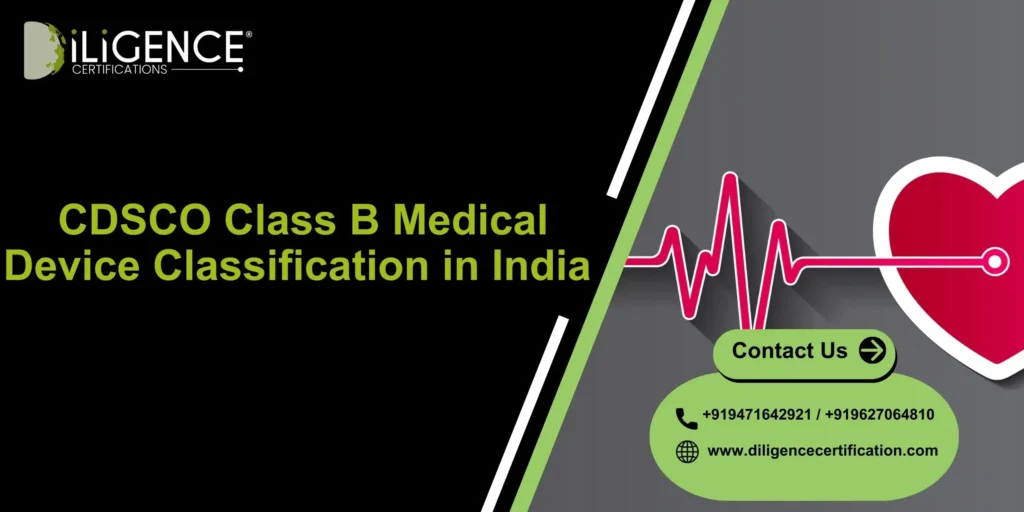
By - CDSCO Class B Medical Device are considered moderate-risk devices under Indian medical device regulations.
- These devices require regulatory approval from the Central Drugs Standard Control Organization (CDSCO) before manufacturing or import.
- The classification is defined under the Medical Device Rules, 2017, which categorize devices into Class A, B, C, and D based on risk level.
- Manufacturers must obtain a manufacturing or import license through the CDSCO SUGAM portal after fulfilling regulatory requirements.
- Proper classification ensures patient safety, product quality, and regulatory compliance for medical devices sold in India.
Introduction | CDSCO Class B Medical Device
India’s healthcare sector is fleetly expanding, and the demand for safe, effective, and dependable medical Devices is adding every time. To ensure that medical Devices meets safety and quality norms, the Government of India regulates them through the Central Drugs Standard Control Organization( CDSCO).
Under the Medical Device Rules, 2017, medical devices are classified into four categories-Class A, Class B, Class C, and Class D-based on their risk level to patients and users. Among these, Class B medical devices fall under the moderate-risk category and require strict regulatory compliance before they can be manufactured, imported, or marketed in India.
Obtaining CDSCO Class B Medical Device ensures that the product is safe for use, meets quality norms, and complies with Indian nonsupervisory conditions. This companion explains everything you need to know about Class B Medical Device Bracket under CDSCO, including its significance, benefits, process, and compliance conditions.
What is CDSCO Class B Medical Device Classification ?
CDSCO Class B Medical Device bracket refers to moderate- threat medical Devices that bear nonsupervisory oversight to insure safety and performance. These Devices are more complex than low- threat Class A Devices but do n’t pose as grandly a threat as Class C or Class D Devices.
The bracket system helps nonsupervisory authorities determine the position of evaluation, testing, and Documentation needed before approving a medical device.
Examples of Class B medical devices include:
- Hypodermic needles
- Suction equipment
- Blood pressure monitors
- Infusion pumps
- Nebulizers
- Oxygen concentrators
Manufacturers or importers of Class B medical devices must obtain approval from the CDSCO before selling these products in India. The regulatory process ensures that devices meet quality standards, technical safety requirements, and manufacturing guidelines.
Why CDSCO Class B Medical Device is Required
CDSCO Class B Medical Device classification and approval for Class B devices is essential for businesses operating in the medical device sector. It ensures regulatory compliance and protects public health.
Key Reasons for CDSCO Class B Classification
1. Ensures Patient Safety Medical Devices directly impacts patient health. The CDSCO instrument ensures that the device is safe and effective.
2. Legal demand in India Manufacturers and importers must follow the Medical Device Rules, 2017 to fairly vend their products in the Indian request.
3. Quality Assurance The instrument process evaluates the device’s design, manufacturing process, and quality operation system.
4. Request Authorization Without CDSCO blessing, companies can not manufacture or import Class B medical Devices in India.
5. Builds Consumer Trust Regulatory blessing increases confidence among healthcare professionals and cases.
Importance and Benefits of CDSCO Class B Medical Device
| Importance | Benefits |
| Ensures compliance with Indian medical device regulations | Allows legal manufacturing and marketing in India |
| Improves patient safety and device reliability | Builds trust among hospitals and healthcare professionals |
| Maintains high manufacturing and quality standards | Enhances brand credibility in the healthcare industry |
| Enables regulatory monitoring of medical devices | Reduces the risk of product recalls or legal issues |
| Supports transparency in the medical device market | Provides competitive advantage for certified manufacturers |
Process for CDSCO Class B Medical Device
Obtaining CDSCO approval for Class B medical devices involves several regulatory steps. The process must be carefully followed to avoid delays or rejection.
Step 1: Device Classification
The first step is determining whether the product falls under Class B classification according to the Medical Device Rules, 2017.
Step 2: Appointment of Authorized Agent (For Importers)
Foreign manufacturers must appoint an Authorized Indian Agent who will represent them during the registration and licensing process.
Step 3: Preparation of Documentation
Applicants must prepare and submit necessary regulatory documents, including:
- Device master file
- Plant master file
- Quality management system documents
- ISO 13485 certification
- Product testing reports
- Free sale certificate (for imported devices)
Step 4: Online Application Submission
The application must be submitted through the CDSCO SUGAM portal, which is the official online system for medical device approvals.
Step 5: Review by Regulatory Authorities
CDSCO authorities review the submitted documents to verify compliance with regulatory requirements.
Step 6: Inspection (If Required)
In some cases, CDSCO may conduct a facility inspection to verify manufacturing practices and quality standards.
Step 7: Grant of License
Once all requirements are satisfied, CDSCO issues the manufacturing or import license, allowing the company to legally market the device in India.
Challenges of Getting CDSCO Certification Without a Consultant
Many manufacturers and importers face difficulties while applying for CDSCO Class B Medical Device due to complex regulatory requirements. Without expert guidance, the process can become time-consuming and complicated.
Common Challenges
1. Complex Regulatory Guidelines Understanding the Medical Device Rules and bracket guidelines can be delicate for new aspirants.
2. Documentation crimes Incorrect or deficient Documentation can lead to operation rejection or detainments.
3. Specialized Compliance Issues Manufacturers must meet strict quality and specialized norms.
4. Time- Consuming Process The operation process requires multiple way, which can take months if not handled duly.
5. Lack of Regulatory Expertise Many companies are strange with CDSCO procedures and submission conditions.
Why Choose Diligence Certification for CDSCO Class B Medical Device Approval
Getting professional assistance can make the CDSCO certification process smoother and faster. Diligence Certification provides expert guidance to help businesses obtain medical device approvals efficiently.
Our Key Services
1. Expert Regulatory Consultation Our specialists help determine the correct bracket and compliance conditions.
2. Complete Documentation Support We help in preparing all necessary documents to meet CDSCO norms.
3. Operation Form on SUGAM Portal Our platoon handles the online submission process to avoid crimes or detainments.
4. Faster blessing Process With professional support, your operation can move easily through the nonsupervisory process.
5. End- to- End Compliance backing From original discussion to final blessing, we give complete support.
Choosing a professional adviser like industriousness instrument ensures that your medical device blessing process is accurate, effective, and biddable with Indian regulations.
Conclusion
The CDSCO Class B Medical Device Bracket plays a pivotal part in icing the safety, quality, and trustability of moderate- threat medical Devices in India. Under the Medical Device Rules, 2017, manufacturers and importers must gain proper nonsupervisory blessing before selling these devices.
Compliance with CDSCO regulations not only ensures legal authorization but also improves product credibility and consumer trust. Still, the instrument process involves complex Documentation and nonsupervisory procedures that bear careful planning.
By working with educated professionals like Diligence Certification businesses can simplify the blessing process, avoid nonsupervisory miscalculations, and gain their medical device license more efficiently. Proper guidance ensures smooth compliance and helps companies successfully enter the growing Indian medical device request.
Frequently Asked Questions (FAQs)
What is a Class B medical device in India?
Class B medical devices are moderate-risk devices regulated under the Medical Device Rules, 2017.
Who regulates medical devices in India?
Medical devices in India are regulated by the Central Drugs Standard Control Organization (CDSCO).
Is CDSCO approval mandatory for Class B devices?
Yes, manufacturers and importers must obtain CDSCO approval before selling Class B devices in India.
What license is required for Class B medical devices?
Manufacturers require a manufacturing license, while importers need an import license from CDSCO.
What is the SUGAM portal?
SUGAM is the online portal used for submitting CDSCO medical device applications.
How long does CDSCO approval take for Class B devices?
The approval process typically takes a few months depending on documentation and review.
Is ISO certification required for Class B medical devices?
Yes, ISO 13485 certification is usually required for quality management compliance.
Can foreign manufacturers sell Class B devices in India?
Yes, but they must appoint an authorized Indian agent and obtain an import license.
What happens if a company sells devices without CDSCO approval?
Selling medical devices without approval can result in legal penalties and product bans.
Can consultants help with CDSCO certification?
Yes, professional consultants can simplify the process and help ensure successful approval.