BIS Certification
 CDSCO
CDSCO
 PESO
PESO
 CPCB
CPCB
 LMPC
LMPC
 WPC Approval
 Global Approvals
 TEC
TEC
 ARAI
ARAI
 BEE
BEE
 ISO Certification
 DGCA Certification
 NOC For Steel
 APEDA Registration























 Business Registration
 FSSAI Mark Certification












 (32).jpg)
 Legal Services
 Trademark Registration
 Copyright Registration
 Patent Registration
 By
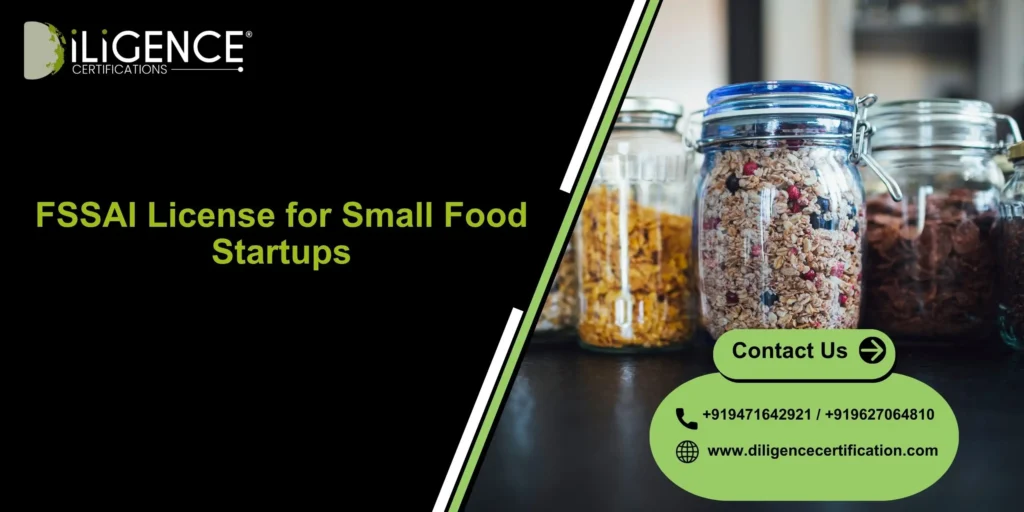
By - FSSAI License Small Food Startups is mandatory for all food businesses in India, including small startups.
- The type of license depends on the scale and turnover of the business: Basic, State, or Central license.
- Required documents include identity proof, business proof, and a food safety management plan.
- Non-compliance can result in fines, legal action, or business closure.
- Using a professional consultant can streamline the process and reduce errors.
Introduction | FSSAI License Small Food Startups
India’s food industry is growing rapidly, and small food startups are emerging across urban and rural areas. While starting a food business can be rewarding, entrepreneurs must navigate a complex regulatory landscape. One of the most important requirements is obtaining an Food Safety and Standards Authority of India (FSSAI) license, which ensures that your business meets food safety standards and operates legally.
Many new food startups face confusion about which license to apply for, how to prepare the required documents, and how to meet compliance standards. This guide breaks down the entire FSSAI License Small Food Startups process, highlights the benefits of registration, explains potential challenges, and offers tips for small startups to secure their license efficiently.
What is FSSAI Registration?
Food Safety and Standards Authority of India (FSSAI) is the regulatory agency under the Ministry of Health and Family Welfare that regulates food safety in India. Every business that is engaged in food production, processing, storage, transport, or sale must get their FSSAI license or registration based on their scale of operations.
FSSAI registration guarantees:
- Businesses are adhering to food safety regulations
- Consumers are consuming safe food products
- Businesses have legal recognition from authorities
Types of FSSAI Licenses
- Basic Registration - For startups or small-scale units having an annual turnover less than ₹12 lakhs.
- State License - For medium-scale business units having annual turnover ranging from ₹12 lakhs to ₹20 crores or those functioning within a single state.
- Central License - For large-scale units, exporters, or multi-state businesses having annual turnover more than ₹20 crores.
Choosing the right FSSAI License Small Food Startups is of great importance because applying for the wrong license may cause legal trouble and delays.
Why FSSAI License Small Food Startups is Important
FSSAI License Small Food Startups is more than a legal formality. It protects your business, your customers, and ensures compliance with food safety standards.
Key Reasons:
- Legal Compliance: All food businesses must be registered to operate legally. Non-compliance attracts fines or legal action.
- Consumer Trust: The FSSAI logo on your products reassures customers about product safety.
- Market Access: Retailers, online platforms, and government tenders often require FSSAI registration.
- Food Safety: Registration ensures adherence to hygiene and food safety standards.
- Business Growth: Registered businesses can expand more easily and attract investors or partnerships.
Importance and Benefits for FSSAI License Small Food Startups
| Importance | Benefit to Small Food Startups |
| Legal Compliance | Avoids fines and legal complications; ensures lawful operations |
| Consumer Trust | FSSAI logo builds credibility, increases customer confidence |
| Market Access | Enables entry into supermarkets, e-commerce, and government contracts |
| Food Safety | Maintains hygiene and quality standards, reducing health risks |
| Business Growth | Facilitates partnerships, investor confidence, and business scaling |
Process for FSSAI License Small Food Startups
Obtaining an FSSAI License Small Food Startups involves several steps. Following them carefully ensures a smooth registration process for small food startups.
Step 1: Determine License Type
- Check your business turnover and scale.
- Decide whether your business requires Basic Registration, State License, or Central License.
Step 2: Gather Required Documents
Prepare the following for submission:
- Identity Proof (Aadhaar, PAN, Passport)
- Business Proof (Shop Act License, GST registration, partnership deed if applicable)
- Food Safety Management Plan (HACCP or GMP documentation)
- Address Proof of business premises
- Passport-size photograph of the applicant
Tip: Keeping all documents ready in digital format saves time during online application.
Step 3: Complete the Online Application
- Visit the FSSAI online portal.
- Select the license type and fill in all business and personal details.
- Upload scanned copies of the required documents.
Example: A small bakery in Delhi with ₹10 lakh turnover will apply for Basic Registration and upload their PAN, GST certificate, and bakery layout plan.
Step 4: Pay Registration Fees
Fees vary depending on license type:
- Basic Registration
- State License
- Central License
Payment is made online via the FSSAI portal.
Step 5: Inspection (if required)
- State and Central licenses may require a physical inspection.
- Inspectors check premises for hygiene, food handling practices, and storage facilities.
- Ensure all equipment and facilities comply with GMP/HACCP guidelines.
Step 6: Receive FSSAI License
- After verification, FSSAI issues a license or registration certificate.
- The license number must be displayed on product packaging and business premises.
Pro Tip: Even after registration, maintain proper hygiene, documentation, and food safety practices, as authorities may conduct random checks.
Challenges of Getting This Certification Without a Consultant
Many small startups attempt registration independently but face several challenges:
| Challenge | Impact |
| Lack of Knowledge | Incorrect applications can lead to rejection or delay |
| Documentation Errors | Missing or inaccurate documents prolong approval |
| License Type Confusion | Applying for the wrong license can create legal penalties |
| Compliance Understanding | Difficulty implementing GMP/HACCP standards |
| Time-Consuming | Repeated follow-ups with authorities can take weeks |
Example: A startup may submit a State License application without proper GMP documentation, resulting in multiple rejections. A consultant ensures all requirements are met the first time.
Why Choose Diligence Certifications for FSSAI License
Diligence Certifications specializes in assisting small food startups with FSSAI registration.
- Expert Guidance: Over 30 years of experience with Indian regulatory compliance.
- Document Preparation: Ensures all documents are correct and complete.
- Faster Processing: Reduces delays by handling portal submissions and follow-ups.
- Compliance Support: Provides advice on GMP/HACCP implementation.
- Reliable Track Record: Numerous small food businesses successfully licensed.
Using Diligence Certifications reduces errors, saves time, and provides peace of mind, allowing entrepreneurs to focus on growing their business.
Conclusion
FSSAI License Small Food Startups is a vital requirement for all small food startups in India. It ensures legal compliance, builds consumer trust, and enables market growth. By following a step-by-step process, preparing the necessary documents, and understanding the license type required, startups can navigate the registration process efficiently. Engaging professional support, such as Diligence Certifications, further simplifies the process and ensures timely approval. Startups that invest time in obtaining their FSSAI License Small Food Startups are better positioned to grow, expand, and succeed in India’s competitive food industry.
Frequently Asked Questions (FAQs)
What is the cost of FSSAI registration for small startups?
State and Central licenses depending
How long does the registration process take?
Basic registration: 7-10 days; State/Central licenses: 15-30 days.
Do home-based food businesses require FSSAI registration?
Yes, all food businesses selling products must be registered.
Can I upgrade from Basic to State License?
Yes, businesses can upgrade as turnover or operations expand.
Is physical inspection mandatory?
Only for State and Central license applications; Basic registration usually doesn’t require it.
What documents are required?
Identity proof, business proof, food safety management plan, address proof, and photographs.
Can FSSAI registration be done online?
Yes, the entire application process is available online on the FSSAI portal.
What if my application is rejected?
Errors or missing documents can be corrected and re-submitted.
Do I need a consultant for registration?
Not mandatory, but consultants simplify the process and reduce mistakes.
How long is FSSAI registration valid?
Licenses are valid for 1-5 years depending on the type and application.