BIS Certification
 CDSCO
CDSCO
 PESO
PESO
 CPCB
CPCB
 LMPC
LMPC
 WPC Approval
 Global Approvals
 TEC
TEC
 ARAI
ARAI
 BEE
BEE
 ISO Certification
 DGCA Certification
 NOC For Steel
 APEDA Registration























 Business Registration
 FSSAI Mark Certification












 (32).jpg)
 Legal Services
 Trademark Registration
 Copyright Registration
 Patent Registration
 By
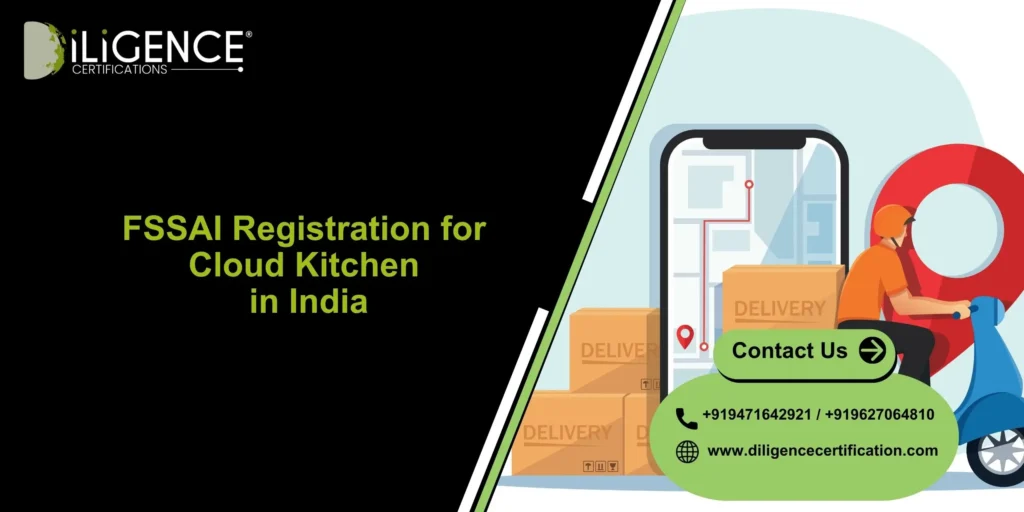
By - FSSAI License for Cloud Kitchen is mandatory for all cloud kitchens operating in India to ensure food safety compliance.
- The type of FSSAI license depends on the annual turnover and operational scale of the kitchen.
- Registration provides legal recognition, builds customer trust, and enables business expansion.
- Compliance with hygiene, food safety, labeling, and packaging standards is essential under FSSAI regulations.
- FSSAI registration is required to partner with online food delivery platforms like Zomato, Swiggy, and Dunzo.
Introduction | FSSAI License for Cloud Kitchen
Cloud kitchens, also known as ghost kitchens or virtual kitchens, are an increasingly popular food business model in India. These kitchens operate without a dine-in facility and focus solely on preparing food for delivery. With the rise of food delivery apps, cloud kitchens have lower overhead costs compared to traditional restaurants, making them a profitable business opportunity.
However, operating a cloud kitchen requires strict compliance with food safety regulations. The Food Safety and Standards Authority of India (FSSAI) regulates food businesses to ensure the health and safety of consumers. Any cloud kitchen operating without FSSAI registration risks legal penalties, fines, or even business closure.
This blog provides a comprehensive guide on FSSAI License for Cloud Kitchen in India, covering why it is necessary, the registration process, challenges of doing it alone, benefits, and how professional consultancy can simplify the process.
What is FSSAI License for Cloud Kitchen?
FSSAI is an abbreviation used to refer to Food Safety and Standards Authority of India, the regulatory agency mandated with the duty of issuing licenses, regulating, and controlling all food-related businesses in India. The main role of FSSAI License for Cloud KitchenI is to ensure that food that is processed, stored, and marketed is safe for consumption.
Registration by FSSAI is mandatory for any cloud kitchen since:
- It shows that the business practices proper food safety and hygiene procedures.
- Food made in such kitchens is safe for consumption by consumers.
- It is legally authorized to operate based on Indian laws regarding food.
Why FSSAI License for Cloud Kitchen Registration is Necessary
FSSAI License for Cloud Kitchen is more than a legal requirement; it provides operational and strategic benefits. Key reasons include:
- Legal Compliance: Running a cloud kitchen without FSSAI registration is against the law as per Food Safety and Standards Act, 2006. Legal non-compliance can lead to penalties or shutdown of the business.
- Customer Confidence: More customers will be willing to use the service when the kitchen provides evidence of FSSAI registration since it implies safe hygiene practices.
- Delivery Platform Access: FSSAI registration is necessary for inclusion of your kitchen into the online platforms used by food delivery apps.
- Business Expansion: It will enable the business to grow since registered kitchens have an easier time working with distributors and participating in food fairs.
- No Penalties: Registering with the FSSAI means avoiding any penalties.
Important and Benefits for FSSAI License for Cloud Kitchen
| Important Points | Benefits |
| Mandatory for all food businesses | Legal recognition and avoidance of fines |
| Types: Basic, State, Central | Suitable license for the kitchen’s scale |
| Compliance with hygiene and safety standards | Builds trust and reliability among customers |
| Required for online delivery platforms | Enables listing on Zomato, Swiggy, Dunzo |
| License validity: 1-5 years | Provides long-term operational security and ease of renewal |
Process for FSSAI License for Cloud Kitchen
The FSSAI registration process for cloud kitchens is systematic and can be completed online. Below are the steps:
Step 1: Determine License Type
- Basic Registration: For small cloud kitchens with an annual turnover of less than ₹12 lakh.
- State License: For medium-scale kitchens with a turnover between ₹12 lakh and ₹20 crore.
- Central License: For large-scale kitchens with turnover above ₹20 crore or operating across multiple states.
Step 2: Collect Required Documents Documents required for registration include:
- Identity proof of the business owner (PAN card, Aadhaar card)
- Address proof of the business premises (rental agreement, NOC from property owner)
- Proof of business constitution (partnership deed, LLP, or company incorporation certificate)
- List of food items and menu to be prepared
- Food safety management plan
- NOC from local municipality if applicable
Step 3: Apply Online
- Visit the FSSAI online portal (https://foodlicensing.fssai.gov.in).
- Fill the application form according to the type of license.
- Upload scanned copies of all required documents.
Step 4: Fee Payment
The FSSAI registration fee depends on the license type:
- Basic Level
- State Level
- Central Level
Step 5: Inspection (if applicable)
For state and central licenses, FSSAI may conduct a physical inspection of the kitchen premises to ensure compliance with hygiene and safety standards.
Step 6: License Issuance
Once the application and documents are verified, the FSSAI license is issued. The license includes a 14-digit registration or license number and is valid for 1-5 years depending on the type of license and application.
Challenges of Getting FSSAI Certification Without a Consultant
- Errors in Documents: Misleading or erroneous documents often cause the rejection of the application.
- Difficult Forms: Completing the FSSAI forms manually can be lengthy and complicated, particularly for new entrepreneurs.
- Delayed Inspection: Inspections done physically often need repeated visits, thereby delaying the process of approval.
- Understanding of Compliance: The lack of understanding of compliance with various norms in terms of food safety, hygiene, packaging, etc., among cloud kitchens owners.
- Wrong License Selection: Wrong selection of license may give rise to legal complications.
Why Choose Diligence Certification for FSSAI Registration
Diligence Certification specializes in assisting cloud kitchens with FSSAI registration. Choosing professional consultancy offers several advantages:
- Consultant Support: Assistance in choosing the right license considering the size of the company and its revenue.
- Documentation: The professionals make sure that the documents are correct and completed.
- License Issue Quicker: Saves time as there will be no mistakes leading to rejection.
- Compliance: Assistance in complying with hygiene and safety regulations, as well as product labels.
- Re-issue: Assistance in maintaining license validity through renewal.
By partnering with Diligence Certification, cloud kitchen operators can focus on operations and growth while ensuring full compliance with FSSAI regulations.
Conclusion
Registration with FSSAI License for Cloud Kitchen is mandatory for cloud kitchens in India due to various reasons such as safety of the food prepared by the food processing unit, establishment of trust among customers, association of cloud kitchens with food delivery apps, and avoiding penalties from authorities.
Though the entire process of obtaining FSSAI License for Cloud Kitchen is tedious, the expert services provided by Diligence Certification will simplify the procedure for licensed cloud kitchens. Cloud kitchens will gain confidence to scale their business operations and build an authentic brand reputation in the food delivery market.
Frequently Asked Questions (FAQs)
Is FSSAI registration mandatory for cloud kitchens?
Yes, all cloud kitchens must obtain FSSAI registration.
What are the types of FSSAI licenses?
Basic, State, and Central licenses depending on turnover and scale.
Can I apply for FSSAI online?
Yes, the registration process is fully online via the FSSAI portal.
How long does FSSAI registration take?
Typically 7-30 days depending on the type of license.
Do I need an inspection for a basic license?
No, inspections are usually required only for state and central licenses.
What documents are required for registration?
Identity proof, address proof, business constitution, menu list, and food safety plan.
What is the validity of an FSSAI license?
1-5 years depending on license type.
Can a cloud kitchen operate without FSSAI?
No, it is illegal and may result in fines or closure.
Is FSSAI registration required for online delivery platforms?
Yes, platforms like Zomato, Swiggy, and Dunzo require a valid license.
Why hire a consultant for FSSAI registration?
Consultants ensure correct documentation, faster approval, and compliance with all regulations.