BIS Certification
 CDSCO
CDSCO
 PESO
PESO
 CPCB
CPCB
 LMPC
LMPC
 WPC Approval
 Global Approvals
 TEC
TEC
 ARAI
ARAI
 BEE
BEE
 ISO Certification
 DGCA Certification
 NOC For Steel
 APEDA Registration























 Business Registration
 FSSAI Mark Certification












 (32).jpg)
 Legal Services
 Trademark Registration
 Copyright Registration
 Patent Registration
 By
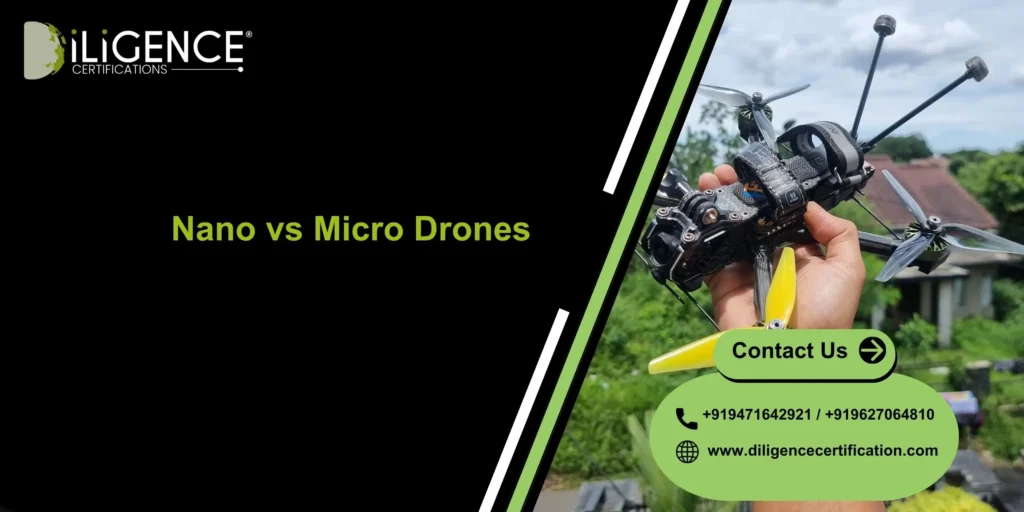
By - Nano vs Micro Drones Nano drones weigh less than 250 grams, while micro drones weigh between 250 grams and 2 kilograms.
- Certification requirements differ significantly between nano and micro drones under DGCA regulations.
- Nano drones have fewer operational restrictions, making them suitable for hobbyists and indoor use.
- Micro drones require more stringent approvals, especially for commercial operations and aerial photography.
- Non-compliance can lead to fines, confiscation of drones, and legal liability.
Introduction | Nano vs Micro Drones
Drones are no longer just gadgets; they have become essential tools for industries like agriculture, logistics, photography, and surveillance. In India, the rise of drone usage has prompted regulatory measures to ensure safety and accountability. Among drones, nano and micro drones are widely used for both personal and commercial purposes. Understanding the differences between them, along with their certification requirements, is critical to avoid legal issues and operational risks.
What are Nano and Micro Drone?
- Nano Drone: A drone with a weight less than 250 grams. These drones are typically used for indoor activities, recreational flying, or experimental purposes. Due to their light weight, the risk they pose to people and property is minimal.
- Micro Drone: A drone weighing between 250 grams and 2 kilograms. These drones are used for commercial purposes like photography, surveying, mapping, and delivery services. They have more advanced capabilities but require stricter compliance.
Why This Distinction Matters Nano vs Micro Drones
Understanding the difference between Nano vs Micro Drones is essential for several reasons:
- Regulatory Compliance: Different weight categories have distinct rules under the DGCA (Directorate General of Civil Aviation).
- Certification Needs: Nano drones may have simpler registration, while micro drones require formal approvals.
- Insurance and Liability: Micro drones pose a higher risk and require mandatory insurance coverage.
- Operational Limits: Flying altitude, no-fly zones, and permissions differ between nano and micro drones.
- Commercial Use: Micro drones can generate revenue but need stricter adherence to regulations.
Important Features and Benefits Nano vs Micro Drones
| Feature | Nano Drone | Micro Drone |
| Weight | < 250 grams | 250 grams - 2 kg |
| Registration | Optional or simplified | Mandatory via Digital Sky Platform |
| Licensing | Not required for hobby use | Required for commercial use |
| Operational Range | Short, mostly indoor | Longer, can operate outdoors |
| No-Fly Zones | Limited restrictions | Must comply strictly with restricted zones |
| Insurance | Optional | Mandatory for commercial operations |
| Safety Risk | Low | Moderate to high |
| Cost | Low | Moderate to high |
Benefits:
- Nano Drones: Easy to fly, low cost, minimal legal hurdles, ideal for beginners.
- Micro Drones: Suitable for commercial applications, professional photography, surveying, and mapping, higher reliability and performance.
Process Nano vs Micro Drones of Certification in India
1. Nano Drones
- Mostly exempt from DGCA certification for recreational use.
- Recommended to register via the Digital Sky Platform to ensure legal compliance.
- Follow basic safety guidelines like flying below 50 feet indoors and away from people.
2. Micro Drones
- Step 1: Registration - Mandatory on the Digital Sky Platform.
- Step 2: Unmanned Aircraft Operator Permit (UAOP) - Required for commercial operations.
- Step 3: Permission for Aerial Work - Apply for specific flight permissions if flying in controlled zones.
- Step 4: Insurance - Secure drone liability insurance for damages or accidents.
- Step 5: Pilot Certification - Operators may need a Remote Pilot License (RPL) for drones above 250 grams.
Key Platforms:
- DGCA Digital Sky Platform
- Local Civil Aviation Authorities
Challenges of Getting This Nano vs Micro Drones Without a Consultant
- Complex Application Forms: The Digital Sky Platform requires detailed technical and operational data.
- Regulatory Updates: Rules change frequently, making it easy to miss compliance requirements.
- Approval Delays: Incorrect documentation can delay the UAOP or flight permissions.
- Insurance Complications: Choosing the correct insurance for commercial micro drones can be confusing.
- Legal Risks: Non-compliance can result in fines, confiscation, or penalties.
Why Choose Diligence Certification for Drone Certification
Diligence Certification specializes in handling drone compliance for both nano and micro categories.
- Expert Guidance: Navigate DGCA regulations without mistakes.
- End-to-End Process Handling: Registration, licensing, permissions, and insurance.
- Time Efficiency: Avoid delays due to incomplete or incorrect submissions.
- Commercial Support: Assistance in planning drone operations legally for business.
- Legal Safety: Minimize risk of penalties and operational interruptions.
Conclusion
Understanding the difference between Nano vs Micro Drones and their respective certification requirements, is critical for both hobbyists and commercial operators in India. Nano drones offer low-risk recreational use, while micro drones provide commercial potential but with stricter regulatory requirements. Working with professional certification consultants like Diligence Certification ensures compliance, avoids legal trouble, and maximizes the operational benefits of drones.
Frequently Asked Questions (FAQs)
Do nano drones need DGCA registration?
Generally no, but optional registration is recommended.
What weight defines a micro drone?
250 grams to 2 kilograms.
Is a pilot license needed for nano drones?
No, only micro drones used commercially may require an RPL.
Can micro drones fly in no-fly zones?
No, permission from DGCA is mandatory.
Is insurance mandatory for nano drones?
No, it is optional for recreational purposes.
How long does micro drone certification take?
Typically 2-6 weeks depending on documentation accuracy.
What happens if I fly a micro drone without certification?
Fines, drone confiscation, and legal liability.
Can micro drones be used for commercial delivery?
Yes, with proper licensing and permissions.
Are there penalties for flying drones near airports?
Yes, strict fines and potential imprisonment under DGCA regulations.
Can Diligence Certification help with nano drones too?
Yes, they offer guidance even for recreational compliance and best practices.