BIS Certification
 CDSCO
CDSCO
 PESO
PESO
 CPCB
CPCB
 LMPC
LMPC
 WPC Approval
 Global Approvals
 TEC
TEC
 ARAI
ARAI
 BEE
BEE
 ISO Certification
 DGCA Certification
 NOC For Steel
 APEDA Registration























 Business Registration
 FSSAI Mark Certification












 (32).jpg)
 Legal Services
 Trademark Registration
 Copyright Registration
 Patent Registration
 By
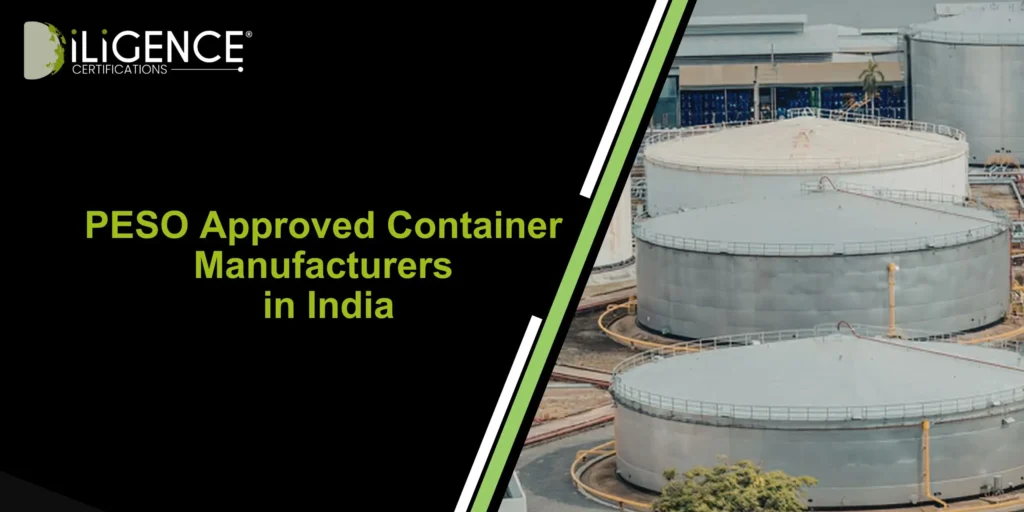
By - PESO Approved Container is mandatory for containers used in petroleum, gas, and hazardous chemical industries.
- Only approved manufacturers can legally produce pressure vessels, cylinders, and storage tanks.
- The approval process involves design validation, testing, and factory inspection.
- Non-compliance can lead to heavy penalties, product rejection, or business shutdown.
- Working with a consultant significantly reduces approval time and rejection risks.
Introduction | PESO Approved Container
In India, industries dealing with hazardous materials-such as petroleum, gases, chemicals, and explosives-must comply with strict safety regulations. One of the most critical regulatory authorities overseeing such compliance is the Petroleum and Explosives Safety Organization (PESO).
For manufacturers of containers used to store or transport hazardous substances, obtaining How to get PESO approval for container manufacturing
PESO Approved Container is not optional-it is mandatory. Without this certification, businesses cannot legally manufacture, sell, or use such containers in regulated sectors.
This guide explains everything you need to know about PESO-approved container manufacturers in India, including what the certification means, why it matters, the approval process, benefits, challenges, and how to get it done efficiently.
What is PESO Approval for Containers?
PESO Approved Container is a certificate issued by the regulatory body from the Ministry of Commerce & Industry. The certificate ensures that any container designed to store and transport hazardous materials satisfies all safety requirements and design criteria.
The following containers are included:
- Pressure vessels
- LPG cylinders
- Cryogenic tanks
- Chemical storage tanks
- Fuel tankers
Main points:
- Compliance with safety standards in Explosives Act and Petroleum Rules
- Required for manufacture and use
- Relevant to both Indian and international manufacturers
- Encompasses design, materials, construction, and testing
Why PESO Approval is Required
It is important that your containers be approved by PESO so that you can be legally compliant and ensure safety as well as secure market access for them.
Key Reasons:
- Legality: This approval is mandatory as per Indian laws such as Explosives Act and Petroleum Rules. Otherwise, manufacture/sale becomes illegal.
- Safety: This ensures that there will be no accidents related to leakage, explosions, and other potential fire hazards.
- Standardization: It standardizes the products to the required technical as well as quality parameters.
- Market Access: This is necessary to sell your product to oil companies, chemical industries, and even government projects.
- Legal Transport: Important for transport of hazardous cargo.
- Insurance Benefits: It minimizes legal risks and enhances insurance acceptance.
Bottom Line:
Approval is necessary otherwise you won’t be able to do business in regulated industries.
Importance and Benefits of PESO Approved Containers
| Aspect | Without PESO Approval | With PESO Approval |
| Legal Compliance | Illegal to manufacture/sell | Fully compliant with Indian laws |
| Market Access | Limited or restricted | Access to national and global markets |
| Safety Standards | Unverified | Certified and tested safety |
| Business Credibility | Low trust | High industry credibility |
| Government Projects | Not eligible | Eligible for tenders |
| Risk of Penalties | High | Minimal |
| Product Acceptance | Often rejected | Widely accepted |
| Export Opportunities | Difficult | Easier approvals |
Process to Get PESO Approval for Container Manufacturers
Getting PESO approval involves multiple technical and regulatory steps. Missing even one requirement can lead to rejection.
Step-by-Step Process
1. Application Submission
- Submit application with company details
- Provide manufacturing unit information
- Include technical specifications
2. Design Approval
- Submit engineering drawings
- Material specifications must meet standards
- Design reviewed by PESO authorities
3. Prototype Testing
- Containers are tested for pressure, leakage, and durability
- Must meet safety benchmarks
4. Factory Inspection
- PESO officials inspect manufacturing facility
- Check machinery, quality control systems, and workforce capability
5. Documentation Verification
- Quality manuals
- Welding procedures
- Inspection reports
- Safety protocols
6. Grant of Approval
- PESO issues certification if all requirements are met
7. Periodic Renewal
- Regular inspections required
- Compliance must be maintained continuously
Challenges of Getting This Certification Without a Consultant
Underestimating the intricacy of obtaining PESO approval is typical among many companies. Approaching the process without professional help usually results in delays and denials.
Typical Difficulties
- Inaccurate format of supporting documents
- Unclear interpretation of technical requirements
- Denial for design due to non-conformity
- Failing inspections because of inadequate preparation
- Continuous engagement with regulatory bodies
- Prolonged approval periods (6-12 months or even longer)
Actual Issue
The majority of producers pay attention only to their manufacturing processes but neglect compliance with legal requirements.
Why You Should Choose Diligence Certification
Diligence Certification of the consultant is directly tied to fast approvals, reduced costs, and improved success rates. For PESO approvals, mistakes in documentation and design may result in a delayed project by several months.
- End-to-End Approach: Full coverage of your project from application to PESO approval process.
- Expert Guidance: Professional guidance on technical specifications of design and documentation to prevent any rejection.
- Shorter Approval Process: Eliminate all delays caused by mistakes in documentation and multiple submission rounds.
- Ready for Inspection: Your factory process is ready to pass the PESO inspection easily.
- Fewer Errors: Find out the areas where your product is not compliant and make necessary adjustments.
- Query Resolution: All inquiries with PESO are handled directly by our consultants.
Steps To Take:
- Contact us to benefit from professional support lacking in-house
- Prepare the documentation and design following PESO requirements before application
Avoid These Steps:
- Submit an application without full documentation
- Neglect technical compliance in favor of simple paperwork
Conclusion:
Lack of proper expertise leads to delayed or even denied approvals. Our Diligence Certification provides a well-managed and risk-free approval process.
Additional Important Considerations
Types of Containers Covered
- Static pressure vessels
- Transportable pressure vessels
- LPG and CNG cylinders
- Tank trucks and bowsers
- Cryogenic storage tanks
Industries That Require PESO Approved Containers
- Oil & Gas
- Chemical manufacturing
- Pharmaceuticals
- Explosives industry
- Logistics and transport
Conclusion
PESO Approved Container manufacturers is a critical compliance requirement in India. It ensures that containers used for hazardous materials meet strict safety and quality standards.
Ignoring this certification can result in legal penalties, business losses, and safety risks. On the other hand, obtaining PESO approval enhances credibility, opens market opportunities, and ensures long-term business sustainability.
The process is technical and time-consuming, but with the right approach-or expert support-you can complete it efficiently and avoid costly mistakes.
Frequently Asked Questions (FAQs)
What is PESO approval for containers?
PESO approval certifies that containers used for hazardous materials meet safety and regulatory standards in India.
Is PESO approval mandatory for all container manufacturers?
Yes, if the containers are used for petroleum, gas, or hazardous substances.
How long does it take to get PESO approval?
Typically 3 to 6 months with proper documentation; longer if errors occur.
Can foreign manufacturers get PESO approval?
Yes, but they must comply with Indian regulations and appoint an authorized representative.
What documents are required for PESO approval?
Design drawings, material specifications, test reports, quality manuals, and factory details.
What happens if PESO approval is rejected?
You must correct the issues and reapply, which increases time and cost.
Is factory inspection mandatory?
Yes, PESO officials will inspect your manufacturing unit before approval.
What types of containers need PESO approval?
Pressure vessels, LPG cylinders, tankers, cryogenic tanks, and chemical containers.
How often is PESO approval renewed?
It depends on the approval type, but periodic inspections and renewals are required.
Can I apply for PESO approval without a consultant?
Yes, but it is risky due to technical complexity and high chances of rejection.