 BIS Certification
 CDSCO
CDSCO
 PESO
PESO
 CPCB
CPCB
 LMPC
LMPC
 WPC Approval
 Global Approvals
 TEC
TEC
 ARAI
ARAI
 BEE
BEE
 ISO Certification
 DGCA Certification
 NOC For Steel
 APEDA Registration























 Business Registration
 FSSAI Mark Certification












 (32).jpg)
 Legal Services
 Trademark Registration
 Copyright Registration
 Patent Registration
SABER Certificate
The SABER certificate is an obligatory electronic conformity requirement when importing goods into Saudi Arabia.
Get expert consultation
Trusted by 25,000+ leading enterprises worldwide



Key takeaways
- The SABER certificate is a mandatory electronic conformity requirement for importing regulated products into Saudi Arabia.
- It runs through the SABER platform under the supervision of the Saudi Standards, Metrology and Quality Organization (SASO).
- SABER issues compliance through two certificates: the Product Certificate of Conformity (PCoC) and the Shipment Certificate of Conformity (SCoC).
- The PCoC is a product-level approval valid for one year, while the SCoC is issued per shipment and checked at Saudi customs.
- Only regulated categories such as electricals, machinery, automotive parts, construction materials, textiles, chemicals, packaging, food-contact materials and PPE require SABER.
- Without SABER approval, shipments are blocked at customs, delayed, or exposed to penalties and re-export risk.
- Most delays come from documentation gaps such as wrong HS codes or missing test reports, not from regulatory rejection.
What is a SABER certificate?
The SABER certificate is an obligatory electronic conformity requirement when importing goods into Saudi Arabia. It confirms that all regulated products comply with the safety and quality requirements of the Saudi authorities before they reach the country.
The process is entirely digital and runs through the officially registered Saudi conformity portal in connection with the regulators. Without SABER clearance, regulated products cannot be brought into Saudi Arabia, so importers, manufacturers, exporters and international trading firms must obtain it before shipment.
SABER is an electronic conformity assessment system operated under the supervision of the Saudi Standards, Metrology and Quality Organization (SASO), which defines the technical regulations and national product standards. Importantly, SABER is not a certification authority in itself. It is the online platform on which importers register products, submit technical documents and obtain compliance approvals.
The role of SASO
SASO sets the framework that every regulated product must meet:
- Product safety standards
- Technical regulations
- Risk classification rules
- Compliance requirements
What the SABER platform connects
- Importers
- Certification bodies
- Testing laboratories
- Saudi customs
Link to the SALEEM programme
SABER operates under Saudi Arabia’s SALEEM programme, which focuses on product safety enforcement, risk-based inspection and market surveillance.
Key point: there is no single SABER certificate issued directly. Instead, SABER generates compliance approvals through two certificates, the PCoC and the SCoC.
Why a SABER certificate is required
The SABER certificate is mandatory because Saudi Arabia strictly regulates product safety and import quality. In practice, it is the first compliance checkpoint before any physical shipment movement.
Main reasons it is required
- Legal import requirement under Saudi regulations
- Mandatory customs clearance system
- Product safety verification before market entry
- Prevention of counterfeit or unsafe goods
- Alignment with Saudi national quality policies
What happens without SABER approval
- Shipments blocked at customs.
- Import delays that increase significantly.
- Financial penalties or re-export risk.
Which products require SABER
SABER certification is not required for every imported product. It applies only to certain categories defined by SASO’s technical regulations. If your products fall into any regulated category, they must have a valid PCoC and SCoC before customs clearance.
Electrical & electronic products
Home appliances such as mixers, irons and heaters, mobile chargers and adapters, lighting like LEDs and lamps, and consumer electronics.
Machinery & industrial equipment
Manufacturing machines, pumps and compressors, construction machinery and heavy industrial tools.
Automotive & vehicle components
Spare parts, tyres and batteries, brake systems and other safety components.
Construction materials
Cement and steel products, tiles, glass and insulation materials, and plumbing and piping systems.
Textile & apparel products
Clothing and garments, fabrics and yarn, and protective textiles.
Chemical products & detergents
Cleaning agents, industrial chemicals, and household detergents and disinfectants.
Packaging materials
Food packaging materials, industrial packaging films and plastic containers.
Food-contact materials
Kitchenware, storage containers, and food-grade plastics and utensils.
Safety & PPE
Helmets, gloves, safety shoes and industrial protective gear.
Each category follows strict Saudi technical standards defined by SASO.
PCoC and SCoC explained
SABER approval is built on two linked certificates: a product-level approval and a shipment-level approval.
Product Certificate of Conformity (PCoC)
The PCoC is the product-level approval that confirms a product meets Saudi technical regulations.
- Issued per product model or SKU
- Valid for one year and renewable
- Requires lab testing and technical evaluation
- Issued by SASO-approved certification bodies
- Mandatory before the shipment clearance process
Shipment Certificate of Conformity (SCoC)
The SCoC is the shipment-specific approval that is verified at Saudi customs.
- Required for every shipment
- Valid for a single consignment only
- Checked at Saudi customs
- Linked to a valid PCoC
- Needed for each shipment even when the product already holds approval, because every consignment is verified individually
The SABER certificate process
The SABER certificate follows a structured compliance flow, from product classification through to customs clearance.
Product classification
Products are mapped to Saudi technical regulations based on the HS code.
Importer registration
The company creates an account on the SABER platform.
Product registration
Product details and specifications are entered into the system.
Documentation submission
Test reports, technical files, safety certificates and manufacturer details are uploaded.
Evaluation by certification body
A SASO-approved body reviews the compliance documents.
Issuance of PCoC
The Product Certificate of Conformity is generated for approved products.
Shipment registration (SCoC)
Each shipment is registered separately for its Shipment Certificate of Conformity.
Customs clearance
The shipment is released after validation at Saudi customs.
What SABER certification requires
To obtain SABER approval, importers and manufacturers must have the following in place.
- Valid importer registration in SABER
- Accurate HS code classification
- Product technical specification sheet
- Accredited laboratory test reports
- Compliance with SASO technical regulations
- Certification body approval
Additional requirements that may apply
- Factory inspection for high-risk products
- ISO certifications for manufacturers in some categories
Timeline, cost and validity
| Aspect | What to expect |
|---|---|
| Cost | Varies with the product category and applicable technical regulations, testing requirements and certification body charges. Additional compliance services can affect the total, and the final cost is confirmed after product evaluation. |
| Timeline | Depends on the completeness and accuracy of the submitted documents and on product complexity and testing needs. Correct, complete paperwork leads to faster approvals, while missing information or corrections cause delays. |
| Validity | A PCoC stays valid for the applicable certification period and must be renewed for continued imports. An SCoC is valid only for the specific shipment it is issued for. Renewals keep market access uninterrupted, and significant product changes may require a fresh conformity assessment. |
Benefits of SABER certification
SABER is mandatory for regulated products, and every shipment needs a separate conformity approval before customs clearance. Beyond compliance, a well-managed SABER process delivers real commercial value.
Market access
Enables legal access to the Saudi Arabian market for regulated products.
Faster clearance
Facilitates smoother and faster customs clearance at Saudi ports.
Fewer delays
Reduces the risk of shipment delays, rejection and penalties.
Product credibility
Enhances product credibility and customer confidence in the market.
Assured compliance
Ensures compliance with Saudi safety and technical regulations.
Long-term access
Supports hassle-free import operations and long-term market access.
Who needs a SABER certificate
SABER is primarily an import compliance requirement handled through the SABER platform, and it involves every party in the supply chain for regulated goods.
- Importers in Saudi Arabia are the primary responsible party. They register products and must obtain both the PCoC and the SCoC.
- Foreign manufacturers exporting to Saudi Arabia are involved indirectly through importer registration and must provide test reports, technical documents and product specifications.
- Exporters and trading companies need SABER when shipping regulated goods and must ensure products are linked to a valid PCoC before shipment.
- Local manufacturers based in Saudi Arabia must register regulated products and obtain a PCoC, though no shipment certificate is needed as no import occurs.
- Customs and logistics agents are not certificate holders but require a valid SCoC to clear shipments at customs.
Common mistakes to avoid
Most SABER applications are delayed by avoidable documentation and process errors rather than regulatory rejection.
- Incorrect HS code classification, which maps the product to the wrong technical regulation
- Missing, outdated or non-accredited laboratory test reports
- Incomplete technical documentation, specifications or manufacturer details
- Mismatch between the product data in the PCoC and the shipment declaration in the SCoC
- Arranging a shipment before obtaining the PCoC, or using an expired PCoC
- Choosing a non-approved or unsuitable certification body
- Misunderstanding SASO technical regulations for the product category
- Non-compliant Arabic labelling or missing safety markings
- Poor coordination between the importer, exporter and testing laboratories
Why choose Diligence Certifications
Diligence Certifications offers SABER certification support to manufacturers, exporters, importers and brand owners in Saudi Arabia and worldwide. We keep the entire process organised and free of avoidable errors or delays, so companies that handle SABER efficiently enjoy smoother customs clearance and better market access. You can explore our full range of compliance and certification services for related approvals.
- Product category identification under SABER and SASO regulations
- SABER registration guidance and account setup
- Documentation preparation and technical file review
- Product testing coordination with accredited laboratories
- Certification body coordination for PCoC approval
- Shipment registration support for SCoC issuance
- Query handling and clarification with the authorities
- Label and packaging compliance support where applicable
- Renewal and ongoing compliance management
Ready to enter the Saudi market?
Tell us about your products and target categories, and we will map the exact SABER registration, testing and certification steps for your shipments.
Frequently asked questions
What is a SABER certificate?
It is a conformity certification system used to ensure that products meet the required safety and quality standards before entering the Saudi market.
How do you get a SABER certificate in India?
You obtain it through a Saudi importer by registering the product on the SABER platform and submitting the required technical documents and test reports.
How much does a SABER certificate cost?
The cost depends on the product type, testing requirements and certification body charges, and it varies for each category and compliance need.
Is a SABER certificate mandatory?
Yes. It is mandatory for all regulated products imported into Saudi Arabia and is required for customs clearance.
Who requires a SABER certificate for imports to Saudi Arabia?
The SABER certificate is mostly issued to importers in Saudi Arabia, as well as to exporters and manufacturers who supply regulated goods.
Which products require SABER certification?
Goods such as electronic devices, machinery, auto parts, chemicals, textiles, building materials and PPE require a SABER certificate.
What do PCoC and SCoC mean in the SABER procedure?
PCoC means Product Certificate of Conformity, while SCoC stands for Shipment Certificate of Conformity used for customs clearance.
How long does SABER approval take?
The time required to obtain a SABER certificate depends on the product category, documentation and certification requirements.
What are the main mistakes during SABER approval?
The main mistakes are wrong HS code selection, absence of a test report, incomplete paperwork and incorrect shipment information.
What happens if SABER is not obtained?
Without a SABER certificate, shipments may be detained, returned or even rejected at Saudi customs.
Why choose Diligence Certification?
For compliance and credibility, Diligence is much more than a checklist - we give you real confidence in your business. We examine your legal, financial and operational status, so you are not just certified, but trusted.
Stronger risk protection
Spot hidden legal, financial or operational risks early - fix problems before they become threats.
Earn stakeholder trust
From investors to customers, people want to work with businesses that play by the rules.
Stay legally aligned
Compliant not just on products but on labour, environmental and tax laws too.
Enhance brand reputation
Show the world you operate with integrity and transparency.
Stand out from competitors
In a crowded market, credibility is your biggest edge.
24×7 expert support
A 100+ strong service team guiding you at every step, free first consultation.
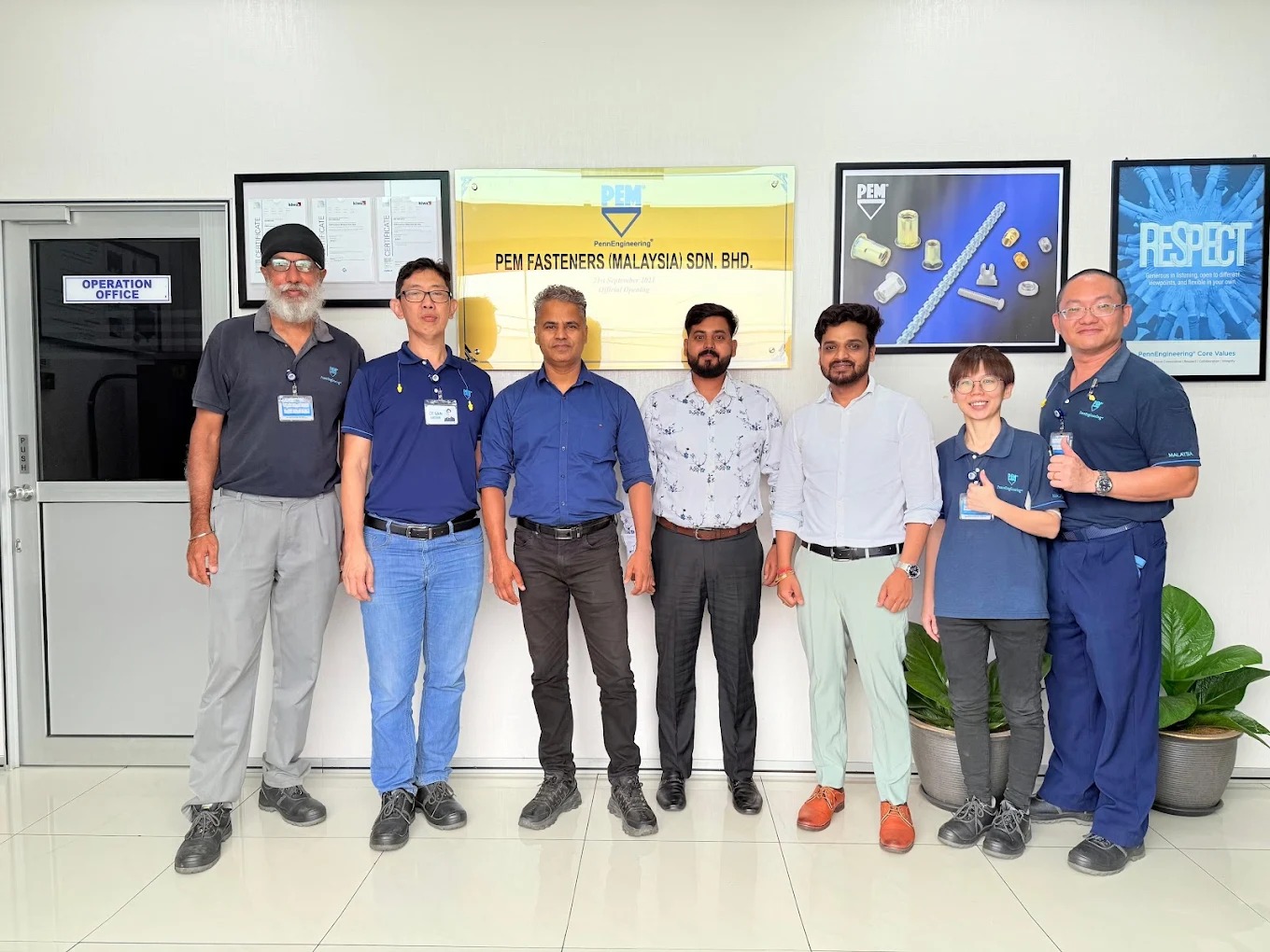
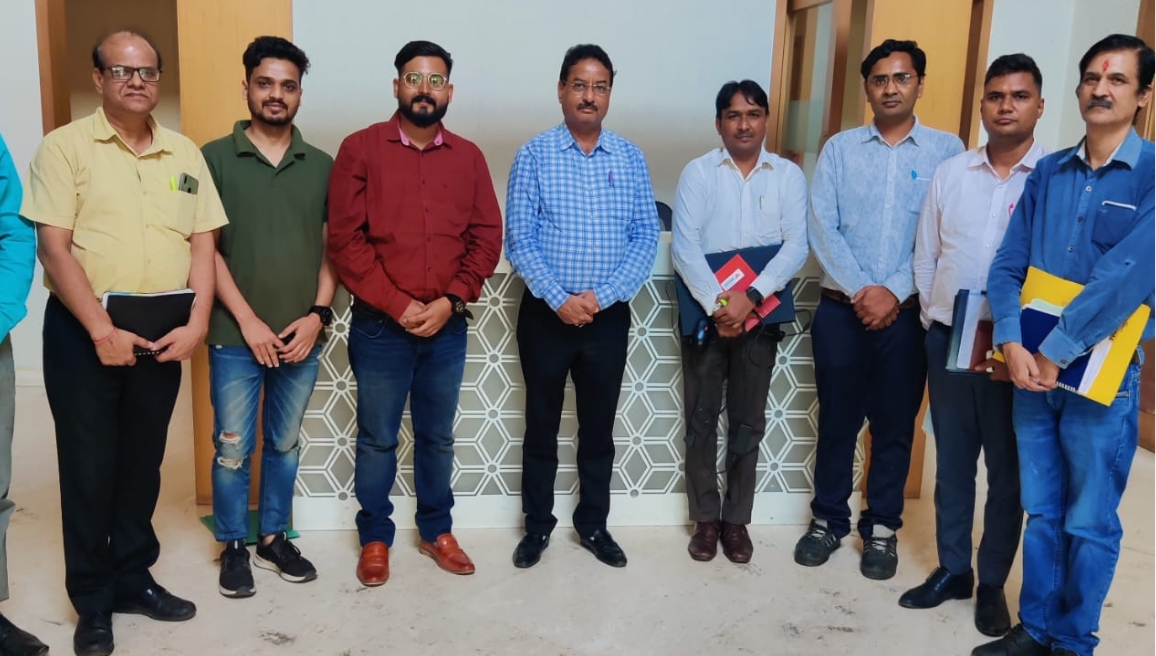
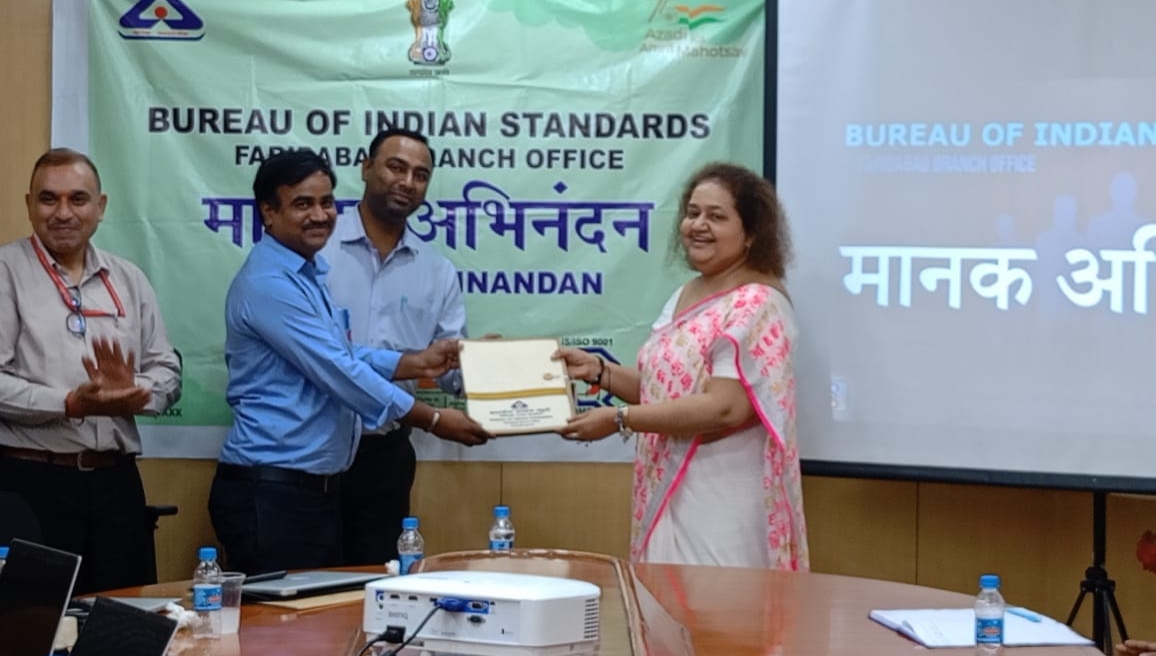
Real sites, real certifications
Our teams work inside factories and plants across India and abroad - inspections, audits and certification milestones spanning BIS, global schemes and the full compliance stack you see on this site.



What our clients say
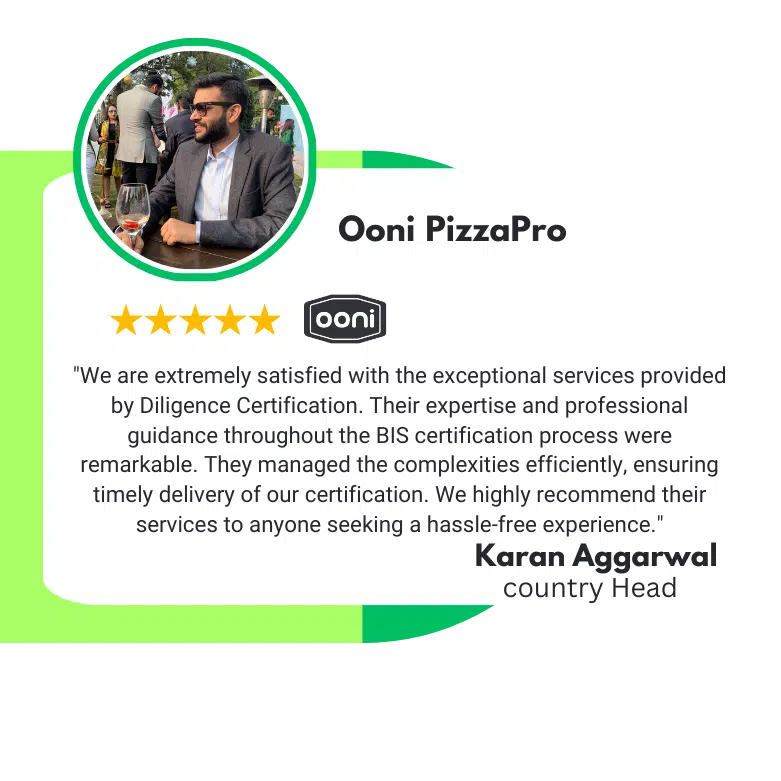
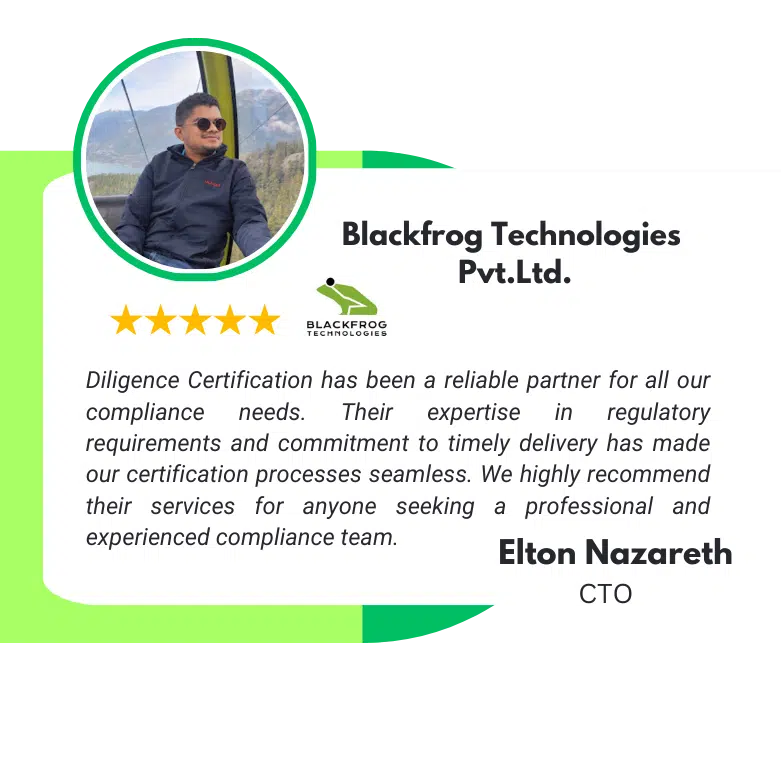
Reviews and feedback from businesses that have worked with Diligence Certifications.






Related Global Approvals services
RoHS Certification
Restriction of Hazardous Substances compliance.
View details →UL Certification
UL Certification for North American markets.
View details →KC Certification
Korea Certification for Korean market access.
View details →FCC Certification
FCC certification for US market entry.
View details →CE Certification
CE marking for European Union market access.
View details →CB Certification
IECEE CB Scheme certification - global recognition.
View details →Ready to get SABER Certificate?
Talk to our experts for a clear, fixed-scope plan - most clients get a roadmap the same day.