 BIS Certification
 CDSCO
CDSCO
 PESO
PESO
 CPCB
CPCB
 LMPC
LMPC
 WPC Approval
 Global Approvals
 TEC
TEC
 ARAI
ARAI
 BEE
BEE
 ISO Certification
 DGCA Certification
 NOC For Steel
 APEDA Registration










 Business Registration
 FSSAI Mark Certification










 (32).jpg)
 Legal Services
 Trademark Registration
 Copyright Registration
 Patent Registration
IECEE CB Scheme
The IECEE CB Scheme is an internationally accepted certification programme for electrical and electronic products.
Get expert consultation
Trusted by 25,000+ leading enterprises worldwide









Key takeaways
- The IECEE CB Scheme is an internationally accepted certification programme for electrical and electronic products, operated within the IEC (International Electrotechnical Commission) System of Conformity Assessment Schemes.
- CB stands for Certification Bodies Scheme. You test a product once against IEC standards and the result is recognised across the participating countries.
- An approved CB Testing Laboratory carries out the testing, then issues a CB Test Certificate and a CB Test Report.
- Those documents let you apply for national certification in other member countries without repeating the tests.
- The scheme is used by manufacturers, exporters and OEM suppliers of consumer electronics, IT equipment, industrial electronics, batteries and components.
- It cuts duplicate testing, lowers cost and speeds export approval, while giving buyers recognised proof of safety.
What is the IECEE CB Scheme?
The IECEE CB Scheme is an internationally accepted certification programme for electrical and electronic products. It is operated within the IEC (International Electrotechnical Commission) System of Conformity Assessment Schemes, and CB stands for Certification Bodies Scheme.
International markets each set their own rules for safety, voltage and testing, so a product that sells freely in one country can fail approval in another. The CB Scheme removes that friction. A product is tested once against the relevant IEC standards, and the resulting report is recognised by the countries that take part in the scheme.
Under the scheme, an approved CB Testing Laboratory tests the equipment to the applicable IEC standard. On passing, the manufacturer receives a CB Test Certificate and a CB Test Report, which can then be used to apply for national certification in other member countries. The scheme is widely used by manufacturers, exporters and OEM suppliers of consumer electronics, IT and audio-video equipment, industrial electronics, batteries and electrical components.
How the CB Scheme works for you
- Test once against IEC standards instead of repeating tests in every market.
- Receive a CB Test Certificate and CB Test Report from an approved CB Testing Laboratory.
- Use those results to support national certification applications abroad.
- Cut duplicate testing cost and shorten export timelines.
- Give buyers and regulators recognised proof of safety compliance.
Types of CB Scheme certification
The CB Scheme covers a broad range of product categories and certification outputs. The main category codes and document types are set out below.
| Type / category | Description / scope |
|---|---|
| HOUS | Household and similar electrical appliances |
| IT/AV | Information technology and audio/video equipment |
| LITE | Lighting equipment and luminaires |
| MED | Medical electrical equipment, such as hospital devices and diagnostic tools |
| BATT | Batteries and battery systems |
| MEAS | Measuring, control and laboratory equipment |
| CABL | Cables, cords and wiring products |
| INST | Installation accessories and connection devices |
| CONT | Switches, circuit breakers and automatic controls |
| ELVH | Electric vehicle charging equipment |
| EMC | Electromagnetic compatibility related testing scope |
| CBTC | CB Test Certificate, the official certification document |
| CBTR | CB Test Report, the detailed test documentation |
| CCP | Component Certification Programme for electrical components |
| ACP | Aspect Certification Programme, covering specific safety aspects of a product |
Who needs CB certification
If you make or export electrical and electronic goods and sell across borders, the CB Scheme is usually the fastest route to multi-market acceptance.
Electrical and electronics manufacturers
Producers of finished electrical goods that need recognised safety testing to sell internationally.
Consumer electronics brands
Brands whose products must clear varied national safety rules in each destination market.
Industrial equipment manufacturers
Makers of industrial electrical equipment supplying customers across multiple countries.
Exporters of electrical goods
Exporters that need a single test report accepted across participating markets.
OEM and component suppliers
Suppliers whose buyers expect certified, traceable components and sub-assemblies.
IT hardware manufacturers
Producers of IT and audio-video hardware placing products in global supply chains.
Battery and power supply makers
Manufacturers of batteries, chargers and power supplies subject to strict safety testing.
Lighting and medical device makers
Lighting product manufacturers, and medical electrical equipment makers where applicable.
Why the CB Scheme is worth it
Global markets follow strict safety and performance regulations. Without recognised certification, products often face delays, retesting or outright rejection at the border. For exporters, CB certification is frequently the first step toward entering Europe, Asia and the Middle East, and it turns a slow, market-by-market approval process into a single, harmonised one.
What the CB Scheme gives you
- Faster approvals for products entering multiple countries.
- Lower testing cost by avoiding repeat tests in each region.
- Global acceptance of a single set of test reports.
- Easier export expansion into new markets.
- Stronger buyer and OEM confidence in your products.
- Less duplication of compliance effort and paperwork.
The CB certification process
The route runs from an internal review, through laboratory testing, to issuance of the CB Test Certificate and CB Test Report.
Internal assessment and classification
Review the product and confirm which IEC standard and product category apply before any testing begins.
Documentation preparation
Assemble the technical file, specifications and drawings needed for testing. A complete file must be ready before samples go to the laboratory.
Product testing in a CB laboratory
An authorised CB Testing Laboratory conducts the safety and performance tests in line with the IEC requirements.
Technical evaluation
Test results are reviewed together with the technical documentation to confirm full compliance.
Issuance of the CB certificate
Once approved, a CB Test Certificate and CB Test Report are issued, enabling national certification applications in other countries.
Documents required
Requirements vary by product and standard, but most CB Scheme applications draw on four groups of documents.
Business documents
- Company registration certificate
- Brand authorisation
- GST or VAT certificate, if applicable
- Import and export licence
Testing documents
- Sample submission form
- Previous test reports, if available
- Material details
- Component datasheets
Product documents
- Technical specification sheet
- Product drawings
- Circuit diagrams, if applicable
- User manual
- Model list
Manufacturer documents
- Factory profile
- Quality control procedures
- Production process details
Common mistakes and risks to avoid
Many applications are delayed by avoidable errors, and selling before you are certified carries real commercial risk.
Common mistakes in CB certification
- Wrong IEC standard selection, which makes the test report invalid.
- Incomplete technical files, with missing diagrams or specifications.
- Non-representative samples that cause test failure.
- Model mismatches across documents and samples that trigger rejection.
- Late compliance planning that leads to shipment delays.
Risks of selling without CB certification
- Market rejection in export destinations.
- Higher cost from duplicate testing in different regions.
- Shipment delays at customs clearance.
- Compliance failure, as non-compliant products face regulatory restrictions.
- Loss of buyer trust, since OEMs prefer certified suppliers.
- Financial loss from rework, retesting and delays.
What affects the certification timeline
There is no single fixed duration. The time to certification depends on the product, the standard, and how ready your documentation and samples are. A well-prepared application improves the probability of a smooth, first-time approval.
| Factor | Impact on timeline |
|---|---|
| Product category | Complex products need longer testing time. |
| IEC standard | Some standards require extended safety testing. |
| Testing requirements | Electrical safety, thermal and EMC tests all affect duration. |
| Sample readiness | Delayed samples slow the whole process down. |
| Documentation quality | Incomplete files increase review cycles. |
| Lab availability | The testing queue affects processing time. |
CB Scheme vs national certification vs CE marking
The CB Scheme is a supporting test-report system rather than a substitute for a country’s mandatory approval. It works alongside national certification and CE marking, not in place of them.
| Aspect | CB Scheme | National certification | CE marking |
|---|---|---|---|
| Meaning | International test report system | Country-specific approval | EU compliance marking |
| Scope | Global IEC member countries | Individual country | European Union |
| Purpose | Test harmonisation | Legal market approval | EU product compliance |
| Issuing body | CB Testing Laboratories | National authorities | EU manufacturer, by self-declaration |
| Mandatory | No, it is a support system | Yes, where the country requires it | Mandatory for the EU market |
CB Scheme vs general product testing
General product testing only evaluates performance under controlled conditions. CB Scheme testing goes further and confirms that the product meets the international IEC safety standards. A product can pass an internal test yet still fall short of CB requirements if the relevant IEC safety standard is not met, which is why CB certification is important for anything you plan to export.
How Diligence Certifications helps
We support manufacturers, exporters and brands with complete CB Scheme compliance, from the first standard check to certification across multiple countries.
- IEC standard identification and product classification.
- Documentation preparation and technical review.
- Sample coordination and CB laboratory testing support.
- Certification guidance for multiple countries.
Planning to export electrical or electronic products?
Tell us about your product range and target markets, and we will map the right IEC standards, documents and CB testing steps to keep your global compliance on track.
Frequently asked questions
What is the IECEE CB Scheme?
The IECEE CB Scheme is an international certification system that lets manufacturers test electrical and electronic products once and use the resulting CB Test Certificate and CB Test Report to support certification in multiple participating countries. It is operated within the IEC System of Conformity Assessment Schemes, and CB stands for Certification Bodies Scheme.
Who needs IECEE CB Scheme certification?
Manufacturers, exporters and OEM suppliers of electrical and electronic goods use the scheme, including makers of consumer electronics, IT and audio-video equipment, industrial equipment, batteries, lighting and components. It is most valuable for anyone selling into more than one international market.
What is the difference between a CB Test Certificate and a CB Test Report?
The CB Test Report contains the detailed test data and results, while the CB Test Certificate is the official document confirming that the product was tested to the relevant IEC standard. Together they are used to support national certification applications in other member countries.
What documents are required for CB Scheme certification?
Typical documents include company registration and brand authorisation, GST or VAT and import-export details, a technical specification sheet, product drawings and circuit diagrams, the user manual and model list, sample submission forms and any previous test reports, plus factory and quality-control information. Exact requirements depend on the product and the applicable IEC standard.
How is the CB Scheme different from CE marking?
The CB Scheme is an international test-report system issued by CB Testing Laboratories and accepted across IEC member countries. CE marking is a compliance marking specific to the European Union, and national certification is a country-specific legal approval. The CB Scheme supports these approvals rather than replacing them.
How long does CB Scheme certification take?
There is no fixed duration. The timeline depends on the product category, the applicable IEC standard, the testing required, sample readiness, documentation quality and laboratory availability. Preparing a complete technical file and representative samples in advance is the best way to avoid delays.
Why choose Diligence Certification?
For compliance and credibility, Diligence is much more than a checklist - we give you real confidence in your business. We examine your legal, financial and operational status, so you are not just certified, but trusted.
Stronger risk protection
Spot hidden legal, financial or operational risks early - fix problems before they become threats.
Earn stakeholder trust
From investors to customers, people want to work with businesses that play by the rules.
Stay legally aligned
Compliant not just on products but on labour, environmental and tax laws too.
Enhance brand reputation
Show the world you operate with integrity and transparency.
Stand out from competitors
In a crowded market, credibility is your biggest edge.
24×7 expert support
A 100+ strong service team guiding you at every step, free first consultation.
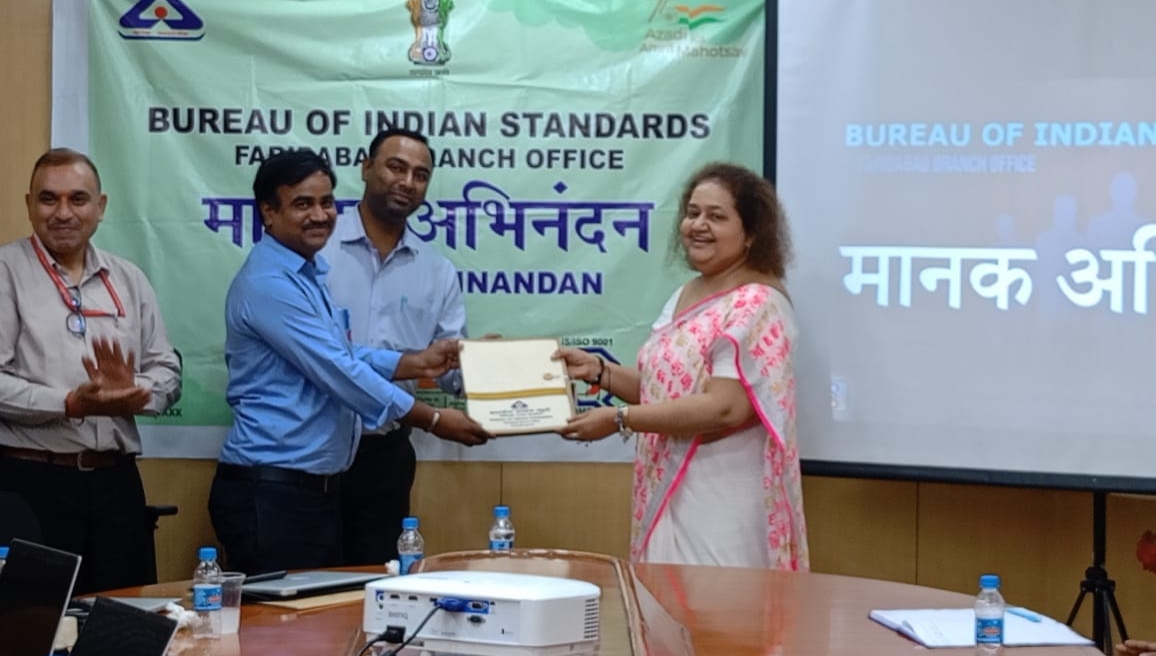
Real sites, real certifications
Our teams work inside factories and plants across India and abroad - inspections, audits and certification milestones spanning BIS, global schemes and the full compliance stack you see on this site.






What our clients say
Reviews and feedback from businesses that have worked with Diligence Certifications.





Related ISO Certifications services
ISO Certification
ISO 9001, 14001, 27001 & more - full ISO suite.
View details →ISO 14001 EMS
Environmental Management System certification.
View details →ISO 9001:2015
Quality Management System certification.
View details →ISO 50001 Energy Mgmt
Energy Management System certification.
View details →ISO 45001:2018
Occupational Health & Safety Management.
View details →ISO 13485
Medical Devices Quality Management System.
View details →Ready to get IECEE CB Scheme?
Talk to our experts for a clear, fixed-scope plan - most clients get a roadmap the same day.