BIS Certification
 CDSCO
CDSCO
 PESO
PESO
 CPCB
CPCB
 LMPC
LMPC
 WPC Approval
 Global Approvals
 TEC
TEC
 ARAI
ARAI
 BEE
BEE
 ISO Certification
 DGCA Certification
 NOC For Steel
 APEDA Registration























 Business Registration
 FSSAI Mark Certification












 (32).jpg)
 Legal Services
 Trademark Registration
 Copyright Registration
 Patent Registration
 By
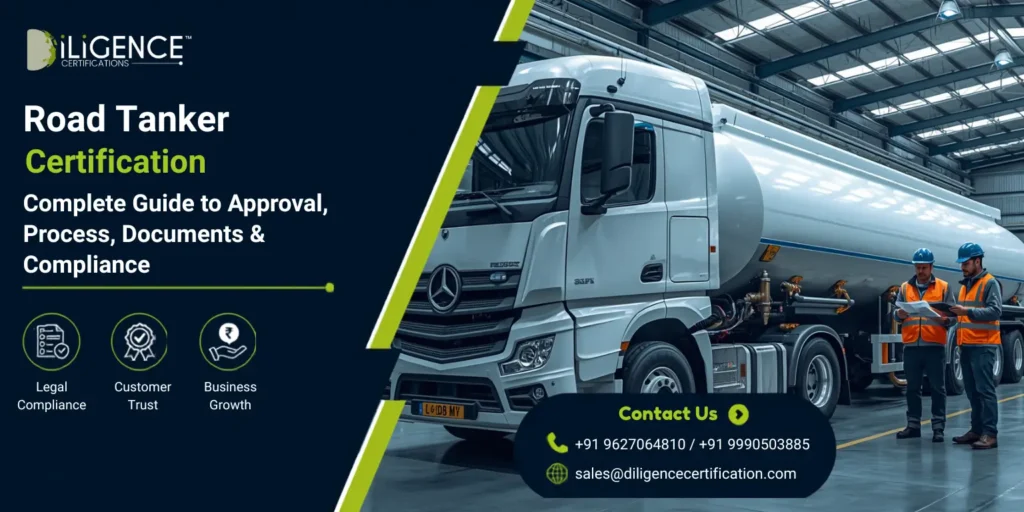
By - Road Tanker Certification is a must-compliance for the safe transport of petroleum products, chemicals, LPG, and other hazardous material using road tankers in India.
- The procedure consists of the verification of the design, compliance with safety requirements, inspections, and documentation as required by the relevant regulation.
- Diligence Certifications will assist you in acquiring the Road Tanker Certification.
Introduction
Just a few months back, one of our clients from a transport firm contacted us due to constant delays with regard to the approval process of their newly manufactured petroleum tankers. All the fabrication process had been completed, the tanker was already operational but there were some problems with the documentation process.
The company had spent a lot of money on manufacturing and increasing their fleet. But without the proper certificate, their vehicles couldn’t be put into operation as they would carry hazardous substances.
Such problems arise in many firms engaged in petroleum, chemical, LPG, and industrial gas transportation. It is quite common for companies to pay much attention to the manufacturing of tankers and forget about certification and other things.
That is why Road Tanker Certification becomes so important.
It is quite evident that road tankers which carry hazardous substances face a lot of safety issues since they contain flammable liquids, compressed gases, and chemicals and work under tough conditions. A certified road tanker will provide assurance that it complies with all requirements.
We at Diligence Certifications can help you with regulatory approvals in a number of ways.
What is Road Tanker Certification?
Road Tanker Certification is a regulatory approval process that verifies whether a tanker is designed, manufactured, tested, and maintained according to the required safety standards for transporting hazardous materials by road.
In India, tankers used for transporting petroleum products, LPG, CNG, and other hazardous substances must comply with applicable safety regulations established by authorities such as the Petroleum and Explosives Safety Organisation (PESO).
The certification process ensures that the tanker meets essential safety requirements, including:
- Tank design and construction standards
- Material suitability for the transported substance
- Pressure and leakage testing
- Safety valves, fittings, and protective equipment
- Vehicle and tanker compatibility
- Technical document verification
- Inspection and compliance requirements
Road Tanker Certification is commonly required for tankers transporting:
- Petroleum products
- LPG and CNG
- Industrial gases
- Hazardous chemicals
- Flammable liquids
- Other regulated substances
The purpose of certification is not only to fulfil regulatory obligations but also to prevent risks such as leakage, fire, explosion, pressure failure, and transportation-related accidents. Proper certification ensures safer operations and helps businesses comply with PESO and other applicable safety requirements.
Why is Road Tanker Certification Important?
Shipping hazardous materials using road transport is accompanied by certain dangers. Even slight imperfections in the design of tankers or tanker maintenance may cause serious problems, such as fires, explosions, pollution, and casualties.
Road Tanker Certification ensures the tanker was assessed according to safety requirements before going into service.
The certification allows companies to:
Ensure Safety Compliance
Tankers are tested for strength, safety equipment, and proper use of the equipment.
Comply with Legal Requirements
Any company shipping hazardous materials should meet all the regulations set by governmental authorities.
Prevent Operational Interruptions
Insufficient documentation and nonconformity in tank design may cause tanker rejection. Proper certification prevents such situations.
Build Company Reputation
Certified tankers prove that the company cares about safety.
Protect Assets and People
Properly certified tankers prevent any harm to the driver, operator, customer, and surrounding areas.
Which Industries Require Road Tanker Certification?
Road Tanker Certification is required by businesses involved in manufacturing, transporting, storing, or distributing hazardous substances.
Common industries include:
Petroleum Industry
The oil industry uses road tankers to transport the following:
- Petrol
- Diesel
- Aviation fuel
- Furnace oil
- Petroleum based products
- Safety compliance is crucial for the road tankers since the products are highly flammable.
LPG and Gas Industry
- Specialized tankers that transport LPG and gaseous products are used by the LPG and gas industry.
- Design of the tank should be such that it can withstand the pressures and leakage of the products while in transit.
Chemical Industry
- Specialized tankers are needed by chemical manufacturers for the transportation of chemicals that could be corrosive or toxic.
- Tanker design should depend on the nature of the chemicals transported in the tanker.
Industrial Gas Suppliers
Suppliers of industrial gases like oxygen, nitrogen, hydrogen etc., need road tanker certifications according to the product they are supplying.
Logistics and Transportation Companies
Companies dealing with hazardous goods transport must ensure that their vehicles are certified as per the relevant standards before using them.
Regulatory Authorities Involved in Road Tanker Certification
The approval requirements for road tankers are determined by the nature of the substance to be transported.
In India, the relevant authorities vary based on the tanker category.
Petroleum & Explosive Safety Organization (PESO)
- For petroleum, LPG, compressed gases, and any other such dangerous substances, PESO is of prime importance in this matter.
- Activities related to the storage, transportation, handling, and usage of petroleum and explosive substances are regulated by PESO.
Transport Authorities
Registration of the vehicles, fitness test, and transport requirements may be concerned with the relevant Regional Transport Office (RTO) and the applicable transport regulations.
Other Relevant Standards
Based on the tanker category and application, other standards concerning pressure vessels, vehicle safety, and transportation of hazardous substances may apply.
Types of Road Tankers Covered Under Certification
Different products require different tanker designs because each material creates unique safety challenges.
Petroleum Tankers
Used for transporting liquid petroleum products such as diesel and petrol.
Important compliance areas include:
- Tank construction
- Earthing provisions
- Safety valves
- Emergency shut-off systems
LPG Road Tankers
LPG tankers operate under pressure and require specialised design considerations.
Important aspects include:
- Pressure testing
- Relief devices
- Valve protection
- Gas leakage prevention
Chemical Tankers
Chemical tankers require material compatibility because certain chemicals can react with unsuitable metals or coatings.
Important considerations include:
- Corrosion resistance
- Chemical compatibility
- Safe loading and unloading arrangements
Cryogenic Tankers
These tankers transport extremely cold liquefied gases.
They require special insulation systems and temperature control measures.
Road Tanker Certification Process in India
Step 1: Identification of the Applicable Requirements
The first step in the Road Tanker Certification process is identification of the type of tanker and material that will be transported. Organizations should identify the hazardous substance, tank capacity, operating pressure, construction material, applicable standard and approvals.
Step 2: Evaluation of Road Tanker Design
Road tanker design is evaluated prior to manufacturing to ensure safety requirements are fulfilled. Evaluation is carried out on tank dimensions, design pressure, material, welding techniques and safety and emergency equipment among others.
Step 3: Manufacturing of Road Tanker
The tanker manufacture involves manufacture and fabrication of the tank using appropriate materials and processes. The manufacturing process includes fabrication, welding, valve fitting and treatment among others.
Step 4: Testing and Inspection
Tests are performed to verify the strength, leak proofing and safety of the road tanker. These tests and inspections are done for pressure, leakage, welds and safety accessories including valves, relieving devices, emergency system and earthing among others.
Documents Required for Road Tanker Certification
Documentation is an essential part of successful approval. Lack of proper documentation is one of the common causes of certification delays.
The following could be some of the documents required:
Technical Documents
- Tanker design drawings
- General arrangement drawings
- Material specifications
- Construction drawings
- Welding procedure documents
- Testing reports
Manufacturing Documents
- Details of the manufacturer
- Quality control documents
- Material testing certificates
- Welding inspection reports
- Calibration certificates
Vehicle Documents
- Documents of vehicle registration
- Chassis details
- Fitness certificate
- Manufacturer’s certificate
Safety Documents
- Safety Documents
- Pressure test reports
- Leakage test reports
- Inspection certificates
- Safety equipment details
The exact documentation depends on the tanker category and regulatory requirements.
Common Reasons for Road Tanker Certification Rejection
The following are some of the causes of business rejection owing to non-compliance in most cases.
Inappropriate Technical Documentation
Problems can arise if there are no correct specifications or inadequate drawings.
Non-Conforming Tank Specifications
Dimensions, materials used, and pressure rating can cause the rejection of the tank.
Poor Welding
Wrong welding methods pose risks of weakening the tanks.
Test Report Inadequacy
Authorities need proof that the tanker has undergone successful testing.
Inadequate Safety Devices
The absence of any emergency device, valves, and protection devices might cause rejection.
Maintenance Record Absence
This is in relation to old tankers.
Road Tanker Certification for Different Applications
The certification approach depends significantly on the product being transported.
Road Tanker Certification for Petroleum Products
Strict safety measures must be followed for petroleum tankers due to high flammability of petroleum substances.
The following are key areas for adherence to rules and regulations:
- Fire safety
- Grounding methods
- Prevention of leakage
- Loading and offloading
- Organizations that transport fuels should ensure that their tankers comply with petroleum transportation regulations.
Road Tanker Certification for LPG Transportation
LPG tankers require additional attention because LPG is stored in liquid form under pressure.
Important factors include:
- Pressure vessel safety
- Relief valve installation
- Pressure testing
- Valve protection
- Emergency shutdown systems
Improperly maintained LPG tankers can create serious safety hazards.
Road Tanker Certification for Chemical Transportation
Chemical transportation requires careful selection of tanker materials.
The tanker must be suitable for the chemical properties of the product.
Key considerations include:
- Corrosion resistance
- Chemical compatibility
- Safe handling systems
- Spill prevention measures
How Long Does Road Tanker Certification Take?
The timeline depends on several factors, including:
- Type of tanker
- Complexity of design
- Documentation accuracy
- Inspection scheduling
- Compliance status
A well-prepared application generally moves faster because authorities can complete technical evaluation without repeated clarification requests.
Businesses can reduce delays by preparing documents and technical details before submission.
Cost Factors for Road Tanker Certification
The cost of certification depends on multiple factors rather than a fixed amount.
Major factors include:
- Tanker type
- Capacity
- Testing requirements
- Inspection requirements
- Documentation preparation
- Consultancy support
Companies should focus on complete compliance rather than choosing the lowest-cost approach because safety failures can result in significant operational losses.
Benefits of Professional Road Tanker Certification Support
Many businesses try to get certification without the help of any professionals. This can seem to be economical on the surface, but document issues will delay the process.
There are many benefits to hiring professional help:
More Familiarity with Regulatory Requirements
Hazardous materials transportation requires some technical requirements. A professional can explain what approvals must be obtained according to the type of tanker.
Fewer Documentation Mistakes
- Wrong drawings, missing certificates, and technical documentation are often the reason for delays.
- A compliance expert checks all documents before submitting them.
Faster Certification Preparation
The right preparation will help businesses to deal with inspections and certification requirements.
Better Safety Compliance
Getting a certificate does not mean just getting an approval. It makes sure that the tanker is designed safely.
Better Confidence of Business
Certified tankers will give more confidence to the transportation company among its clients and suppliers.
Why Choose Diligence Certifications for Road Tanker Certification?
The process of getting the Road Tanker Certification needs technical expertise, proper documentation, and compliance. Even a small error in the design documentation, testing report, or even compliance will cause delay in approval and extra expenses.Diligence Certifications provides assistance to manufacturers, transportation companies, and industries in simplifying the process of certification through compliance expertise.
Services Provided by Diligence Certifications Include:
- Requirements Analysis and Compliance Assistance
- Review of Technical Documentation
- Document Preparation Assistance
- Assistance in Inspection and Testing
- Approval Process Coordination
- Regulatory Compliance Assistance
Having industrial certification and regulatory approval expertise, Diligence Certifications assists organizations in preparing the proper documentation of tankers and overcoming compliance problems.This is the reason that we concentrate on making the approval process smooth and avoiding any unnecessary delays for organizations.If you are a tanker manufacturer, petroleum transporter, LPG supplier, chemical logistics company, then Diligence Certifications will assist you in getting the Road Tanker Certification easily.
Conclusion
Hazardous material transport needs proper planning, technical compliance and regular inspections. A road tanker is more than just a vehicle with a storage vessel but rather an advanced safety device meant for carrying dangerous materials in a controlled environment.
Road Tanker Certification assists organizations in proving compliance to safety and operation standards before placing the tankers into service.
If you are a tanker manufacturer, petroleum transporter, chemicals manufacturer or an industrial gases supplier, appropriate certification assistance will go a long way in making your processes smooth.
Diligence Certifications can help organizations in handling the paperwork, preparation for inspection, and all other necessary compliance issues with compliance solutions.
Contact us at Diligence Certifications to receive expert assistance on your Road Tanker Certification needs.
Frequently Asked Questions
What is Road Tanker Certification?
Road Tanker Certification verifies that a tanker meets the required safety and technical standards for transporting hazardous materials by road.
Is Road Tanker Certification mandatory in India?
Yes. Road tankers carrying hazardous substances must comply with applicable regulations and obtain the necessary approvals, including PESO where required.
Who needs Road Tanker Certification?
Tanker manufacturers, petroleum transporters, LPG distributors, chemical companies, and hazardous goods logistics providers typically require Road Tanker Certification.
What documents are required for Road Tanker Certification?
Common documents include design drawings, material certificates, test reports, inspection records, and vehicle-related documents.
How long does the Road Tanker Certification process take?
The timeline depends on the tanker type, documentation, inspections, and regulatory approval process.
Why is Road Tanker Certification important?
It helps ensure safe transportation, regulatory compliance, and reduces the risk of accidents involving hazardous materials.
Can Diligence Certifications help with Road Tanker Certification?
Yes. Diligence Certifications provides expert support for documentation, compliance, inspections, and the approval process.
Which hazardous materials require Road Tanker Certification?
It is commonly required for tankers transporting petroleum products, LPG, CNG, chemicals, industrial gases, and other regulated hazardous substances.
What types of road tankers require certification?
Road tankers used for transporting petroleum products, LPG, CNG, chemicals, and other hazardous materials generally require certification.
What happens if a road tanker operates without certification?
Operating a non-compliant road tanker may lead to regulatory action, penalties, operational restrictions, and increased safety risks.