BIS Certification
 CDSCO
CDSCO
 PESO
PESO
 CPCB
CPCB
 LMPC
LMPC
 WPC Approval
 Global Approvals
 TEC
TEC
 ARAI
ARAI
 BEE
BEE
 ISO Certification
 DGCA Certification
 NOC For Steel
 APEDA Registration























 Business Registration
 FSSAI Mark Certification












 (32).jpg)
 Legal Services
 Trademark Registration
 Copyright Registration
 Patent Registration
 By
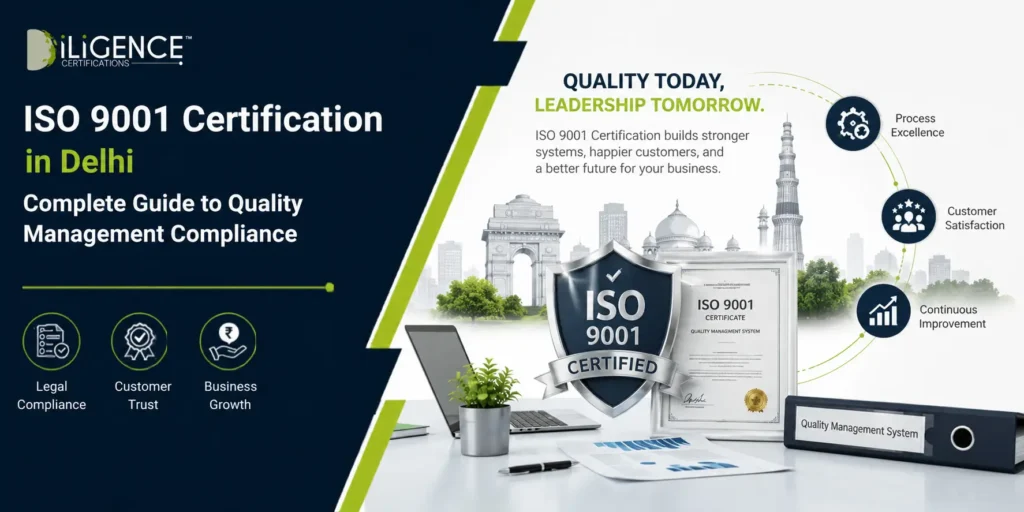
By - ISO 9001 Certification in Delhi enables companies to set up a recognized Quality Management System (QMS) for better quality, customer satisfaction, and increased efficiency.
- Improves the reputation of the organization, makes the firm eligible for tenders from the government/corporates, and generates new growth avenues.
- Optimizes the business process, reduces risks in operations, and enables continuous improvement.
Introduction
The ISO 9001 Certification in Delhi is a world-renowned certification that demonstrates that an organization has implemented the Quality Management System (QMS) according to the standards of ISO 9001. The key areas for which the ISO 9001 Certification in Delhi stands for include consistent quality maintenance, customer satisfaction, effective process management, reduced business risks, and continuous improvement.
An implementation of Quality Management System helps organizations to boost efficiency, increase effectiveness of processes, minimize inefficiencies, and provide quality products and services all the time. Organizations from such sectors as manufacturing, health care, education, construction, IT, logistics, hospitality, retail, and many others get the ISO 9001 Certification in Delhi to boost their reputation in the market and become more competitive.
What is ISO 9001 Certification?
International Organization for Standardization ISO 9001 Certification is an international standard for Quality Management Systems (QMS). The certification indicates that the organization implements processes in order to deliver quality products and services that meet customer needs and applicable regulations.
The certification assesses the following key areas of an organization’s quality management system:
- Leadership and Commitment of the Management
- Customer Orientation
- Risk-Oriented Thinking
- Management of Processes
- Documentation Management
- Resources Management
- Performance Measurement
- Internal Audits
- Correction of Errors
- Continuous Improvement
Applications of ISO 9001 Certification
ISO 9001 Certification is widely applicable across various industries and business sectors, including:
- Manufacturing Companies
- IT & Software Companies
- Construction Companies
- Healthcare Organizations
- Educational Institutions
- Pharmaceutical Companies
- Food Processing Industries
- Logistics Companies
- Engineering Firms
- Trading Businesses
- Service Providers
- MSMEs & Startups
Who Needs ISO 9001 Certification in Delhi?
ISO 9001 certification in Delhi is ideal for any organization of all sizes to enhance their quality management, achieve customer satisfaction and implement standardized business processes. While getting ISO 9001 certification is not obligatory for any firm, many governmental organizations, international corporations, and corporate buyers generally prefer doing business with firms holding ISO certification.
Organizations that commonly obtain ISO 9001 Certification include:
- Manufacturing Industries
- Automobile Companies
- Engineering Firms
- Construction Companies
- Pharmaceutical Companies
- Hospitals & Healthcare Providers
- Educational Institutions
- IT & Software Companies
- Logistics Companies
- Food Processing Businesses
- Chemical Industries
- Textile Manufacturers
- Retail Businesses
- Exporters & Importers
- MSMEs & Startups
Types of Compliance Under ISO 9001 Certification
The compliance requirements for ISO 9001 Certification depend on an organization’s business activities, operational processes, and quality objectives.
Quality Management System Compliance
Organizations are required to establish and maintain a documented Quality Management System (QMS) that supports consistent quality, customer satisfaction, and continual improvement.
The QMS generally includes:
- Quality Policy
- Quality Objectives
- Process Documentation
- Risk Assessment
- Operational Controls
- Internal Audits
- Corrective Action Procedures
- Management Review
Applicable For:
- Manufacturing Industries
- Service Providers
- IT Companies
- Healthcare Organizations
- Educational Institutions
- Construction Businesses
Operational Process Compliance
Businesses should implement standardized operational procedures to improve efficiency, reduce process variations, and maintain consistent product or service quality.
This generally includes:
- Process Standardization
- Workflow Management
- Supplier Evaluation
- Product Quality Control
- Customer Complaint Handling
- Documentation Control
Applications:
- Manufacturing Units
- Engineering Companies
- Logistics Businesses
- Pharmaceutical Industries
- Food Processing Companies
Continuous Improvement Compliance
ISO 9001 promotes continual improvement through regular monitoring, performance evaluation, internal audits, and corrective actions.
Typical compliance activities include:
- Internal Audits
- Customer Satisfaction Reviews
- Performance Monitoring
- Corrective Actions
- Employee Training
- Risk Management
- Management Review Meetings
Maintaining continual improvement enables organizations to increase operational efficiency, minimize business risks, improve customer confidence, and consistently achieve quality objectives.
Documents Required for ISO 9001 Certification in Delhi
The documents required for ISO 9001 Certification in Delhi may vary depending on the organization’s size, operational activities, and Quality Management System requirements. Proper documentation helps simplify the certification process and minimizes unnecessary delays during audits.
Generally, the required documents include:
- Identity Proof of the Applicant
- Business Registration Documents
- Certificate of Incorporation (if applicable)
- GST Registration Certificate
- PAN Card
- Address Proof of Business Premises
- Organization Chart
- Quality Policy
- Quality Objectives
- Scope of Quality Management System
- Standard Operating Procedures (SOPs)
- Process Flow Documents
- Risk Assessment Records
- Internal Audit Reports
- Management Review Records
- Customer Feedback Records
- Corrective Action Reports
- Employee Training Records
- Document Control Records
- Other Documents Required by the Certification Body
Maintaining complete and well-organized documentation helps organizations achieve ISO 9001 Certification in Delhi more efficiently while ensuring smooth implementation of the Quality Management System.
Step-by-Step Certification Process for ISO 9001 Certification in Delhi
Adopting a quality management system by means of a proper certification process allows organizations to get the ISO 9001 certification in Delhi without any difficulties while meeting the criteria of internationally recognized quality management systems.
Step 1: Certification Requirements Recognition
Identification of quality management requirements and the scope of ISO 9001 Certification in Delhi is the initial step to be made. Determination of the scope of the certification becomes a solid basis for development of an efficient quality management system according to the specific business activities and quality goals of the organization.
Step 2: Development of Documentation
The next step includes preparation of the whole set of necessary documents relating to a Quality Management System, such as quality policies, procedures, objectives, process records, and other guidelines. Adequate documentation is the key point of ISO 9001 implementation.
Step 3: Implementation of QMS
After completion of documentation, implementation of the Quality Management System is done throughout the organization where employees are made aware about quality policies and documented procedures along with their own responsibilities regarding the Quality Management System.
Step 4: Internal Audit & Management Review
Internal audit is performed for checking the compliance of the implemented Quality Management System with ISO 9001 requirements and its proper functioning. Management will then review results of audit and performance of the organization and take corrective action where ever needed.
Step 5: Certification Audit
Certification audit is performed by an accreditation body for checking compliance of organization with ISO 9001 requirements.
The certification audit generally includes:
- Document Audit
- Process Audit
- Employee Interview
- Operational Audit
- Audit of Records
- Non-Conformity Review
- Corrective Actions Review
Step 6: ISO 9001 Certification
After successful completion of the certification audit and removal of all non-conformities, ISO 9001 Certification in Delhi is awarded to the organizations.
Step 7: Conformity Continuously
Organizations have to maintain the Quality Management System even after certification through continuous internal audits, training, and other related activities. This is important for sustaining certification and improved performance of the organization.
Timeline, Cost & Validity of ISO 9001 Certification in Delhi
The timeline, cost, and validity depend on factors such as the organization’s size, certification scope, documentation readiness, business activities, and audit requirements.
| Timeline | Cost | Validity |
| The timeline depends on documentation, implementation, and certification audit requirements. | The cost depends on the organization size, certification scope, and audit requirements. | ISO 9001 Certification is generally valid for three years, subject to successful surveillance audits. |
| Documentation readiness and implementation may influence the overall certification period. | Government fees, certification charges, consultancy fees, and audit expenses may apply. | Periodic surveillance audits are conducted to ensure continued compliance. |
| Proper documentation helps avoid unnecessary delays. | Additional costs may vary depending on business complexity and operational scope. | Renewal is required after the validity period to maintain certification. |
| Processing time may vary depending on the certification body’s audit schedule. | Proper planning helps manage the overall certification expenses efficiently. | Maintaining an effective Quality Management System supports smooth renewal and continued compliance. |
Why is ISO 9001 Certification in Delhi Important?
ISO 9001 Certification aids an organization in setting up its Quality Management System based on quality, efficiency, customer satisfaction, and continuous improvement. It builds the credibility of the business and increases the chance of participating in government and corporate procurement.
The importance of ISO 9001 Certification lies in the following areas:
- Quality of product and service.
- Customer satisfaction.
- Process standardization.
- Continual improvement.
Consequences of Non-Compliance with ISO 9001 Standards
Although ISO 9001 Certification in Delhi is voluntary for many organizations, failing to establish an effective Quality Management System can create several operational and business challenges that affect long-term growth and customer confidence.
Some common consequences include:
- Inconsistent quality of goods/services provided
- More customer complaints
- Inadequate process control
- Operational inefficiencies
- More business risks
- Lack of business opportunities
- Difficulties in participating in government/corporate tenders
- Lack of customer confidence
- Competitive disadvantage
Implementing an effective Quality Management System helps businesses improve operational consistency, strengthen customer relationships, reduce business risks, and achieve sustainable growth.
Renewal of ISO 9001 Certification
Continuous improvements to the quality management system must be made by organizations for their ISO 9001 Certification at Delhi. This can be done through constant monitoring and documenting. Organizations must make sure that all the requirements of the ISO 9001 standard are being met while making operations more efficient.
The process of renewal and surveillance typically comprises the following elements:
- Internal Quality Audits
- Management Reviews
- Verification of Corrective Actions
- Employee Training
- Document Updating
- Process Performance Monitoring
- Risk Assessment Evaluation
- Surveillance Audits by the Certification Body
How Professional Assistance Helps in ISO 9001 Certification?
ISO 9001 Certification in Delhi needs appropriate planning, documentation, QMS, training, and auditing. With the help of professionals, the whole process of certification becomes easier because all requirements are met effectively without any mistake in documentation and delay.
The professional consultants help organizations not only in getting certified but also implement QMS according to ISO 9001 guidelines.
Professional assistance generally includes:
- Gap Analysis
- Documentation Assistance
- QMS Implementation Assistance
- Employee Training
- Internal Audits
- Audit Preparation for Certification
- Coordination with Certification Agencies
- Renewal and Surveillance Audit Assistance
Professional guidance helps organizations complete the certification process smoothly while saving valuable time and resources.
Why Choose Diligence Certifications for ISO 9001 Certification in Delhi?
ISO 9001 Certification in Delhi involves proper documentation, implementation of the Quality Management System, internal audits, and certification audits. There might be delays, non-conformities, and additional compliance difficulties because of any errors in the certification process.
Diligence Certifications provides comprehensive help at all stages of the certification process, helping organizations in the implementation of the Quality Management System and getting the ISO 9001 Certification.
Benefits of working with Diligence Certifications include:
- Complete support in documentation and implementation of the Quality Management System.
- Professional advice on the ISO 9001 standards and compliance requirements.
- Help in performing internal audits and certification audits.
- Coordination of work with an accredited certification body.
- Full-fledged help in surveillance audits and certification renewal.
Using the experience of our professionals and streamlined processes, we help companies in getting the ISO 9001 Certification in an efficient way.
Conclusion
ISO 9001 certification in Delhi is one of the best ways to help your organization in the enhancement of its Quality Management System, increase efficiency in operations, and make customers more satisfied. No matter whether you run a startup company, MSME, services-oriented business, manufacturing organization, educational institution, health care organization, or a big company, implementing the ISO 9001 standards will help you build credibility in your business.
An efficient Quality Management System will ensure good performance in services, minimize any operational risks, help customers trust you, and promote continuous improvements in all business activities. It will be easy to get ISO 9001 Certification if you keep proper records, conduct regular internal audits, concentrate on process improvements, and seek professional advice.
Frequently Asked Questions
ISO 9001 Certification Overview
ISO 9001 Certification is a global certification scheme that demonstrates that an organization has established a QMS in line with ISO 9001 specifications to provide quality products/services.
Who can obtain ISO 9001 Certification in Delhi?
Companies that are into manufacturing, service sector, IT industry, hospitals, schools, construction business, export/import business, MSMEs, start-ups, and any other kind of business firm can apply for ISO 9001 Certification in Delhi.
Is ISO 9001 Certification compulsory?
No, ISO 9001 Certification is not obligatory in most cases. But, it becomes a necessity when dealing with some government bodies, private firms, and MNCs.
What kind of documents are needed for ISO 9001 Certification?
The list of documents usually includes the documents of business registration, GST Certificate, PAN Card, Quality Policy, Quality Objectives, SOPs, internal audit report, management review report, training record of employees, and many more quality management system documents.
How long does it take to get ISO 9001 Certification?
It usually takes time to complete the process depending upon various factors like documentation status, quality management system implementation, company size, business activities, etc.
What is the validity period of ISO 9001 Certification?
Usually, ISO 9001 Certification remains valid for three years, provided that the organization undergoes a successful surveillance audit.
Can startups and MSMEs get ISO 9001 Certification?
Yes, startups and MSMEs can get ISO 9001 Certification to increase efficiency, improve customer satisfaction, increase business credibility and grow their business.
Why is internal audit important for ISO 9001 Certification?
Internal audit helps to detect nonconformities, assess effectiveness of the Quality Management System, optimize business processes and maintain continuous compliance with ISO 9001 standards.
Is ISO 9001 Certification good for business growth?
Yes, ISO 9001 Certification improves business reputation, increases customer trust, standardizes business processes and provides additional opportunities to bid on government and corporation tenders.
How do professional consultants help with ISO 9001 Certification?
Professional consultants help to prepare documentation, implement the QMS, train employees, conduct internal audits, prepare for certification audit, coordinate with the certification body and maintain continuous compliance.