BIS Certification
 CDSCO
CDSCO
 PESO
PESO
 CPCB
CPCB
 LMPC
LMPC
 WPC Approval
 Global Approvals
 TEC
TEC
 ARAI
ARAI
 BEE
BEE
 ISO Certification
 DGCA Certification
 NOC For Steel
 APEDA Registration























 Business Registration
 FSSAI Mark Certification












 (32).jpg)
 Legal Services
 Trademark Registration
 Copyright Registration
 Patent Registration
 By
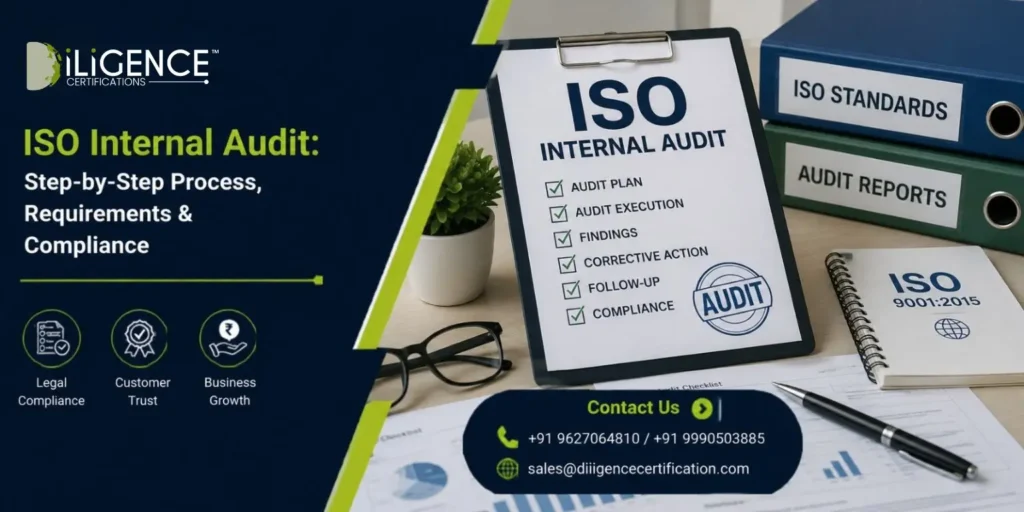
By - ISO Internal Audits assist in ensuring compliance with International Organization for Standardization standards and identifying process deficiencies prior to an external audit for certification purposes.
- An organized ISO Internal Audit increases operational efficiency, mitigates risks, and promotes continuous improvement.
- Companies implement International Organization for Standardization Internal Audits in order to ensure certification readiness.
Introduction
The manufacturing firm contacted the ISO Consultant due to frequent observations during its certification surveillance audit. The firm had all the necessary documentation in place along with trained personnel and an effective quality management system; however, some process deficiencies were causing non-compliance problems.
Upon reviewing the matter, it was clear that the problem lay in the fact that although the organisation was keeping all the records, it was not assessing its processes for their efficiency and effectiveness against the International Organization for Standardization requirements.
This is where the ISO Internal Audit comes into play.
Many organisations see internal audit as a mandatory activity needed for the certification purpose. An effective internal audit is much like a medical examination for the organisation and can help identify deficiencies and allow continuous improvements in organisational procedures.
Whether it is about ISO 9001 Quality Management System or International Organization for Standardization 14001 Environmental Management System, or ISO 45001 Occupational Health and Safety Management System, internal audit allows system effectiveness.
What is ISO Internal Audit?
An ISO Internal Audit is an audit performed inside an organisation that determines whether the organisation’s management system satisfies all ISO standards.
This can be described in simpler words as an internal audit process whereby auditors will look at various business activities and processes with the aim of identifying:
- Compliance gaps
- Process improvements
- Non-conformities
- Opportunities for better performance
Whereas the external certification audits are done by the certification body, the internal audits are done by or on behalf of the organization itself.
An ideal International Organization for Standardization Internal Audit does not involve just detecting errors but rather understanding whether the processes are working effectively and if they meet organizational goals.
For instance, an auditing process for a manufacturing organization can be done to see whether the quality control systems have been put in place.
Why is ISO Internal Audit Mandatory?
International Organization for Standardization standards require organisations to conduct ISO Internal Audits at planned intervals to ensure their management systems remain effective and compliant.
Internal audits help organisations:
- Identify compliance gaps
- Monitor process performance
- Take corrective actions
- Maintain ISO certification
- Support continual improvement
Without regular internal audits, businesses may face non-conformities, certification risks, poor process control, and customer complaints. Regular audits help organisations stay prepared for surveillance and recertification audits.
Types of ISO Internal Audit
International Organization for Standardization Internal Audits can be classified based on their purpose and approach.
First-Party Internal Audit
A first-party audit is conducted by the organisation itself.
The company appoints trained internal auditors who review its own processes against International Organization for Standardization requirements.
Example:
A pharmaceutical company’s quality team audits manufacturing records, documentation, and compliance practices internally.
Process-Based Internal Audit
A process-based audit focuses on individual business processes rather than only checking documents.
Examples include:
- Production process audit
- Purchase process audit
- Customer service process audit
- Quality control process audit
This approach helps organisations understand whether their processes are delivering expected results.
System-Based Internal Audit
A system-based audit evaluates the complete management system.
It reviews whether different processes work together effectively according to International Organization for Standardization requirements.
For example, an ISO 9001 audit may review:
- Quality objectives
- Risk management
- Customer satisfaction
- Corrective actions
- Management review
Compliance Audit
A compliance audit checks whether the organisation follows applicable legal, regulatory, and International Organization for Standardization requirements.
Who Needs ISO Internal Audit?
ISO Internal Audit is beneficial for:
- Manufacturing companies
- IT organisations
- Healthcare organisations
- Construction companies
- Export businesses
- Food industries
- Automotive companies
- Service providers
Any organisation implementing an ISO management system should conduct internal audits regularly.
Eligibility Criteria for ISO Internal Audit
Any organisation implementing an International Organization for Standardization management system can conduct internal audits. However, the auditor should have proper knowledge and competency.
Requirements generally include:
- Understanding of applicable ISO standards
- Knowledge of audit principles
- Training in internal auditing techniques
- Understanding of organisational processes
- Ability to identify non-conformities
Internal auditors can be employees of the organisation or external professionals appointed by the company.
Many businesses prefer external ISO consultants because they provide an unbiased evaluation of processes.
Importance & Benefits of ISO Internal Audit
| Importance | Benefits |
| Identifies compliance gaps before external audits | Helps businesses maintain ISO compliance effectively |
| Evaluates whether processes follow ISO requirements | Improves operational efficiency and reduces wastage |
| Detects risks and areas needing improvement | Supports successful certification and surveillance audits |
| Ensures proper implementation of ISO procedures | Builds customer trust and business credibility |
| Helps maintain a strong management system | Encourages continuous improvement across processes |
Documents Required for ISO Internal Audit
Before conducting an ISO Internal Audit, organisations usually prepare the following documents:
- ISO policy documents
- Quality manual (if applicable)
- Standard operating procedures (SOPs)
- Process flow documents
- Previous audit reports
- Corrective and preventive action records
- Risk assessment documents
- Training records
- Employee competency records
- Management review reports
- Customer feedback records
Proper documentation helps auditors evaluate whether the implemented system matches International Organization for Standardization requirements.
Step-by-Step ISO Internal Audit Process
1. Audit Planning
The first step is preparing an audit plan.
The organisation defines:
- Audit scope
- Audit objectives
- Audit criteria
- Departments to be audited
- Audit schedule
A planned approach ensures that important processes are properly reviewed.
2. Preparing Audit Checklist
Auditors prepare a checklist based on International Organization for Standardization standard requirements and organisational procedures.
The checklist helps auditors verify:
- Process implementation
- Documentation
- Records
- Employee awareness
- Compliance status
3. Conducting the Internal Audit
During the audit, auditors collect evidence through:
- Employee interviews
- Document review
- Workplace observation
- Record verification
The auditor checks whether actual practices match documented procedures.
4. Identifying Non-Conformities
If any requirement is not properly followed, auditors record it as a non-conformity.
Examples:
- Missing records
- Incorrect procedures
- Untrained employees
- Outdated documents
Auditors may also identify improvement opportunities.
5. Preparing Audit Report
After completing the audit, a detailed report is prepared.
The report includes:
- Audit findings
- Non-conformities
- Observations
- Recommendations
- Corrective action requirements
6. Corrective Action and Follow-Up
The organisation reviews audit findings and takes corrective actions.
A follow-up audit may be conducted to verify whether issues have been properly resolved.
ISO Internal Audit Timeline, Cost & Validity
The timeline for an ISO Internal Audit depends on:
- Organisation size
- Number of processes
- Complexity of operations
- Applicable International Organization for Standardization standard
Small organisations may complete internal audits within one or two days, while large organisations may require multiple audit sessions.
The cost depends on:
- Audit scope
- Number of employees
- Number of locations
- Consultant involvement
International Organization for Standardization Internal Audit does not have a fixed validity period. Organisations should conduct audits at planned intervals to maintain continuous compliance.
Renewal Process After ISO Internal Audit
ISO certification requires regular monitoring and improvement. During renewal, organisations should:
- Review previous audit findings
- Update ISO documents
- Verify corrective actions
- Conduct internal audits
- Prepare for external assessment
Regular ISO Internal Audit helps identify gaps early and supports smooth certification renewal.
Documents Required for Renewal Review
- Updated International Organization for Standardization documents
- Previous audit reports
- Corrective action records
- Training records
- Management review records
- Risk assessment updates
Proper record maintenance improves audit readiness and compliance.
Common Mistakes to Avoid During ISO Internal Audit
- Conducting Audits Only Before Certification: Regular audits are important to maintain continuous compliance.
- Using Untrained Auditors: Lack of auditor knowledge can result in missed compliance gaps.
- Ignoring Previous Findings: Unresolved issues may lead to repeated non-conformities.
- Focusing Only on Documents: Audits should check actual process implementation, not just paperwork.
- Poor Record Maintenance: Incomplete records can create compliance challenges.
Why Choose Diligence Certifications?
Managing International Organization for Standardization compliance requires proper planning, technical understanding, and practical experience.
Diligence Certifications supports organisations with:
- ISO consulting services
- Internal audit assistance
- Documentation support
- Compliance guidance
- Certification preparation
Our experts help businesses identify gaps, improve processes, and prepare confidently for International Organization for Standardization certification audits.
A professional internal audit approach saves time, reduces risks, and helps organisations maintain long-term compliance.
Conclusion
ISO Internal Audit is more than mere compliance; it is a great tool for enhancing business efficiency.
Companies that constantly audit their processes will be able to detect any loopholes and inefficiencies and keep themselves International Organization for Standardization certified successfully.
No matter if you want to get ISO certification or maintain your management system already certified, International Organization for Standardization Internal Audit is something that your company needs to perform to comply with requirements.
Diligence Certifications will help you get the best out of ISO Internal Audit.