BIS Certification
 CDSCO
CDSCO
 PESO
PESO
 CPCB
CPCB
 LMPC
LMPC
 WPC Approval
 Global Approvals
 TEC
TEC
 ARAI
ARAI
 BEE
BEE
 ISO Certification
 DGCA Certification
 NOC For Steel
 APEDA Registration























 Business Registration
 FSSAI Mark Certification












 (32).jpg)
 Legal Services
 Trademark Registration
 Copyright Registration
 Patent Registration
 By
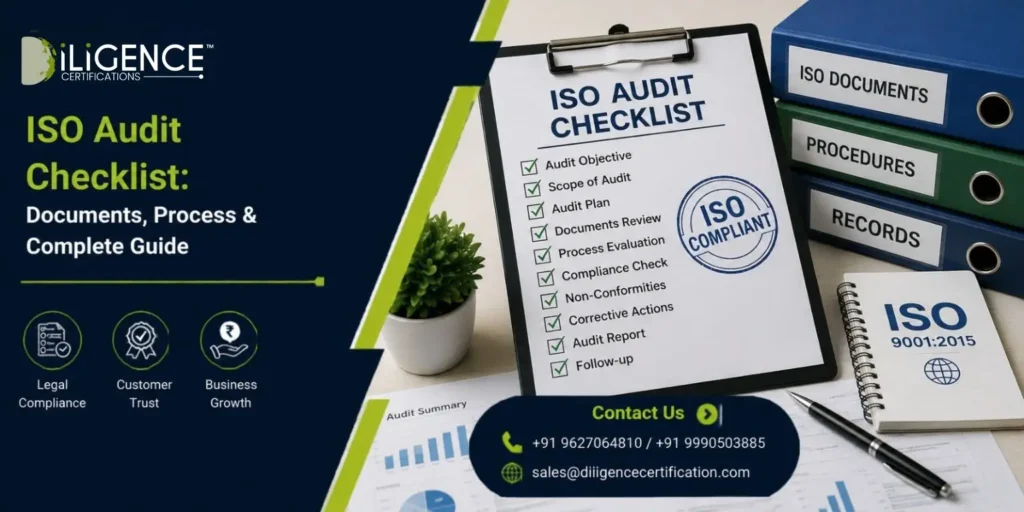
By - ISO Audit Checklist serves as an aid to organizations to determine the compliance, spot any loopholes, and be ready for ISO certification audits.
- These checklists cover key elements such as documentation, processes, risks management, actions, and standards.
- An appropriately filled out ISO Audit Checklist increases your chances of passing an ISO audit.
Introduction
Recently, a manufacturing company contacted our compliance department as a result of a few observations that they received during their ISO certification audit. Even though the company had put in place a quality process, they did not have their documents in place and were not well prepared for the audit.
This is a problem that many companies face. ISO certification is not only about keeping documents; it is also about proving that your processes are implemented and improved.
ISO Audit Checklist helps you check your compliance, verify necessary documents, identify deficiencies, and be well prepared for certification or surveillance audit.
What is an ISO Audit Checklist?
An ISO Audit Checklist is a tool that helps determine whether an organization satisfies the standards prescribed by the ISO standard.
This checklist includes questions, documents, audit criteria, and procedures that should be reviewed during the auditing process.
In simple words, an ISO Audit Checklist helps answer:
- Are the required processes implemented?
- Are documents properly maintained?
- Are employees following defined procedures?
- Are risks identified and controlled?
- Are corrective actions completed?
For instance, an organization that is about to get ISO 9001 can apply the checklist for assessing quality objectives, customer comments, process controls, internal auditing and management review.
This list is not a substitute for the requirements of the ISO. It only serves as an easy way of ensuring that the organization is ready for assessment.
Why is an ISO Audit Checklist Mandatory?
An ISO Audit Checklist is not always a legal requirement, but it is an important document for those organizations who want to achieve ISO certification successfully.
The certification bodies assess whether a particular company is adhering to the requirements set out in the ISO standard. Lack of preparation can lead to delays, audit findings, and non-conformities.
An ISO Audit Checklist is important because it helps organisations:
- Identify compliance gaps before the audit
- Ensure required documents are available
- Maintain consistency in internal processes
- Prepare employees for auditor questions
- Track corrective and preventive actions
For instance, when conducting an ISO 14001 audit in terms of the environment, the auditor can verify information on waste management, environmental goals, legal documentation, and monitoring processes. The use of a checklist helps to examine all these aspects before starting.
A properly prepared checklist demonstrates the company’s dedication to quality and safety.
Types of ISO Audit Checklists
ISO audits can involve different types of checklists depending on the purpose and stage of certification.
1. Internal Audit Checklist
An internal audit checklist is used by an organisation to evaluate its own compliance before an external audit.
Internal audits help businesses identify weaknesses and improve processes internally.
It usually covers:
- Department-wise procedures
- Documentation review
- Employee awareness
- Process effectiveness
- Previous audit findings
- Corrective actions
Internal audits are generally conducted by trained internal auditors who verify whether the management system is working effectively.
2. Certification Audit Checklist
An ISO certification audit checklist is used during the first ISO certification audit carried out by an accredited certification body.
This checklist concentrates on checking if the organization complies with all the requirements of the selected ISO standard.
Common review areas include:
- Scope of the management system
- Documented information
- Operational controls
- Risk assessment
- Performance evaluation
- Management commitment
Successful completion of this audit allows organisations to receive ISO certification.
3. Surveillance Audit Checklist
After receiving ISO certification, organisations undergo periodic surveillance audits to ensure continuous compliance.
A surveillance audit checklist focuses on:
- Maintaining ISO requirements
- Reviewing previous non-conformities
- Checking improvements
- Monitoring system performance
These audits help ensure that companies continue following ISO practices after certification.
Who Needs an ISO Audit Checklist?
An ISO Audit Checklist is useful for:
- Manufacturing companies
- IT companies
- Healthcare organisations
- Food businesses
- Construction companies
- Logistics providers
- Educational institutions
- Service-based organisations
Any organisation implementing an ISO management system can benefit from structured audit preparation.
Eligibility Criteria for ISO Audit Preparation
Any organisation planning to obtain or maintain ISO certification should prepare an ISO Audit Checklist.
Eligibility depends on:
- Applicable ISO standard requirements
- Organisation size and business activities
- Implemented management system
- Availability of required records
- Employee involvement
Businesses from various sectors including manufacturing, healthcare, IT services, construction, education, logistics, and food industries can prepare for ISO audits.
Importance & Benefits of ISO Audit Checklist
| Importance | Benefits |
| Better Audit Preparation | Helps identify gaps and resolve issues before the external audit, improving audit readiness. |
| Reduced Non-Conformities | Ensures all ISO requirements are reviewed systematically, reducing the risk of audit observations. |
| Improved Documentation | Encourages proper maintenance of policies, procedures, and records for easy verification. |
| Enhanced Business Credibility | Demonstrates commitment to quality and compliance, increasing customer and stakeholder confidence. |
Documents Required for ISO Audit Checklist
The documents required depend on the ISO standard, but commonly include:
- Organisation profile
- Scope of ISO certification
- Quality policy or management policy
- Process procedures
- Risk assessment records
- Internal audit reports
- Management review records
- Training records
- Customer feedback records
- Corrective action reports
- Legal compliance documents
For ISO 9001, auditors mainly focus on quality management processes, while ISO 45001 audits focus on occupational health and safety practices.
Step-by-Step ISO Audit Checklist Process
Step 1: Understand ISO Standard Requirements
The first step is identifying the requirements of the applicable ISO standard.
For example:
- ISO 9001 - Quality Management System
- ISO 14001 - Environmental Management System
- ISO 45001 - Occupational Health & Safety Management System
Step 2: Prepare Audit Checklist
Create a checklist covering:
- Standard clauses
- Documentation requirements
- Process controls
- Compliance records
Step 3: Conduct Internal Audit
Review existing processes and compare them with ISO requirements.
Identify:
- Non-conformities
- Missing documents
- Process weaknesses
Step 4: Implement Corrective Actions
Once gaps are identified, organisations should take corrective measures.
This may include:
- Updating procedures
- Training employees
- Improving records
- Modifying processes
Step 5: Final Audit Preparation
Before the certification audit:
- Review all documents
- Conduct employee awareness sessions
- Verify compliance records
- Complete pending actions
Validity, Timeline & Audit Cost
| Particular | Details |
| Validity | ISO certification is generally valid for 3 years, subject to successful surveillance audits. |
| Timeline | The certification process usually takes 2-8 weeks, depending on the organisation’s size, readiness, and the selected ISO standard. |
| Cost | The cost varies based on the ISO standard, organisation size, scope of certification, number of locations, and certification body’s pricing. Contact Diligence Certifications for a customised quotation. |
Documents Required for Renewal & Recertification
Common renewal documents include:
- Existing ISO certificate
- Updated management system documents
- Previous audit reports
- Corrective action records
- Internal audit reports
- Management review reports
- Updated organisational information
Common Mistakes to Avoid During ISO Audit
Many organisations face audit observations due to simple but avoidable mistakes, such as:
- Incomplete Documentation: Missing or outdated records can delay the audit process.
- Lack of Employee Awareness: Employees should understand their responsibilities and ISO requirements.
- Ignoring Previous Findings: Unresolved non-conformities can affect future audits.
- Last-Minute Preparation: ISO compliance should be maintained throughout the year, not just before the audit.
Why Choose Diligence Certifications?
Preparing for an ISO audit requires proper understanding of standards, documentation, and compliance practices.
Diligence Certifications helps businesses with:
- ISO certification consultancy
- Audit preparation support
- Documentation assistance
- Internal audit guidance
- Compliance improvement
Our experts help organisations identify gaps and prepare effectively before certification audits.
With professional support, businesses can reduce audit challenges and build a stronger management system.
Conclusion
ISO Audit Checklist is a vital checklist for businesses to ensure ISO certification success and compliance.
Having a well-prepared audit checklist does not only mean preparation for an audit; rather, it provides structure to your approach towards improvement.
In case your business is preparing for ISO certification or struggling to get through the audit process, you can rely on Diligence Certifications to help you create a strategic audit approach.
Frequently Asked Questions
What is ISO Audit Checklist?
It is a list of audit items which are to be audited to check if the organisation satisfies ISO standard requirements.
Is it necessary to have ISO Audit Checklist?
Though ISO Audit Checklist is not compulsory by law, it is recommended to conduct ISO audit efficiently.
Which documents are audited in ISO audit process?
Auditors tend to audit policies, procedures, records, risk assessments, internal audits, and corrective actions reports.
How often ISO Audit should be carried out?
Internal audits are usually done periodically, whereas certification bodies do surveillance audits on certification cycle basis.
Can a consultant prepare an ISO Audit Checklist for an organisation?
Yes, ISO consultants can assist in preparing checklists and gap analysis for ISO audits.
Does the ISO Audit Checklist remain the same across all ISO standards?
No, it differs according to each ISO standard.
What is the consequence of failing an ISO audit?
The organisation will get non-conformities and will have to implement corrective actions before being approved for certification.
How many years does an ISO certificate last?
An ISO certification lasts for three years, contingent on a successful surveillance audit.
What is the importance of internal auditing?
Internal audits enable companies to spot areas that require improvement within their management systems.
How does Diligence Certifications assist with ISO audits?
Diligence Certifications assists with ISO consulting, documentation, and audit preparations for companies.