BIS Certification
 CDSCO
CDSCO
 PESO
PESO
 CPCB
CPCB
 LMPC
LMPC
 WPC Approval
 Global Approvals
 TEC
TEC
 ARAI
ARAI
 BEE
BEE
 ISO Certification
 DGCA Certification
 NOC For Steel
 APEDA Registration























 Business Registration
 FSSAI Mark Certification












 (32).jpg)
 Legal Services
 Trademark Registration
 Copyright Registration
 Patent Registration
 By
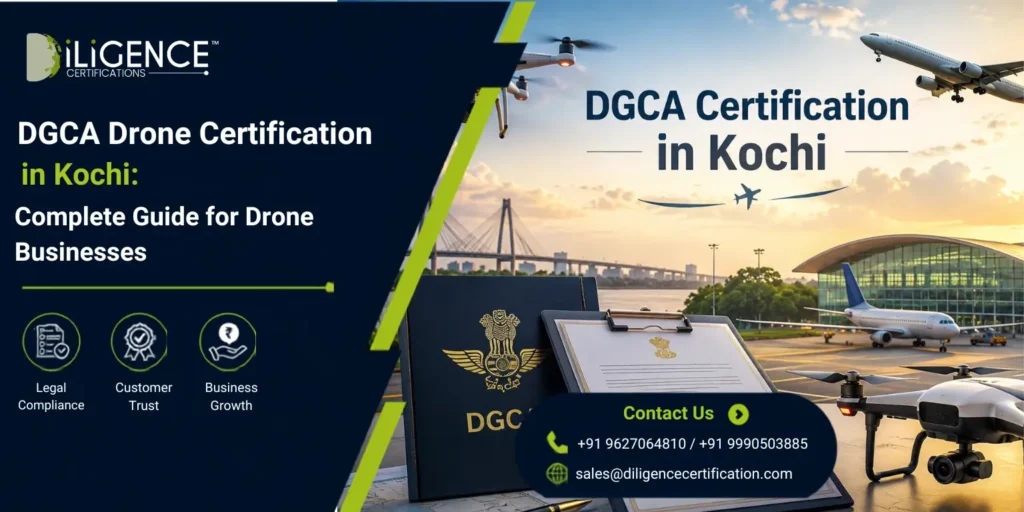
By - DGCA Certification in Kochi helps drone manufacturers, operators and training organisations align their activities with India’s regulatory framework for unmanned aircraft systems.
- Depending on the activity, compliance may involve Type Certification, UIN registration, Remote Pilot Certificate, operational permissions or RPTO authorisation.
- A properly planned application reduces documentation gaps, testing delays and compliance issues when dealing with India’s drone regulatory system.
Introduction
A drone manufacturer in Kochi may have an excellent prototype, capable flight controller and a promising commercial customer. The problem often starts when the business moves from prototype development to actual regulatory compliance.
DGCA Certification in Kochi is not simply a local certificate issued by a Kerala office. Drone regulation in India is governed at the national level, and businesses in Kochi follow the applicable Directorate General of Civil Aviation framework and digital regulatory processes.
A drone company based in Kalamassery, Kakkanad, Aluva or another part of the Kochi region may develop and manufacture its aircraft locally, but the regulatory pathway still depends on the nature of the UAS, its intended use, the applicant’s role and the approval being sought.
What Is DGCA Certification in Kochi
DGCA Certification in Kochi refers to obtaining the applicable approval, registration or certification required under India’s drone regulatory framework for a drone, remote pilot, operator or training organisation.
It is important not to treat “DGCA certification” as one universal document.
Depending on the business activity, the regulatory requirement may include:
- Type Certification for an unmanned aircraft system
- UIN-related registration requirements
- Remote Pilot Certificate requirements
- Operational compliance
- Remote Pilot Training Organisation approval
- Other permissions or authorisations applicable to the proposed drone activity
The correct route should therefore be identified before submitting an application.
This is particularly important for manufacturers because Type Certification is associated with a specific type of unmanned aircraft system, rather than being a general business certificate.
DGCA Drone Certification Rules in India
India’s drone framework is primarily built around the Drone Rules, 2021 and subsequent regulatory directions, circulars and updates issued by the competent authorities.
The framework provides for certification of unmanned aircraft systems and establishes requirements around their operation, registration, remote pilots and related activities.
One point that manufacturers should understand clearly is that certification is not merely an administrative exercise. Technical characteristics of the aircraft, prototype documentation, testing and regulatory compliance can all influence the application.
The official DGCA portal currently also displays an important notice stating that registration of non-Type Certified UAS has been temporarily suspended until further notice. Businesses should therefore verify the current regulatory position before making commercial or operational decisions.
Regulatory requirements can change, so a consultant’s old checklist should never be treated as the final authority.
Who Needs DGCA Certification in Kochi
The requirement depends on what the organisation intends to do.
Drone Manufacturers
Manufacturers developing drones for commercial deployment may need to pursue the applicable Type Certification pathway before the aircraft can be used within the regulatory framework.
This becomes especially important when moving from R&D to commercial production.
Drone Importers and Businesses
Companies involved with drones sourced from outside India need to examine the applicable import and aviation requirements before bringing products into the Indian market.
Import compliance and drone certification are related but should not automatically be treated as the same approval.
Commercial Drone Operators
Businesses using drones for activities such as:
- Land surveying
- Mapping
- Infrastructure inspection
- Agriculture
- Construction monitoring
- Industrial inspection
- Cinematography
- Disaster assessment
need to ensure that their aircraft, pilots and operations comply with the applicable regulatory requirements.
Remote Pilots
Individuals operating drones professionally may need the appropriate remote pilot certification depending on the category and nature of the operation.
Remote Pilot Training Organisations
Organisations providing professional drone pilot training may need DGCA authorisation as an RPTO and must satisfy the applicable requirements relating to infrastructure, personnel, training and operations.
DGCA Certification in Kochi for Drone Manufacturers
For a manufacturer, certification should be considered during the design stage rather than after production has been completed.
A common mistake is to build a drone first and check regulatory requirements later.
That can create expensive redesign work.
A better approach is to review the intended aircraft configuration, operating purpose, technical specifications and applicable certification requirements before finalising the prototype.
The manufacturer should maintain controlled technical documentation throughout development.
Typical Areas Examined During Certification Preparation
Depending on the applicable requirements, the compliance exercise can involve:
- Applicant information
- Drone technical specifications
- Prototype details
- Design information
- Flight-related characteristics
- Safety-related features
- Control and communication systems
- Navigation systems
- Identification information
- Test documentation
- Photographs and drawings
- Manufacturer declarations
- Other documents required by the applicable application process
The exact document set should be confirmed against the current DGCA requirements rather than copied from an old application.
DGCA Type Certification Process for Drones
The Type Certification process is one of the most important areas for manufacturers.
Under the Drone Rules framework, an applicant seeking a Type Certificate submits the prescribed application through the applicable digital platform, provides the required information and makes the prototype available to the authorised testing entity.
The testing entity examines the aircraft and prepares the relevant test report and recommendation.
The competent authority then considers the application and test outcome before issuing the Type Certificate when the prescribed requirements are satisfied.
Practical Process
A manufacturer can broadly organise its work into the following stages:
Stage 1: Regulatory assessment
First identify the exact certification route applicable to the aircraft.
Stage 2: Technical gap assessment
Review the drone design against the applicable certification requirements.
Stage 3: Documentation
Prepare the technical and corporate documents required for submission.
Stage 4: Prototype readiness
Ensure that the prototype presented for testing corresponds with the information submitted in the application.
Stage 5: Testing
The prototype undergoes the prescribed evaluation through the applicable authorised testing mechanism.
Stage 6: Regulatory review
The test results and recommendations are considered by the competent authority.
Stage 7: Type Certificate
Once the requirements are satisfactorily met, the applicable Type Certificate is issued.
The critical lesson is simple: do not treat testing as the first time the aircraft should meet the requirements.
Testing should validate a well-prepared product, not discover fundamental design problems.
Documents Required for DGCA Certification in Kochi
The exact documentation depends on the approval being pursued. However, applicants should generally be prepared to organise both business and technical records.
Business Documents
These may include:
- Certificate of incorporation or business registration
- PAN and GST details where applicable
- Applicant information
- Registered office information
- Authorised signatory details
- Manufacturer information
- Relevant declarations
Technical Documents
Depending on the application, technical records may include:
- Drone specifications
- Product description
- Dimensions and weight
- Maximum take-off weight
- Propulsion details
- Battery information
- Communication systems
- Navigation systems
- Flight-control information
- Safety features
- Photographs
- Drawings
- Prototype details
- Test-related information
The strongest applications are normally built around consistency.
If the model number in the technical document differs from the prototype label, or the submitted specification does not match the actual configuration, the applicant can face avoidable questions.
Common Reasons Drone Certification Applications Delays
Most regulatory delays are not caused by one dramatic problem.
They usually come from several small inconsistencies.
Incomplete Documentation
A missing declaration or poorly organised technical document can result in additional correspondence.
Prototype Does Not Match Submitted Details
If the prototype has been modified after the application documents were prepared, the difference needs to be properly addressed.
Unclear Product Configuration
Multiple variants can create confusion if the applicant has not clearly defined which configuration is being submitted.
Poor Technical Record Keeping
A manufacturer may know its drone inside out but still struggle to demonstrate that knowledge through controlled documentation.
Incorrect Assumptions About Current Rules
Drone regulations have evolved rapidly. An old blog or consultant checklist may no longer reflect the current regulatory position.
Treating Certification as a Paper Exercise
A drone certification application is ultimately connected to the aircraft’s technical and operational characteristics.
Documentation cannot compensate for an unresolved technical gap.
How Diligence Certification Supports Drone Businesses in Kochi
At Diligence Certification, the practical objective is to help businesses understand the regulatory route before they commit time and money to an application.
Our support can include:
- Initial regulatory assessment
- Identification of the applicable approval route
- Document checklist preparation
- Application support
- Technical documentation coordination
- Compliance gap identification
- Assistance during the certification process
- Regulatory follow-up support
- Guidance for related drone compliance requirements
For a manufacturer, this can be particularly useful during the prototype stage.
Conclusion
DGCA Certification in Kochi is an important compliance step for drone manufacturers, operators, remote pilots and training organisations looking to operate within India’s regulatory framework. The exact requirement depends on the type of drone, intended application and activity being undertaken.
For manufacturers, preparing the technical documentation, prototype and certification requirements before submitting an application can help avoid unnecessary corrections and delays. Operators and pilots should also verify the applicable registration, certification and operational requirements rather than relying on outdated information.
If you are planning to manufacture, operate, import or provide training related to drones in Kochi, Diligence Certification can help you identify the applicable DGCA compliance route, organise documentation and manage the certification process professionally.
Frequently Asked Questions
What is DGCA Certification in Kochi?
It refers to the applicable DGCA approval, certification or registration required for drone-related activities in Kochi.
Is DGCA Certification mandatory for drones?
The requirement depends on the drone type and intended operation.
Can Kochi manufacturers apply for Type Certification?
Yes, eligible drone manufacturers can apply under the applicable DGCA process.
What is DGCA Type Certification?
It confirms that a particular drone type meets the prescribed certification requirements.
Is UIN registration the same as Type Certification?
No. UIN identifies an aircraft, while Type Certification applies to the drone type
What documents are required?
Documents may include technical specifications, company details, prototype information and test records.
How long does DGCA certification take?
The timeline varies based on documentation, testing and regulatory review.
What is the cost of DGCA Certification in Kochi?
Costs vary according to the certification type, testing and consultancy requirements.
Can Diligence Certification assist with DGCA approval?
Yes, Diligence Certification provides support for applicable DGCA drone compliance processes.
Where can DGCA requirements be verified?
Current requirements should be verified through the official DGCA regulatory channels.