BIS Certification
 CDSCO
CDSCO
 PESO
PESO
 CPCB
CPCB
 LMPC
LMPC
 WPC Approval
 Global Approvals
 TEC
TEC
 ARAI
ARAI
 BEE
BEE
 ISO Certification
 DGCA Certification
 NOC For Steel
 APEDA Registration























 Business Registration
 FSSAI Mark Certification












 (32).jpg)
 Legal Services
 Trademark Registration
 Copyright Registration
 Patent Registration
 By
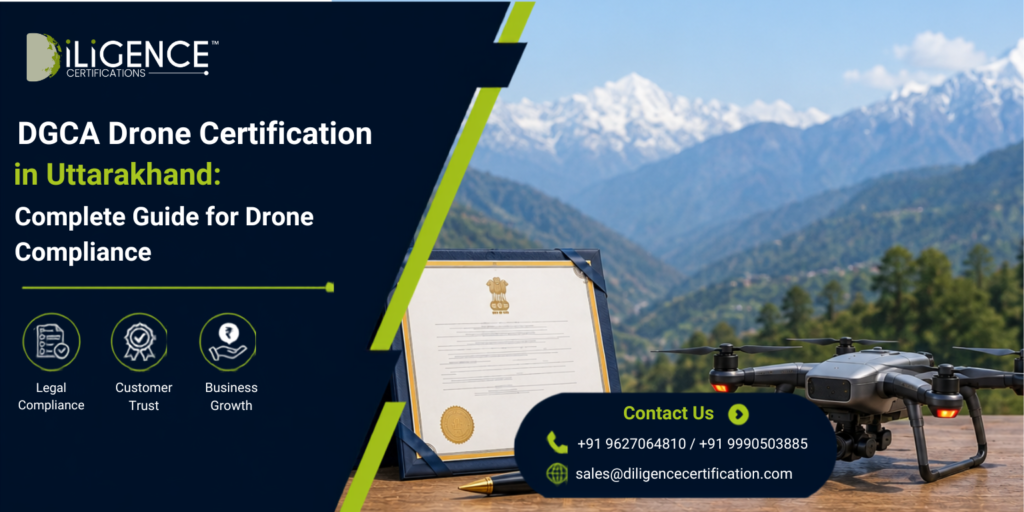
By - DGCA Certification in Uttarakhand helps drone manufacturers, operators and aviation businesses meet India’s regulatory requirements for compliant UAS operations.
- The applicable compliance may involve Type Certification, drone registration/UIN, Remote Pilot Certificate and operational requirements, depending on the drone and activity.
- Applications and regulatory processes are handled through DGCA systems, including the Digital Sky platform, with requirements depending on the applicant, drone type and intended use.
Introduction
The Dehradun-based drone firm could start off with a simple business proposition: employ drones for surveys, infrastructure inspections, and agricultural applications. The technology could have everything sorted out. It could fly, take pictures, and even have customers waiting to purchase its services.
Uttarakhand provides a number of practical applications of unmanned aerial vehicles in surveying, tourism, agriculture, disaster management, infrastructure, construction, and environment monitoring. Terrain of the state is mountainous and could add to the efficiency of the drone-based system compared to regular inspection techniques.
What Is DGCA Certification in Uttarakhand
DGCA Certification in Uttarakhand refers to the regulatory compliance and approval requirements applicable to drones and related aviation activities carried out by businesses or individuals in Uttarakhand.
There is not a separate “Uttarakhand DGCA certificate” issued only for the state. DGCA is a national aviation regulator. A business located in Dehradun, Haridwar, Haldwani or another part of Uttarakhand follows the applicable central aviation requirements.
Depending on the activity, the compliance journey can involve:
- Drone Type Certification
- UAS registration
- Unique Identification Number (UIN)
- Remote Pilot Certificate (RPC)
- Remote Pilot Training Organisation requirements
- Operational and airspace compliance
- Technical documentation
- Testing and conformity requirements
- Other permissions or regulatory approvals applicable to the particular operation
DGCA’s official portal provides dedicated resources for drones and Advanced Air Mobility and directs stakeholders towards the applicable rules and guidance.
Why Is DGCA Certification Important for Drone Businesses in Uttarakhand
A drone may be a sophisticated electronic product, but from the regulator’s perspective it is also an aircraft operating in controlled airspace. That distinction matters.
A manufacturer needs to demonstrate that the aircraft complies with applicable technical and safety requirements. An operator has different obligations. A remote pilot has different requirements again.
This is why simply purchasing a drone, registering a business and starting commercial flights does not automatically establish regulatory compliance.
Key reasons businesses pursue DGCA compliance include:
- Regulatory compliance
Businesses need to operate within the applicable aviation framework. - Commercial credibility
Clients increasingly expect professional drone service providers to demonstrate appropriate compliance. - Tender and project readiness
Compliance documentation can become important when participating in institutional or government projects. - Risk management
Proper regulatory planning reduces the possibility of operational interruptions caused by incomplete approvals. - Market expansion
A compliant drone operation is easier to scale across projects and locations.
For a growing drone company, certification is similar to obtaining the necessary roadworthiness and registration documents for a commercial vehicle. Owning the vehicle is one step; legally putting it to work is another.
Who Needs DGCA Certification
The exact requirement depends on the business model.
Drone Manufacturers
Manufacturers developing UAS for the Indian market need to examine Type Certification and the applicable technical requirements before commercial deployment.
This is particularly important for companies developing indigenous drones for:
- Agriculture
- Mapping
- Surveying
- Infrastructure inspection
- Surveillance
- Logistics
- Industrial inspection
- Disaster response
Drone Importers
Importers need to examine the applicable Indian requirements before bringing UAS into the country.
Import compliance should be evaluated before the product reaches customs rather than after an unexpected regulatory issue arises.
Commercial Drone Operators
Companies offering drone-based services may need applicable pilot, registration and operational compliance.
Examples include:
- Real-estate photography
- Land surveying
- Construction monitoring
- Agricultural spraying
- Power-line inspection
- Mining surveys
- Infrastructure inspection
- Geographic mapping
Remote Pilots
Individuals who operate drones professionally may require the appropriate training and Remote Pilot Certificate depending on the aircraft and operation.
Remote Pilot Training Organisations
Training organisations operate under their own DGCA authorisation requirements. DGCA’s Drone Training Circular establishes the regulatory framework for authorisation of Remote Pilot Training Organisations (RPTOs).
How to Apply for DGCA Certification in Uttarakhand
The practical process depends on which approval you are seeking.
A typical manufacturer-side compliance pathway can be understood as follows.
Step 1: Identify the Regulatory Requirement
First establish what you are actually applying for.
Is it:
- Type Certification?
- Drone registration?
- UIN?
- Remote Pilot Certificate?
- RPTO authorisation?
- Another aviation approval?
This first step prevents a common mistake: preparing a large documentation file without knowing which regulatory route applies.
Step 2: Review the Drone’s Technical Configuration
Prepare the technical information relating to the UAS.
Depending on the application, documentation can include:
- Technical specifications
- Design information
- Drawings
- Flight characteristics
- Manuals
- Safety information
- Test documentation
- Component details
- Software and control-system information
The exact documentation should be mapped against the applicable DGCA requirements rather than copied from another drone project.
Step 3: Testing and Compliance Assessment
Where certification requires testing, the aircraft must be evaluated against the relevant standards and requirements.
This is often where manufacturers discover gaps that were not visible during product development.
For example, a prototype may fly successfully but still require additional documentation or testing before it can proceed through the certification pathway.
Step 4: Application Through the Applicable DGCA System
Applications and related processes may be handled through DGCA’s digital systems, depending on the approval.
The applicant should ensure that names, specifications and supporting documents are consistent across the application.
A mismatch between the technical file and application information can create avoidable clarification requests.
Step 5: Regulatory Review
The authority or relevant certification mechanism reviews the submission.
If clarification is requested, responses should be precise and supported by appropriate technical evidence.
Step 6: Approval or Certification
Once the applicable requirements are satisfactorily completed, the relevant certificate, authorisation or registration can be issued.
The business should then maintain compliance rather than treating approval as the end of the process.
Documents Required for DGCA Drone Certification
The exact document list depends on the approval being requested.
For a manufacturer, the documentation can involve:
- Company incorporation documents
- Manufacturer details
- Product specifications
- Technical drawings
- Design documentation
- Flight manual
- Operating manual
- Maintenance information
- Test reports
- Safety-related documentation
- Component information
- Technical declarations
- Applicant details
- Other documents specified under the applicable certification process
Common Mistakes Businesses Make
Applying Before Understanding Eligibility
Businesses sometimes begin an application without first identifying the exact approval category.
That can result in unnecessary documentation and delays.
Treating All Drones the Same
A drone intended for agricultural spraying is not automatically subject to exactly the same practical considerations as a drone used for photography or surveying.
Ignoring Product Changes
Changing the propulsion system, payload, battery configuration or other significant characteristics can affect the technical compliance position.
Using Outdated Regulatory Information
This is particularly risky in the drone industry.
DGCA’s current website shows regulatory updates and notices, including the present temporary suspension of non-Type-Certified UAS registration.
Businesses should therefore verify the current position before making commercial commitments.
Confusing Pilot Certification With Drone Certification
A pilot certificate does not certify the drone itself.
Similarly, a drone’s Type Certificate does not replace requirements applicable to the person operating it.
Why Choose Diligence Certification for DGCA Certification in Uttarakhand
Choosing the right compliance consultant can make the DGCA approval process more organised and easier to manage. Diligence Certification supports businesses with regulatory documentation, application preparation and certification coordination.
1. End-to-End DGCA Compliance Support
Diligence Certification can assist with different stages of the drone compliance process, from understanding the applicable requirements to preparing documentation and supporting the application.
2. Support for Different Drone Businesses
Whether you are a drone manufacturer, importer, commercial operator, remote pilot or training organisation, the compliance requirement can be different. Diligence Certification helps identify the appropriate regulatory pathway for your business.
3. Technical Documentation Assistance
Incomplete or inconsistent documentation can lead to clarification requests. Our team helps organise technical specifications, product information, manuals, test reports and other supporting documents according to the applicable requirements.
4. Type Certification Guidance
For drone manufacturers, Type Certification can involve detailed technical and testing requirements. Diligence Certification provides guidance on the documentation and compliance steps required for the certification process.
5. Application Process Support
Instead of handling the regulatory process without guidance, businesses can receive assistance with application preparation, document submission and responses to regulatory queries.
Conclusion
DGCA Certification in Uttarakhand is an important compliance consideration for drone manufacturers, operators, remote pilots, training organisations and businesses using UAVs for commercial applications. From surveying and agriculture to infrastructure inspection and disaster management, drones are becoming increasingly useful across the state.
However, the approval requirement depends on the type of drone, its intended use and the applicant’s role. Manufacturers may need to address Type Certification and technical compliance, while operators and pilots may have separate registration, certification and operational requirements.
Businesses should verify the latest DGCA requirements before starting the application because drone regulations and procedures can change. Preparing the technical documents, test reports and application details correctly at the beginning can also reduce avoidable queries and delays.