BIS Certification
 CDSCO
CDSCO
 PESO
PESO
 CPCB
CPCB
 LMPC
LMPC
 WPC Approval
 Global Approvals
 TEC
TEC
 ARAI
ARAI
 BEE
BEE
 ISO Certification
 DGCA Certification
 NOC For Steel
 APEDA Registration























 Business Registration
 FSSAI Mark Certification












 (32).jpg)
 Legal Services
 Trademark Registration
 Copyright Registration
 Patent Registration
 By
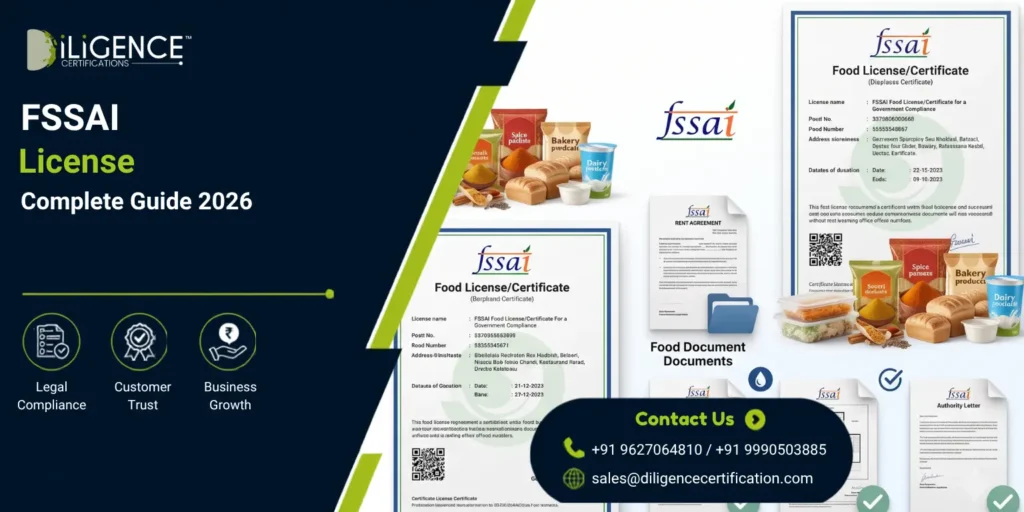
By - What Documents Are Required for FSSAI License? related to your business, premises, food product, and identity should be prepared before applying for an FSSAI license.
- Ensure that all uploaded documents satisfy the document criteria based on the type of food business and the Kind of Business selected.
- Also, all the information uploaded should be up-to-date.
Introduction
If you own or run a food business in India, it is essential to obtain a FSSAI License as a part of food business compliance. Be it manufacturing, distribution, retailing, restaurant, wholesaling, importing, or some other food business activity, you would require either FSSAI Registration or FSSAI License based on the type of business activity you are involved in.
It would depend on the nature and size of the food business, KoB chosen, and the kind of FSSAI License that is required. FoSCoS offers document requirements based on the business activity chosen, and additional documentation would be needed for certain businesses and cases.
What is FSSAI License?
FSSAI represents Food Safety and Standards Authority of India. The FSSAI license refers to a food safety certification granted within the context of the food safety regulatory regime to eligible food business entities in India.
The FSSAI process facilitates food businesses regulation.
Depending on the business, FSSAI approval may involve:
- Business Details Verification
- Food Product Details
- Premises Verification
- Identity and Address Documents
- Food Category Details
- Manufacturing Information
- Equipment and Machinery Details
- Food Safety Management Information
- Water Testing Reports, Where Applicable
- Supporting Documents
- Regulatory Compliance Guidance
Not every food business requires the same type of approval or documents. The exact requirement depends on the selected business activity and applicable FSSAI criteria.
Applications of FSSAI License in India
FSSAI registration and licensing requirements can apply to a wide range of food businesses.
These may include:
- Food Manufacturers
- Food Processors
- Restaurants
- Cafes
- Bakeries
- Caterers
- Food Wholesalers
- Food Distributors
- Food Retailers
- Food Storage Businesses
- Food Transporters
- Importers
- Exporters
- E-Commerce Food Businesses
- Food Vending Businesses
- Packaged Food Businesses
- Dairy and Dairy Product Businesses
The exact FSSAI requirement depends on the nature of the food business, its activities, products, and applicable eligibility criteria. FoSCoS provides an eligibility facility for businesses to identify the applicable licensing or registration requirement.
Who Needs FSSAI License in India?
FSSAI licensing or registration may be required by businesses involved in manufacturing, processing, storage, distribution, transportation, sale, import, export, or other food-related activities.
FSSAI requirements may apply to:
- Food Manufacturers
- Importers
- Exporters
- Wholesalers
- Distributors
- Retailers
- Restaurants
- Food Processors
- Caterers
- Food Storage Operators
- Food Transporters
- E-Commerce Food Businesses
- Food Vending Agencies
- Food Service Businesses
- Other Food Business Operators
Businesses should identify their correct Kind of Business before preparing documents because document requirements can vary according to the selected activity.
Types of Documents Required for FSSAI License in India
Identity and Address Proof
Identity and address-related documents may be required to establish the details of the proprietor, partners, directors, authorized signatory, or other responsible persons.
Common documents may include:
- Government-issued Identity Proof
- Address Proof
- PAN Details
- Photographs, Where Applicable
- Authorized Signatory Details
The exact requirement can vary depending on the constitution and nature of the business.
Useful for:
- Proprietors
- Partners
- Directors
- Authorized Signatories
- Food Business Operators
Business Constitution Documents
Businesses operating as companies, partnerships, LLPs, or other legal entities may need to provide documents showing their legal constitution.
These may include:
- Partnership Deed
- Certificate of Incorporation
- Memorandum and Articles of Association
- LLP Agreement
- Company Authorization Documents
- Proprietorship Declaration, Where Applicable
These documents help establish the legal identity of the applicant and the relationship between the business and the responsible persons.
Useful for:
- Companies
- LLPs
- Partnership Firms
- Proprietorship Businesses
- Other Registered Entities
Proof of Premises
Proof of possession of the premises may be required for the location where the food business is being operated.
Depending on the situation, documents may include:
- Rent Agreement
- Lease Agreement
- Sale Deed
- Electricity Bill
- Property Documents
- Other Valid Premises Proof
The premises document should generally correspond with the address provided in the FSSAI application.
Useful for:
- Manufacturers
- Restaurants
- Food Processors
- Warehouses
- Retailers
- Food Service Businesses
Food Product Details
Businesses involved in manufacturing or processing may need to provide information about the food products they intend to manufacture.
This may include:
- Food Product Names
- Food Category Details
- Product Description
- Manufacturing Activity
- Product Information
- Proposed Food Categories
Accurate product information is important because the FSSAI approval should reflect the food activities and products covered by the business.
Useful for:
- Food Manufacturers
- Food Processors
- Repackers
- Relabellers
- Product-Based Food Businesses
Manufacturing Unit Documents
Manufacturing and processing businesses may have additional documentation requirements compared with simple food retailers or service businesses.
Depending on the business, documents may include:
- Layout or Blueprint of the Processing Unit
- List of Equipment and Machinery
- Installed Capacity Details
- Food Product Categories
- Manufacturing Process Details
- Premises Documents
- Water Testing Report, Where Applicable
- Food Safety Management Documents
FoSCoS specifically provides for documents relevant to the selected Kind of Business, and manufacturing or processing activities may require additional supporting information.
Useful for:
- Food Manufacturers
- Food Processing Units
- Packaged Food Manufacturers
- Dairy Businesses
- Food Production Units
Water Testing Report
For certain manufacturing and processing businesses, a water analysis report may be required where water is used as an ingredient or for relevant food processing purposes.
The report may cover parameters such as:
- Chemical Analysis
- Bacteriological Analysis
- Potability
The report should be obtained from an appropriate recognized or public health laboratory where applicable.
Useful for:
- Food Manufacturers
- Food Processing Units
- Beverage Businesses
- Packaged Drinking Water Businesses
- Other Applicable Food Businesses
Authority Letter and Responsible Person Details
Where applicable, a manufacturer may need to provide an authority letter identifying the responsible person nominated to handle regulatory communication and assist during inspection or related activities.
The document may include:
- Name of Responsible Person
- Address
- Contact Details
- Authorized Responsibilities
- Alternative Responsible Person, Where Applicable
This helps establish who will be responsible for communication and compliance-related activities.
Useful for:
- Manufacturers
- Large Food Businesses
- Processing Units
- Businesses Requiring Responsible-Person Details
Documents and Details Required for FSSAI License in India
The exact document list depends on the selected Kind of Business and application type. Generally, businesses may need:
- Identity Proof
- Address Proof
- PAN Details
- Business Constitution Documents
- Proof of Premises
- Business Address Details
- Food Product Details
- Food Category Information
- List of Directors or Partners, Where Applicable
- Layout or Blueprint, Where Applicable
- Equipment and Machinery Details, Where Applicable
- Food Safety Management Information
- Water Testing Report, Where Applicable
- Authority Letter, Where Applicable
- Additional NOCs, Where Required
- Other Supporting Documents
According to FoSCoS, only the relevant documentation to the Kind of Business chosen will be needed, with extra documentation such as the report of water tests, NOC, vehicle documentation, FSMS plan, and any other documentation, which may be applicable.
It will be beneficial if the documents provided are accurate and consistent.
Step-by-Step Process for Preparing Documents for FSSAI License in India
Step 1: Identify the Food Business
First, know exactly what type of food business you have.
Find out if you manufacture, process, distribute, store, transport, import, export or serve food.
Step 2: Check FSSAI Eligibility
To find out what the requirement is regarding the registration or license for your food business, you may use the FoSCoS eligibility tool.
The eligibility criteria may vary depending on the type of your business.
Step 3: Identify the Required Documents
Once the Kind of Business is identified, check the applicable document list.
Do not prepare documents randomly because different food businesses can have different requirements.
Step 4: Prepare Business Documents
Keep your business constitution documents, identity proof, PAN details, and authorization documents ready wherever applicable.
Step 5: Prepare Premises Documents
Keep valid proof of possession of the business premises available.
Make sure the address matches the information being entered in the FSSAI application.
Step 6: Prepare Food Product Details
Manufacturers and processors should prepare accurate details of the food products and categories they intend to manufacture or process.
Step 7: Prepare Additional Documents
As per the nature of the business activity, other relevant documents like water test reports, NOC, FSMS-related documents, machinery particulars, and so forth could be needed.
Step 8: Upload Documents on FoSCoS
Once the relevant documents have been collected, submit these documents by way of the FoSCoS application process.
Timeline, Cost & Validity of FSSAI License in India
The FSSAI License cost in India depends on the type of license, business activity, applicable fee structure, and other requirements.
| Timeline | Cost | Validity |
| The FSSAI application timeline depends on the type of application, documentation, business activity, and whether additional scrutiny or inspection is required. | The FSSAI License cost depends on the applicable license category, business activity, government fee, and professional assistance, if required. | FSSAI License validity depends on the period selected and applicable regulatory requirements. |
| Complete and accurate documents can help make the application process easier. | Additional professional charges may apply when detailed documentation or compliance assistance is required. | Businesses should monitor the expiry date and complete renewal within the applicable period. |
| The processing time may vary depending on the application and verification requirements. | Businesses should consider the complete compliance requirement instead of selecting a service only on price. | The license should be kept active and renewed according to applicable FSSAI requirements. |
Importance & Benefits of FSSAI License
| Importance | Benefits |
| Helps demonstrate compliance with applicable food safety requirements. | Builds trust among customers and business partners. |
| Supports proper regulation of food business activities. | Helps businesses operate with greater regulatory clarity. |
| Helps maintain proper food business documentation. | Supports smoother business operations and market activities. |
| Promotes awareness of food safety responsibilities. | Can improve business credibility and customer confidence. |
| Supports responsible food business compliance. | Helps businesses manage applicable regulatory requirements. |
Why is Having the Right Documents for FSSAI License Important?
It is crucial to submit appropriate paperwork when applying for FSSAI approval. Although the business may have a legitimate food-based activity, the lack of proper paperwork can result in unnecessary hassles when applying for FSSAI approval.
Proper documentation can help:
- Establish Business Identity
- Verify Applicant Details
- Establish Premises Information
- Clarify Food Business Activities
- Support Food Product Details
- Demonstrate Applicable Compliance
- Reduce Documentation Errors
- Support Application Processing
- Improve Regulatory Record-Keeping
For manufacturers and processors, documentation can be particularly important because additional information may be required regarding the processing unit, machinery, products, water quality, and food safety systems.
What Documents Are Required for FSSAI License?
The documents required for an FSSAI License depend on the type of food business.
Identity Proof
Identity documents of the proprietor, partner, director, or authorized person may be required.
Business Constitution Documents
Companies, LLPs, and partnership firms may need to provide relevant legal constitution documents.
Premises Proof
A rent agreement, lease document, sale deed, electricity bill, or other applicable premises document may be used to establish possession of the business premises.
Food Product Details
Manufacturers and processors may need to provide details of the food products and applicable food categories.
Layout Plan
Manufacturing and processing businesses may need a layout or blueprint showing the processing unit and relevant areas.
Equipment and Machinery Details
Manufacturers and processors may need to provide information about equipment, machinery, installed capacity, and related details.
Water Analysis Report
Where applicable, a water analysis report may be required for water used in food production or processing.
Authority Letter
Certain businesses may need an authority letter identifying the responsible person for regulatory and inspection-related activities.
Additional Supporting Documents
Depending on the business, additional documents such as NOCs, vehicle documents, FSMS plans, or other supporting documents may be required.
Consequences of Not Preparing the Correct FSSAI Documents
Failure to prepare the correct documents can create different challenges for food businesses.
Application Delays
Missing or incorrect documents may lead to queries and can slow down the application process.
Incorrect Business Information
If the documents do not match the application details, the business may face difficulties during verification.
Compliance Issues
Operating without the applicable FSSAI approval can create regulatory concerns for the food business.
Additional Documentation
Businesses may be required to provide additional information when the submitted documents do not adequately support the application.
Business Delays
Documentation issues can affect plans related to starting, expanding, manufacturing, selling, or distributing food products.
Customer Confidence
Maintaining appropriate FSSAI compliance can support customer confidence in the business.
Business Reputation
Proper regulatory documentation contributes to a more professional and credible business image.
Renewal of FSSAI License
The FSSAI license is not a perpetual one and must be renewed periodically. Organizations must make sure that the license is valid and should renew it accordingly.
Businesses should regularly review:
- FSSAI License Status
- Expiry Date
- Business Details
- Food Product Details
- Premises Details
- Kind of Business
- Responsible Person Details
- Applicable Compliance Requirements
- Supporting Documents
If there is any modification in the business, then there will be a need to change the information provided in the FSSAI license.
Frequent verification of the license information helps in maintaining proper records.
How Professional Assistance Helps with FSSAI License in India?
An FSSAI consultant can help businesses understand the documentation requirements and prepare the application according to the applicable food business category.
Professional assistance may include:
- FSSAI Eligibility Assessment
- Document Requirement Guidance
- Application Assistance
- Business Activity Assessment
- Food Category Guidance
- Documentation Review
- Premises Document Guidance
- Product Information Support
- Application Submission Assistance
- Query Resolution
- Renewal and Modification Support
Professional help is also recommended if the company engages in several activities, has manufacturing processes, has imported items, different types of food, etc.
Why Choose Diligence Certifications for FSSAI License in India?
Diligence Certifications assists businesses with FSSAI licensing, documentation, food compliance, and regulatory requirements.
Services include:
- FSSAI License Assistance
- FSSAI Registration Assistance
- Eligibility Assessment
- Documentation Assistance
- Food Category Guidance
- Application Support
- Compliance Guidance
- Query Resolution
- Renewal Support
- Modification Support
Diligence Certifications can help businesses understand applicable FSSAI requirements, prepare the required documentation, identify documentation gaps, and manage the application process more efficiently.
Conclusion
One of the first things needed to be done in preparation for the food licensing application is to get acquainted with the documents needed for the FSSAI License.
There might be different kinds of required documents based on the kind of business, selected Kind of Business, business constitution, premises, food products, and other requirements for that particular business. Some common documents required could be ID proof, business constitution proof, premises proof, food product details, layout plans, machinery details, water test report, authority letter, and others (if any).
It is recommended not to use a checklist for every food business since FSSAI requirements depend on the activities performed.
Maintaining good documents, filling in correct information, and verifying the applicable requirements through FoSCoS will help in maintaining an organized process. Moreover, businesses need to check the validity of their FSSAI license regularly and update their details in case of any changes in their business.
Frequently Asked Questions
What documents are required for FSSAI License?
Common documents include identity proof, premises proof, business documents, food product details, and other documents applicable to the selected business activity.
What is FSSAI full form?
FSSAI stands for Food Safety and Standards Authority of India.
What is the full form of ISO?
ISO stands for International Organization for Standardization. ISO and FSSAI are different standards and regulatory systems.
Is address proof required for FSSAI License?
Yes, applicable premises or address-related documents may be required depending on the type of food business.
Is PAN required for FSSAI License?
PAN details may be required depending on the applicant and business structure.
Do manufacturers need additional documents?
Yes. Manufacturers and processors may need additional documents such as layout plans, machinery details, food product information, and water testing reports where applicable.
Is a rent agreement accepted for FSSAI?
A valid rent or lease agreement may be used as premises proof where applicable.
Is a water test report required for FSSAI License?
It may be required for applicable manufacturing and processing businesses, particularly where water is used in food production.
Can FSSAI documents be submitted online?
Yes. Applicable documents are uploaded through the FoSCoS online application process.
Can Diligence Certifications help with FSSAI documentation?
Yes. Diligence Certifications can assist with FSSAI eligibility, document preparation, application support, compliance guidance, and related requirements.