BIS Certification
 CDSCO
CDSCO
 PESO
PESO
 CPCB
CPCB
 LMPC
LMPC
 WPC Approval
 Global Approvals
 TEC
TEC
 ARAI
ARAI
 BEE
BEE
 ISO Certification
 DGCA Certification
 NOC For Steel
 APEDA Registration























 Business Registration
 FSSAI Mark Certification












 (32).jpg)
 Legal Services
 Trademark Registration
 Copyright Registration
 Patent Registration
 By
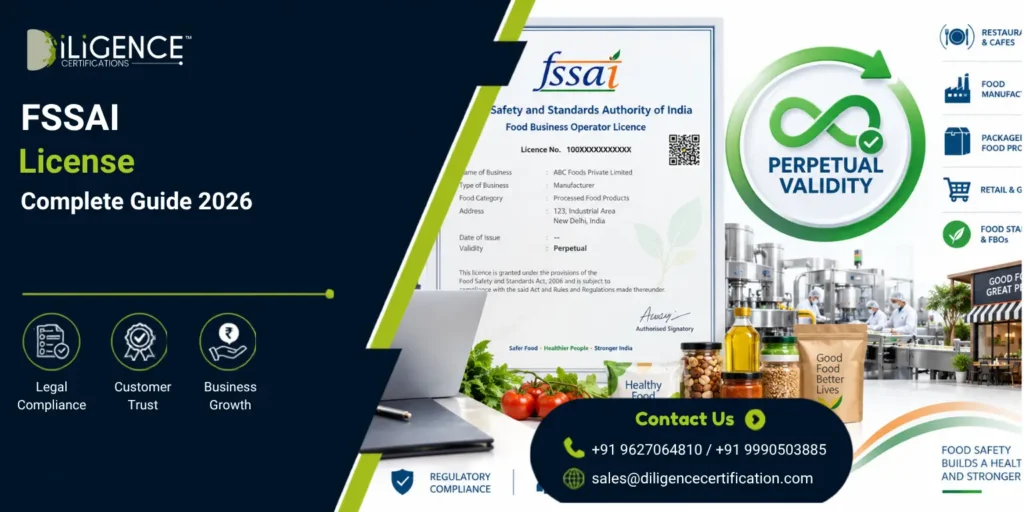
By - What Is the Validity of an FSSAI License is a very vital aspect for all food businesses in India.
- In the existing FSSAI regulatory regime, FSSAI Licenses/Registrations are valid perpetually, unless suspended/cancelled/surrendered.
- Food businesses shall continue to maintain compliance with food safety, hygiene, documentation, and other relevant compliance requirements despite the absence of periodic renewals.
Introduction
The process of operating a food business encompasses not only production, manufacture, sale, or distribution of food products. It also includes the adherence of food businesses to appropriate food safety laws and regulations to ensure the safety and regulatory compliance of their products.
Probably, the most important registration in the sphere of food safety for food businesses in India is the FSSAI License or Registration.
The abbreviation FSSAI refers to Food Safety and Standards Authority of India. It is the body responsible for food safety regulations and supervision in India.
It is one of the questions raised by food business owners in regard to the FSSAI license: What is the validity of an FSSAI license?
Previously, the validity of FSSAI licenses and registrations was established and food businesses had to apply for renewal of the license. Nowadays, the system of regulations allows perpetual validity of FSSAI licenses and registrations.
Despite the perpetual validity, food businesses should still comply with all food safety regulations.
It will help food businesses stay in compliance and prevent misunderstandings regarding renewals.
What Is the Validity of an FSSAI License?
Validity of an FSSAI License relates to the period when the license is valid and can be used by the holder to conduct his food business activities as mentioned in the license.
In the present scheme of things, Food Safety and Standards Authority of India. has brought about a concept of perpetual validity in licenses and registration. Hence, an FSSAI license will normally not require renewal on account of its earlier validity period ending.
Perpetual validity means that the license continues to remain valid unless it is:
- Suspended
- Cancelled
- Surrendered
- Otherwise affected under applicable regulatory provisions
With perpetual validity, there is less administrative work required by food business operators, thus maintaining continuity in business operations.
Perpetual validity does not imply the removal of all obligations. It is necessary for food businesses to still adhere to relevant food safety and hygiene standards and other requirements relating to business operations.
Applications of FSSAI License
An FSSAI License or Registration may be relevant to various food-related businesses operating in India.
It may apply to:
- Food Manufacturers
- Food Processors
- Food Wholesalers
- Food Distributors
- Food Retailers
- Food Importers
- Food Exporters
- Restaurants
- Hotels
- Cafes
- Cloud Kitchens
- Food Storage Businesses
- Food Transporters
- Food Catering Businesses
- E-Commerce Food Businesses
Requirement will depend on the type and size of food business and the classification under FSSAI.
An FSSAI license ensures the regulatory acceptance of the food business and assists in making sure that the food business operates in accordance with the food safety regulations.
It is necessary for the food business operators to make sure that the information provided in the FSSAI license remains correct.
Who Needs an FSSAI License?
Food business operators covered under the applicable FSSAI licensing and registration requirements may need an FSSAI Registration or License.
They may include:
- Food Manufacturers
- Food Processors
- Food Distributors
- Food Wholesalers
- Food Retailers
- Restaurants
- Hotels
- Caterers
- Importers
- Exporters
- Food Storage Operators
- Food Transporters
- Cloud Kitchens
- Other Eligible Food Businesses
The category would depend on the operations, turnover, business activity, and other criteria stipulated by the regulations. Food businesses must determine the right category of FSSAI certification without thinking that all food businesses need the same kind of certification.
Types of Compliance Supported by FSSAI License
Food Safety & Hygiene Compliance
An FSSAI license supports compliance with applicable food safety and hygiene requirements.
A food business may need to maintain:
- Food Safety Standards
- Hygiene Practices
- Sanitation Requirements
- Safe Food Handling
- Storage Conditions
- Processing Controls
- Cleaning Procedures
- Pest Control Measures
- Food Safety Records
Maintaining these requirements is important even when the FSSAI license has perpetual validity.
Product & Labelling Compliance
Compliance with FSSAI regulations might also include labelling requirements for food products.
The relevant labeling information for food products may need to be correct and compliant.
Relevant areas may include:
- Product Name
- Ingredients
- Nutritional Information
- Allergen Information
- Net Quantity
- Manufacturer Details
- FSSAI Information
- Date Marking
- Storage Instructions
- Other Applicable Labelling Requirements
Correct labelling helps consumers understand the food product and supports regulatory compliance.
Documentation & Record Compliance
Food businesses should maintain relevant records and documents associated with their operations.
These may include:
- FSSAI License or Registration
- Identity Documents
- Address Proof
- Business Documents
- Food Product Details
- Supplier Records
- Purchase Records
- Testing Reports
- Food Safety Records
- Hygiene Records
- Inspection Documents
- Supporting Compliance Documents
Proper documentation can help the business respond effectively to inspections, queries, modifications, or other regulatory requirements.
Documents Required for FSSAI License
Documents required for an FSSAI License or Registration depend on the nature of the food business and the applicable category.
Generally, applicants may need:
- Identity Proof
- Address Proof
- Business Address Proof
- Business Constitution Documents
- Food Product Details
- Partnership Deed, Where Applicable
- Company Documents, Where Applicable
- Manufacturing or Processing Details
- Equipment Details, Where Applicable
- Layout Plan, Where Applicable
- Supporting Food Safety Documents
- Other Documents as Applicable
The documents should contain accurate and consistent information.
Businesses should also keep their supporting records updated so that they can provide them whenever required by the applicable authority.
Step-by-Step Process for Understanding FSSAI License Validity
Step 1: Identify the FSSAI Category
First, determine whether the business requires FSSAI Registration, State License, or Central License based on the applicable criteria.
Consider:
- Nature of Business
- Food Activities
- Turnover
- Business Location
- Products Handled
- Manufacturing Activities
- Import or Export Activities
- Applicable FSSAI Rules
The correct category helps ensure proper regulatory compliance.
Step 2: Check Your FSSAI License Details
Food business operators should check the details available on their FSSAI license.
Review:
- FSSAI License Number
- Business Name
- Premises Address
- Food Business Activities
- Product Categories
- License Category
- Other Relevant Details
Keeping these details accurate is important for ongoing compliance.
Step 3: Understand the Current Validity
According to the existing scheme, the licenses and registrations from the FSSAI do not have an expiry date.
This implies that the food business operators will not be required to apply for renewal of their licenses regularly.
The food business should, however, still comply with the food safety requirements..
Step 4: Maintain Ongoing Compliance
Perpetual validity does not remove the responsibility of the food business operator.
Businesses should continue to maintain:
- Hygiene Standards
- Food Safety Practices
- Proper Labelling
- Required Records
- Applicable Testing
- Food Safety Documentation
- Regulatory Conditions
Failure to comply with applicable requirements can still result in regulatory action.
Step 5: Update Changes When Required
If important business information changes, the food business operator may need to follow the applicable procedure for modification or updating the FSSAI license.
Changes may relate to:
- Business Address
- Food Activities
- Product Categories
- Business Details
- Contact Information
- Other License Information
A perpetual license should not be understood as a license that never needs updating.
Step 6: Continue Monitoring Compliance
Food businesses should regularly review their compliance status.
They may need to:
- Maintain Records
- Monitor Food Safety Practices
- Check Regulatory Updates
- Respond to Authority Queries
- Follow Inspection Requirements
- Maintain Hygiene Standards
- Update Applicable Information
Regular monitoring can help reduce compliance-related problems.
Timeline, Cost & Validity of FSSAI License
The timeline, cost, and validity depend on the type of FSSAI application, business category, applicable government fee, documentation, and regulatory requirements.
| Timeline | Cost | Validity |
| The processing timeline depends on the type of application, documentation, verification, inspection requirements, and applicable authority. | The government fee depends on the applicable FSSAI category, business activity, and type of application. | FSSAI Licenses and Registrations now have perpetual validity unless suspended, cancelled, or surrendered. |
| Complete and accurate documentation can help reduce avoidable delays. | Professional assistance charges may depend on the scope and complexity of the service. | Food businesses must continue complying with applicable food safety, hygiene, and regulatory requirements. |
| Processing time may vary depending on the application type and regulatory requirements. | Additional expenses may apply depending on testing, documentation, professional assistance, or other requirements. | Changes in business information may require applicable modification or updating procedures. |
The current FSSAI framework introduced perpetual validity to reduce the burden of repeated renewal applications. FSSAI has clarified that licenses and registrations remain valid unless suspended, cancelled, or surrendered.
Importance & Benefits of FSSAI License
| Importance | Benefits |
| Helps food businesses comply with applicable food safety requirements. | Provides regulatory recognition to the food business. |
| Supports transparency and accountability in food operations. | Helps establish consumer confidence in the food business. |
| Encourages compliance with applicable FSSAI standards. | Reduces the administrative burden of repeated renewal. |
| Promotes responsible food safety practices. | Supports continuity of business operations. |
| Supports awareness of food safety and regulatory responsibilities. | Helps businesses maintain organized food compliance records. |
Why Is FSSAI License Validity Important?
It is critical to have knowledge on FSSAI License Validity for the simple reason that food establishments have to be aware of whether their license continues to be valid and what obligations come with it.
With perpetual validity, it becomes easier for food companies to comply since they are not obliged to go through the process of renewing their license each time the validity period expires.
Nonetheless, food establishments must not think that with perpetual validity comes exemption from compliance.
Food businesses must continue to follow applicable:
- Food Safety Requirements
- Hygiene Standards
- Labelling Requirements
- Storage Conditions
- Food Handling Practices
- Documentation Requirements
- Inspection Requirements
- Other Regulatory Conditions
A valid FSSAI license is only one part of maintaining food business compliance.
Professional assistance can help businesses understand their applicable FSSAI category, documentation, modification requirements, and ongoing compliance responsibilities.
Consequences of Not Addressing FSSAI Compliance
Ignoring FSSAI-related compliance requirements can create difficulties for food businesses.
Potential consequences may include:
Regulatory Action
Non-compliance with applicable food safety requirements may result in regulatory action by the competent authority.
Business Disruption
Serious compliance issues may affect the ability of a business to continue certain food operations.
Financial Loss
Non-compliance may create additional financial pressure through penalties, corrective actions, testing, or other expenses.
Product-Related Issues
Failure to follow applicable food safety or labelling requirements can create problems with food products.
Loss of Consumer Trust
Food safety concerns may negatively affect customer confidence in a business.
Documentation Problems
Poor record maintenance can make it difficult to demonstrate compliance when required.
Inspection Difficulties
Businesses may face difficulties if they cannot provide required information or records during regulatory checks.
Missed Compliance Requirements
Failure to monitor applicable rules can result in businesses overlooking important regulatory obligations.
Reputation of the Business
Repeated compliance problems may negatively affect the reputation and credibility of a food business.
Growing the Business
A weak compliance system can create challenges when a business expands into new products, locations, or food activities.
Renewal of FSSAI License
The existing FSSAI model does not require FSSAI Licenses and Registration to be renewed periodically as the present system allows for perpetual validity of the said FSSAI Licenses and Registration.
It is significant to note that this is different from the old scheme which would provide a license/registration with a fixed period and would require periodic renewal thereafter.
Though periodic renewal is not necessary because of the perpetual validity scheme, food business entities will still have to be wary of their compliances.
Important areas include:
- License Details
- Business Information
- Food Activities
- Product Categories
- Hygiene Requirements
- Food Safety Practices
- Regulatory Updates
- Modification Requirements
- Inspection Requirements
- Compliance Records
Professional help would not only assist in making the entire process of obtaining the FSSAI license more structured, but will also assist in avoiding common mistakes made while preparing documents.
It would also help in understanding how the existing system of perpetual validity can be applied in their case.
How Professional Assistance Helps with FSSAI License Compliance?
A professional can assist with:
- FSSAI Requirement Review
- License Category Identification
- Documentation
- Application Preparation
- Online Filing Assistance
- License Modification
- Food Business Compliance
- Document Organization
- Regulatory Guidance
- Compliance Review
- Query Resolution
- Ongoing Compliance Support
Professional assistance will not only make the whole FSSAI compliance procedure more systematic but also help organizations avoid typical documentation errors.
It will also help food business operators understand how exactly the current system of perpetual validity is applicable to their licenses or registrations.
Why Choose Diligence Certifications for FSSAI License Assistance?
Diligence Certifications assists individuals and businesses with regulatory and compliance-related requirements.
Services may include:
- FSSAI Documentation
- Application Preparation
- Online Filing Assistance
- Document Organization
- FSSAI Compliance Assistance
- License Modification Support
- Regulatory Guidance
- Query Resolution
- Compliance Support
Under proper guidance, food businesses will get better clarity regarding their FSSAI responsibilities and keep things organized in terms of documentation.
Professional advice will be especially helpful to those businesses which are uncertain regarding their license type, food activity, and documentation.
Conclusion
It becomes essential to know about the validity of FSSAI license for all food businesses operating in India.
According to the existing FSSAI system, the validity of the license and registration is perpetual in nature, which implies that the license remains valid until it gets suspended, cancelled, or surrendered by the applicant. As a result, there is no need for food business operators to adopt the previous practice of renewing the license periodically just to maintain its validity.
Perpetual validity doesn’t imply that businesses will be able to ignore the compliance aspect.
Food business operators need to be aware about their license details, update business information, keep proper records, and also take note of the changing regulations.
Professional help will facilitate better management of documentation, application, amendments, and other aspects of FSSAI license process.
Frequently Asked Questions
What is FSSAI?
FSSAI stands for Food Safety and Standards Authority of India. It is responsible for regulating food safety and standards in India.
What is the validity of an FSSAI license?
Under the current framework, FSSAI licenses and registrations have perpetual validity, unless suspended, cancelled, or surrendered.
Does an FSSAI license need to be renewed?
Generally, no. Under the current perpetual validity system, periodic renewal is not required simply to continue the validity of the license.
Does perpetual validity mean no FSSAI compliance is required?
No. Food businesses must continue following applicable food safety, hygiene, labelling, and other regulatory requirements.
Can an FSSAI license be cancelled?
Yes. An FSSAI license may be affected by suspension, cancellation, surrender, or other applicable regulatory action.
Can FSSAI license details be modified?
Yes. Where business information changes, the applicable modification procedure may need to be followed.
Is FSSAI mandatory for food businesses?
Eligible food businesses are required to obtain the applicable FSSAI Registration or License under the relevant regulatory framework.
Can an FSSAI license become invalid because of non-compliance?
Yes. Regulatory action such as suspension or cancellation can affect the validity of an FSSAI license.
What documents are required for FSSAI License?
Documents depend on the food business and application category and may include identity proof, business documents, address proof, food activity details, and other supporting documents.
Can Diligence Certifications help with FSSAI compliance?
Yes, Diligence Certifications can assist with FSSAI documentation, application support, modification, compliance guidance, and related procedures.