BIS Certification
 CDSCO
 PESO
 CPCB
 LMPC
 WPC Approval
 Global Approvals
 TEC
 ARAI
 BEE
 ISO Certification
 DGCA Certification
 NOC For Steel
 APEDA Registration























 Business Registration
 FSSAI Mark Certification












 (32).jpg)
 Legal Services
 Trademark Registration
 Copyright Registration
 Patent Registration
 By
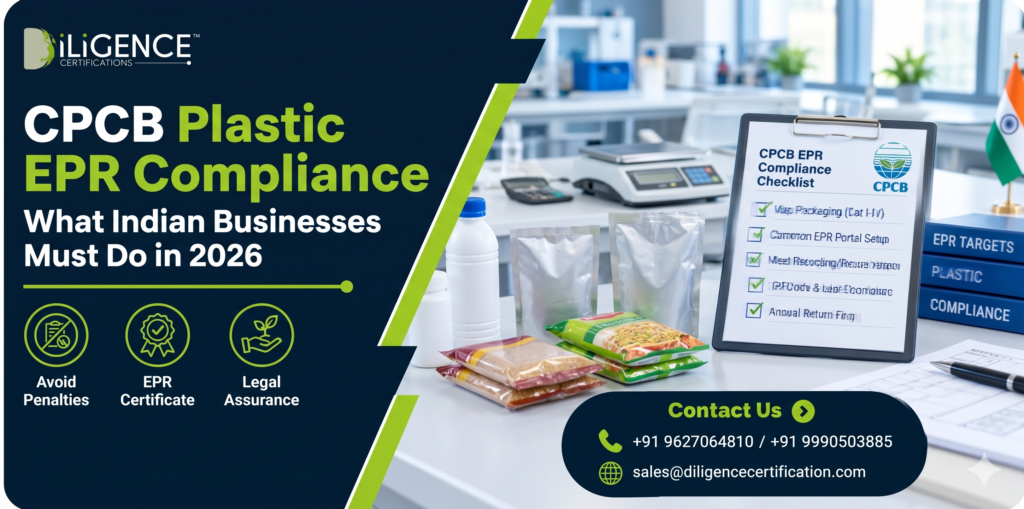
- CPCB plastic EPR compliance means registering on the CPCB portal, meeting yearly targets, labelling your packs and filing an annual return.
- It applies to producers, importers and brand owners. Online sellers with their own brand are included.
- The Plastic Waste Management (Amendment) Rules, 2026 and the new Common EPR Portal have changed how things work.
- If you ignore it, you can face Environmental Compensation and problems with marketplaces.
Introduction
Think of a home-décor brand that sells on its own website and on two marketplaces. Orders are coming in, and the packing is simple: a plastic mailer, a bubble sheet and a small pouch. Then one day the marketplace asks for an EPR registration number. The founder has never heard of it.
This happens more often than you would think. Many owners believe plastic rules are meant only for big factories. They are not. CPCB plastic EPR compliance depends on the plastic packaging you put in the market, not on the size of your factory.
This guide explains the rules in simple words, so you know what to do and in which order.
What Is CPCB Plastic EPR Compliance?
CPCB plastic EPR compliance is the set of duties that producers, importers and brand owners (PIBOs) must follow for the plastic packaging that producers sell in India. CPCB plastic EPR compliance involves registration on the CPCB portal meeting recycling and recycled‑content targets by using EPR certificates labeling each pack with the registration number and filing annual returns. CPCB plastic EPR compliance is based on the Plastic Waste Management Rules, 2016 and the EPR guidelines were added to those Rules in February 2022.
EPR means Extended Producer Responsibility. The idea is easy. Whoever puts plastic in the market must also take responsibility for its collection and recycling.
Who Needs to Follow CPCB Plastic EPR Compliance?
You come under the rules if you are in any of these groups.
- Producers: companies that make plastic packaging, or make goods that use plastic packaging.
- Importers: businesses that bring in packaged goods or plastic packaging. Importers of plastic raw material, such as resin and pellets, have also been brought in. Customs may ask for your registration.
- Brand owners: anyone who sells goods under their own brand and packs them in plastic. D2C brands and online sellers fall here.
- Plastic waste processors: recyclers and disposal units. They register separately and issue the certificates that PIBOs buy.
Here is a simple test. If your brand name is on the pack and the pack has plastic in it, you are most likely a brand owner. If you are still unsure, take a written opinion before the marketplace or the Pollution Control Board asks you.
What Changed in 2026?
If your understanding is from 2024, it is out of date. These are the changes that matter most.
| Change | What it means for you |
| PWM (Amendment) Rules, 2026, notified on 31 March 2026 | New rules on recycled content, reuse targets, audits and enforcement |
| Common EPR Portal from 28 June 2026 | The old plastic portal is closed. Your data was moved, so please check it |
| Registered Environment Auditors | Some verification work can now be done through them |
| Recycled content label | Packs with recycled plastic must follow IS 14534:2023 for labelling |
| Carry-forward | Shortfall in food-contact packaging for FY 2025-26 can be carried forward up to three years |
| Imported recycled content | It does not count towards your recycled-content target |
| QR code or barcode | Packs must show the PIBO name and registration number, in force since 1 July 2025 |
Targets differ by category and by year. Always read the final rules and portal notices for the exact numbers.
The Four Packaging Categories
Your targets depend on your packaging category. A wrong category is one of the easiest ways to get a portal query.
| Category | What it covers | Examples |
| Category I | Rigid plastic | Bottles, jars, containers, caps |
| Category II | Flexible sheets and films | Carry bags, mailers, pouches |
| Category III | Multilayered packaging | Chips packets, sachets, laminated pouches |
| Category IV | Compostable plastic | Compostable bags and sheets |
Biodegradable plastic is now treated separately from compostable plastic, with its own marking and certification needs. One more thing: EPR certificates are category-specific. A certificate for rigid packaging cannot cover multilayered packaging.
How to Complete CPCB Plastic EPR Compliance, Step by Step
Step 1: Map your packaging
List every plastic item you use. That includes the package, the outer package, the courier bag, the tape and the inserts. Write down the weight and the type of each one. This single sheet will save you a lot of trouble later.
Step 2: Register on the portal
Set up your account on the Common EPR Portal. Apply as a producer, importer or brand owner. Have your business documents, GST details, authorisation letter and packaging details ready. The list of documents changes from time to time so check the CPCB website before you apply.
Step 3: Find out your yearly target
Targets depend on how plastic you put into the market. They cover collection, recycling, recycled content. For some rigid packaging reuse.
Step 4: Meet the target through certificates
Most PIBOs meet recycling targets by buying EPR certificates from registered processors on the portal. Make sure the processor is registered and that the certificate category matches your packaging.
Step 5: Label your packs
Put a QR code, barcode or unique identifier with your name and EPR registration number. If you use plastic add the recycled content label as the rules require.
Step 6: File your return
Submit the return on the portal with your sales, packaging quantities, certificate use and recycled content details. CPCB has extended dates more than once. One recent update says that the FY 2025-26 date, for PIBOs was moved to 31 December 2026. Please check the portal for the date before you plan.
Step 7: Keep your records
Store invoices, purchase bills, weight records and certificate copies. If CPCB or your State Pollution Control Board asks for them you should be able to share them. Good records make audits easy.
CPCB Plastic EPR Compliance for E-commerce Sellers
Online sellers need a separate note, because this is where most confusion happens.
If you sell your own branded goods through a website or marketplace, you are generally treated as a brand owner for the plastic you use in packing. If you import goods and sell them, you may be an importer as well. Marketplaces have started asking sellers for registration details, so check your platform’s current seller policy.
Courier mailers and bubble wrap count as packaging too. Many sellers think only of the product box and forget the outer plastic. That small gap shows up later as a shortfall.
If you are a very small seller, please do not guess. A short written opinion on whether you fall under the rules is cheap compared to a notice.
What Happens If You Ignore CPCB Plastic EPR Compliance?
The law works on the polluter-pays idea. These are the usual results of non-compliance.
- Environmental Compensation: it is worked out by a CPCB formula linked to your shortfall.
- Action on registration: continued default can affect your registration, and that can stop you from selling plastic-packed goods legally.
- Legal action: the Environment (Protection) Act can apply in serious cases.
- Business trouble: marketplaces, retailers and export buyers may stop working with you if you have no valid registration number.
There is no need to panic. But please start early, because delay almost always costs more than action.
Common Mistakes to Avoid
- Counting only the main pack and leaving out mailers, tapes and inserts
- Putting a pack in the wrong category
- Using a certificate of one category to cover another
- Printing no QR code or barcode on the pack
- Not checking your data after the move to the Common EPR Portal
- Counting imported recycled material towards your target
- Filing the return on the last day without checking the numbers
A Simple Yearly Routine
Treat this like GST. Small steps through the year are easier than one big rush at the end.
- Every month: update your packaging purchase and sales numbers.
- Every quarter: check your progress against the target and speak to your processor.
- Before year end: buy the remaining certificates and review your labels.
- After year end: reconcile the data and file your return on time.
Why Choose Diligence Certifications for CPCB plastic EPR compliance Certification?
Plastic EPR work is mostly about being careful. You need the right category, the right data and the right document at the right time. That is where good support helps.
At Diligence Certifications, our team explains the rules in plain language and works with your actual packaging, not a ready-made template. Our CPCB plastic registration consultant service helps you with the following.
- Checking whether you are a producer, importer or brand owner
- Placing your packaging in the correct categories
- Preparing documents and supporting the portal application
- Guiding you on targets, certificates, labelling and annual returns
- Keeping you updated when CPCB issues new notices
We do not promise approval dates or outcomes, because the final decision rests with the authorities. What we do promise is clear advice and careful work.
Conclusion
CPCB plastic EPR compliance looks heavy at first, but it becomes easy once you break it into steps. Know your category, register, meet your target, label your packs and file on time. The 2026 changes make clean data and ready records even more important.
Start with a packaging map this week. If you want a second pair of eyes, our team at Diligence Certifications is happy to go through it with you. Before every filing, also read the official updates on the CPCB website.
Talk to Our EPR Team, and we will help you put your CPCB plastic EPR compliance in order before the next deadline.
Frequently Asked Questions.
1. What is CPCB plastic EPR compliance?
It is the set of legal duties for producers, importers and brand owners who put plastic packaging in the Indian market. It covers registration on the CPCB portal, yearly targets, EPR certificates, labelling and annual returns.
2. Who needs to follow CPCB plastic EPR compliance?
Producers, importers and brand owners of plastic packaging must follow it. Importers of plastic raw material and online sellers with their own brand can also come under the rules. Plastic waste processors register separately.
3. Is CPCB plastic EPR compliance mandatory for small businesses?
It depends on your role and packaging, not only on turnover. If you place plastic packaging in the market as a producer, importer or brand owner, the rules generally apply. A written opinion from a consultant helps if you are unsure.
4. Where do I register for plastic EPR now?
CPCB closed the standalone plastic EPR portal on 28 June 2026 and moved users to the Common EPR Portal. Log in, check your migrated data and correct anything that is wrong.
5. Do e-commerce sellers need plastic EPR registration?
If you sell branded goods in plastic packaging, you are generally treated as a brand owner. Courier mailers and bubble wrap also count as packaging. Marketplaces may ask for your registration details, so check their seller policy.