 BIS Certification
 CDSCO
 PESO
 CPCB
 LMPC
 WPC Approval
 Global Approvals
 TEC
 ARAI
 BEE
 ISO Certification
 DGCA Certification
 NOC For Steel
 APEDA Registration



















 Business Registration
 FSSAI Mark Certification











 (32).jpg)
 Legal Services
 Trademark Registration
 Copyright Registration
 Patent Registration
 By
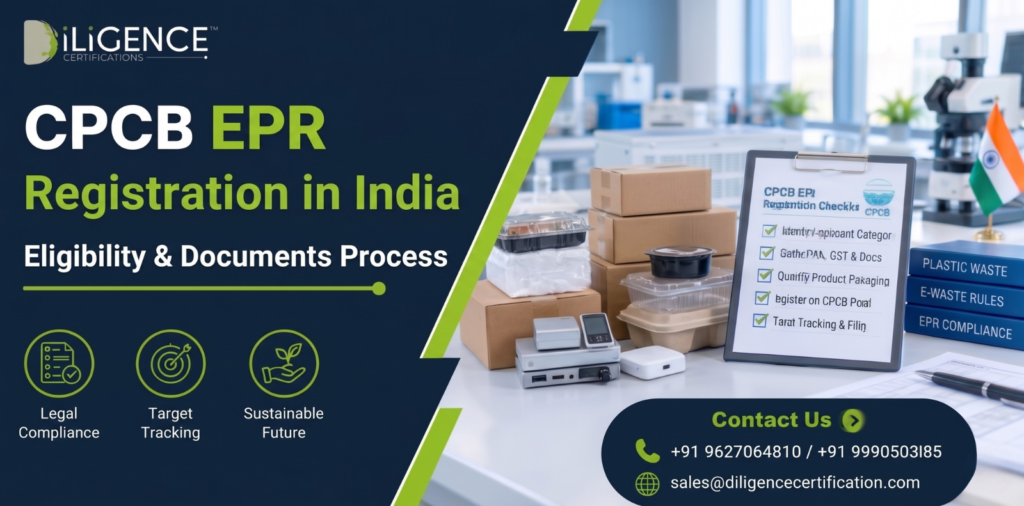
- CPCB EPR registration requirements depend on the type of waste, product, packaging and business activity.
- Producers, importers and brand owners dealing with covered plastic packaging must check their registration and compliance obligations under the applicable rules.
- Commonly relevant documents include PAN, GST details, business registration proof, authorised person details and product or packaging records.
- Businesses dealing with plastic packaging should use the current CPCB Common EPR Portal and follow the latest instructions for their applicant category.
- Registration is only the first step. Applicable EPR targets, recycling obligations, recycled-content requirements and returns may continue after approval.
Introduction
Imagine a company selling packaged snacks under its own brand. It has started getting orders from distributors and online marketplaces. The snacks are made by a third-party factory. Packed in plastic pouches with the company’s brand name on them.
At first everything seems fine.. Then a distributor asks for the company’s Extended Producer Responsibility (EPR) registration details. The owner assumes the factory must have already taken care of the rules. After looking through the documents the owner realizes the manufacturer’s registration may not cover every responsibility of the brand owner.
Now the company is unsure. Does it need to register with the Central Pollution Control Board (CPCB)? What documents are needed? Does being a small business change anything? What happens after registration?
These questions are common for manufacturers, importers, startups and brand owners.
Understanding CPCB EPR registration rules helps businesses know their responsibilities early. This prevents issues, during customer audits, product launches or regulatory checks. Being prepared saves time avoids fines and keeps the business running.
What Are CPCB EPR Registration Requirements?
CPCB EPR registration requirements set the rules that businesses must follow. These rules include the eligibility conditions the documents needed the business information that must be shared and the regulatory procedures that must be completed. All of these steps help a company register under the Extended Producer Responsibility framework. CPCB EPR registration requirements are clear and detailed.
EPR is designed to make sure that waste from covered products and packaging is handled following rules. Depending on the framework a business may need to register report how waste it produces meet the targets that are set and keep records that prove it is following the rules. CPCB EPR registration requirements guide these actions.
The requirements are not the same, for every type of waste. They change depending on the waste stream. CPCB EPR registration requirements adjust with each waste stream.
Plastic packaging. I see that if a business is a producer, importer or brand owner it may need to register and meet EPR rules for packaging. I also note that eligible plastic waste processors can have their registration and reporting duties.
Electronic waste.
I notice that producers under the E‑Waste (Management) Rules, 2022 must look at the registration and EPR rules that apply to the electronic equipment they sell in India.
Battery waste.
I understand that the Battery Waste Management Rules, 2022 set a system for covered batteries and for the businesses that handle them. I also know that plastic packaging registration does not replace battery EPR rules.
Used oil and waste tyres.
I realize that separate EPR systems exist for the companies that handle used oil and waste tyres. I recommend checking each company’s eligibility, portal steps and reporting duties on its own.
A business that deals with product types may need to review more than one set of rules. For example an importer of appliances might also bring plastic packaging to India. The business should look at both rules of assuming one registration covers everything.
The safest approach is to identify the waste type that applies to the business and then check the official rules, for that applicant category.
Who Needs CPCB EPR Registration in India?
The answer depends on what the business manufactures, imports, sells or processes. For packaging the Plastic Waste Management Rules, 2016 and any later changes and related guidelines are important to look at.
1. Producers
A producer may be included in the EPR framework if its business activities match the definition. Depending on the situation this can mean making packaging or making products that use plastic packaging.
For example a company that makes plastic bottles should look at the duties that apply to its work. A company that sells products in packaging should also check if it is in another group that is covered.
The name of the business does not say what legal group it is in. The real work and the definitions in the rules are what count.
2. Importers
Importers should check their duties before bringing items or packaging into India.
Imagine a business that brings cosmetics in bottles. The company that makes the product may have papers from its own country but those papers do not automatically meet the EPR duties of the Indian importer.
The importer should look at the product the packaging how much is being brought in and the rules in India before putting the items for sale.
3. Brand owners
A brand owner might sell products made by another company. This is often the case with packaged food, cosmetics, personal care items and household products.
For example a new company might sell cleaning products under its name. A factory makes the bottles. Finishes the products while the new company handles the brand and sales.
The new company should check its duties based on the rules. Not think that the factory’s registration covers everyone.
4. Plastic raw-material stakeholders
Manufacturers and importers of raw materials and other related people should check the instructions from the CPCB and any changes to see if they need to register or have other duties.
Businesses should not just use a list when their work includes making, bringing in or selling plastic raw materials.
5. Plastic waste processors
Businesses that handle waste may be allowed to process it if they are doing things like recycling turning waste into energy making oil from waste or composting. This is all based on the rules and conditions.
Their registration duties are different from those of brand owners and importers. If needed they should also know the rules for reporting waste and giving out EPR certificates.
Does a small business need CPCB EPR registration?
A small business should not think it is automatically not required to register just because its sales, number of workers or production is small.
Some rules may apply to kinds of small businesses. What applies depends on the rules and any changes.
A business should check what group it is in and what rules apply before deciding if registration is needed. If it is not clear getting help, from a professional can stop mistakes and missed duties.
Documents Required for CPCB EPR Registration
The documents required for CPCB EPR registration vary according to the waste stream and applicant category. The following records are commonly relevant during preparation, but the current official checklist determines what must actually be submitted.
Business identity documents
Businesses may need to prepare:
- PAN details of the business.
- GST registration details, where applicable.
- Certificate of incorporation or other proof of business constitution.
- Registered business address and contact information.
- Details of the authorised person responsible for the application.
- Importer Exporter Code (IEC), where applicable.
- Existing registration details, where the business is already registered.
Not every document applies to every applicant. The requirements shown for the relevant category should be followed.
Product and packaging information
For packaging it is helpful to gather product details before beginning the process. Depending on what’s needed this can involve product names, brand information, packaging material, type of packaging and the amounts that are put on the Indian market.
Companies might also need production, buying, importing or selling documents to back up the information they provide.
For example a company that sells shampoo in bottles should keep information that helps it know how much packaging is put on the market. Details, about the product, supplier information, bills and sales records can help the company get and check its numbers.
Why must business details be consistent?
Imagine that the legal name, on a companys PAN does not match the name written in the application. The GST certificate may show a trade name and the registered address may have changed recently. These differences can cause the government office to ask for clarification or make verification harder. Before sending an application I suggest checking the name the address, the authorised person and all supporting documents. If a difference is real and correct then prepare the evidence. Write a clear explanation.
Keep supporting records organised
Do not wait until the project is almost done to collect the information. Ask the teams that are involved for their records at a stage.
The accounts team might have invoices and import documents while the purchase team could have packaging specifications. The production or operations team might keep track of quantity information.
Putting these records together can help avoid errors and make reporting much easier.
Plastic Packaging Categories Under EPR
Correct classification is important because the applicable category affects the obligations and calculations that may apply to a business.
Category I: Rigid plastic packaging
Rigid plastic packaging generally includes bottles, jars and containers. Only if they fit the definitions in the rules that apply.
If a business sells beverages, cosmetics or household products, in plastic containers that business should examine the packaging material and the correct classification before it reports the amounts.
Category II: Flexible plastic packaging
Flexible plastic packaging can consist of films, wrappers, pouches and bags that are considered eligible.
Packaged food, snacks and personal care products usually use packaging. Still the final classification must rely on the packaging structure and the regulatory definitions not on the product’s label.
Category III: Multilayered plastic packaging
Some multilayered plastic packaging contains layers of material. That structure often mixes plastic with materials to give protection, strength or barrier properties.
Businesses that use packaging should look at the material composition and the applicable category definitions before they report it. Multilayered plastic packaging demands review of those definitions.
Category IV: plastic packaging
Compostable plastic packaging is covered in this category when it meets the rules that apply.
A product should not be called compostable simply because its supplier calls it friendly. Businesses must check the paperwork and the regulatory conditions before they make that call.
These examples are general guidance. The legal definitions that apply and the current CPCB instructions must be used when a business classifies packaging for a case.
How to Apply for CPCB EPR Registration Online
The registration process changes with the waste stream and with the category. If the business works with packaging the business must use the current CPCB Common EPR Portal and follow the portal’s latest instructions.
Step 1: Identify the applicant category
The business should first look at its main activity. The business must decide if the business is a producer, importer, brand owner, raw‑material stakeholder or plastic waste processor. The business should not pick a category just because it looks similar to what the business does. The business must first check the definition and instructions that apply.
Step 2: Prepare the required documents
The business must gather identity papers details of the person and records that show the product or packaging. The business must check that all information is correct and matches. If the business has swapped its address, legal name or ownership the business must confirm whether extra documents are needed.
Step 3: Visit the official portal
For plastic packaging the business must go to the CPCB Common EPR Portal: https://epr.cpcb.gov.in/. The business must use the official registration or account‑access instructions that belong to the applicant category. The portal may change options and steps so the business must follow the guidance that appears on the portal now.
Step 4: Enter the application information
The business must fill in all required details and give information about the products, packaging or waste stream. The business must upload the documents that the portal asks for. The business should look over the information again before sending it. Wrong amounts, mismatched company details or wrong classification can cause trouble later.
Step 5: Submit and keep the application record
After the business checks everything the business must submit the application following the process. The business must keep the reference number and a copy of each document that was sent. Submitting the application does not mean the business is approved. The business must wait for a status or a letter, from the authority.
Step 6: Respond to clarification requests
If the authority asks for information the business must read the question carefully and give a clear answer with the right records. The business must keep a copy of the answer and any added documents. This keeps a log of the application and helps the business track any pending issues.
Important 2026 Update: CPCB Plastic EPR Portal Transition
Businesses should pay particular attention to the transition from the former dedicated plastic packaging EPR portal to the Common EPR Portal.
According to CPCB’s transition instructions, the former dedicated portal was discontinued for new activities from 28 June 2026. Businesses should use the Common EPR Portal for applicable new activities and follow the latest official instructions for accessing existing registration information.
Businesses with an existing plastic EPR registration should take the following steps:
- Access the current Common EPR Portal.
- Follow the prescribed account-linking or access process.
- Check the migrated registration information and business details.
- Identify discrepancies and use the official process to report them.
- Review pending reporting, target fulfilment and other compliance responsibilities.
Do not create a duplicate application simply because the portal has changed. First check the status of the existing registration and the official transition instructions.
The portal transition does not mean that all other waste streams use identical procedures. Battery waste, electronic waste and other regulated categories should be managed according to their own current official requirements.
What Are the Compliance Requirements After Registration?
Registration is one part of EPR compliance. Depending on the rules that apply a business may still have duties. Those duties can include setting targets keeping records reporting and managing waste.
Meet the EPR targets.
Entities that must comply should look at the targets that apply to their category and to the year that is relevant.
For packaging the obligations that apply may include recycling targets and other set requirements. A business should not use the percentage for all packaging categories. The rules and the way you calculate can be different.
Check requirements.
Some plastic packaging must meet set rules. A business should verify the category that applies the year, the target, the calculation method and any exceptions that may be relevant.
For example a brand that buys containers from a supplier should ask for reliable information about the packaging’s composition and recycled content if that matters. The supplier’s statements should be backed up by records when it is needed for compliance.
Maintain records.
Keep the records that are needed to back up the production, import, sales, packaging amounts and EPR fulfilment that you report. The exact rules for what you must keep depend on the rules that apply.
A practical approach is to check the records from time, to time of waiting until the return deadline is close.
File returns.
A business should keep a calendar that shows the reporting deadlines that apply to its category. Plastic packaging, battery waste and electronic waste can have reporting rules.
Check the official instructions, instead of trusting a deadline that came from an old article or a different waste stream.
Work with waste processors when required.
If the framework that applies needs registered processors or EPR certificates a business should verify the registration and the supporting documents.
A business should check that the quantities, certificates and records match the obligation that applies. A certificate should not automatically meet every EPR requirement.
Common Mistakes to Avoid During CPCB EPR Registration
Many application problems can be prevented by checking the information before submission.
Choosing the wrong category
Selecting an incorrect category may result in an unsuitable application or additional clarification. Review the legal definitions and the company’s actual activities before applying.
Using inconsistent company details
Differences in names, addresses or authorised person information can cause difficulties. Compare the application with the original business documents.
Reporting unsupported packaging quantities
Packaging figures should be based on reliable business records. Avoid using rough estimates when documented production, import, purchase or sales information is available.
Assuming the manufacturer covers the brand owner
Contract manufacturing does not automatically settle the legal responsibilities of every party. Each business should assess its position under the applicable rules.
Following outdated portal instructions
Older guides may refer to previous portal arrangements. For plastic packaging, check the current Common EPR Portal and CPCB’s latest instructions.
Ignoring compliance after approval
Registration does not necessarily complete the business’s obligations. Maintain a schedule for applicable targets, reporting, records and other requirements.
Depending on guaranteed approval claims
A consultant can assist with preparing information and navigating the application process, but cannot guarantee a regulatory decision. Verify the scope of work before engaging a service provider.
How Long Does CPCB EPR Registration Take?
There is no processing period that should be assumed for every EPR application.
The time required can depend on the category on the completeness of the documents on the portal procedure on the quality of the submitted information and on any clarification requests.
I have seen many businesses face delays.
Businesses should prepare documents early. Should not rely on unsupported promises of approval, within a fixed number of days.
Businesses should check the official instructions and should allow time to correct any discrepancies.
What Happens If a Business Does Not Comply?
Failure to meet the rules for registration, reporting or EPR can put a business in trouble with the laws.
Depending on the rules that’re in place and the situation there could be instructions from the authority in charge or the business might have to pay for environmental damage if it is required by law. There could also be actions taken under the laws that control this.
The results are not the same for every type of waste or every mistake. Companies need to look at the rules that apply to their work instead of depending on general information, about punishments.
The best way is to check the rules keep all the papers that support the work and fix any missing parts before they turn into big problems with following the rules.
Why Choose Diligence Certifications for CPCB EPR Registration Requirements?
Choosing a compliance consultant should start with how good the guidance’s not with promises of sure approval.
Businesses that work with packaging might need help figuring out which applicant category they fall into. They may also need help putting together company documents checking packaging details and understanding what comes after registration.
Diligence Certifications helps businesses learn about certification and regulatory compliance. Before hiring a service provider make sure you know exactly what help they offer how much government fees will cost, what you can expect to get from them and who will answer any questions from regulators.
If you need help with the application check out the CPCB EPR Registration Service.
A good consultant should explain everything in easy-to-understand words. They should point out any info and help your business understand its responsibilities. Remember, the final approval is always up, to the government authority. The business must keep following all the rules that apply to it no matter what.
Conclusion
Understanding CPCB EPR registration is a first step for any business that makes imports or sells products that are covered by India’s waste‑management rules. Begin by finding the applicant category and checking the legal rules that apply.
Gather business paperwork, line up product details and packaging data use the latest official portal and keep track of the duties that follow after CPCB EPR registration.
For packaging the 2026 portal change means you must read the newest instructions instead of older registration guides. Those who already have CPCB EPR registration should double‑check their login and the information that is, on file.
If you do not know whether CPCB EPR registration is needed for your business look over your products, packaging, imports and daily work before you start the application. Picking the category from the start can make CPCB EPR registration smoother.
If CPCB EPR registration feels confusing think about getting help from an expert who can confirm your category collect the documents and plan the next steps.
Frequently Asked Questions
1. What are the CPCB EPR registration requirements?
CPCB EPR registration requirements include the applicable eligibility conditions, business details, supporting documents and registration procedures. The exact requirements depend on the waste stream and applicant category.
2. Who needs CPCB EPR registration?
Covered producers, importers, brand owners and other designated stakeholders may need registration under the applicable r
3. What documents are required for CPCB EPR registration?
Commonly relevant documents include PAN, GST details, business registration proof, authorised person details and product, packaging, production or import records. The official checklist determines which documents must be submitted.
4. Is CPCB EPR registration mandatory for small businesses?
Some small businesses may fall within a category that requires registration, while specific provisions may affect other cases. Businesses should check the current rules and any applicable exemptions instead of assuming that small size automatically removes the obligation.
5. Can an online seller or e-commerce brand need EPR registration?
Yes, a business may need registration if its actual activities fall within a covered category. For example, selling products under its own brand in covered plastic packaging may require an assessment of brand-owner responsibilities.
6. Is the old CPCB plastic EPR portal still used for new applications?
The former dedicated plastic packaging portal was discontinued for new activities from 28 June 2026. Businesses should use the CPCB Common EPR Portal and follow the current instructions for their category.
7. Is plastic EPR registration the same as battery EPR registration?
No. Plastic packaging and battery waste are governed by separate regulatory frameworks. Businesses should identify the correct waste stream and follow the corresponding official requirements.