BIS Certification
 CDSCO
 PESO
 CPCB
 LMPC
 WPC Approval
 Global Approvals
 TEC
 ARAI
 BEE
 ISO Certification
 DGCA Certification
 NOC For Steel
 APEDA Registration























 Business Registration
 FSSAI Mark Certification












 (32).jpg)
 Legal Services
 Trademark Registration
 Copyright Registration
 Patent Registration
 By
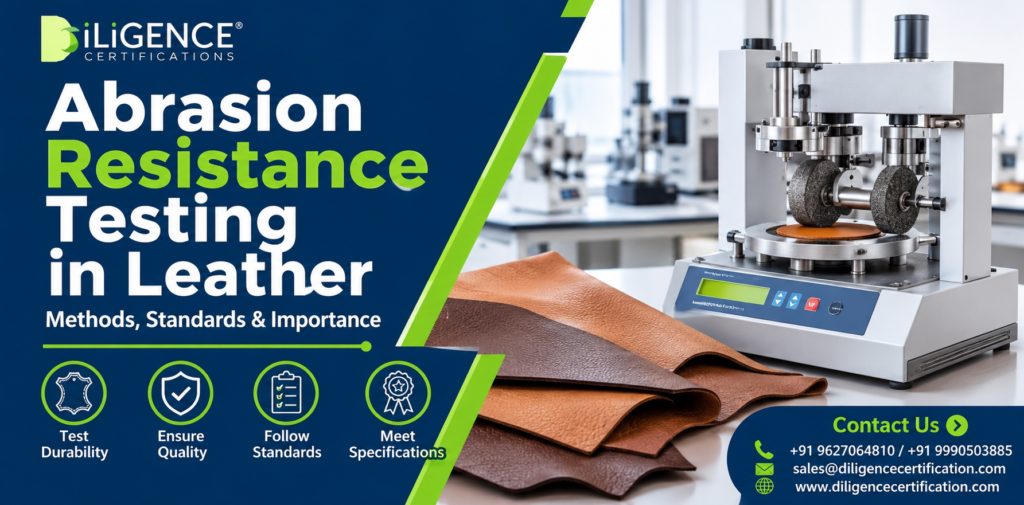
- Abrasion resistance testing in leather evaluates how well leather withstands repeated rubbing and friction.
- It helps manufacturers identify surface wear, colour changes, scratches and coating damage.
- Taber and Martindale are commonly used abrasion testing methods.
- Leather used in footwear, furniture, automotive interiors and bags requires suitable abrasion performance.
- Sample preparation, testing pressure and rubbing cycles can affect test results.
- Testing helps improve product quality and reduce customer complaints.
Introduction
Leather is widely used in footwear, handbags, furniture, automotive interiors, jackets, belts and many other products. These products experience regular friction during daily use. Shoes rub against different surfaces, furniture comes into contact with clothing, and handbags experience repeated handling. Over time, this friction can damage the leather surface.
This is where abrasion resistance testing in leather becomes important.
Abrasion resistance testing evaluates how well leather can withstand repeated rubbing without showing excessive wear, surface damage, colour loss or coating deterioration. It helps manufacturers understand whether their leather products can maintain their appearance and performance during regular use.
For example, leather used in car seats must withstand repeated contact with passengers, while leather used in footwear needs to tolerate friction during walking. Both applications require suitable resistance to surface wear.
This guide explains the meaning, importance, testing methods, procedures, standards and benefits of abrasion resistance testing in leather.
What Is Abrasion Resistance Testing in Leather?
Abrasion resistance testing in leather is a laboratory method used to measure the ability of leather to resist surface wear caused by repeated friction.
During normal use, leather comes into contact with other materials. This contact gradually removes surface fibres, damages protective coatings and may change the original appearance of the material.
The test reproduces these conditions under controlled laboratory settings.
A leather sample is rubbed against an abrasive material or another specified surface using a testing machine. The machine applies a defined pressure and movement for a particular number of cycles.
After testing, the leather is examined for:
- Surface scratches and visible damage.
- Colour fading or colour changes.
- Loss of surface coating.
- Cracking or peeling.
- Fibre damage and surface deterioration.
- Changes in overall appearance.
The results help manufacturers determine whether the leather is suitable for its intended application.
Why Is Abrasion Resistance Testing Important for Leather?
Leather products are expected to maintain their quality even after repeated use. Poor abrasion resistance can reduce product life and affect customer satisfaction.
Here are some important reasons why this testing is necessary.
1. Evaluates Leather Durability
Abrasion resistance testing helps manufacturers understand how well leather can withstand repeated friction. It provides useful information about the durability of the material under specified test conditions.
2. Protects Surface Appearance
Leather is often selected for its attractive texture, colour and finish. Repeated rubbing can damage these features. Testing helps identify whether the surface maintains its original appearance.
3. Checks Coating Performance
Many leather products contain protective surface coatings. These coatings improve appearance and provide additional protection. Abrasion testing helps evaluate whether the coating remains intact during repeated rubbing.
4. Improves Footwear Quality
Leather shoes, boots and sandals experience continuous friction during walking. Abrasion resistance testing helps manufacturers evaluate the surface durability of leather used in these products.
5. Supports Automotive Applications
Automotive leather is used in car seats, steering wheel covers and interior panels. These surfaces experience regular contact and friction. Testing helps assess their resistance to wear.
6. Reduces Product Rejection
Testing leather before large-scale production helps manufacturers identify weak materials. This can reduce manufacturing defects, product returns and quality-related complaints.
Types of Leather Abrasion Testing Methods
Different testing methods are used depending on the leather type, product application and customer requirements.
1. Taber Abrasion Testing
Taber abrasion testing is a commonly used method for evaluating the resistance of leather surfaces to repeated rubbing.
In this method, a circular leather sample is placed on a rotating platform. Two abrasive wheels come into contact with the sample while applying a specified force.
As the platform rotates, the wheels create friction on the leather surface.
The laboratory examines the sample for:
- Surface wear and damage.
- Colour changes.
- Coating removal.
- Scratches and visible deterioration.
- Changes in surface appearance.
Relevant Standard: ISO 17076-1:2020 specifies the Taber method for determining the abrasion resistance of leather.
2. Martindale Abrasion Testing
Martindale abrasion testing is particularly useful for evaluating upholstery leather used in furniture and automotive interiors.
The leather sample is mounted in a testing apparatus and rubbed against a specified abrasive material using a controlled movement. The equipment produces repeated rubbing movements to simulate everyday friction.
The sample is examined at specified intervals to identify visible changes.
This method helps evaluate:
- Surface wear.
- Colour deterioration.
- Coating damage.
- Changes in leather appearance.
- Resistance to repeated contact.
Relevant Standard: ISO 17076-2:2011 covers the Martindale ball plate method for upholstery leather, including semi-aniline, pigmented and coated leather.
3. Surface Rubbing and Wear Evaluation
Surface rubbing evaluation helps manufacturers understand how leather reacts to repeated contact with another surface.
Depending on the product specification, laboratories may examine:
- Colour transfer.
- Surface polishing.
- Loss of finish.
- Visible scratches.
- Changes in texture.
This evaluation should not automatically be treated as a substitute for a standardised abrasion resistance test. The appropriate method must be selected according to the required performance characteristic.
Difference Between Taber and Martindale Abrasion Testing
Both methods evaluate abrasion resistance, but their equipment and testing arrangements are different.
| Parameter | Taber Test | Martindale Test |
|---|---|---|
| Equipment | Taber abrasion tester | Martindale tester |
| Movement | Rotating platform | Repeated rubbing movement |
| Abrasive contact | Two abrasive wheels | Specified rubbing material and ball plate |
| Main application | Leather surface wear | Upholstery leather |
| Standard | ISO 17076-1 | ISO 17076-2 |
| Evaluation | Surface damage and colour change | Appearance and surface wear |
The correct method depends on the leather application and the test specification provided by the buyer or manufacturer.
Abrasion Resistance Testing Procedure for Leather
Abrasion resistance testing follows a controlled laboratory procedure. The exact steps depend on the selected standard and testing equipment.
The general process includes the following stages.
Step 1: Sample Selection
The laboratory selects leather samples from the material or finished product that needs evaluation.
Samples should represent the actual leather being supplied or manufactured. Any unusual defects or damaged areas should be considered during sample selection.
Step 2: Sample Preparation
The leather is cut into the required dimensions according to the selected testing method.
The sample should be free from unwanted folds, contamination and preparation damage.
Step 3: Conditioning of Samples
Leather properties can change with temperature and humidity. Therefore, samples are conditioned under the atmosphere specified by the applicable standard.
Proper conditioning helps improve the consistency and reliability of test results.
ISO 2419 is an important reference for leather sample preparation and conditioning.
Step 4: Equipment Setup
The laboratory prepares the abrasion testing machine.
The operator checks:
- Abrasive wheels or rubbing materials.
- Applied load.
- Testing speed.
- Sample holder.
- Cycle counter.
- Equipment condition.
The settings must follow the selected test method.
Step 5: Conducting the Abrasion Test
The prepared leather sample is fixed inside the testing machine.
The equipment applies controlled friction to the surface for the required number of cycles or until the specified evaluation point is reached.
Step 6: Inspection of the Sample
After testing, the laboratory removes the sample and examines its condition.
The operator checks for:
- Scratches.
- Surface coating damage.
- Colour changes.
- Fibre exposure.
- Peeling or cracking.
- General wear.
Step 7: Recording Test Results
The laboratory records the observations and measurements according to the applicable test method.
The results are compared with the buyer’s specification or product acceptance criteria.
Important Factors That Affect Leather Abrasion Resistance
The abrasion resistance of leather depends on several material and manufacturing factors.
1. Type of Leather
Different leather types have different physical characteristics.
Full-grain leather, corrected-grain leather, suede and nubuck may react differently to repeated friction because their surface structures and finishes are different.
2. Surface Coating
Leather coatings provide protection against external friction. The quality, thickness and composition of the coating can influence abrasion performance.
Poor-quality coatings may peel, crack or lose their appearance during repeated rubbing.
3. Leather Thickness
Thickness can influence the overall behaviour of leather during wear. However, thicker leather does not automatically mean better abrasion resistance because surface finish and material structure also matter.
4. Tanning and Finishing Process
The tanning and finishing processes affect the physical and surface properties of leather.
Proper processing helps manufacturers produce leather with consistent performance.
5. Testing Pressure
The pressure applied during testing can influence the amount of surface damage.
For accurate comparison, the laboratory must follow the specified load and testing conditions.
6. Abrasive Material
The type and condition of abrasive material can affect test results. Different abrasive surfaces may produce different levels of friction and wear.
7. Environmental Conditions
Temperature and humidity can influence leather properties. Samples should be conditioned properly before testing.
Leather Products That Require Abrasion Resistance Testing
Abrasion resistance testing is useful for manufacturers working with different leather products.
| Leather Product | Why Testing Is Important |
|---|---|
| Leather shoes | Evaluates resistance to regular friction during walking |
| Leather bags | Checks surface durability during handling |
| Leather furniture | Evaluates wear from repeated sitting and contact |
| Automotive leather | Checks durability of seats and interior surfaces |
| Leather jackets | Helps assess surface wear during daily use |
| Leather wallets | Evaluates resistance to frequent handling |
| Leather belts | Helps assess surface deterioration during use |
Relevant ISO Standards for Abrasion Resistance Testing in Leather
Standards provide a common testing approach and help laboratories maintain consistency.
The following standards are particularly relevant:
| Standard | Description |
|---|---|
| ISO 17076-1:2020 | Determination of abrasion resistance using the Taber method |
| ISO 17076-2:2011 | Determination of abrasion resistance using the Martindale ball plate method |
| ISO 2418 | Sampling location for leather testing |
| ISO 2419 | Leather sample preparation and conditioning |
| ISO 105-A02 | Assessment of colour change using the grey scale |
Important: ISO 17076-1:2020 and ISO 17076-2:2011 cover different testing methods and applications. The appropriate standard must be selected according to the leather product, customer requirements and test purpose. Always verify the latest applicable edition and amendments before testing.
How to Interpret Abrasion Resistance Test Results
Test results help manufacturers understand the behaviour of leather under specified friction conditions.
However, there is no single universal pass or fail value for every leather product.
The acceptance criteria depend on the material, product application, buyer requirements and applicable specification.
Common Observations During Testing
1. No Significant Surface Damage
The leather maintains its appearance with little visible deterioration after the specified test cycles.
2. Minor Surface Wear
Some surface changes may appear, but the material may still meet the required acceptance criteria.
3. Coating Deterioration
The protective surface layer starts wearing away, exposing the underlying material.
4. Colour Change
The original colour becomes lighter, darker or visibly uneven because of repeated friction.
5. Severe Surface Damage
The leather shows excessive wear, cracking, peeling or fibre damage.
A laboratory report should clearly describe the method, testing conditions, number of cycles and observed results.
Common Mistakes During Leather Abrasion Resistance Testing
Incorrect testing practices can produce unreliable results. Manufacturers and laboratories should avoid the following mistakes.
1. Incorrect Sample Preparation
Samples with folds, cuts or surface defects may affect the testing outcome. Proper cutting and preparation are important.
2. Using the Wrong Testing Method
Using a method that does not match the leather application can produce results that are not suitable for the intended evaluation.
3. Ignoring Sample Conditioning
Leather can respond to environmental conditions. Skipping the required conditioning process may affect the consistency of results.
4. Using Worn Abrasive Materials
Damaged or excessively worn abrasive wheels can influence the friction applied to the sample.
5. Incorrect Testing Pressure
Applying an incorrect load may produce misleading results. The equipment should be set according to the selected standard.
6. Poor Result Documentation
A test report should include the testing method, sample details, test conditions and observations. Missing information makes it difficult to compare results.
Documents and Information Required for Leather Abrasion Testing
Before sending leather samples to a testing laboratory, manufacturers should prepare the necessary information.
Commonly required details include:
- Manufacturer or supplier name.
- Leather product description.
- Type and grade of leather.
- Sample identification details.
- Intended product application.
- Required testing standard.
- Customer or buyer specifications.
- Number of samples submitted.
- Special testing requirements, if applicable.
The laboratory may request additional information depending on the product and testing method.
How to Select the Right Leather Testing Laboratory?
Choosing an appropriate testing laboratory is important for obtaining reliable test results.
Manufacturers should consider the following points before selecting a laboratory.
1. Testing Equipment: Check whether the laboratory has suitable Taber or Martindale abrasion testing equipment.
2. Relevant Testing Experience: The laboratory should have experience with the type of leather being evaluated.
3. Standard-Based Testing: Confirm that the laboratory follows the correct version of the applicable testing standard.
4. Sample Handling: Proper sample preparation, conditioning and identification should be maintained.
5. Testing Reports: The laboratory should provide clear reports containing test methods, observations and results.
6. NABL Accreditation: If accreditation is required by the customer or regulatory authority, verify the laboratory’s NABL accreditation scope for the specific test. Accreditation for one test does not automatically cover every leather testing method.
Role of Diligence Certifications in Leather Testing and Compliance
Leather manufacturers and suppliers often need guidance on product testing, quality requirements and applicable compliance procedures.
Diligence Certifications provides certification and compliance consultancy support to businesses that need assistance understanding relevant standards and certification requirements.
For leather manufacturers, the consultancy process may involve:
- Understanding applicable product testing requirements.
- Identifying relevant testing standards.
- Providing guidance on testing documentation.
- Helping businesses understand certification procedures.
- Supporting coordination and documentation for applicable compliance requirements.
- Guiding manufacturers on quality and regulatory requirements.
It is important to understand that abrasion resistance testing must be performed by a suitably equipped testing laboratory. Diligence Certifications is a consultancy and certification support service, not a physical leather testing laboratory.
Manufacturers should obtain the required test reports from an appropriate laboratory and use them as part of their product quality or certification documentation, wherever applicable.
Benefits of Abrasion Resistance Testing for Leather Manufacturers
Regular abrasion resistance testing provides several benefits to leather manufacturers and product suppliers.
Better Product Quality
Testing helps manufacturers identify leather materials that may not provide the required surface durability.
Improved Customer Satisfaction
Products that maintain their appearance during regular use can help improve customer confidence.
Reduced Manufacturing Losses
Early identification of weak leather materials helps reduce the chances of rejected products and unnecessary production costs.
Better Supplier Evaluation
Manufacturers can compare different leather suppliers using consistent testing methods and defined acceptance criteria.
Improved Product Development
Testing results help manufacturers evaluate different coatings, finishes and leather treatments during product development.
Support for International Markets
Standardised testing can help manufacturers provide technical evidence when buyers or international customers request abrasion resistance reports.
Abrasion Resistance Testing vs Other Leather Quality Tests
Abrasion resistance is only one part of overall leather quality evaluation. Other tests are also important for understanding the material’s performance.
| Testing Type | What It Evaluates |
|---|---|
| Abrasion resistance testing | Resistance to repeated surface friction |
| Tensile strength testing | Resistance to pulling forces |
| Tear strength testing | Resistance to tearing |
| Flex resistance testing | Resistance to repeated bending |
| Colourfastness testing | Resistance to colour change or transfer |
| Water resistance testing | Behaviour when exposed to water |
| Heat resistance testing | Behaviour under specified temperature conditions |
| Stitch tear strength testing | Resistance to tearing around stitched areas |
These tests provide different information. Passing an abrasion test does not automatically mean that leather will pass other physical or chemical tests.
Conclusion
Abrasion resistance testing in leather plays an important role in evaluating the durability and surface quality of leather products. Repeated friction can cause scratches, colour fading, coating damage and surface deterioration. Proper testing helps manufacturers identify these problems before products reach the market.
Methods such as Taber and Martindale abrasion testing provide useful information about how leather performs under controlled rubbing conditions. By following the appropriate ISO standards, preparing samples correctly and evaluating test results carefully, manufacturers can improve product quality and maintain consistent performance.
For leather manufacturers, footwear companies, furniture suppliers and automotive component manufacturers, abrasion resistance testing is an important part of product quality evaluation.
Working with an appropriate testing laboratory and understanding the applicable compliance requirements can help businesses make better decisions about leather quality and product performance.
Frequently Asked Questions (FAQs)
1. What is abrasion resistance testing in leather?
Abrasion resistance testing in leather is a laboratory test that evaluates how well leather withstands repeated rubbing and friction without excessive surface wear, colour change or coating damage.
2. Why is abrasion resistance testing important for leather?
It helps manufacturers evaluate surface durability, maintain product appearance, improve quality and reduce the possibility of premature wear during regular use.
3. Which machines are used for leather abrasion testing?
The commonly used machines include the Taber abrasion tester and Martindale abrasion tester. The choice depends on the leather type, intended application and selected testing standard.
4. Which ISO standard is used for leather abrasion resistance testing?
ISO 17076-1:2020 specifies the Taber method, while ISO 17076-2:2011 specifies the Martindale ball plate method for upholstery leather.
5. Can abrasion resistance testing be performed on leather shoes?
Yes. Abrasion resistance testing can help evaluate leather used in footwear, although the test method and acceptance criteria should match the specific footwear material and application.
6. What factors affect leather abrasion resistance?
Important factors include leather type, surface coating, finishing process, thickness, abrasive material, testing pressure and sample conditioning.