BIS Certification
 CDSCO
CDSCO
 PESO
PESO
 CPCB
CPCB
 LMPC
LMPC
 WPC Approval
 Global Approvals
 TEC
TEC
 ARAI
ARAI
 BEE
BEE
 ISO Certification
 DGCA Certification
 NOC For Steel
 APEDA Registration























 Business Registration
 FSSAI Mark Certification












 (32).jpg)
 Legal Services
 Trademark Registration
 Copyright Registration
 Patent Registration
 By
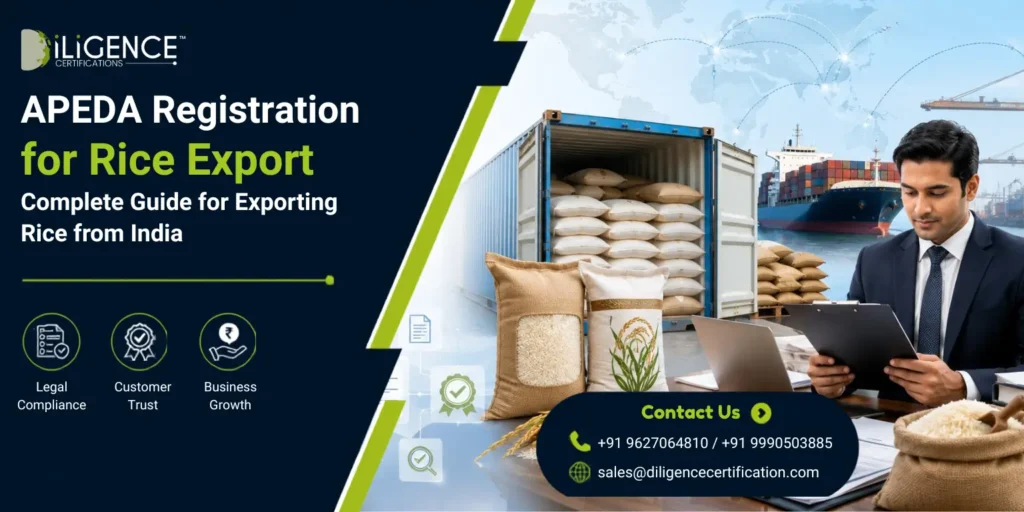
By - APEDA Registration for Rice Export and export rice from India as per the rules of export and avail export promotion benefits provided by the government.
- Learn about the eligibility criteria, documents needed, procedure, validity period, and compliance for APEDA Registration for Rice Export.
- Grow your rice export business with high credibility and international reach.
Introduction
India is a major exporter of rice in the form of both Basmati and Non-Basmati rice across the globe. With an increasing demand for Indian rice on the international market, companies should first get themselves registered according to the rules of rice export in India.
One of the important procedures that need to be undertaken by exporters is to register themselves under APEDA Registration for Rice Export. APEDA takes care of the export of agricultural products that are scheduled by them and enables the exporters to avail the benefits of various export schemes of the government.
APEDA Registration is important for all manufacturers, merchants, processors, MSMEs, and startups.
What is APEDA Registration for Rice Export?
APEDA Registration for Rice Export is a registration granted to companies involved in the export of rice from India. APEDA Agricultural and Processed Food Products Export Development Authority is the government body responsible for promoting the export of scheduled agricultural and processed food products. As rice is a scheduled item under APEDA, exporters usually need this registration to facilitate exports in compliance with the relevant guidelines.
The functions performed by APEDA Registration include:
- Rice Export Registration
- Export Promotion
- Development of Product Quality
- Market Development
- Brand Promotion
- Packaging Improvement
- Export Documentation
- International Standards Compliance
Getting APEDA Registration enables rice exporters to enhance their credibility and develop their business internationally.
Applications of APEDA Registration for Rice Export
APEDA Registration is suitable for businesses involved in exporting different varieties of rice from India.
It is generally applicable to:
- Basmati Rice Exporters
- Non-Basmati Rice Exporters
- Organic Rice Exporters
- Rice Processing Companies
- Rice Manufacturers
- Merchant Exporters
- Agricultural Exporters
- Export Houses
- MSMEs
- Startups
- Farmer Producer Organizations (FPOs)
The registration supports exporters in expanding their international presence while ensuring regulatory compliance.
Who Needs APEDA Registration for Rice Export?
APEDA Registration is generally required for businesses exporting rice covered under the APEDA Schedule.
It is suitable for:
- Rice Export Companies
- Rice Manufacturers
- Rice Processing Units
- Merchant Exporters
- Agricultural Exporters
- Organic Rice Exporters
- Food Processing Companies
- Export Houses
- MSMEs
- Startups
- Farmer Producer Organizations (FPOs)
The registration helps businesses strengthen export credibility, participate in export promotion programs, and access international markets.
Types of Compliance Under APEDA Registration for Rice Export
The compliance requirements depend on the nature of the business and export activities. Proper compliance helps businesses conduct exports smoothly while meeting international standards.
Export Registration Compliance
Businesses exporting rice should obtain APEDA Registration and maintain accurate registration details.
The registration generally includes:
- Business Registration
- Import Export Code (IEC)
- PAN Details
- GST Registration
- Bank Details
- Rice Export Product Information
Useful for:
- Rice Manufacturers
- Merchant Exporters
- Rice Processing Units
- Agricultural Exporters
- MSMEs
- Startups
Proper registration helps businesses legally export rice and access APEDA export promotion benefits.
Product Quality Compliance
Exporters should maintain product quality by following applicable food safety, packaging, and labeling standards.
Product quality compliance generally includes:
- Quality Control
- Product Testing
- Proper Packaging
- Labeling
- Food Safety Standards
Useful for:
- Basmati Rice Exporters
- Non-Basmati Rice Exporters
- Organic Rice Exporters
- Rice Processing Companies
- Food Export Businesses
Maintaining quality standards improves buyer confidence and supports successful exports.
Export Documentation Compliance
Proper documentation is essential for smooth export operations.
Export documentation generally includes:
- Registration Records
- Export Invoices
- Shipping Documents
- Product Details
- Quality Certificates
- Export Records
Maintaining accurate documentation helps businesses complete export procedures efficiently and remain compliant with APEDA requirements.
Documents Required for APEDA Registration for Rice Export
The documents required for APEDA Registration for Rice Export may vary depending on the nature of the business and export activities. Submitting complete and accurate documents helps ensure smooth registration while minimizing the chances of delays.
Generally, the required documents include:
- Import Export Code (IEC)
- PAN Card of the Business
- GST Registration Certificate (if applicable)
- Business Registration Certificate
- Address Proof of Business
- Bank Certificate or Cancelled Cheque
- Digital Signature (if applicable)
- Email ID & Mobile Number
- Details of Rice Export Products
- Authorized Signatory Details
- Other documents required by APEDA
Maintaining updated documents helps exporters complete the registration process efficiently and comply with APEDA requirements.
Step-by-Step Process for APEDA Registration for Rice Export
The process of online registration for APEDA Registration for Rice Export becomes easy as long as you have your documents in order and the required details of your business.
Step 1 : Check for Eligibility
The first step is to check whether your business is involved in the export of rice, which falls within the purview of APEDA schedule.
Your business needs to have a valid Import Export Code (IEC) to apply for this registration.
Step 2: Gather Required Documents
After the above checks, the candidate needs to collect all documents that are required for the application.
Documents include:
- IEC Certificate
- PAN Card
- GST Certificate (if any)
- Bank Details
- Business Registration Documents
- Details of Rice Export Products
Step 3: Submit the Online Application
The applicant is supposed to complete the online application process with details of the business, export details, and submission of required documents using the APEDA online portal.
Step 4: Application Verification
APEDA will verify the submitted application and supporting documents of the exporter.
This verification will generally include:
- Details of the Business
- IEC Details
- Product Category
- Supporting Documents
- Application Details
In case of any queries, APEDA will require more information from the applicant.
Step 5: APEDA Registration
Once the application has been verified, APEDA will issue the Registration-Cum-Membership Certificate (RCMC) to the business, proving that the business is duly registered for exporting rice as per APEDA norms.
Step 6: Maintain Compliance
Once the registration process is completed, the exporters should keep updating the business details and maintain compliance with relevant APEDA guidelines.
Timeline, Cost & Validity of APEDA Registration for Rice Export
The timeline, cost, and validity of APEDA Registration for Rice Export depend on document readiness, verification, and applicable registration requirements.
| Timeline | Cost | Validity |
| The registration timeline depends on document verification and application processing. | The cost depends on the applicable government fee and professional service charges, if any. | APEDA Registration generally remains valid as per the prevailing APEDA registration guidelines. |
| Proper documentation helps reduce processing delays. | Additional charges may vary depending on business requirements. | Exporters should comply with applicable renewal or update requirements whenever necessary. |
| Processing time may vary based on the completeness of the application. | Proper planning helps manage the registration cost efficiently. | Maintaining updated business information helps ensure continued compliance. |
Why is APEDA Registration for Rice Export Important?
APEDA Registration is significant in assisting Indian rice exporters in building a presence in the international market environment, while meeting export requirements. The registration is an official recognition of the exporters that allows them to gain access to government export promotion programs.
Importance of APEDA Registration can be described through the following aspects:
- Export Recognition
- International Market Access
- Government Export Promotion Assistance
- Improvement of Product Quality
- Development of Brand
APEDA Registration creates a solid base for business intending to develop rice exports.
Consequences of Non-Compliance with APEDA Registration Requirements
Business organizations involved in exporting rice without ensuring APEDA compliance might be faced with a number of difficulties.
They could be:
- Inability to get assistance from APEDA export promotion schemes
- Inability to obtain government help
- Poor business credibility
- Lack of international market presence
- Inability to attend trade shows and export development activities
- Delay in export activities
- Lost business opportunities
- Low customer trust
- Market competitiveness
Proper APEDA compliance allows exporters to conduct their business activities easily while gaining a better standing in international business.
Renewal of APEDA Registration for Rice Export
In order to continue reaping the advantages of APEDA Registration, exporters must ensure that the registration details are kept up-to-date in accordance with the APEDA guidelines.
Whenever there is any change in business details, contact details, banking details, or export products details, the same must be updated on the APEDA website.
Updating registration details will help the exporters continue receiving the export promotion schemes and government assistance and participate in international trade without any hindrances.
The steps involved in the renewal of updating are as follows:
- Updating Business Details
- Verification of Registration Details
- Updating Rice Export Product Details
- Submission of Required Documents (if any)
- APEDA Guidelines Compliance
How Professional Assistance Helps in APEDA Registration for Rice Export
Process of getting APEDA Registration for Rice Export includes documentation, submitting an online application and complying with the regulations of APEDA. Minor mistakes can cause delays in the process of registration.
Professional help enables companies to get their registration completed without any documentation mistake and complying with the rules and regulations.
Professional services generally assist businesses with:
- Understanding APEDA Registration Requirements
- Preparing and Reviewing Documents
- Filing the Online Application
- Resolving Documentation Queries
- Ensuring Compliance with APEDA Guidelines
Professional support generally includes:
- Eligibility Assessment
- Documentation Assistance
- Online Application Filing
- Compliance Guidance
- Application Tracking
- Query Resolution
- Registration Support
- Post-Registration Assistance
With professional guidance, rice exporters can complete the registration process efficiently while minimizing delays and compliance-related issues.
Why Choose Diligence Certifications for APEDA Registration for Rice Export?
APEDA Registration for Rice Export can be achieved with the help of proper documentation, proper filling up of applications, and adherence to the conditions laid down by APEDA.
The experts at Diligence Certifications assist businesses in achieving the same without any hassles or complications.
Some of the features of choosing Diligence Certifications for APEDA registration include:
- Full-fledged assistance in documentation for APEDA Registration
- Assistance in filling up the online application form
- Professional guidance on compliance
- Quick solution to application related queries
- Complete assistance for the entire registration process
- Assistance after APEDA registration
With the expertise of professional experts, Diligence Certifications helps business in obtaining APEDA Registration hassle free.
Conclusion
APEDA Registration for Rice Export is an important step for organizations that want to export rice from India. It allows exporters to adhere to relevant laws, increase credibility, and avail themselves of many government schemes for export promotion.
No matter whether you are a rice manufacturer, merchant exporter, food processor, MSME, start-up, or Farmer Producer Organization, APEDA Registration gives you a competitive edge in the international market.
With proper documentation and adherence to APEDA norms, your organization will be able to grow internationally as well as conduct its rice export business without any problem.
Frequently Asked Questions
What is APEDA Registration for Rice Export?
It is a form of registration granted to the companies exporting rice from India. It helps exporters to fulfill the regulatory requirements of APEDA and take benefits from the promotion of their exports.
Who can apply for APEDA Registration for Rice Export?
The common applicants for APEDA Registration for Rice Export include manufacturers of rice, merchant exporters, rice processors, agricultural exporters, MSMEs, start-ups, export houses, and Farmer Producer Organizations.
Is APEDA Registration mandatory for Rice Export?
The companies exporting rice falling under the category of APEDA Schedule generally need to obtain APEDA Registration.
What are the required documents for APEDA Registration for Rice Export?
Documents like Import Export Code (IEC), PAN Card, GST Registration, if any, business registration papers, bank account details, address proof, and details of rice export products are some of the commonly required documents.
What is the time period for obtaining APEDA Registration?
The time period depends on verification of the documents and completion of the process of online application.
What is the validity of APEDA Registration?
The validity depends mostly on APEDA registration norms prevailing at that time. Exporters have to ensure that their registration is up-to-date always when necessary.
Are MSMEs and start-ups eligible for APEDA Registration?
Yes. The MSMEs and start-ups along with other exporters like merchant exporters, manufacturers, etc. involved in rice export are eligible.
What are the advantages of APEDA Registration for Rice Export?
The advantages include increase in credibility in exports, access to the international market, eligibility for export promotion schemes, etc.
Is APEDA Registration helpful in international trade?
Yes. The APEDA Registration helps in increasing buyer confidence and improving export credibility.
What role do professional consultants play in the process of APEDA Registration?
Professional consultants simplify the APEDA Registration process by verifying documents, ensuring compliance, preparing and submitting the application, resolving queries, and helping exporters obtain registration quickly with minimal errors.