



 BIS Certification
 CDSCO
CDSCO
 CPCB
CPCB
 LMPC
LMPC
 WPC Approval
 Global Approvals
 TEC
TEC
 ARAI
ARAI
 BEE
BEE
 ISO Certification
 DGCA Certification
 NOC For Steel
 APEDA Registration
















 Business Registration
 FSSAI Mark Certification












 Legal Services
 Trademark Registration
 Copyright Registration
 Patent Registration
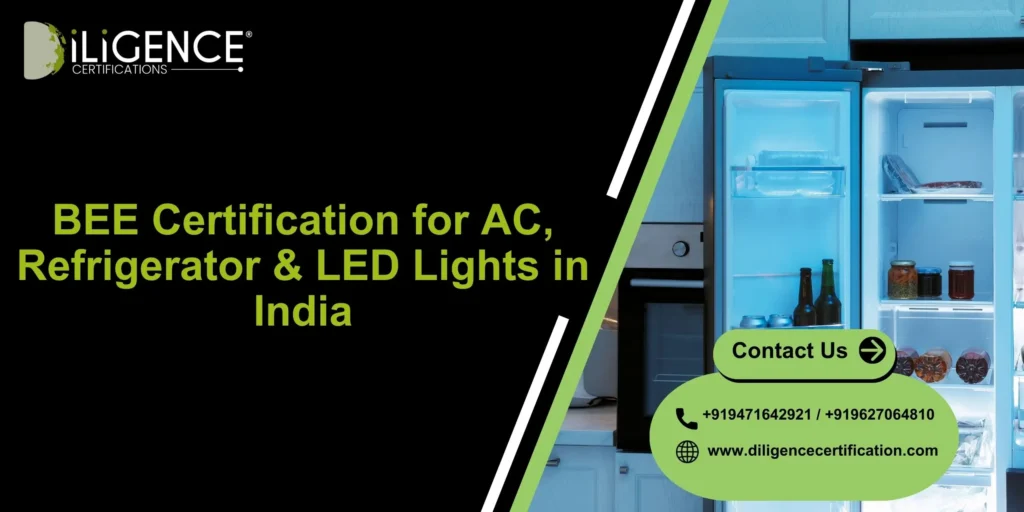
- BEE certification for appliances is mandatory for many electrical appliances in India, including air conditioners, refrigerators, and LED lights under the energy efficiency labeling program.
- The Bureau of Energy Efficiency (BEE) provides a Star Rating Label (1 to 5 stars) to indicate how energy-efficient a product is.
- Manufacturers and importers must register their products on the BEE portal and get them tested in NABL-accredited laboratories before selling in India.
- Appliances with higher star ratings consume less electricity, helping consumers reduce power bills and protect the environment.
- Proper documentation, product testing, and compliance with BEE guidelines are essential to obtain the certification successfully.
Introduction | BEE certification for appliances
BEE certification for appliances Energy effectiveness has come a major concern in India as electricity demand continues to grow fleetly. Household appliances similar as air conditioners, refrigerators, and LED lights consume a significant quantum of electricity in homes and marketable structures. To insure that these appliances meet energy effectiveness norms, the Government of India introduced the BEE Star Labeling Program.
The Bureau of Energy Efficiency (BEE), under the Ministry of Power, regulates this program and provides star ratings to appliances based on their energy consumption. The aim is to encourage manufacturers to produce energy-efficient products and help consumers make informed purchasing decisions.
BEE certification is especially important for manufacturers, importers, and merchandisers of ACs, refrigerators, and LED lights, as these products must misbehave with energy effectiveness norms before being vended in the Indian request.
In this blog, we will explain everything you need to know about BEE Certification for ACs, refrigerators, and LED lights in India, including the process, conditions, benefits, and challenges.
What is BEE certification for appliances?
BEE certification for appliances is an energy effectiveness instrument issued by the Bureau of Energy Efficiency for electrical appliances. The instrument allows manufacturers to display a BEE Star Marker on their products, indicating their energy effectiveness position.
BEE certification for appliances star rating ranges from 1 star to 5 stars:
- 1 Star – Lowest energy efficiency
- 2 Stars – Basic efficiency
- 3 Stars – Moderate efficiency
- 4 Stars – High efficiency
- 5 Stars – Highest energy efficiency
BEE certification for appliances with advanced star conditions consume lower electricity while furnishing the same performance. This helps consumers save energy and reduce electricity bills.
For appliances like air conditioners, refrigerators, and LED lights, BEE Certification may fall under obligatory labeling, meaning that the products can not be vended in India without a valid BEE enrollment . BEE certification for appliances ensures that products meet the minimal energy performance norms( MEPS) set by BEE.
Why BEE certification for appliances is Required
BEE certification for appliances is required to promote energy conservation and ensure that electrical appliances meet national energy efficiency standards.
Below are some key reasons why BEE certification for appliances is important.
1. Promote Energy Efficiency The main thing of BEE Certification is to reduce electricity consumption by encouraging manufacturers to design energy-effective appliances.
2. Consumer mindfulness The star labeling system helps consumers fluently compare products grounded on their energy effectiveness.
3. Government Compliance Manufacturers and importers must misbehave with BEE regulations before dealing appliances in India.
4. Environmental Protection Energy-effective appliances reduce electricity operation, which helps lower carbon emigrations and supports environmental sustainability.
5. Request Competitiveness Products with advanced star conditions are more seductive to consumers and have better request demand.
Importance and Benefits of BEE Certification
| Importance | Benefits |
| Ensures compliance with government regulations | Avoids legal penalties and market restrictions |
| Encourages production of energy-efficient appliances | Reduces electricity consumption |
| Builds consumer trust and credibility | Customers prefer certified products |
| Helps differentiate products in the market | Higher star ratings increase product value |
| Supports environmental sustainability | Reduces carbon footprint and energy waste |
| Improves brand reputation | Strengthens brand recognition in the market |
Process to Get BEE Certification for AC, Refrigerator & LED Lights
Step 1: Product Testing
The first step is to test the product in a BEE-approved or NABL-accredited laboratory. The testing determines the energy efficiency level of the appliance.
The test report is an essential document required for BEE registration.
Step 2: Company Registration on BEE Portal
Manufacturers or importers must register their company on the BEE online portal.
This registration includes submitting company details, business licenses, and authorized signatory information.
Step 3: Product Registration
After company registration, the applicant must apply for product registration by submitting product specifications and technical details.
Step 4: Submission of Documents
Applicants must submit the required documents such as:
- Test reports from accredited laboratories
- Product specifications
- Brand authorization letter (if applicable)
- Business registration documents
- Trademark certificate (if available)
Step 5: Fee Payment
Applicants must pay the applicable BEE registration and labeling fees.
The fee structure may vary depending on the product category and star rating.
Step 6: Review and Approval
BEE reviews the application and verifies the submitted documents and test results.
If everything meets the required standards, BEE grants approval and allows the manufacturer to use the BEE Star Label on the product.
Step 7: Labeling and Market Launch
Once approved, the manufacturer can place the BEE energy label on the product and sell it in the Indian market.
Challenges of Getting BEE Certification Without a Consultant
BEE certification for appliances may appear straightforward, but the process can be complicated for businesses that are not familiar with regulatory procedures.
1. Complex Documentation numerous businesses struggle with preparing the correct documents needed for BEE enrollment .
2. Technical Testing Conditions Product testing must meet specific norms, and opting the right testing laboratory can be grueling.
3. Portal Registration Issues The BEE portal enrollment process may involve multiple way and specialized details that can confuse aspirants.
4. Regulatory Compliance Understanding the applicable norms for ACs, refrigerators, and LED lights requires nonsupervisory knowledge.
5. Operation Rejections Incorrect Documentation or test reports can lead to operation rejection or detainments.
Due to these challenges, numerous businesses prefer to work with professional advisers who have moxie in instrument processes.
Why Choose Diligence Certification for BEE Certification
BEE certification for appliances can be time-consuming without proper guidance. Diligence Certification provides expert assistance to help businesses obtain certification smoothly.
1. Expert Consultation Our platoon has expansive experience in handling BEE Certification for electrical appliances.
2. End- to- End Support We give complete support from Documentation to final blessing.
3. Faster instrument Process Our experts ensure that the operation process is completed efficiently, reducing detainments.
4. Documentation backing We help prepare and corroborate all needed documents to insure compliance with BEE regulations.
5. Regulatory Expertise Our platoon stays streamlined with the rearmost BEE guidelines and nonsupervisory changes.
6. Affordable Services We offer cost-effective instrument services for manufacturers and importers.
With professional support from Diligence Certification, businesses can gain BEE Certification without gratuitous complications.
Conclusion
BEE certification plays a vital part in perfecting energy effectiveness in India. Appliances like air conditioners, refrigerators, and LED lights consume a significant quantum of electricity, making it essential to regulate their energy performance.
The BEE Star Labeling Program ensures that these appliances meet energy effectiveness norms and helps consumers choose products that consume lower electricity. For manufacturers and importers, carrying BEE Certification is n’t only a nonsupervisory demand but also a strategic advantage. Products with advanced star conditions are more seductive to consumers and can ameliorate brand character. the instrument process involves several way, including product testing, Documentation, enrollment , and blessing, which can be challenging without proper guidance.
By working with educated advisers like Diligence Certification, businesses can simplify the process and insure compliance with all nonsupervisory conditions. BEE Certification eventually benefits manufacturers, consumers, and the terrain by promoting energy effectiveness and sustainable development.
Frequently Asked Questions (FAQs)
What is BEE certification?
BEE certification is an energy efficiency certification issued by the Bureau of Energy Efficiency for electrical appliances.
Is BEE certification mandatory for ACs and refrigerators?
Yes, BEE certification is mandatory for many appliances including air conditioners and refrigerators.
What does the BEE star rating indicate?
The star rating shows how energy efficient an appliance is.
Who needs BEE certification?
Manufacturers and importers of certain electrical appliances must obtain BEE certification.
How long does BEE certification take?
The process usually takes several weeks depending on documentation and testing requirements.
What is the validity of BEE certification?
BEE certification is typically valid for a specific labeling period defined by BEE.
Can imported products get BEE certification?
Yes, imported appliances must also obtain BEE certification before being sold in India.
Are LED lights covered under BEE labeling?
Yes, certain LED lighting products fall under the BEE labeling program.
What happens if a product is sold without BEE certification?
Selling products without required BEE certification may result in penalties and legal action.
Can consultants help with BEE certification?
Yes, professional consultants can assist with documentation, testing, and the application process.