


 BIS Certification
 CDSCO
CDSCO
 CPCB
CPCB
 LMPC
LMPC
 WPC Approval
 Global Approvals
 TEC
TEC
 ARAI
ARAI
 BEE
BEE
 ISO Certification
 DGCA Certification
 NOC For Steel
 APEDA Registration









 Business Registration
 FSSAI Mark Certification
 Legal Services
 Trademark Registration
 Copyright Registration
 Patent Registration
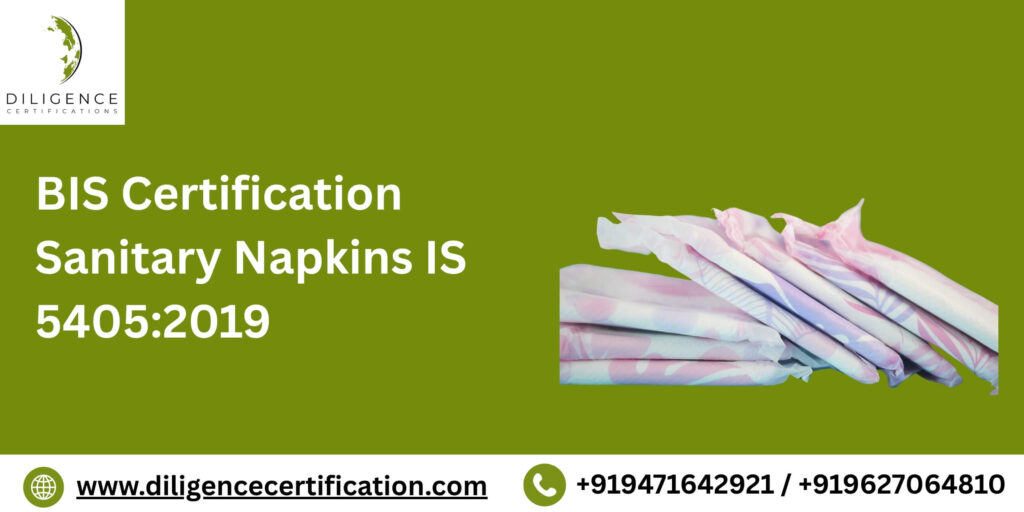
- BIS Certification Sanitary Napkins and Medical Textiles under IS 5405:2019 is important for quality assurance, government compliance, and customer trust.
- With BIS Certification, your manufacturers can legally sell in India, use the ISI mark, and qualify for institutional procurement along with the opportunity for additional regulatory compliance.
- BIS registration can often be complex and challenging and an expert BIS consultant or BIS agency can help guide you through the registration process for these sensitive healthcare products.
Introduction

In 2024, a sanitary napkin start-up from Gujarat had difficulty winning NGO contracts even though they had a socially relevant product. Their product was rejected in the tenders for not having BIS certification-a legally recognized quality stamp under IS 5405:2019.. Within months of acquiring the ISI mark with help from a BIS Certification Consultant, their orders multiplied—proof that regulatory trust leads to commercial growth.
This story isn’t rare. Whether you’re a large FMCG firm or a wellness brand, BIS Certification for Sanitary Napkins and Medical Textiles is no longer optional—it’s the gateway to credibility, retail acceptance, and institutional sales in India and abroad.
BIS Certification For IS 5405: 2019 – Sanitary Napkins : Ensuring Quality and Safety for Women’s Health
In current times, healthfulness is an indicator of hygienic practices as far as sanitary napkins are concerned during menstruation. Sanitary napkins comprise an aspect in women’s daily lives that directly impact their state of health and quality of life. Thus, high standards of safety, effectiveness, and comfort anticipation were to be upheld considering the fact that these products touch on quite sensitive areas. In that scenario, IS 5405: 2019 shall be an important standard, which is the new certification standard laid down by the Bureau of Indian Standards (BIS), for regulating mature quality of sanitary napkins in the market. The standard relates to specifications for sanitary napkins, for ensuring that these satisfy critical criteria of performance and safety.
Let us now go through IS 5405: 2019, its relevance, and the parameters involved in its certification process including its broad benefits to both end consumers and manufacturers.
What is BIS Certification Sanitary Napkins?

BIS (Bureau of Indian Standards) is the national body that sets quality and safety standards in India. For sanitary napkins and related medical textiles, IS 5405:2019 is the designated quality benchmark.
Sanitary napkins, menstrual pads, and period panties fall under this standard, which tests for:
- pH and absorbency rate
- Freedom from sharp edges and toxic residues
- Biocompatibility and sterilization efficacy
- Performance after storage
Who Needs It?
- Manufacturers of sanitary napkins (disposable or reusable)
- Brands importing menstrual hygiene products into India
- Startups selling period care products through ecommerce or retail
- Firms supplying products to schools, NGOs, hospitals, and government schemes
What is IS 5405: 2019?
The Conditions, according to the IS 5405:2019 standard, prescribed by the Institute of Standards under the Ministry of Commerce, Government of India, for the adequate quality performance and safety of sanitary napkins, are as follows: These Conditions should be satisfied to make sanitary napkins effective to absorb the menstrual fluids and safe for use.
- Absorbability: Ensuring that the napkin soaks up and locks away menstrual fluid.
- Materials used: Those are wise/benign/nontoxic, and not harmful chemicals or substances used in the construction of napkins.
- Design and Comfort: That the design of the napkin would accommodate different body types with the materials not causing discomfort or irritation.
- Microbial Safety: Ensures that the sanitary napkins are free from harmful microorganisms and resistant to contamination.
- Environmental sustainability : There will be favorable impact on environmental sustainability, promoting responsible production practices, and reducing harm, as well as non-biodegradable materials. IS 5405 of 2019 makes it obligatory for sanitary napkins to meet updated safety standards with respect to growing concern regarding their health and environmental safety impacts on women in India.
About IS 5405:2019 – Indian Standard for Sanitary Napkins
IS 5405:2019 outlines the essential technical specifications and test methods for non-woven absorbent sanitary napkins. It covers:
- Absorbent layer performance (gel technology, wood pulp, or cotton)
- Backing sheet waterproofing standard
- Packaging hygiene and microbial testing
- Length, width, thickness and adhesive uniformity
- Toxicity levels for materials in contact with skin
It’s aligned with international best practices and is now harmonized with several medical textile testing norms.
Scope of Medical Textiles Products Certification
BIS Certification also covers a broader class of medical textile products, including:
- Surgical pads
- Gauze bandages
- Wound dressings
- Disposable drapes and gowns
- Sterile compression products
- Period panties and reusable menstrual cloth pads
Each category may be subject to specific IS standards. For example:
- IS 5405:2019 – Sanitary Napkins
- IS 758:2020 – Cotton Bandage Cloth
- IS 14976:2022 – Surgical Dressings
Always consult a BIS Registration Consultant to map your exact product to the appropriate Indian Standard (IS).
Importance of BIS Certification IS 5405: 2019 in Sanitary Napkins Certification
Such importance is given to the certification of BIS Certification for sanitary napkins under IS 5405: 2019 on many accounts:
- Health and Safety Guarantees-The main reason for this certification is to ensure that the sanitary napkins made or sold are produced by materials which are safe for women’s intimate health. This means that these napkins would not cause irritation or rashes or even infections within the body of women. This certification guarantees the use of very high-quality materials, which are free from harmful chemicals, fragrances or toxins that may potentially harm the body in any way.
- Consistent Quality Control: IS 5405: 2019 makes it compulsory for all certified sanitary napkins to be put under stringent quality control measures. It guarantees that a woman can trust the products she will buy to be consistent in performance, with every napkin bringing reliable absorbency, comfort, and protection against leaking. For a manufacturer, it ensures that high standards of production are met at a given time, which helps in customer satisfaction for the long run.
- Consumer Confidence: Increasing awareness of health risk plus hygiene makes people acute users in their selecting what they buy: sanitary napkins are certified under IS 5405: 2019 that consumers are assured that they have used products which have undergone assessment against abstinent benchmarks which carry safety assurance
- Concern for the environment : Besides, the IS 5405: 2019 certification is also concentrated on the eco-friendliness of sanitary napkins. Manufacturers are recommended to use less and less harmful materials while taking steps toward the biodegradable option where possible. It proves very fruitful in the way of global contemporaries’ journey toward sustainability and responsible consumerism for the planet, whereby health products for women are not only safe for the users but also for the planet.
- Market Access and Growth: Manufacturers obtain the IS 5405: 2019 certification to allow broader market access because most retailers and distributors stock products that comply with safety standards. In addition, the certification enhances a brand’s standing and build confidence in the brand. and is an advantage during competition in the crowded sanitary market.
Key Criteria of IS 5405: 2019
The IS 5405: 2019 standard is voluminous as it describes various very important parameters that specify how sanitary napkins should be fit for use, safety, effectiveness, and comfort. It States Parameters as Enlisted Below:
- Absorbent Capacity: The napkin must be able to retain a specific volume of menstrual fluid without leakage. This ensures that the product has passed tests for absorbent capacity and can comfortably and reliably manage from moderate to heavy flow.
- Material Safe: This is further tested for toxic chemicals and irritants, including pesticides, industrial chemicals, and harmful fragrances. The top sheet, absorbent core as well as outer cover should comprise material that does not cause sensitivity or any other health concerns.
- Surface Comfort: This allows that the top layer of the sanitary napkin comes into contact with skin directly, which should be soft, breathable, and non-irritating. This would protect users and provide maximum comfort during wearing as the material is dermatologically tested.
- Microbial and Chemical Safety: The sanitary napkins must fulfill the specific microbiological safety standards that the napkin should not harbor an abundance of the harmful bacteria, fungi, or other pathogens. They should also not contain harmful chemicals such as chlorine bleach, which means that infections can occur or lead to long-term sicknesses.
- Design and Dimensions: The standard includes layout guidelines, shapes, and size for sanitary napkins on value. The design should be practical and comfortable for different types of bodies to ensure product performance in use. Both adhesion should be sufficiently great so that it does not shift or bunch up.
- Environmental Responsibility: The standard directs manufacturers to put due consideration to environmental impact. It firmly encourages the use of biodegradable or recyclable materials, and the reduction of waste per se, which aligns with the ongoing global emphasis on sustainability.
The BIS Certification Process: Steps to IS 5405: 2019 Compliance
All these would be accomplished in multiple steps for an organization obtaining this certification. The steps to be followed would be without limitation.
- Initial Application and Documentation: Companies from which the Bureau of Indian Standards applies for certification will provide an application. It also includes manufacturing process-related details about the product and quality control systems.
- Testing of Product: Testing of the product under operational conditions is therefore done on it in the laboratories accredited from the third parties to certify the use of an absorbent napkin. These tests include absorption and material safety, microbial safety, and the quality of the napkin overall. The samples are subject to different conditions to check how well they meet specifications.
- Factory Assessment: It is meant for the inspection of a factory whereby a BIS official comes to ensure that production is done in accordance with the required production standards. This includes maintenance of cleanliness, hygiene, and approved materials. The manufacturers should be able to demonstrate how specific proof of having adequate quality control procedures are maintained for their products.
- Certification and Monitoring : Then all appropriate symptoms are created after the passing of tests and inspection of the factory. About IS 5405: 2019, it is issued to the manufacturer. But the remains are not a one-time process. Manufacturers would have to undergo regular surveillance audits and product testing to evaluate whether they continue to meet the specifications set in the standard.

Renewal, Modification & Surveillance
- Renewal: Every 2 years with fresh testing and audit
- Surveillance: Surprise audits may be conducted by BIS
- Scope Extension: New variants or product sizes require fresh application or licence update
Key Benefits of BIS Licence for Sanitary Napkins
Legal Compliance
Mandatory under Indian law for institutional supply and brand visibility in health sectors.
Competitive Market Entry
Large buyers (hospitals, schools, women’s NGOs) prefer or mandate BIS-licensed vendors.
ISI Mark Branding
Adds trust, boosts online sales, and improves shelf visibility in pharmacies and modern trade outlets.
Export Acceptance
South Asia, Africa, and Gulf nations increasingly accept ISI-marked hygiene products for local sale.
BIS Certification Cost Breakdown
| Category | Details |
|---|
| Documentation & Consultant Fees | Covers application drafting, compliance documentation, and professional consultancy services. |
| Testing in NABL Lab | Includes mandatory product testing in BIS-recognized NABL-accredited laboratories. |
| BIS Application & Licence Fee | Official government charges for processing the BIS certification and grant of license. |
| Renewal (after 2 years) | Periodic renewal fees required to extend the validity of the BIS license. |
A consultant might cost more upfront, but they reduce repeat audits, failed applications, and hidden testing fees.
Role of a BIS Certification Consultant
A trusted BIS Consultant like Diligence Certifications ensures a seamless journey from documentation to approval. Their services include:
- Product mapping to correct IS code
- Pre-audit & process hygiene check
- Lab coordination with accredited facilities
- Label verification for ISI Mark compliance
- Objection handling during BIS review
An export-focused brand from Noida got ISI Mark in just 11 weeks with help from Diligence Certifications—saving 2 months of back-and-forth with the BIS authority.
Conclusion
The IS 5405: 2019 certification indeed plays a major role in the protection of women’s health and ensures the quality as well as safety of sanitary napkins. It provides a clear line of guidelines to manufacturers to ensure production on consumer expectant and safety grounds. It assures consumers that products used by them are of high quality, free from harmful substance contents, and effectively execute the intended function.
While the world is getting more health concerned, environmentally friendly, and consumer-oriented, the IS 5405: 2019 certification will still be an indispensable tool in governing the sanitary products industry. It’s meant to lead the consumer towards feeling safe and confident in her choices and improving the menstrual health of such women and creating environmental responsibility through the increased standards of hygiene, safety, and comfort.
Frequently Asked Questions
Is BIS Certification mandatory for sanitary napkins sold online in India?
Yes. Even D2C or ecommerce products must comply with IS 5405:2019 for consumer safety.
Can reusable pads or period panties get BIS certified?
Yes, they fall under the broader scope of medical textiles and can be certified if absorbency and washability pass lab tests.
How do I place the ISI mark on packaging?
The ISI mark must be placed on the front side of packaging along with the licence number and IS standard. It should not be distorted or hidden.
Do imported sanitary pads require BIS registration?
Yes. Importers must register the product under the same process, including factory audit at the overseas site.
What happens if my product fails testing?
You’ll need to address the non-conformance, modify product design or material, and retest—resulting in delay and added costs.
Can I use BIS test reports for multiple SKUs?
No. Each size or type of product must undergo separate testing unless explicitly exempted by BIS.
How long does the BIS licence remain valid?
The initial licence is valid for 2 years, after which renewal is required with fresh testing and an audit.
Does BIS offer fast-track approval for startups?
No formal scheme exists, but working with a consultant may fast-track approvals by avoiding mistakes.
Can multiple brands use one BIS licence?
No. BIS licences are product and manufacturer specific. A licence cannot be shared across brands or companies.
Can BIS reject my application?
Yes, if documentation is incomplete, testing fails, or your factory is not audit-ready. Hence, consultant guidance is recommended.