


 BIS Certification
 CDSCO
CDSCO
 CPCB
CPCB
 LMPC
LMPC
 WPC Approval
 Global Approvals
 TEC
TEC
 ARAI
ARAI
 BEE
BEE
 ISO Certification
 DGCA Certification
 NOC For Steel
 APEDA Registration












 Business Registration
 FSSAI Mark Certification










 (32).jpg)
 Legal Services
 Trademark Registration
 Copyright Registration
 Patent Registration
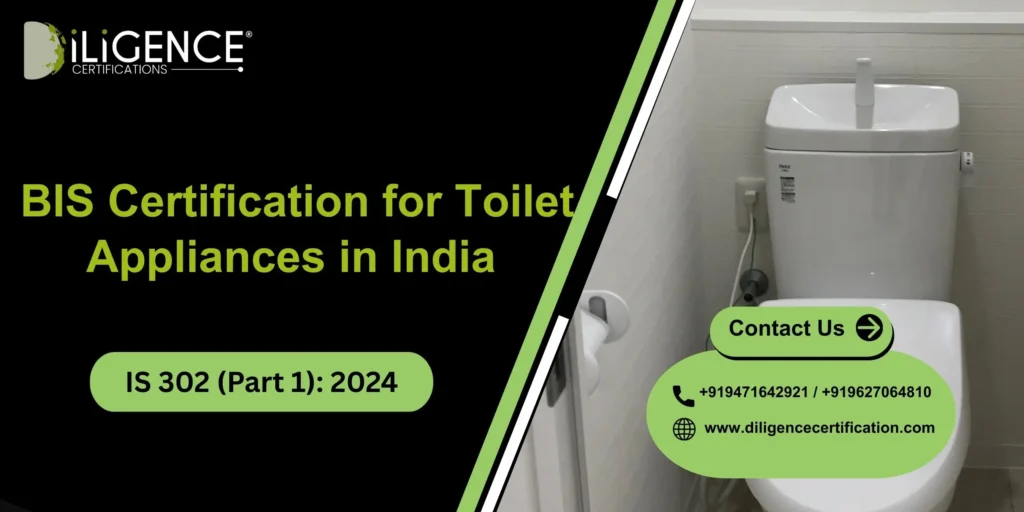
- Compulsory Safety Compliance BIS for Toilet Appliances certification confirms that toilet fixtures comply with electrical safety norms laid out in IS 302 (Part 1): 2024.
- Consumer Protection The certification of products safeguards against potential dangers such as electric shock, heating, or fires.
- Market Access in India BIS certification is required for legal market accessibility in the Indian market.
- Quality & Trust Certification adds quality and strengthens trust in a brand.
- Risk Mitigation BIS compliance is beneficial to organizations as it prevents them from suffering any civil liabilities and criminal charges
Introduction | BIS for Toilet Appliances
With the ever-increasing use of electrical and electronic toilet appliances such as bidet seats, self-flushing systems, warm water cleansing units, and intelligent toilet accessories, the area of electrical and electronic safety has become increasingly important. The operation of these appliances is done in a wet environment that makes them more vulnerable than other devices to electrical shock.
To counter these risks, the Bureau of Indian Standards has made it compulsory to adhere to IS 302 (Part 1): 2024, which is “Electrical appliances – Safety – Part 1: General requirements.” Getting BIS certification in this category ensures that toilet appliances sold in India satisfy basic requirements in terms of safety and reliability.
What Is BIS Certification for Toilet Appliances (IS 302 Part 1: 2024)?
BIS Certification is a government-approved conformity assessment procedure that ensures whether a particular electrical appliance meets Indian norms for safety or not. In case of toilets, the base safety standard is defined by IS 302 (Part 1): 2024 pertaining to:
- Protection against electric shock
- Moisture and water resistance, or resistance to the influence of
- Mechanical strength and durability
- Temperature Rise & Prevention of Overheating
Any toilet appliance that either directly or indirectly uses electricity has to comply with this standard before it enters the Indian marketplace.
Appliances Included Under this Standard
- Electric bidet seats
- Heated toilet seats
- Automatic Flushing Systems
- Water-heating toilet attachments
- Smart toilet control units
- Electronic devices for hygiene and cleansing
Key Features of BIS Certification for Toilet Appliances
- Improved Electrical Safety Provides protection against electric shock, short circuit, and leakage currents in wet conditions.
- Moisture Resistance Rating Appliances are tested for their safe use in the presence of water splashes, humidity, and condensation.
- Thermal Protection Ensures that heating elements and circuits are not overheating under either continuous operation or abnormal operation conditions.
- Mechanical Strength & Durability The products should be able to withstand normal usage and mechanical stress.
- Standardized Labeling & Marking Certified devices feature distinct marks indicating the voltage, wattage, and manufacturer, together with safety warnings.
Why BIS Certification Is Required – Key Reasons
- Legal Requirement in India Many sanitary appliances are included in the ambit of mandatory BIS certification. Selling such non-certified products may attract penalties or bans.
- User Safety in Wet Environments Bathrooms have more electrical risks, so BIS standards minimize accidents and injuries.
- Regulatory Compliance Ensures compliance with Indian electrical laws and consumer protection regulations.
- Market Acceptance & Trust Retailers, distributors, and consumers prefer BIS-certified products.
- Long-Term Business Sustainability Certification helps to decrease the risks of product liability and improves one’s brand reputation.
Importance vs Benefits of BIS Certification
| Importance | Benefits |
| Ensures compliance with Indian safety laws | Legal sale across India |
| Prevents electrical hazards | Reduced accidents and failures |
| Mandatory for regulated appliances | Avoids fines and product seizures |
| Builds regulatory credibility | Higher brand trust |
| Protects end users | Increased customer satisfaction |
BIS Certification Process
Step1:Documentation
- Collect required technical documents
- Prepare product specifications
- Gather company registration details
- Ensure documents follow BIS format
Step2:Product Testing
- Send samples to a BIS-approved lab
- Conduct safety and quality tests
- Receive test reports
- Confirm compliance with BIS standards
Step3:Application Submission
- Fill out the BIS application form
- Upload all required documents
- Attach valid test reports
- Pay the necessary BIS fees
Step4:Scrutiny and Inspection
- BIS reviews submitted documents
- Authority verifies test results
- Factory/product inspection may occur
- Clarifications requested if needed
Step5:Grant of License
- BIS approves the application
- License number is issued
- Product can carry BIS mark
- Renewal required before expiry
Documents Required for BIS Certification
| Category | Documents Required |
| Business Documents | Business license/registration, ISO certificate, organizational details |
| Manufacturer Details | Factory layout, process flow chart, machinery list, production details |
| Product Documents | Product specifications, component list, user manual, model details |
| Testing Documents | Test report from BIS-recognized lab, sample details, test request form |
| Legal & Compliance | Authorization letter, brand ownership proof, trademark certificate (if any) |
| Import/Foreign Manufacturer (If applicable) | AIR (Authorized Indian Representative) details, contract agreement, overseas manufacturer documents |
Timelines, Costs, Validity & Renewal
- Timelines: Usually from 20 to 30 days, with only 7-15 days for the testing.
- Costs: The cost of the government and the test varies depending on the product. There can be some additional charges though.
- Validity: The validity period is 2 years in most situations.
- Renewal: The renewal is done before the expiration; there should be updated documents/tests the renewal
Challenges of Getting BIS Certification Without a Consultant
As important as BIS certification is, the process can be exceedingly cumbersome and complicated—especially for manufacturers attempting it without professional support.
1. Complex Documentation Understanding and preparing technical files, test reports, and factory details can be overwhelming.
2. Testing Coordination Issues Identifying the right BIS-recognized laboratory and ensuring correct sample testing requires experience.
3. Errors in Compliance Even small errors in product design or labeling may result in rejection or re-testing.
4. The procedures involved are also time-consuming This results in unnecessary delays for lack of procedural knowledge.
5. Gaps in Regulatory Communication Interacting without familiarity with BIS officials may delay approvals.
Why Choose Diligence Certificates for BIS Certification Consultancy?
Achieving BIS for Toilet Appliances certification need not be a very complicated process. End-to-end BIS certification consultancy is provided by Diligence Certificates for toilet appliances manufacturers & importers.
- Expert Regulatory Knowledge Detailed knowledge about IS 302 (Part 1): 2024 and BIS procedures.
- End-to-End Product assessment and documentation through to testing and finally the product approval.
- Fast Turnaround Time There are fewer rejections and delays with streamlined processes.
- Personalized Client Support Personalized support throughout your accreditation process.
Securing BIS certification is not a difficult task. Diligence Certificates is providing end-to-end BIS certification consultation services for toilet appliance manufacturers and importers.
Conclusion
BIS for Toilet Appliances Certification for Toilet Appliances Based on IS 302 (Part 1): 2024 is more than just a regulatory requirement—it is a promise of safety, quality, and reliability. With the rising usage of smart and electrical toilet appliances in Indian homes, adhering to BIS norms is a guarantee of safe usage and successful business growth.
The manufacturers and importers who invest in obtaining the apt certification get legal safeguards and success. Working with a good consulting agency such as Diligence Certificates can go a long way in this process and save time and effort.
Frequently Asked Questions (FAQs)
What is BIS Certification for toilet appliances?
BIS Certification for toilet appliances is an approval issued by the Bureau of Indian Standards to confirm that electrical toilet appliances comply with safety requirements specified under IS 302 (Part 1): 2024.
Is BIS certification mandatory for toilet appliances in India?
Yes, BIS certification is mandatory for electrical toilet appliances sold in India if they fall under regulated categories, as per Indian safety and consumer protection laws.
Which toilet appliances require BIS certification under IS 302 (Part 1): 2024?
Electric bidet seats, heated toilet seats, automatic flushing systems, smart toilet attachments, and water-heating toilet devices require BIS certification.
What is IS 302 (Part 1): 2024 standard?
IS 302 (Part 1): 2024 is the Indian safety standard for household and similar electrical appliances, covering protection against electric shock, overheating, moisture, and mechanical hazards.
How long does BIS certification for toilet appliances take?
The BIS certification process typically takes 4 to 8 weeks, depending on product testing results, documentation accuracy, and factory readiness.
What documents need to be submitted for BIS certification for toilet appliances?
The list of required documents includes product specifications, circuit diagrams, test samples, manufacturer information, quality control data, and labeling information.
Can imported toilet appliances get BIS certification?
Well, yes, foreign toilet appliances must have BIS certification for them to be sold in India. The importers have to do this.
What if toilet appliances are sold in the market without BIS certification?
Sale of non-certified toilet appliances may result in seizure of goods, imposition of fines, litigation, and prohibition of sale in India.
Why is BIS certification essential for toilet appliances?
This ensures user safety when wet, protects against electrical danger, enhances quality, and increases consumer confidence. BIS certification of products will now come into effect for all industries.
Why should one consider choosing a BIS certification consultant for manufacturers?
The BIS certification consultant prevents documentation inaccuracy, minimizes document approval timelines, handles laboratory tests, and optimizes overall compliance processes as per IS 302 (Part 1): 2024.