 BIS Certification
 CDSCO
CDSCO
 PESO
PESO
 CPCB
CPCB
 LMPC
LMPC
 WPC Approval
 Global Approvals
 TEC
TEC
 ARAI
ARAI
 BEE
BEE
 ISO Certification
 DGCA Certification
 NOC For Steel
 APEDA Registration















 Business Registration
 FSSAI Mark Certification












 (32).jpg)
 Legal Services
 Trademark Registration
 Copyright Registration
 Patent Registration

 By
By - Fire extinguishers specified under IS:15683 2018 are portable fire extinguishers for the purpose of first-aid fire fighting.
- BIS certification ensures the safety, quality, and performance of the product under Indian law.
- It is a mandatory requirement for manufacturing, selling, or importing fire extinguishers in India.
- It covers many types: water, foam, powder, CO2, and clean agent extinguishers.
- Tests for discharge time, pressure, corrosion resistance, and safety are also part of the procedure.
- The BIS mark gives that trust in the buyer, institutions, and government departments.
- Certification procedures include applying for the ISI mark, lab testing, and periodic factory audits.
- Allows brands to get access to tenders, defense contracts, and commercial safety markets.
- It also ensures compliance with fire safety standards for workplaces, buildings, and vehicles.
Introduction
Fire safety is an essential precaution for the protection of lives and property in various places or structures-in residential buildings, schools, hospitals, hotels, and industrial estates. Indian Standard IS 15683:2018, a standard for portable fire extinguishers, is a standard for quality and reliability of such life-saving equipment. The standard lays down certain conditions for manufacturers who want BIS Certification of their portable fire extinguishers. Professional liaison with organizations such as Diligence Certifications, and conformity to Bureau of Indian Standards (BIS) standards will, however, contribute significantly towards the simplification of the manufacturers’ processes.
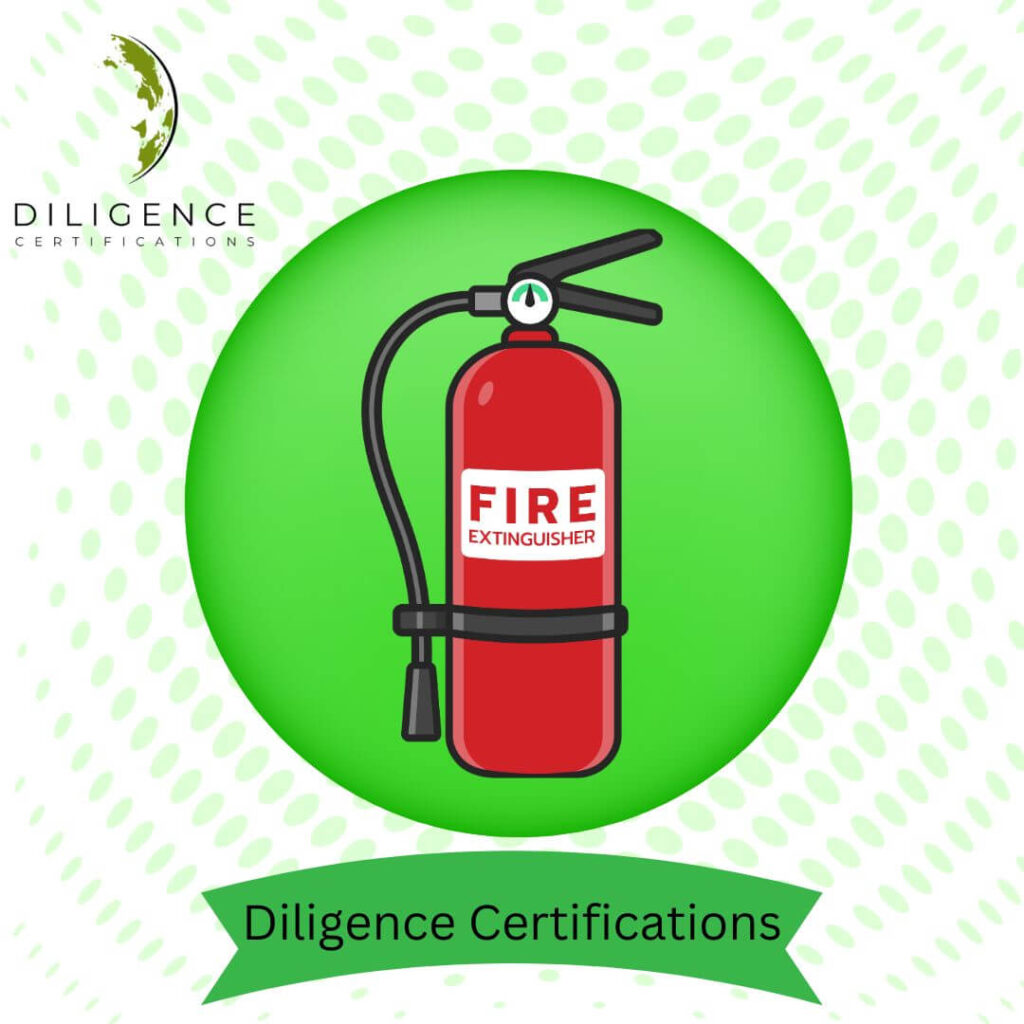
It provides additional details of the significant points of consideration under IS 15683:2018 by highlighting some important points, the BIS certification process, testing machinery, and inspection schemes for the manufacturers who would like to pursue certification.
What is IS 15683:2018?
Its requirements for fire extinguishers that are hand-carried include requirements for performance, safety, construction features, and testing. The standard specifies the various classes of extinguishers, each of which is intended to put out fires caused by a distinct class of fires: Class A for solids, Class B for liquid, Class C for gas, and a few fires electrical in nature.
- It will contain fire extinguishers:
- Function properly when subjected to specified conditions and at specified times;
- Use safety devices or act with integrity;
- Deliver uniform manufacturing quality.
Key Highlights of IS 15683:2018
The following table summarizes the key highlights of the standard:
| Aspect | Description |
| Scope | Covers portable fire extinguishers for Classes A, B, C, and electrical fires. |
| Construction | Specifies materials, corrosion resistance, and pressure testing requirements. |
| Performance Tests | Includes discharge duration, fire rating, and temperature resistance tests. |
| Marking & Labeling | Requires clear instructions, safety symbols, and BIS certification mark. |
| Inspection & Maintenance | Stipulates guidelines for routine checks and refilling procedures. |
| Environmental Safety | Emphasizes eco-friendly extinguishing agents. |
Importance of BIS Certification for Portable Fire Extinguishers
Fire extinguishers’ BIS certification ensures they meet the high levels of IS 15683:2018. Thus, the confidence of customers is instilled in the product quality, safety, and performance.
For manufacturers, BIS certification:
- It relates to market credibility.
- It relates to Indian law compliance.
- It relates to better market access.
For manufacturers, BIS certification provides several advantages which extend beyond legal compliance. It gives credence to their products in the market by reflecting their attachment to accepted safety and performance standards. Henceforth, obtaining BIS certification ensures full compliance with the Indian fire safety code, which is mandatory for marketing any such product within Indian territory.
BIS certification, in addition, will guarantee market accessibility because it opens up doors to government tenders, larger corporates’ contracts, or export. BIS-certified products are an added advantage in the market, as most consumers are expected to favor products affixed with this mark, having already been proved reliable and subjected to stringent standards. Finally, beyond the capability of manufacturers usually, BIS certification significantly reduces the possibility of product recalls and liabilities, enabling cost savings and peace of mind in the long term by avoiding the risk of a product recall or liability issue, providing manufacturers with cost savings and peace of mind in the long term.
Types of Extinguishers: A, B, C, D, K Explained
| Type | Use Case | Chemical |
|---|---|---|
| A | Wood, paper | Water powder |
| B | Flammable liquids | CO₂ or foam |
| C | Gas fires | Dry powder |
| D | Metal fires | Special powder |
| K | Cooking oil | Wet chemical |
BIS Certification Process for Portable Fire Extinguishers
The following are the series of steps critical to the BIS certification of IS 15683:2018:
- Application Processing: The application must be made to the BIS by the manufacturers, accompanied by the necessary documents: product specifications, factory layout, and quality control procedures.
- Factory Audit: BIS officials carry out an inspection of the manufacturing plants to observe the infrastructure, production processes, and quality assurance systems.
- Sample Testing: The samples of the fire extinguishers being tested at BIS-recognized laboratories ensure their compliance with the requirements of IS 15683:2018.
- License Issuance: After satisfactory inspection and testing, BIS issues a certification license permitting the manufacturer to imprint the BIS Standard Mark on his product.
- Surveillance Audits: Regular audits shall be conducted to ascertain compliance with applicable standards at all times.

List of Test Equipment Required for Compliance
The following equipment is essential for testing fire extinguishers as per IS 15683:2018:
| Equipment | Purpose |
| Pressure Gauge | Measures internal pressure of the extinguisher. |
| Hydrostatic Pressure Test Apparatus | Tests cylinder strength under high-pressure conditions. |
| Fire Test Facility | Simulates real fire conditions to assess extinguisher performance. |
| Discharge Time Measurement Setup | Evaluates the duration of extinguisher discharge. |
| Weight Scale | Measures the extinguisher’s weight before and after use. |
| Corrosion Testing Chamber | Assesses resistance to environmental conditions. |
| Temperature Testing Equipment | Tests performance under extreme temperatures. |
Scheme of Inspection and Testing (SIT)
Inspection and Testing Scheme (SIT) forms the foundation of the ongoing quality assurance of the entire manufacturing process of portable fire extinguishers.
SIT includes:
- Raw Material Inspection: In order to ensure that materials such as cylinders, nozzles, and extinguishing agents meet certain quality standards.
- In-Process Inspection: Inspection for conformity at critical points of manufacture, i.e., welding, painting, and assembly.
- Standard Tests: Pressure, leakage, and discharge tests are performed on all fire extinguishers tested.
Partnering with Diligence Certifications
Diligence Certification is a trusted partner for manufacturers navigating the certification process. With a deep understanding of IS 15683:2018 and BIS procedures, their expert team offers end-to-end support, including:
- Document preparation.
- Factory audit guidance.
- Coordination with BIS-approved labs for testing.
- Regular updates on compliance requirements.
Their proven track record ensures a seamless certification experience, enabling manufacturers to focus on production and innovation.
Benefits of IS 15683:2018 Compliance
The benefits of adopting IS 15683:2018 stretch far and wide for manufacturers and users:
- Safety: The certified fire extinguishers do what they are supposed to during emergencies.
- Market Acceptance: The products that possess necessary BIS certification stand practically accepted in the Indian market.
- Compliance with Regulations: Satisfy requirements of fire safety regulations that may be demanded by authorities.
- Customer Trust: Certification provides confidence to the customer regarding product-activity.
- Opportunities in Exports: Many international markets recognize the product that has required BIS certification.
Conclusion
Producers who believe in actually standing for quality and safety acquire portable fire extinguishers according to IS 15683:2018; it is a significant step. Certification is a detailed and robust process for a good reason-it guarantees that fire extinguishers are high-quality and safe. Diligence Certification helps producers achieve compliance, thereby saving them from some of the common mistakes as they strive to achieve certification.
If you are a manufacturer looking to get your products certified or a company looking to buy certified fire extinguishers, familiarity with IS 15683:2018 is of significant significance to increase fire safety and regulatory compliance. Diligence Certification is an assurance of quality, thereby gaining the trust of customers, end-users, and regulatory bodies. The adoption of reflects the intent of manufacturers to provide consistent solutions for fire safety and is a proactive step to enhance the company image, thereby ensuring public safety and trust in fire protection systems.


