



 BIS Certification
 CDSCO
CDSCO
 CPCB
CPCB
 LMPC
LMPC
 WPC Approval
 Global Approvals
 TEC
TEC
 ARAI
ARAI
 BEE
BEE
 ISO Certification
 DGCA Certification
 NOC For Steel
 APEDA Registration

















 Business Registration
 FSSAI Mark Certification












 Legal Services
 Trademark Registration
 Copyright Registration
 Patent Registration
- Mandatory Quality Compliance :BIS certification Copper Alloy Float Valves is a quality compliance requirement for float valves made of copper alloy and it verifies if these valves adhere to the quality, safety and performance levels as stipulated in IS 1703:2000.
- Covers Material and Design Specifications: This standard outlines the criteria for materials (copper alloys) construction size, and the ultimate design of float valves.
- Ensures Durability and Corrosion Resistance: The approved valves are subjected to tests for strength, durability, and corrosion resistance thus ensuring their compatibility for long-term water supply use.
- Testing and Inspection Requirements: This product category must be tested thoroughly through pressure tests, leak tests, and operational capability tests prior to licensing.
- Use of ISI Mark :Manufacturers that get BIS certification are granted the ISI mark which helps in gaining the trust of the customer and is a sign of product reliability and standard compliance.

Introduction
BIS Certification for Copper Alloy Float Valves under IS 1703:2000 confirms that the main water control devices comply with the quality and safety standards prescribed by the Bureau of Indian Standards (BIS). Copper alloy float valves find diverse applications such as water storage tanks, plumbing systems, and industrial sectors where they help in automatic water level changes and overflow prevention.The certification acts as a quality assurance for the use of superior copper alloys in the valves manufacturing along with the implementation of durability, corrosion resistance and high performance designs. Through the IS 1703:2000 standard compliance, manufacturers convey their sincerity towards creating dependable and safe products not only for the domestic but also for commercial sectors.
What is IS 1703:2000?
IS 1703:2000 is a standard in India, established by the Bureau of Indian Standards (BIS), aiming to lay down the specifications for copper alloy float valves (horizontal plunger type) used in water storage systems.
Key Points:
- Scope of the Standard : It specifies the requirement for copper-alloy float valves for automatic control of water levels in tanks and cisterns.
- Material Specifications : The standard sets the nature and chemical composition of the copper alloys so as to achieve strength, durability, and resistance to corrosion.
- Design and Construction Requirements : It specifies the requirements for material, detailed drawings, workmanship, and assembly of the valve, to ensure that it will operate properly.
- Performance and Testing Criteria: The standard IS 1703:2000 lays down the detailed test methods like pressure test, leakage test, and operational checking for confirming the performance of the product.
- Marking and Certification : BIS certification is granted to the products conforming to this standard and such products can carry the ISI mark which is a mark of quality and compliance.
Products Covered Under IS 1703 : 2000
IS 1703:2000 covers float valves of different types made of copper alloy (horizontal plunger type) used for water level control in tanks and water storage systems. The standard is to ensure that all these products comply with certain quality and performance requirements.
Key Reasons:
- Horizontal plunger type float valves: These represent the main category of goods covered by the standard that regulate the water flow automatically depending on the float position.
- Float valves for domestic water tanks: They are installed in the overhead water tanks, underground tanks, and cisterns of houses to avoid overflow and to keep the water level stable.
- Float valves for commercial and industrial use: They can be used in the large storage tanks, industrial water systems, and commercial plumbing applications.
- High and low pressure float valves: The standard encompasses valves that are capable of functioning effectively in different water pressure scenarios.
- Valves with copper alloy components: It embraces the valves which are constructed fully or partially from copper alloys, such as bodies, plungers, and other essential parts that guarantee durability and resistance to corrosion.
Importance and Benefits of BIS Certification
| Importance | Benefits |
| Sets down firm quality standards for copper alloy float valves to guarantee consistent production. | Assured Product QualityConfirming the valves are produced as per safety and performance standards of the country. |
| Requires copper alloys of premium quality to be employed, ensuring the valves are strong, durable, and resistant to corrosion. | Increased Customer TrustWith ISI-marked, it is easier to gain customers’ confidence. |
| Gives elaborate instructions on how valves should be designed, sized, and finished. | Market AdvantageProducts certified enjoy greater acceptance in government and private tenders. |
| Specifies the tests that the valves must undergo, such as the ones for pressure, leakage, and overall functionality. | Enhanced Durability and ReliabilityEnsuring that the product performs efficiently and stays operational in water systems for a long time. |
| The manufacturer should apply identifying marks correctly and only items that meet certification standards can bear the ISI mark as a symbol of quality. | Regulatory ComplianceIndirectly helps manufacturers to operate smoothly by fulfilling the legal and statutory requirements of India. |
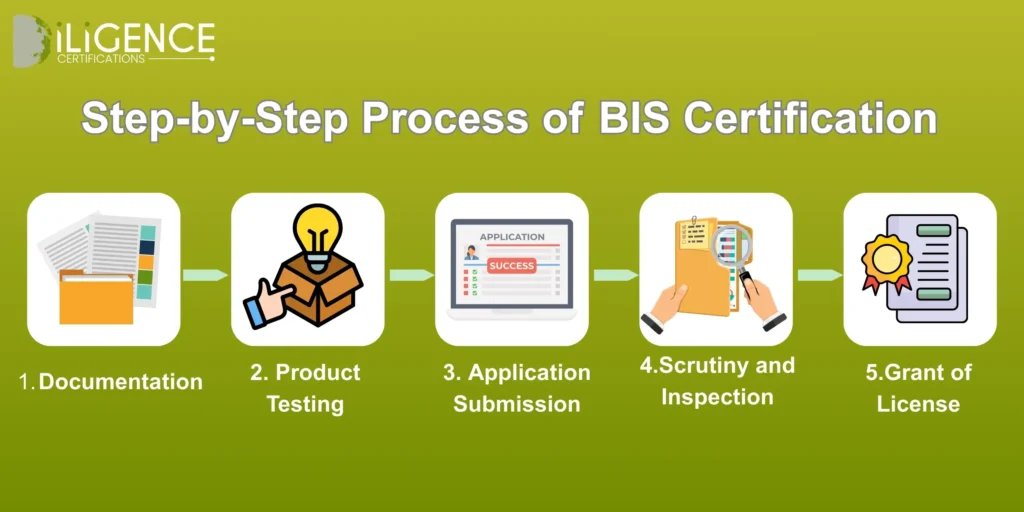
Step-by-Step Process of BIS Certification
Step1:Documentation
- Collect required technical documents
- Prepare product specifications
- Gather company registration details
- Ensure documents follow BIS format
Step2:Product Testing
- Send samples to a BIS-approved lab
- Conduct safety and quality tests
- Receive test reports
- Confirm compliance with BIS standards
Step3:Application Submission
- Fill out the BIS application form
- Upload all required documents
- Attach valid test reports
- Pay the necessary BIS fees
Step4:Scrutiny and Inspection
- BIS reviews submitted documents
- Authority verifies test results
- Factory/product inspection may occur
- Clarifications requested if needed
Step5:Grant of License
- BIS approves the application
- License number is issued
- Product can carry BIS mark
- Renewal required before expiry
Documents Required for BIS Certification
| Category | Documents Required |
| Business Documents | Business license/registration, ISO certificate, organizational details |
| Manufacturer Details | Factory layout, process flow chart, machinery list, production details |
| Product Documents | Product specifications, component list, user manual, model details |
| Testing Documents | Test report from BIS-recognized lab, sample details, test request form |
| Legal & Compliance | Authorization letter, brand ownership proof, trademark certificate (if any) |
| Import/Foreign Manufacturer (If applicable) | AIR (Authorized Indian Representative) details, contract agreement, overseas manufacturer documents |
Timelines, Costs, Validity & Renewal
- Timelines: Usually from 20 to 30 days, with only 7-15 days for the testing.
- Costs: The cost of the government and the test varies depending on the product. There can be some additional charges though.
- Validity: The validity period is 2 years in most situations.
- Renewal: The renewal is done before the expiration; there should be updated documents/tests; the renewal
Why Choose Diligence Certifications
Diligence Certifications is a well-known consultancy specializing in BIS certification and compliance services all over India. They have built their reputation on a very professional approach, thorough knowledge of regulations, and dedication to assisting manufacturers in getting certified without any hiccups.This firm can always be relied upon for comprehensive guidance through the entire certification procedure – from preparing documents and submitting applications to liaising with BIS officials and testing facilities. Their focus on clients helps to eliminate delays, minimize compliance risks, and provide a comfortable certification experience.
Conclusion
BIS certification for copper alloy float valves as per IS 1703:2000 is very important to maintain quality, safety, and consistent performance of product in water management systems. Manufacturers by abiding with this standard are not only showing themselves lying to produce long-lasting, corrosion-resistant and efficient valves but also to manufacture such valves for domestic, commercial and industrial applications.
Frequently Asked Questions (FAQs)
What is IS 1703:2000?
This is a Indian Standard specifies requirements for copper alloy float valves (horizontal plunger type) used in water systems.
Is BIS certification a must for float valves?
It is based on government notifications, however getting certified is always a good measure to ensure quality.
What is ISI mark?
This is a certification mark which signifies that a product is in conformity with the BIS standards.
Who can apply for BIS certification?
BIS certification application can be submitted by the manufacturers of copper alloy float valves.
Which materials are used in these valves?
These valves are made by using copper alloys of high quality which make them highly durable and resistant to corrosion.
What tests are performed as per IS 1703:2000?
The tests cover pressure testing, leakage testing and performance evaluations.
Where do these valves find application?
They are deployed in water tanks, plumbing systems, and industrial water storage.
What is the duration for BIS certification?
The entire procedure may take several weeks to a few months, depending on documentation and testing.
Are foreign manufacturers allowed to apply for BIS certification?
Yes, they can go through the Foreign Manufacturers Certification Scheme (FMCS).
What is the significance of BIS certification?
It guarantees product quality and safety while also helping companies establish their brand in the market.