



 BIS Certification
 CDSCO
CDSCO
 CPCB
CPCB
 LMPC
LMPC
 WPC Approval
 Global Approvals
 TEC
TEC
 ARAI
ARAI
 BEE
BEE
 ISO Certification
 DGCA Certification
 NOC For Steel
 APEDA Registration












 Business Registration
 FSSAI Mark Certification











 (32).jpg)
 Legal Services
 Trademark Registration
 Copyright Registration
 Patent Registration
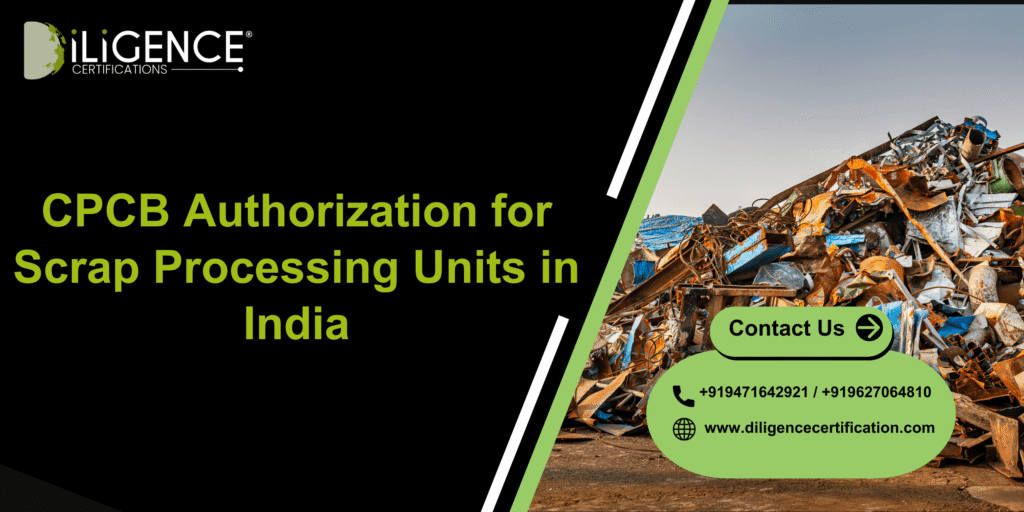
- CPCB Authorization for Scrap Processing Units is a necessity in India to process the scrap and recycle its materials in a manner that is eco-friendly and legally compliant.
- The authorities grant the necessary permissions to handle, separate, recycle, and finally dispose of scrap materials legally.
- This prevents the pollution of air, water, and soil that may have been caused by the wrong handling of scrap.
- It also ensures that the processing units do not have to face any fines, legal notices, or closure of operations.
- Moreover, it establishes a relationship of trust with regulators, industries, recyclers, and business partners.

Introduction
CPCB Authorization for Scrap processing units are an indispensable link in the circular economy of India as they transform waste into resources that can be reused. These units process different kinds of scraps like the metal, plastic, electronic, and industrial waste ones. If the scrap processing is not done properly, it can result in air pollution, soil contamination, water pollution, and health hazards. Central Pollution Control Board
CPCB and SPCB have imposed a mandate for scrap processing units to obtain CPCB Authorization for Scrap in India which acts as the primary tool for regulating and monitoring the processing activities of scrap to the maximum extent. Furthermore, the Authorization ensures that the scrap is processed in an environmentally sound, systematic, and legally compliant manner.
For enterprises engaged in scrap recycling or processing, obtaining CPCB Authorization for Scrap is not merely an obligation but the very basis for sustainable and long-term operations.
What Is CPCB Authorization for Scrap Processing Units?
CPCB Authorization for Scrap processing units is a legal approval that is given under diverse environmental regulations and essentially allows the units to deal with scrap either by processing, recycling, storing, or disposing it as per the specified standards.
This permission states that the scrap processing unit:
- Follows the CPCB and SPCB environmental guidelines
- Is equipped with proper facilities and has pollution control systems in place
- Handles waste in a safe and responsible manner
- Does not allow pollution of air, water, and land to occur
- Keeps accurate and up-to-date records and has reporting systems in place
Holding a scrap processing unit without CPCB authorization is deemed illegal and may lead to strict enforcement actions.
What Is the Purpose of CPCB Authorization for Scrap Processing Units?
Not getting CPCB authorization may lead to:
- Severe penalties and environmental compensation
- Shut down or halt of the business
- Confiscation of scrap and equipment
- Receiving legal notices and being subject to more regulations
- Loss of customers and decrease of reputation
To the contrary, CPCB authorization means:
- Legal right to the scrap processing activities
- Lower regulatory and compliance risks
- Easier inspections and audits
- Environmentally friendly operations
- Business sustainability in the long run
Types of Scrap Covered Under CPCB Authorization
The Central Pollution Control Board (CPCB) might demand its sanction for dealing with the following waste materials in the stipulated manner:
- metal scrap (ferrous and non-ferrous),
- plastic waste,
- electronic (e-waste) waste,
- industrial and manufacturing waste,
- hazardous materials,
- batteries and cables.
The need of CPCB Authorization for Scrap for the unit will be determined by the type, quantity, and category of waste handled.
Which processing units require CPCB authorization?
The CPCB goes ahead with the following:
- recycling and processing plants for scrap,
- metal and plastic scrap processors,
- e-waste dismantling and recycling units,
- industrial scrap handling facilities,
- start-ups and businesses entering processing of scrap,
- units involved in storage and transfer of regulated scrap.
Benefits of CPCB Authorization for Scrap Processing Units
| Importance | Benefits |
| Legal compliance | Operates lawfully under CPCB/SPCB rules |
| Pollution control | Minimizes environmental contamination |
| Operational credibility | Builds trust with authorities and clients |
| Business continuity | Avoids closures and legal disruptions |
| Sustainability | Supports circular economy and recycling goals |
Step-by-Step CPCB Authorization Process for Scrap Processing Units
Step 1: Applicability Assessment
Identify the type of scrap processed and determine applicable CPCB/SPCB authorizations.
Step 2: Infrastructure Readiness
Pollution controls, storage areas, and safety systems are to be proper and fully operational.
Step 3: Documentation Preparation
Technical, environmental, and legal documents needed for merchant authorization are to be prepared.
Step 4: Application Submission
The application is to be submitted via the CPCB/SPCB online portal along with the required fees.
Step 5: Inspection & Verification
Authorities might perform site inspections to check that all requirements are met.
Step 6: Grant of CPCB Authorization
After inspection, CPCB/SPCB gives legal permission to operate if all is in order.
Documents Required for CPCB Authorization
- Certificate of incorporation
- PAN and GST registration
- Consent to Establish (CTE) / Consent to Operate (CTO)
- Scrap processing flow diagram
- Pollution control equipment details
- Waste management plan
- Site layout and location map
- Agreements with recyclers or disposal facilities
Timeline, Validity & Renewal
Processing Time: 30-60 working days
Validity: Usually 1-5 years depending on the type of waste
Renewal: Compulsory before the date of expiry with new compliance records
Timely renewal gives a guarantee of no disruption in operations and legality.
Conclusion
The authorization from CPCB Authorization for Scrap processing units in India is a vital necessity for assuring safe, legal and eco-friendly scrap management. Moreover, it not only shields the industries from the risk of regulation but also encourages the practices of recycling that are sustainable and hence a win-win for the environment and society. CPCB Certification
Thus, the CPCB authorization also provides scrap processing units with a way to communicate their compliance, credibility, and commitment to the environmental protection goals of India and thus make it easier to develop the recycling and waste management sector long-term growth and success.
Frequently Asked for Questions
What is CPCB authorization for scrap processing units?
Thus, it is the legal recognition or permission that allows waste handling and recycling through the scrap units by complying with the respective environmental regulations.
Is CPCB authorization mandatory for scrap processors in India?
Indeed, operating in a manner that does not involve obtaining CPCB approval can lead to penalties and thus, the illegal operation can result in shutdowns.
Who issues CPCB authorization for scrap units?
The Central as well as State Pollution Control Boards grant the authorization.
Which types of scrap need CPCB approval?
Those are metals, plastics, e-waste, industrial, hazardous ones, batteries, and cables.
How long does CPCB authorization take?
Normally from 30 to 60 working days, depending on the verification process.
What happens if a scrap unit operates without CPCB approval?
They may experience penalties, legal actions, confiscation of equipment, or even their closure.
Is site inspection compulsory for CPCB authorization?
Yes, it is emphasized that inspections are usually performed to check compliance and the facilities used.
How long is CPCB authorization valid?
It is normally 1 to 5 years long and it also depends on the type and classification of waste.
Can startups apply for CPCB authorization for scrap processing?
Yes, they will first have to get the permission before they can start the operations of scrap.
Why is CPCB authorization important for business growth?
It secures the legality of the business, enhances and is a part of the sustainable operations.